




Large Victorian Meat Platter
A large victorian meat platter brings robust nineteenth-century scale to the table, offering generous proportions and striking blue and white transfer prints for grand serving.
Large Victorian Meat Platter
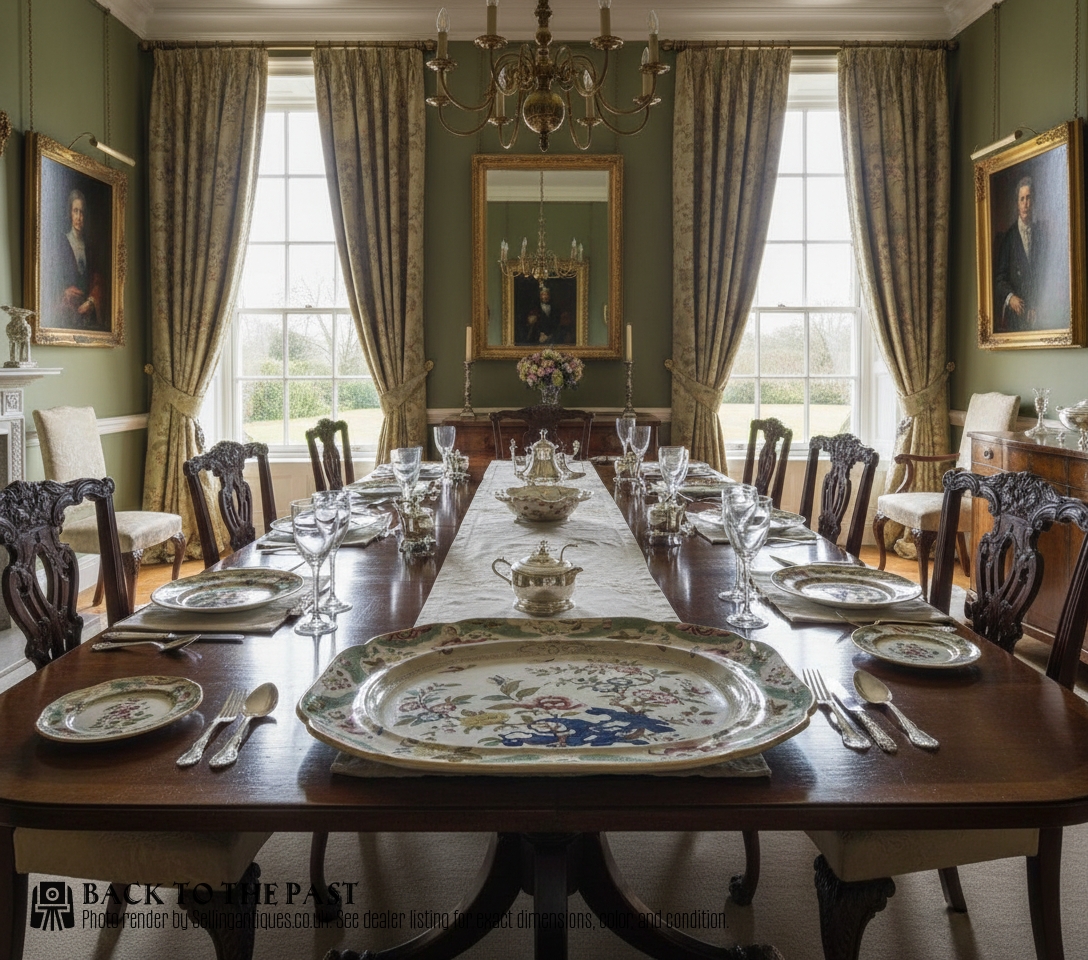
A large victorian meat platter is a substantial serving vessel designed for family joints of meat, fowl, and game during the nineteenth century. These pieces form the centrepiece of a grand dining service, providing both deep wells for juices and wide borders for display.
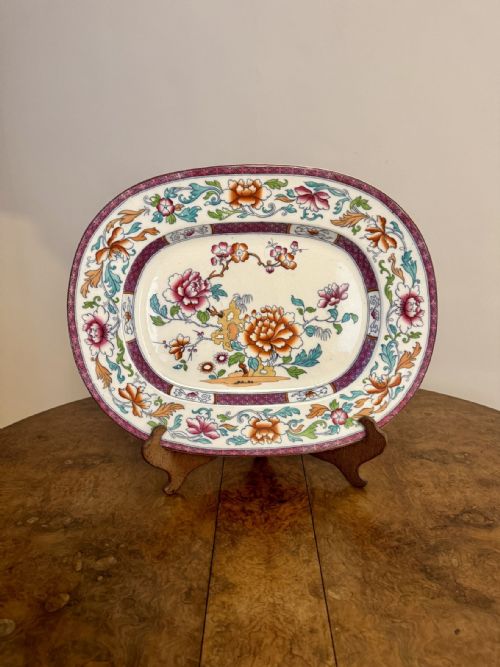
The specimens met on this page range from heavy ironstone and pearlware to refined earthenware and silver plate. Many display rich blue and white transfer printing depicting classical landscapes, Chinese gardens, and gothic cathedrals.
Makers such as Copeland and Garrett, Minton, and Mason's produced these resilient items across the Victorian era alongside Regency antecedents. Buyers seek them out for their practical utility on the modern dining table as much as for their decorative presence on a wall or dresser.
How they were made
Potters shaped thick earthenware, heavy ironstone, and pearlware in large moulds to withstand the weight of heavy joints of meat. These ceramic bases often received a lustrous glaze to prevent absorption of gravies and juices during carving.
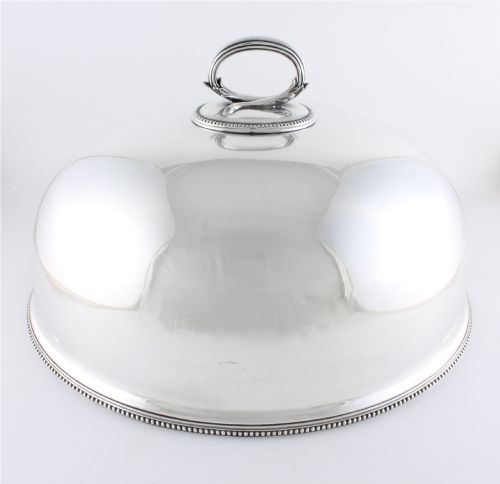
Transfer printing applied intricate blue patterns onto the biscuit body before glazing and firing, ensuring the design remained permanent under daily use. Alternatively, metal smiths formed silver-plated domes and warming trays over sturdy base metals to keep roasted meats hot at the table.
Large Victorian Meat Platter Retail Price Guide 2026
Typical asking prices for large victorian meat platter among the pieces listed under this phrase on Sellingantiques today, from the lower quarter to the upper quarter. They describe what is for sale here now, not the wider market.
Many platters feature hidden drainage channels designed so Sunday joint juices flowed safely away from the roast.
What varies in quality
Silver-plated meat covers and warming trays show variation in the thickness of the plating and the solidity of cast handles and finials. Superior examples retain their original bright finish and fit securely onto their corresponding platters without rocking.
Copeland and Garrett·Minton·Elkin Knight and Bridgwood
The Large Victorian Meat Platter Glossary
- Transfer print
- A decorative technique where an engraved copper plate transfers a design onto tissue paper, which is then pressed onto the ceramic surface before glazing. This method allowed for intricate and consistent pictorial scenes across large production runs.
- Ironstone
- A dense, vitrified ceramic patented in the nineteenth century that mimics porcelain in its strength and durability. It resists chipping and staining far better than standard earthenware.
- Pearlware
- A refined form of earthenware developed in the late eighteenth century featuring a subtle bluish glaze that pooled in crevices. It bridged the gap between creamware and true porcelain.
- Well and tree
- A platter design featuring a system of channels converging on a central well to collect meat juices during carving. This kept the joint elevated and dry.
- Silver plate
- A layer of silver bonded to a base metal such as copper or Britannia metal, utilised extensively for warming domes and trays. It provided the luxurious appearance of solid silver at a fraction of the cost.
Large Victorian Meat Platter: Frequently Asked Questions
How were meat platters used?
These platters served as the central vessels for presenting large joints of roasted meat, poultry, and game at the dining table. Servants carved the meat directly upon them, allowing juices to collect in the recessed wells.
Many included integrated strainers or warming dishes with hot water compartments to keep the meat warm throughout a lengthy multi-course meal.
How do I care for ironstone platters?
Wash these ceramic pieces gently by hand in warm water using mild soap rather than placing them in an automatic dishwasher. Harsh detergents and high heat can damage the nineteenth-century glaze and dull the transfer print over time.
Store them upright in a secure rack or flat with felt dividers between stacked pieces to protect the heavy edges from chipping.
Can I use these platters for serving food?
Most antique ceramic and ironstone platters remain entirely suitable for serving cold or hot foods directly at the table. Ensure the glaze is free from deep cracks or porous areas that might absorb liquids before putting them into regular culinary service.
Silver-plated domes and warming trays require gentle cleaning and should be dried thoroughly immediately after washing to preserve the metal finish.
How do I tell early ironstone from earthenware?
Ironstone feels noticeably heavier and rings with a clearer tone when tapped gently compared to softer earthenware bodies. It possesses a denser, more vitrified composition designed to resist heavy carving knives.
Visual inspection of the base often reveals impressed or printed maker marks specific to nineteenth-century ironstone manufacturers.