


Large Ushak Carpet
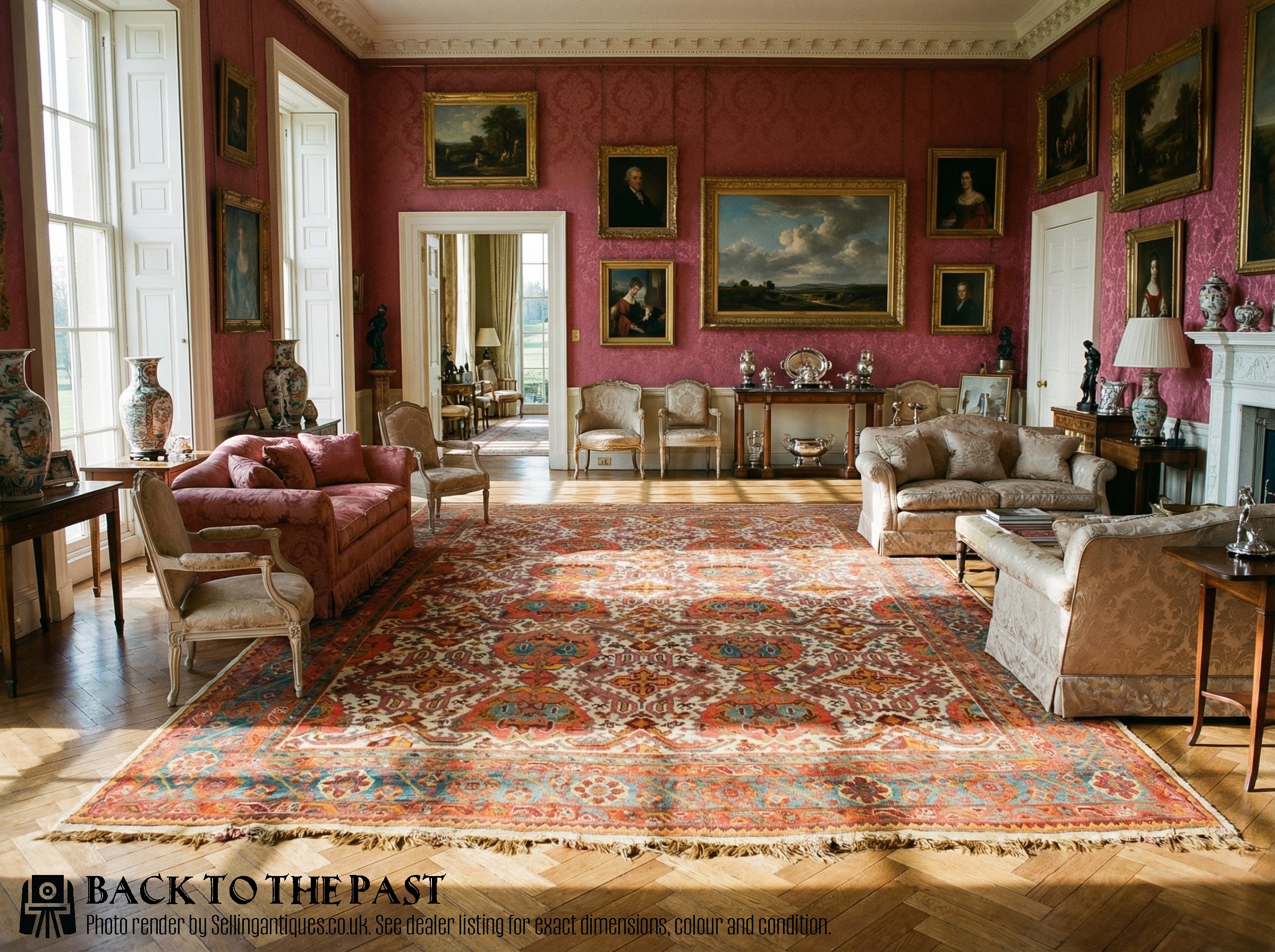
A large ushak carpet brings monumental scale and subdued, faded geometry to a grand room.
Large Ushak Carpet
When you search for a large ushak carpet, you are looking at substantial Turkish floor coverings spanning the late nineteenth and early twentieth centuries. These pieces typically display expansive fields with soft medallions or geometric motifs rather than rigid, intricate borders. Most examples encountered here date from the 1870s up through the 1920s.
The format covers significant room sizes, often stretching over four or five metres in length to suit substantial spaces. They carry Anatolian and Ottoman design traditions that prioritise harmonious proportions over dense patterns. Buyers find these floor coverings prized for their ability to anchor large rooms without overwhelming the interior scheme.
How they were made
These carpets are constructed using traditional hand-knotting techniques with wool piles set upon cotton foundations. Certain notable variants incorporate angora wool, which yields a softer handle and a distinct lustre across the surface. The materials work together to create a durable textile capable of withstanding heavy foot traffic over generations.
Weavers utilised natural and early aniline dyes to achieve the signature faded palette characteristic of these Turkish workshops. The handling of the wool pile combined with relaxed knot densities allows the textile to drape naturally on the floor.
Several carpets are so generously proportioned they require an entire room just to stretch their legs.
What varies in quality
The primary distinction across the range lies in the handling of the wool and the nuance of the colour palette. Pieces featuring angora wool display a finer texture and a more luminous interaction with light. Furthermore, the subtlety of the faded ground colour significantly elevates the visual harmony of the piece.
Proportion and scale also dictate the standing of an individual rug within the tradition. Examples that maintain balance across monumental dimensions without distortion in the central medallion represent the finer tier of production.
Maples·Maple and Co
The Large Ushak Carpet Glossary
- Ushak
- A town in western Anatolia renowned for major carpet production since the Ottoman era. Ushak carpets are celebrated for their distinctive large-scale floral and geometric designs.
- Angora wool
- A fine, soft fibre derived from angora goats, utilised in select carpets to impart a silk-like sheen. This material enhances the tactile quality of the pile.
- Medallion
- A central decorative motif placed in the field of the carpet, often taking a lobed or polygonal shape. It serves as the primary focal point of the composition.
- Anatolian
- Pertaining to the geographic region of Asia Minor encompassing modern-day Turkey. This term roots the carpets in their historical and regional context.
- Field
- The central background area of the carpet enclosed by the border. In these pieces, the field typically exhibits an open, uncluttered design.
Large Ushak Carpet: Frequently Asked Questions
How do I clean a large ushak carpet?
Professional specialist cleaning is essential for these antique wool and cotton textiles. Regular gentle vacuuming without a beater bar removes surface dust.
Avoid household detergents or excessive water, which can damage the natural dyes and historical foundation. Consult a conservator experienced in antique oriental carpets for maintenance advice.
Will a large ushak carpet suit modern interiors?
The subdued palettes and open geometric fields integrate smoothly into contemporary minimalist or maximalist schemes. Their neutral faded tones complement natural wood floors and plastered walls.
These pieces provide warmth and historical depth without dominating a modern architectural space.
How do I date a large ushak carpet?
Dating relies on assessing the weave structure, the specific palette of the wool pile, and stylistic conventions. Pieces from the late nineteenth century often show distinct Ottoman design influences.
Comparing structural details and motifs with archived examples helps narrow the period of origin between the 1870s and the 1920s.
Are these carpets suitable for heavy foot traffic?
The sturdy wool pile and solid cotton foundations were originally built for heavy daily use in substantial rooms. They endure regular walking well when properly protected with a quality underlay.
Placing them in living rooms or dining spaces allows you to enjoy their functional history safely.