


Traditional Carpet Large
A traditional carpet large in scale anchors a room with generations of woven character.
Traditional Carpet Large
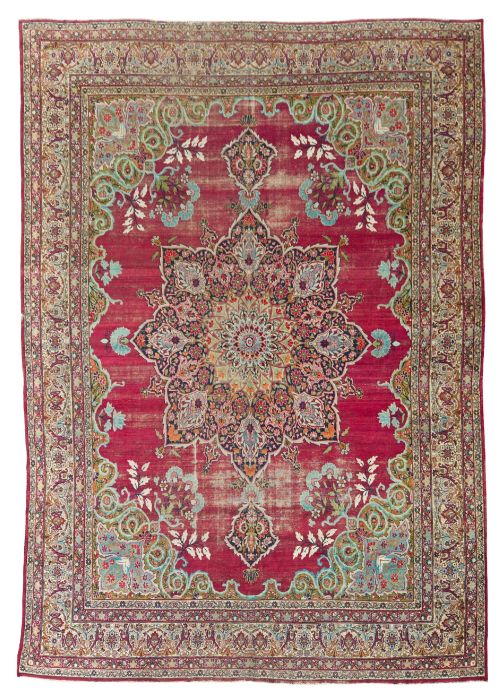
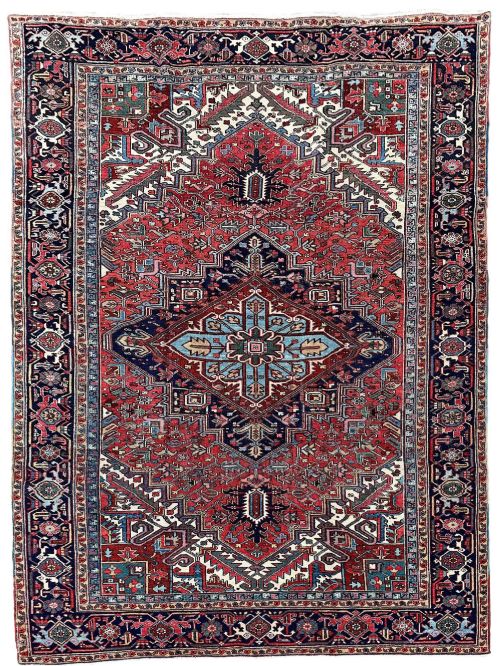
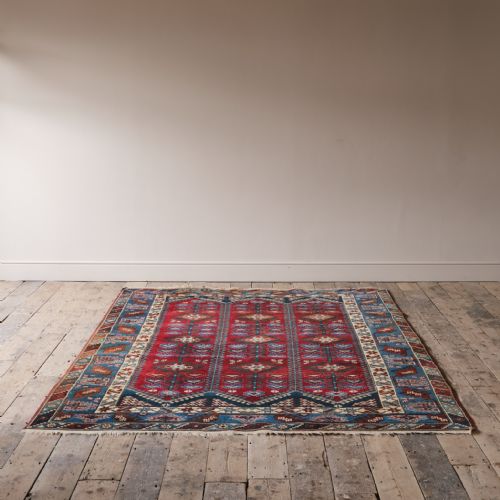
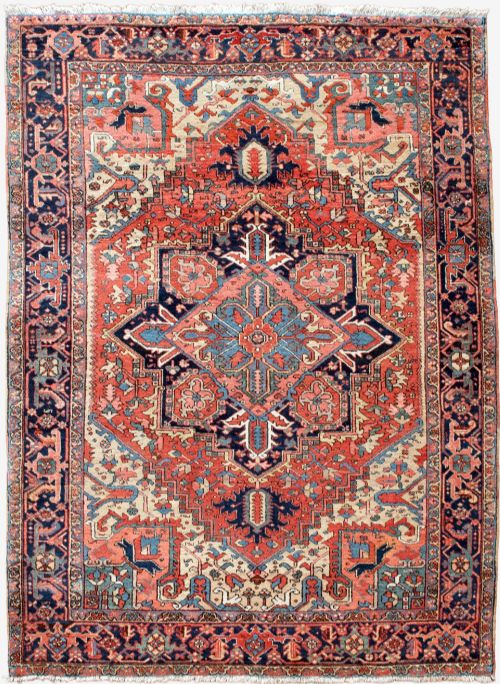
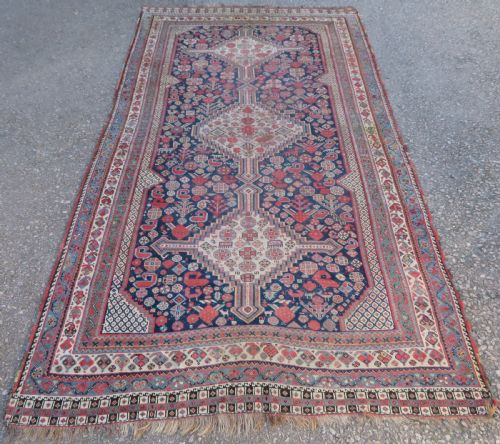
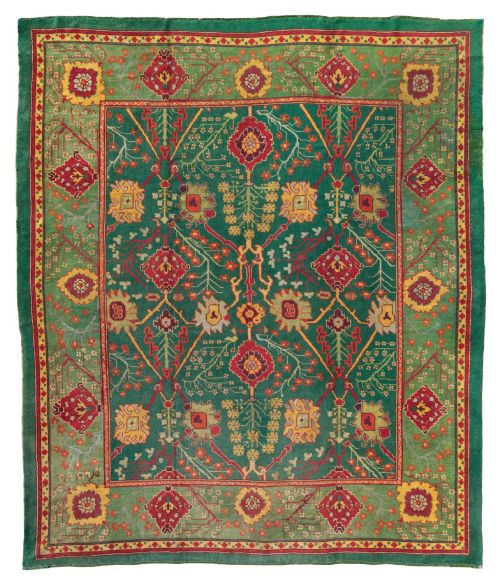
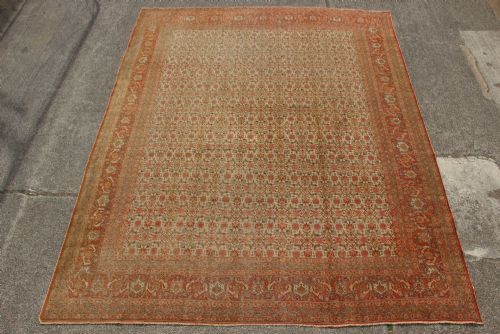
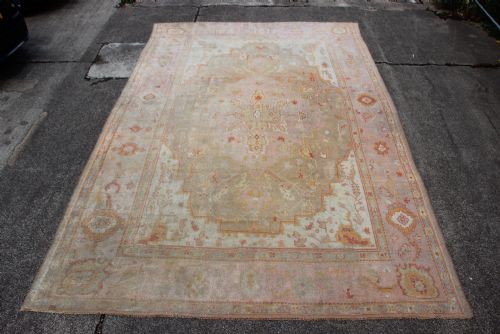
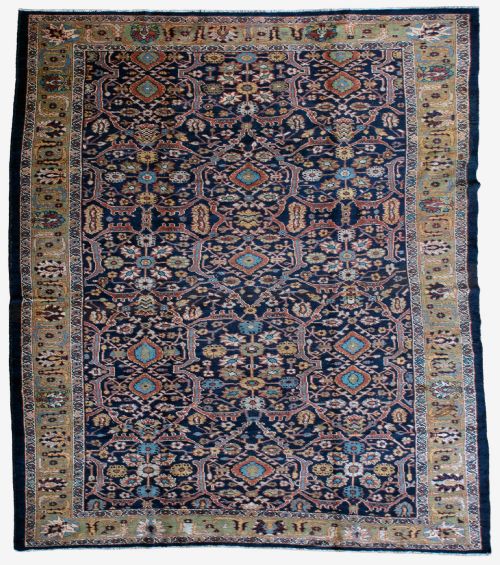
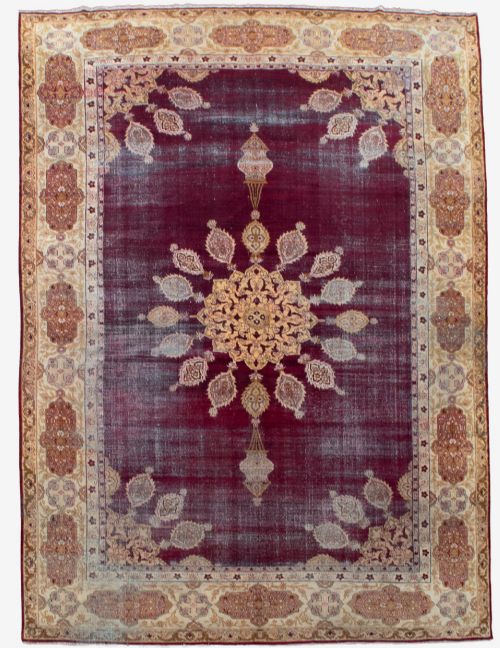
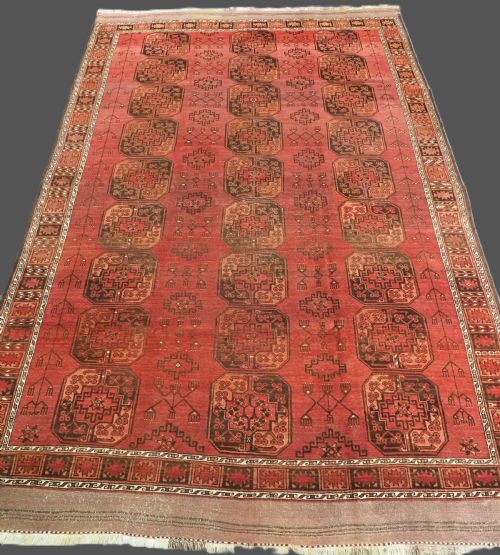
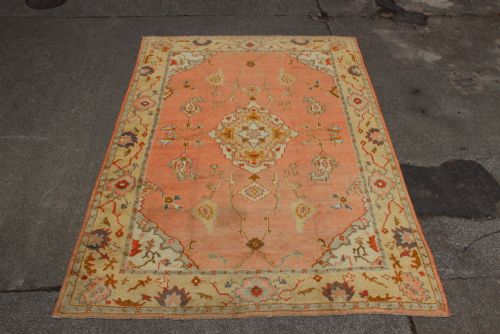
When you search for a traditional carpet large in format, you examine substantial floor coverings originating from workshops and villages across Persia, Anatolia, and Central Asia. The pieces appearing here span the nineteenth century through the early twentieth century, encompassing styles such as Heriz, Oushak, Mahal, and Ersari Turkmen.
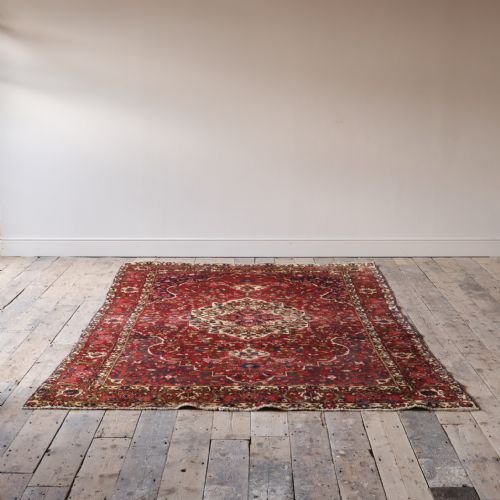
You meet room-sized and country-house proportions, often measuring well over three metres in length, designed to command principal reception spaces. These large formats include geometric village weaves alongside curvilinear workshop designs, executed in wool and cotton foundations.
The inventory demonstrates regional variety, from the bold medallions of Heriz and Serapi carpets to the deep red tones of Afghan village work and the pale grounds of Oushak productions.
How they were made
These carpets rely upon hand-knotted wool pile secured to sturdy cotton or wool warp and weft foundations. Weavers tied symmetrical or asymmetrical knots by hand, building dense surfaces intended to withstand decades of foot traffic.
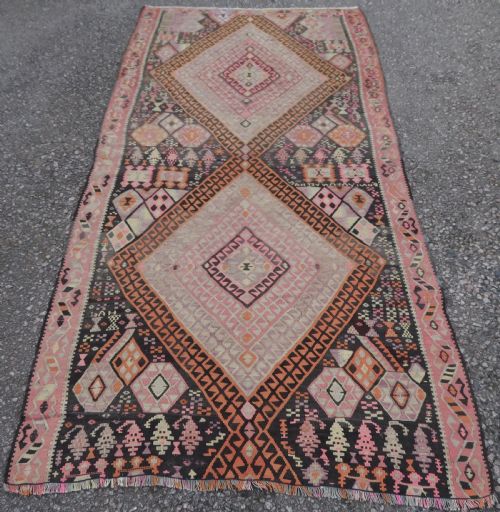
Natural and early aniline dyes provided the palette, yielding warm reds, rich indigos, soft ivory grounds, and earthy browns that age with steady harmony. Flatweave kilims utilise interlocked weft threads to create pattern without a raised pile, offering a lighter alternative for large spaces.
Listings feature traditional carpets in wool and cotton, spanning nineteenth-century village weaves to twentieth-century workshop productions.
What varies in quality
Quality rests upon knot density, the clarity of the drawing, and the integrity of the foundation. Finer workshop pieces achieve intricate curvilinear precision, whereas village and tribal examples prize robust wool and powerful, uninhibited geometry.
The condition of the pile and the originality of the edges and borders dictate the structural merit of a large carpet. Expert historical repairs executed with matching materials preserve the dignity of older weaves, while extensive modern alterations diminish the integrity of the piece.
Haji Jalili
The Traditional Carpet Large Glossary
- Gul
- A repeating octagonal or floral medallion motif frequently found in Turkmen and Afghan carpets. It acts as the primary structural unit of design across tribal main carpets.
- Warp
- The vertical foundation threads stretched tightly on the loom before knotting begins. The fringe of the carpet is simply the extension of these structural threads.
- Weft
- The horizontal threads passed across the warp strands to hold the rows of knots in place. Beating the weft down firmly ensures the density of the finished pile.
- Kilim
- A flatweave textile produced without a pile by tightly interweaving warp and weft threads. These pieces offer a durable, reversible surface often utilised for large summer floor coverings.
Traditional Carpet Large: Frequently Asked Questions
How do I clean a large antique carpet?
Regular gentle vacuuming without a rotating power head removes surface grit before it settles into the wool foundation. Professional specialist washing remains essential for deep cleaning to protect historical dyes and prevent fibre distortion.
Avoid household chemical treatments or excessive water immersion, which weaken natural fibres. Proper rotation every year ensures even wear across high-traffic areas in your room.
Where should I place a large carpet?
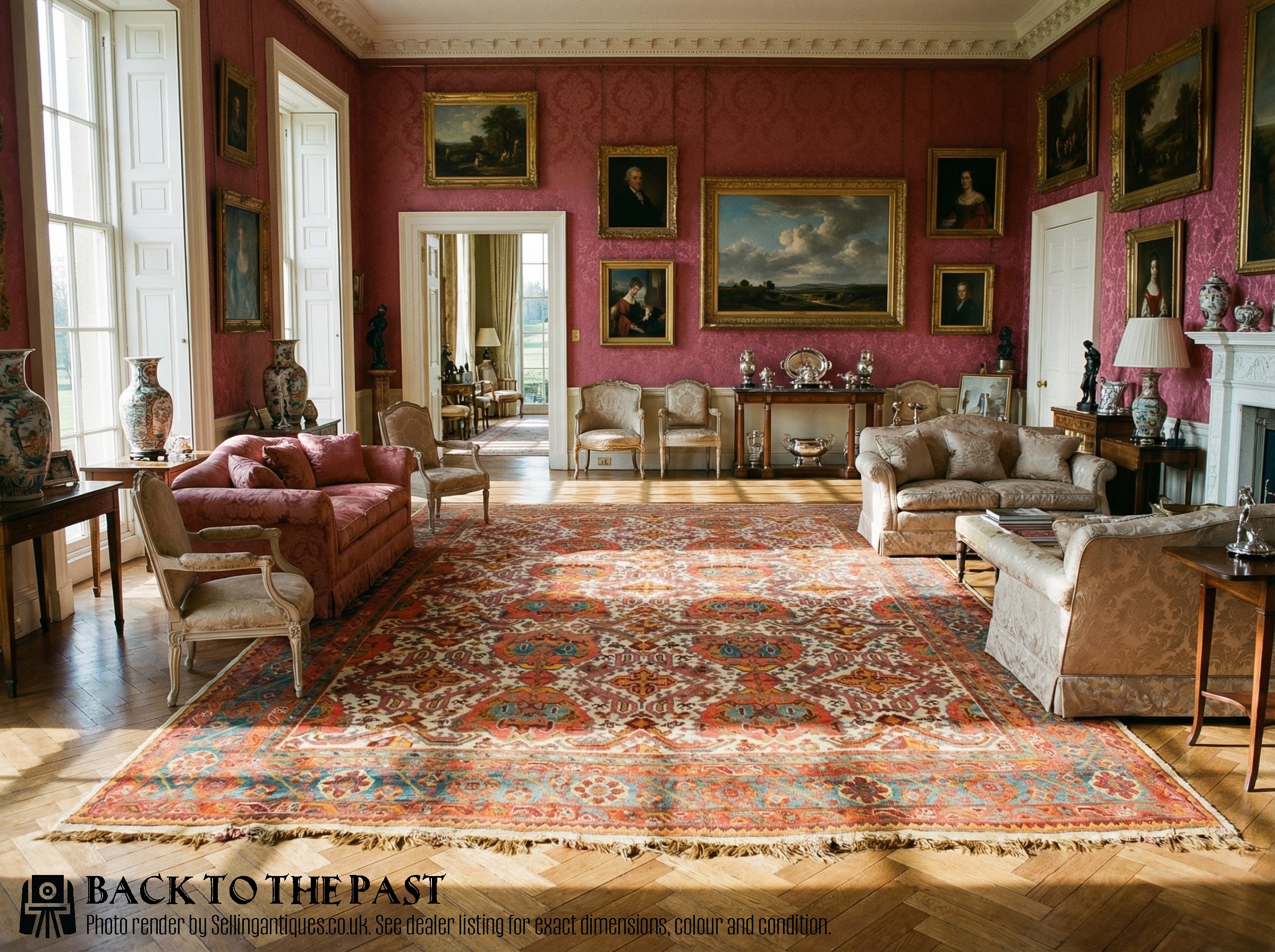
These generous proportions suit principal reception rooms, dining spaces, or wide hallways where furniture rests comfortably on the field. Allowing a uniform border of exposed floorboards around the perimeter balances the visual weight of the textile.
Keep large carpets away from direct, prolonged sunlight to prevent uneven fading of natural wool dyes. Placing a quality underlay beneath the carpet prevents slipping and cushions the foundation against hard flooring.
How can I tell a village carpet from a workshop carpet?
Village and tribal carpets display geometric designs, spontaneous asymmetry, and thicker wool woven on simpler upright looms. Weavers working in these communities relied on memory and local tradition rather than precise cartoon drawings.
Workshop carpets, by contrast, exhibit refined curvilinear florals, balanced symmetry, and higher knot densities produced under the direction of master designers. Cities like Tabriz and Sultanabad specialised in these intricate, coordinated compositions for wider export.
What does a flatweave Kilim mean for my floor?
A kilim provides a lightweight, pileless alternative that lies flat and adapts easily to heavy traffic without crushing. The absence of pile highlights the crisp geometric structure of the interlocking weft threads.
These textiles offer versatility and easy maintenance, though adding a secure underlay is necessary to prevent slipping on smooth surfaces. Their lower profile also allows doors to swing freely across them in hallways and entranceways.