




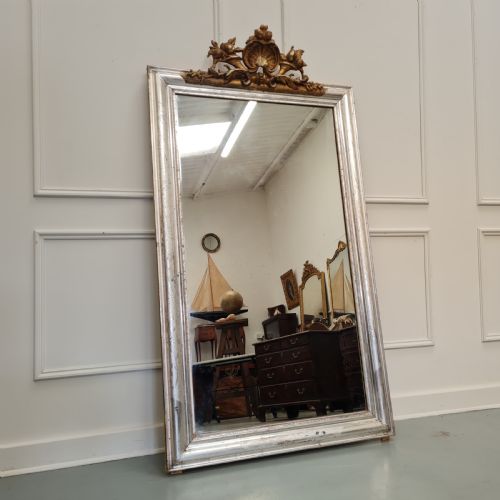
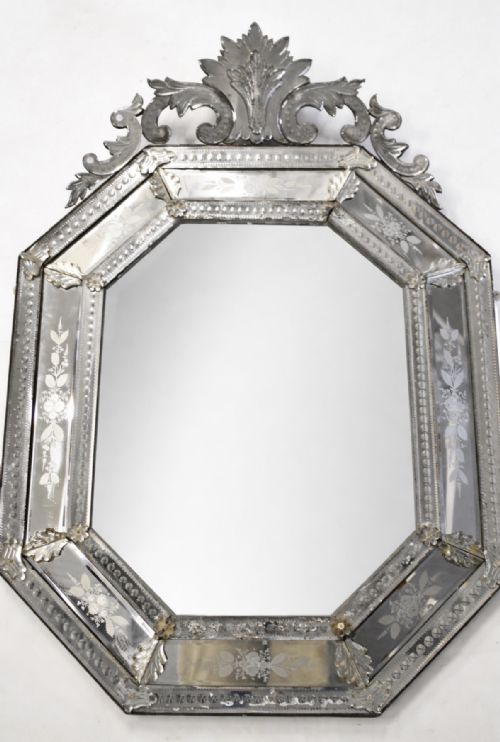


Large Silvered Wall Glass
These large silvered wall glass pieces bring deep reflection and historic presence into a room, capturing light across centuries of design.
Large Silvered Wall Glass
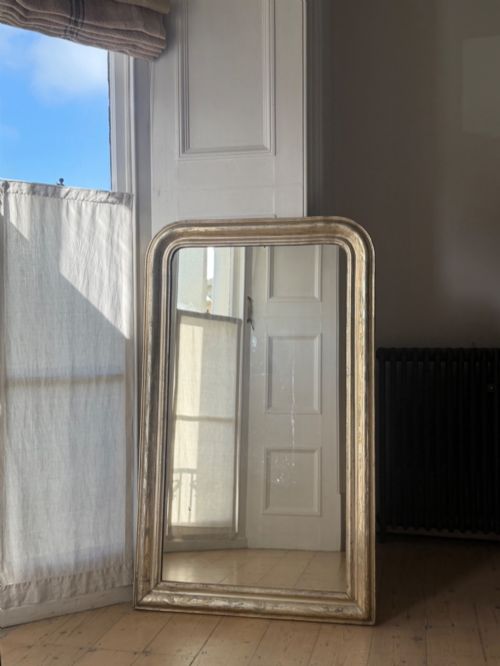
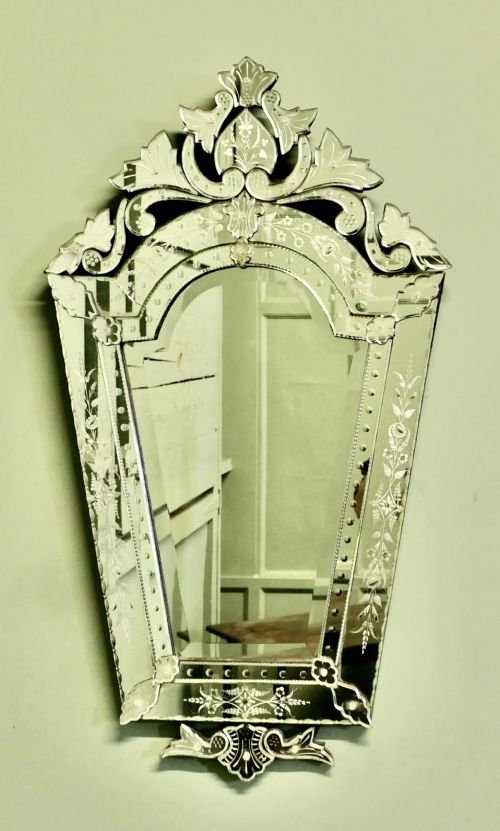
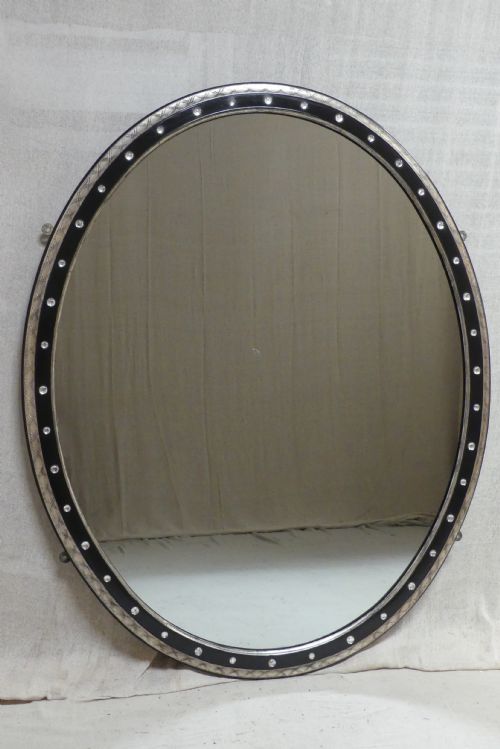
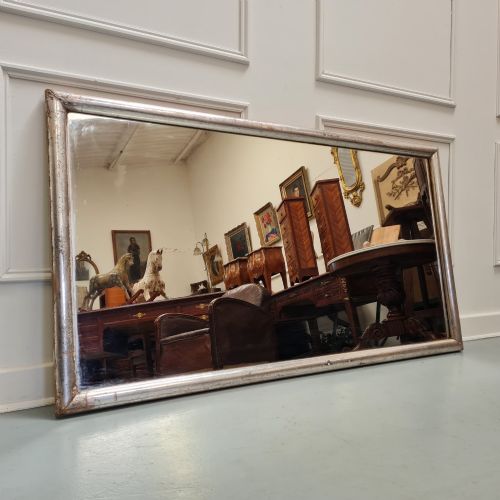
When buyers search for large silvered wall glass, they encounter an array of grand mirrors, overmantels, and girandoles spanning from the seventeenth century through to the mid-twentieth century. The selection ranges from ornate Venetian cushion frames to carved French wood and gesso designs, alongside striking Art Deco wall mirrors.
The most prevalent examples on this page are nineteenth-century French and Victorian pieces, frequently finished in silver gilt or silver leaf. Buyers also find specialised lighting forms such as wall lights and girandoles incorporating mirrored glass panels.
How they were made
Craftsmen utilised traditional timber frames shaped from carved wood, often layering them with gesso before applying delicate silver leaf, silver gilt, or parcel gilt finishes. In Venetian workshops, artisans worked with specialised mirror glass and engraved plates set into cushion frames.
Other examples integrate metal elements, rosewood, or ebonised details, while specialised pieces combine mirrored glass with structural wood and metal armatures for wall lighting.
Large Silvered Wall Glass Retail Price Guide 2026
Typical asking prices for large silvered wall glass among the pieces listed under this phrase on Sellingantiques today, from the lower quarter to the upper quarter. They describe what is for sale here now, not the wider market.
Certain antique mirrors whisper tales of nineteenth-century Parisian salons, having spent generations reflecting candlelight rather than electricity.
What varies in quality
The distinction between tiers rests upon the depth of the carving in the wood and gesso, the purity and preservation of the original silvering, and the complexity of the frame design. Hand-carved details and period-appropriate glass plates elevate the standing of a piece.
The Large Silvered Wall Glass Glossary
- Silver gilt
- Wood or gesso covered with a thin layer of silver leaf that gives a bright, reflective metallic sheen. This finish defines many nineteenth-century French and English mirrors.
- Cushion mirror
- A frame profile that curves outward toward the edge, creating a pillow-like effect often seen in Venetian pieces. The glass panels themselves frequently follow this bevelled contour.
- Gesso
- A plaster-like mixture applied to wooden frames as a smooth base for gilding or silvering. Skilled carvers used it to build up intricate relief ornaments before metal application.
- Girandole
- A decorative wall mirror featuring attached candle branches or lighting arms. These fixtures multiply ambient room light through their mirrored backplates.
- Overmantel mirror
- A wide mirror designed specifically to hang above a fireplace mantel. They typically dominate a chimney breast and reflect light across the entire room.
Large Silvered Wall Glass: Frequently Asked Questions
How do I hang a heavy wall glass?
Large antique mirrors and overmantels carry substantial weight due to their dense wooden frames and thick glass plates. Secure installation requires professional wall anchors suited to the specific wall construction.
Distributing the load across sturdy brackets ensures the frame remains stable and prevents strain on the original hanging hardware.
What is a Venetian cushion mirror?
Venetian cushion mirrors feature distinctive curved frames that slope outward from the central glass plate. Artisans often embellished these borders with fine hand-engraved motifs.
Originating in Italy, this style maximises light refraction and creates a soft, voluminous profile on the wall.
How do I date a silvered wall glass?
Dating relies on examining the construction of the wooden frame, the composition of the gesso, and the manufacturing characteristics of the glass plate. Stylistic indicators like Art Deco geometries or Baroque carving details provide clear chronological markers.
Comparing the backing boards and joinery methods further helps establish the era of origin.
Can I place these mirrors in a bathroom?
Historic silvered glass and delicate gesso frames react sensitively to high humidity and moisture fluctuations. Continuous exposure to steam can damage the silver leaf and degrade the wooden structure.
Dry interior rooms with stable temperatures offer the safest environment for preserving these antique finishes.