

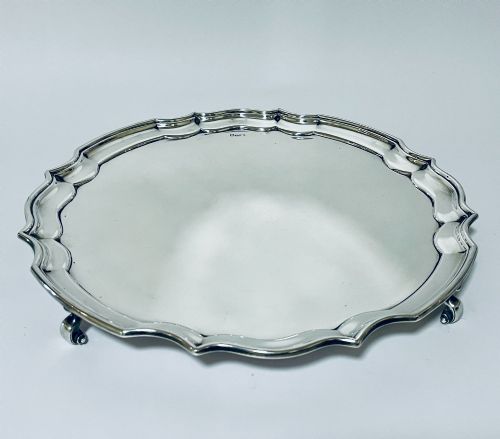


Large Silver Serving Tray
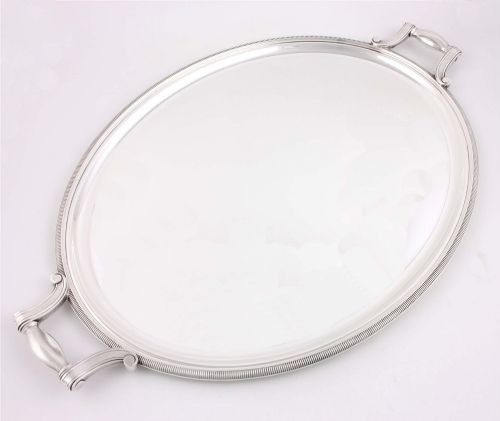
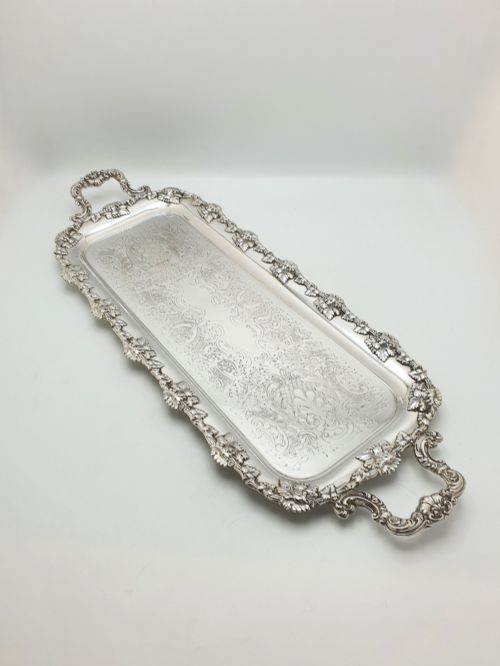
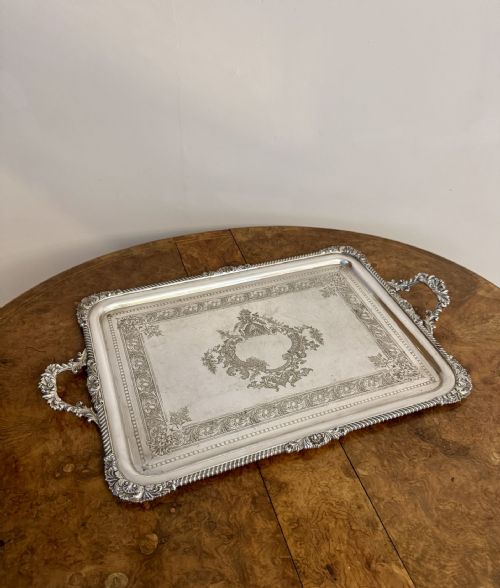
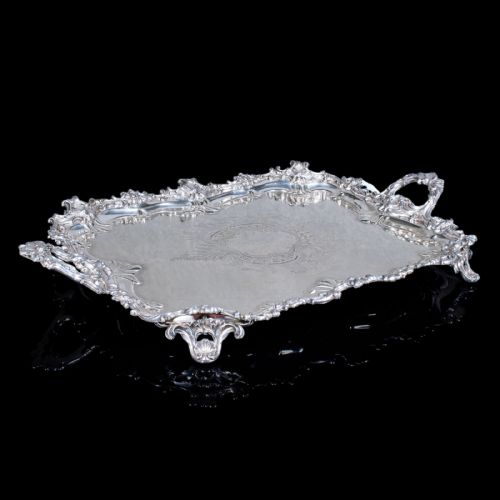
A large silver serving tray commands the centre of a table, carrying tea services, cocktails or decanters with generous weight and polish.
What these trays are
A large silver serving tray appears most frequently in silver plate over nickel silver or copper, alongside solid sterling silver versions from the Victorian and Edwardian eras. These pieces function as butler trays, tea trays, drinks trays or cocktail platters designed for formal service.
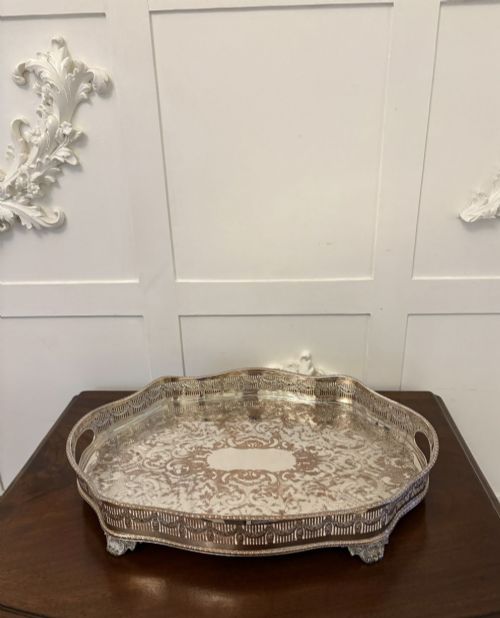
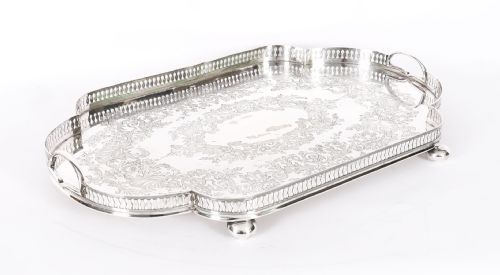
The forms span oval, rectangular and scalloped shapes, often fitted with carrying handles and raised galleries. Pierced fretwork borders and engraved surface patterns recur across Victorian and Edwardian examples from English makers.
Makers such as Elkington & Co., Mappin & Webb, and Walker & Hall dominate the record, alongside continental and regional firms. English production from the nineteenth and early twentieth centuries forms the backbone of these selections.
How they were made
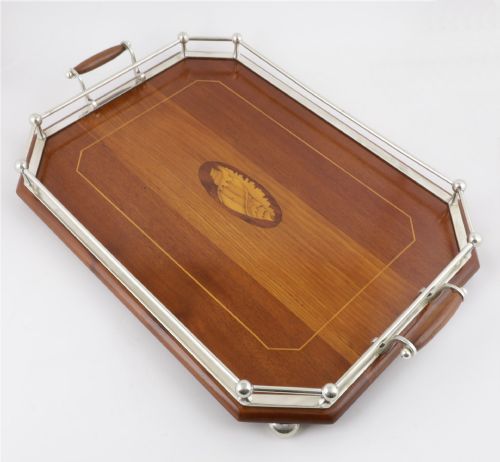
Silversmiths utilised sterling silver or formed durable bases of nickel silver and electroplated nickel silver, known as EPNS, applying a layer of silver via electrolysis. Oak occasionally formed supportive wooden bases or galleries combined with plated mounts.
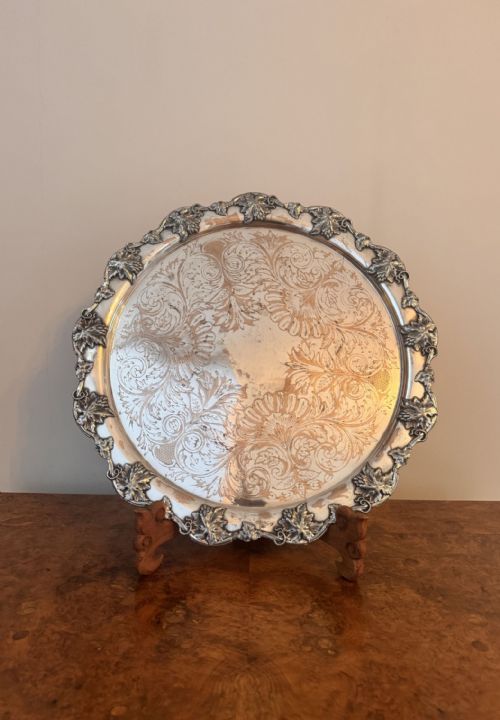
Surface ornamentation involved hand engraving, floral fern motifs, reticulated pierced work and cast handles soldered to the main body. Stamped hallmarks on solid silver pieces indicate the assay office, maker and year of production.
Makers from Sheffield, London and Aberdeen feature prominently across the historical archive of large serving platters and butler trays.
What varies in quality
Depth of engraving and crispness in pierced galleries separate standard production from superior workshop output. Heavy gauge metal resists flexing under the weight of decanters and teapots, maintaining structural rigidity across large surface areas.
The integrity of the silver plate over the underlying base metal determines long-term appearance, where thick plating withstands decades of polishing. Named makers using substantial metal weights distinguish the finest specimens from ordinary domestic wares.
Elkington and Co·Mappin and Webb·Walker and Hall·Lee and Wigfull·Roberts and Belk·James Dixon and Sons·John Grinsell·Hukin and Heath·Barker Ellis·J Hardy
The Large Silver Serving Tray Glossary
- Gallery
- A raised ornamental border surrounding the perimeter of a tray, often pierced or pierced and fretted to secure glassware.
- EPNS
- Electroplated Nickel Silver, a process where a thin layer of pure silver is deposited onto a nickel silver base.
- Reticulated
- Work constructed with an open network or net-like pattern, frequently seen in pierced metal galleries and borders.
- Waiter
- A small serving tray or platter, historically used by domestic staff to carry letters, cards or drinks.
- Hallmark
- A series of official stamps applied to solid silver items indicating standard of purity, maker and assay town.
Frequently Asked Questions
How do I clean a silver plated tray?
Use a specialised silver polish and a soft cloth to remove tarnish gently without abrading the plated surface. Avoid harsh chemical dips that strip underlying layers.
Store the tray in a dry environment and handle it with clean hands to minimise chemical reactions that accelerate tarnishing on the metal.
Can I use these trays for daily drinks service?
These trays handle modern cocktail parties, decanters and tea services effectively, provided you protect the surface from sharp impacts. The sturdy metal construction supports heavy glassware without difficulty.
Pleasant patina accumulates through gentle use, reflecting the history of the object while serving guests at home.
How do I tell solid silver from silver plate?
Inspect the piece for hallmarks indicating sterling standard, which include a lion passant or numerical purity marks on British items. Silver plate displays maker marks indicating electroplating methods.
Examine high-wear areas for signs of the base metal showing through, as silver plate reveals copper or nickel beneath worn spots over time.
What is the difference between an Edwardian and Victorian tray?
Victorian trays often feature heavier ornamentation, elaborate floral or fern hand engraving, and deep cast mounts reflecting nineteenth-century design tastes. Edwardian examples tend toward lighter pierced galleries and restrained decorative borders.
Both periods utilise silver plate or solid silver, but stylistic shifts lean toward cleaner lines as the twentieth century approaches.