
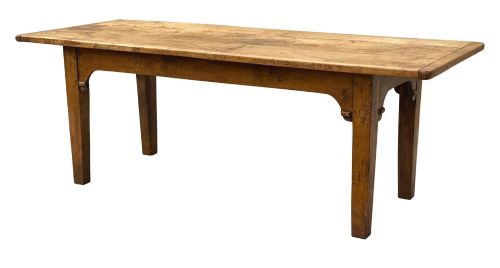
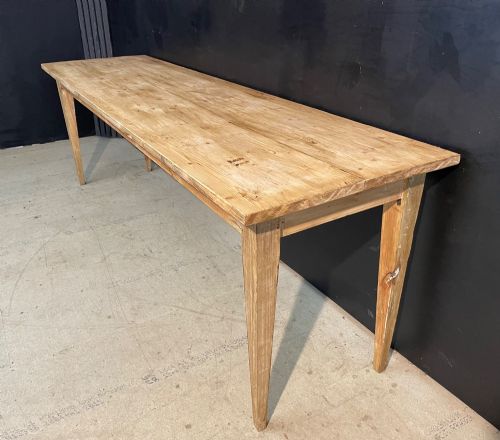
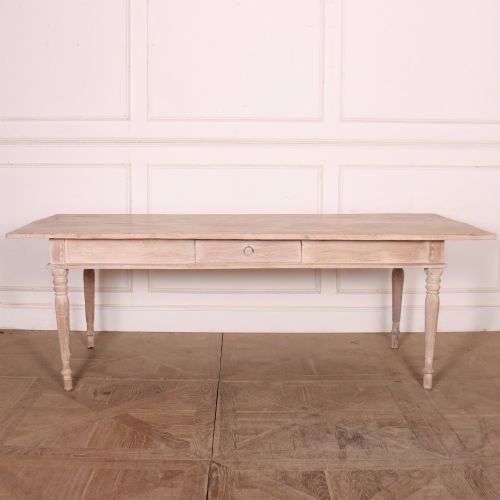
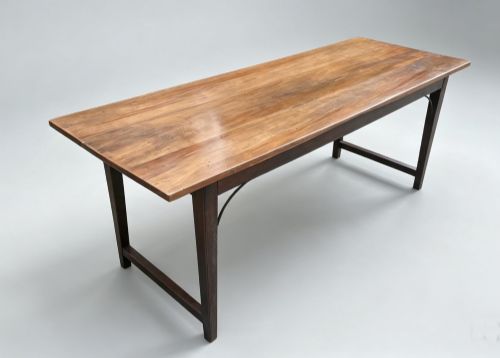
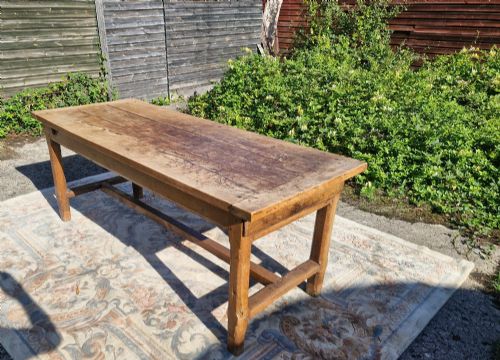
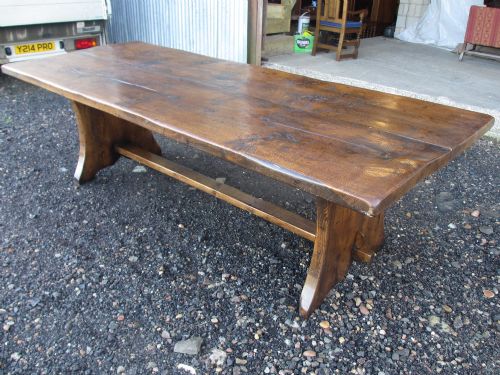
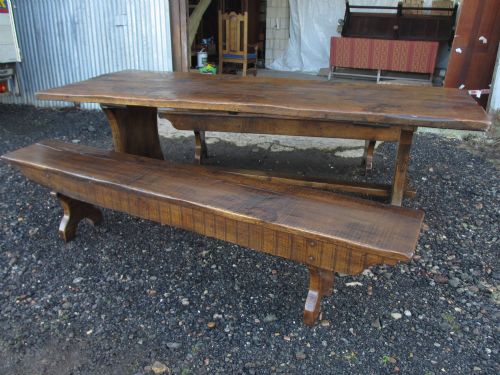
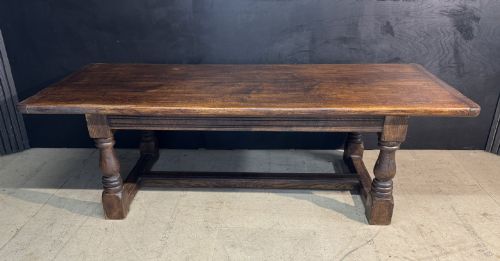
Large Rustic Dining Table
A large rustic dining table anchors a room with generations of utility, offering generous timber surfaces built for heavy daily use.
Large Rustic Dining Table
A large rustic dining table is a substantial domestic board designed for communal dining, appearing predominantly in oak, pine, and elm across this selection. These pieces originate from various periods including the eighteenth and nineteenth centuries, as well as the Edwardian era and the early twentieth century.
The domestic forms recorded on this page encompass traditional refectory tables, gateleg tables, and farmhouse kitchen tables. Many of these examples display regional styles such as French provincial, English country, and rustic farmhouse aesthetics.
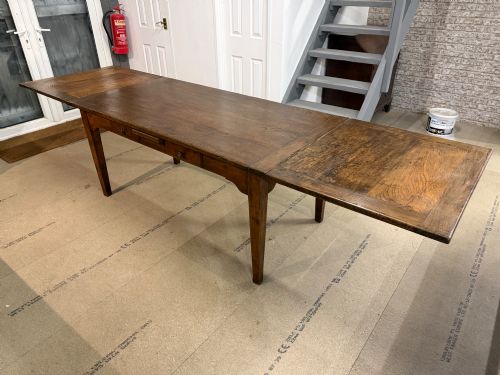
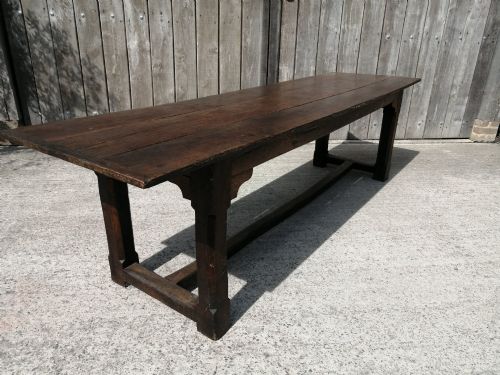
Buyers encounter surfaces ranging from single plank tops and two-board constructions to double extending mechanisms. These formats serve large gatherings, often accommodating eight or ten seats comfortably around solid timber frames.
How they were made
Makers constructed large rustic dining tables using solid hardwoods and softwoods such as oak, pine, elm, sycamore, cherrywood, and beech. Joinery relied on traditional framing and pegged joints to support long boards under heavy daily loads.
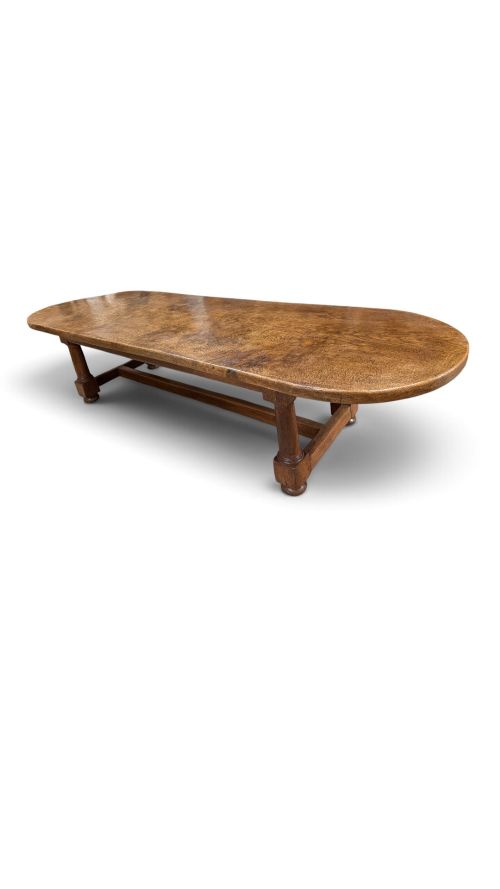
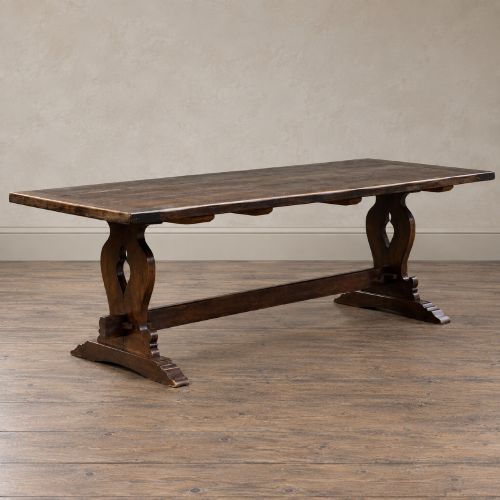
Many tables incorporate shaped trestle ends, substantial legs, and stretcher bases to provide stability for wide tops. Carpenters occasionally utilised wax or paint finishes to seal the timber while retaining the natural grain and texture of the wood.
Formats range from refectory and gateleg tables to double extending designs and harvest tables.
What varies in quality
The standard of a large rustic dining table depends upon the selection of timber and the integrity of its construction. Heavy oak and single plank tops represent superior material choice compared to multi-board assemblies joined with less care.
Proportion and structural rigidity set finer examples apart from simpler utilitarian pieces. Well-balanced trestle supports and clean joints ensure the table remains stable across its entire span.
The Large Rustic Dining Table Glossary
- Refectory table
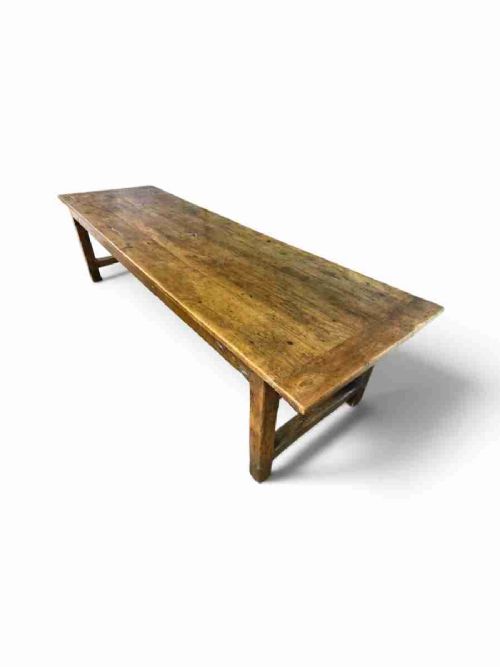
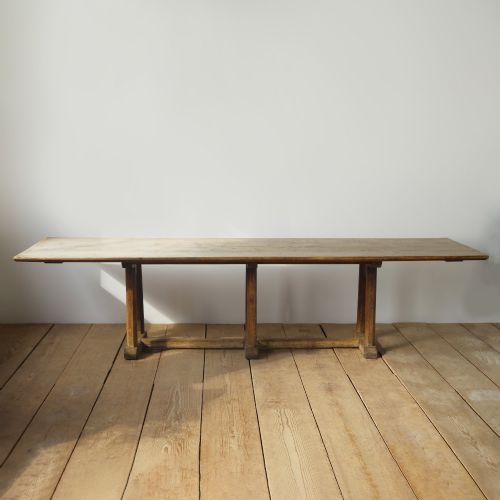
- A long, narrow dining table originally used in monastic dining halls and later adapted for domestic farmhouse use. These pieces typically feature strong stretcher rails running between heavy legs or trestle ends.
- Gateleg table
- A table with hinged leaves supported by legs that swing outward like a gate. This construction allows the surface area to expand or contract according to space and dining needs.
- Single plank top
- A table surface fashioned from one wide board of timber taken from a mature tree. This feature indicates substantial age and large original timber availability.
- Trestle ends
- Support structures positioned at either end of a table, connected by a central beam or stretcher. They provide robust load-bearing capacity without obstructing legroom along the sides.
- French provincial
- A style reflecting regional furniture making traditions in rural France. These pieces balance sturdy utility with understated decorative shaping on legs and aprons.
Large Rustic Dining Table: Frequently Asked Questions
How many people do they seat?
These large tables frequently accommodate eight to ten diners comfortably along their extended lengths. The absence of obstructive corner legs on refectory designs maximises seating capacity.
Buyers should measure dining spaces carefully to ensure adequate clearance around the table edges for chairs and movement.
Which woods are most common?
Oak and pine appear most frequently among the listed pieces, joined by elm, sycamore, and fruitwood. Oak provides dense, heavy durability while pine and fruitwood offer lighter domestic utility.
Each timber species brings distinct grain patterns and surface textures developed through decades of domestic service.
How do I care for the surface?
Routine maintenance involves wiping timber surfaces with a dry or slightly damp cloth. Periodic application of natural wax helps nourish the wood and protect against everyday wear.
Avoiding excessive moisture and direct heat sources preserves the historic finish and structural stability of antique timber.
Are extension mechanisms original?
Double extending tables feature integrated draw leaves or pull-out sections designed to lengthen the surface when needed. These systems utilise internal runners concealed beneath the main top.
Inspect the smooth operation of these runners to understand how the mechanical elements interact with the surrounding frame.
What defines a farmhouse table?
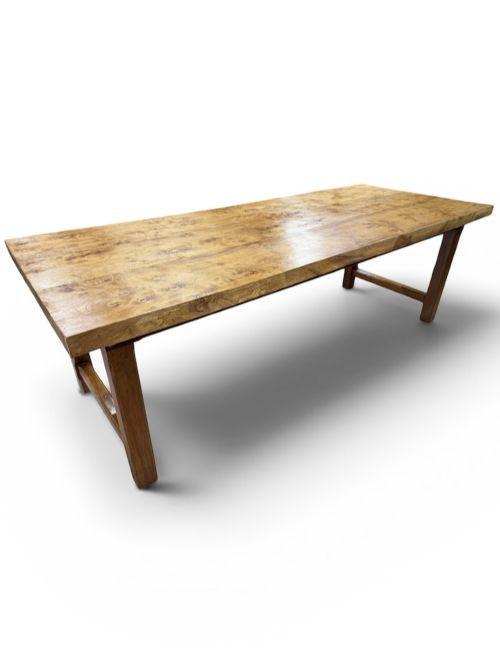
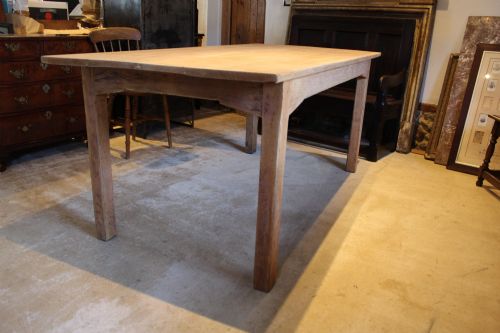
Farmhouse tables prioritize functional strength and honest carpentry over ornate decoration. Thick timber tops and sturdy stretcher bases reflect their origins in working kitchens and rural homesteads.
Over time, daily preparation and communal meals impart a distinct patina across the wooden boards.