
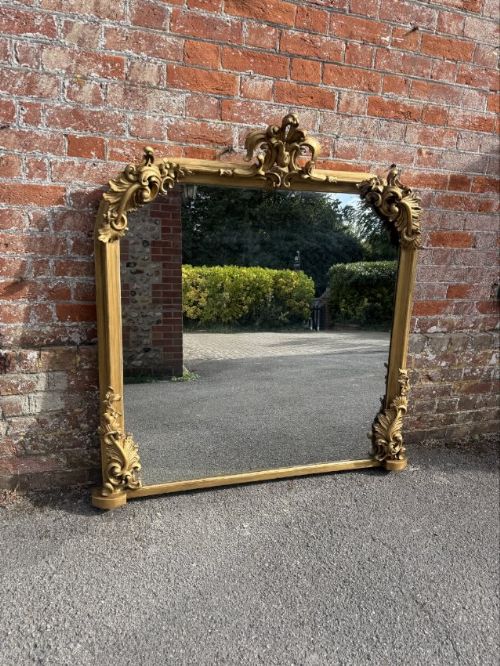
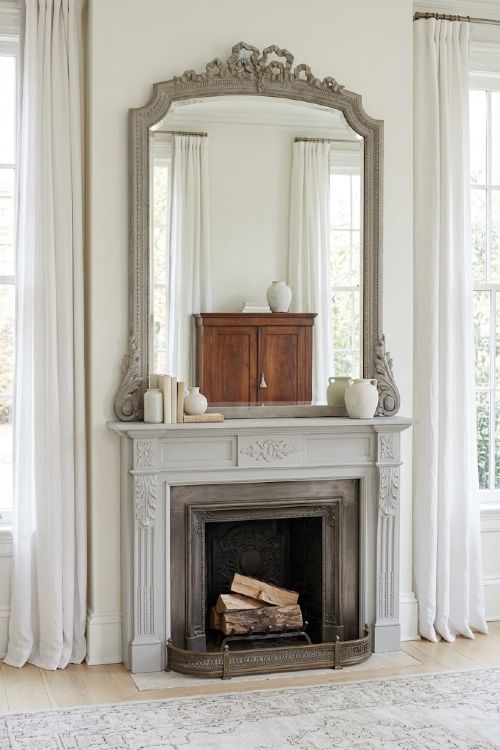
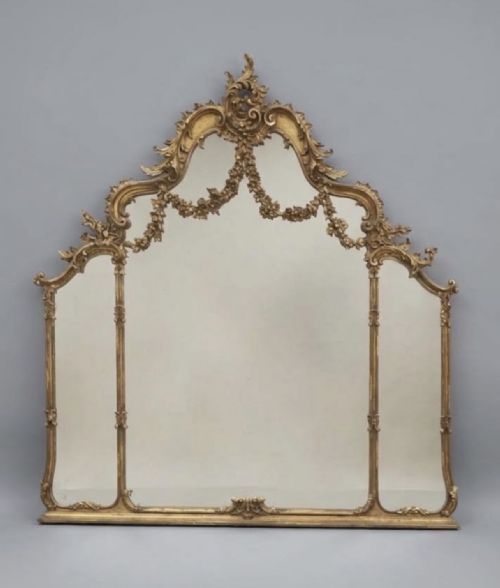

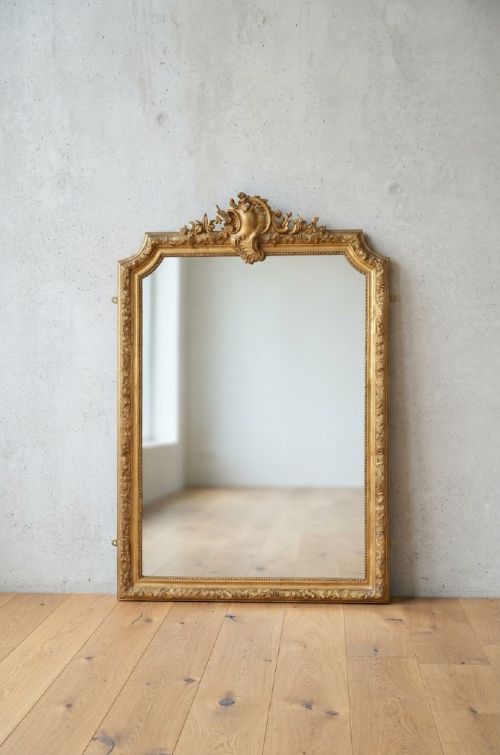
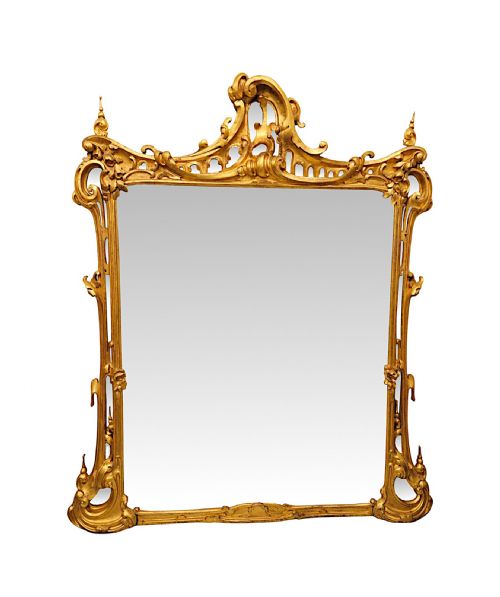
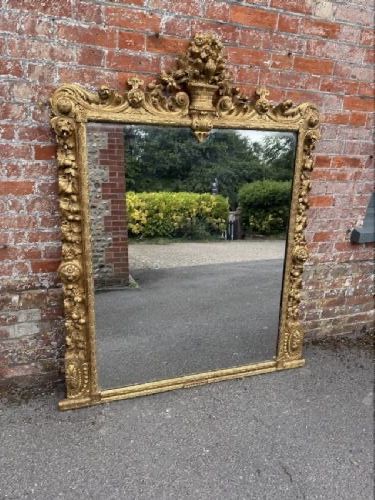
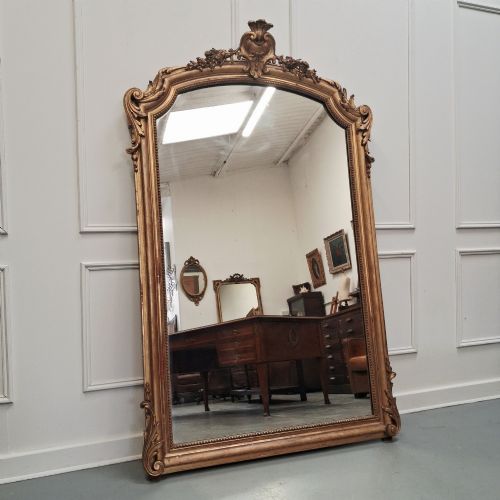
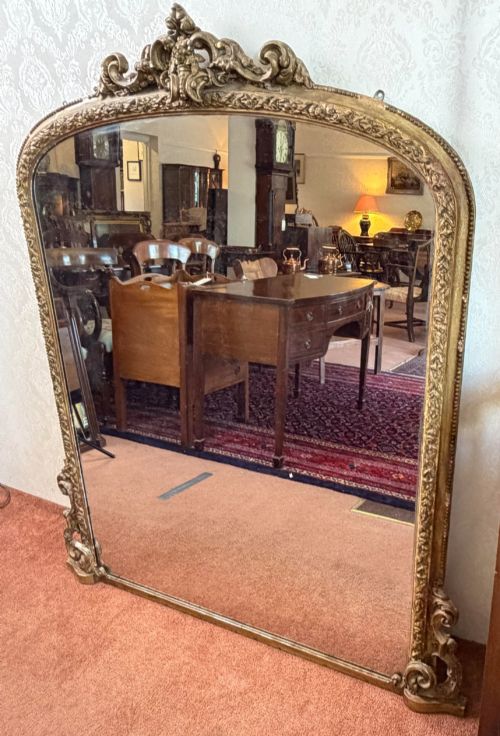
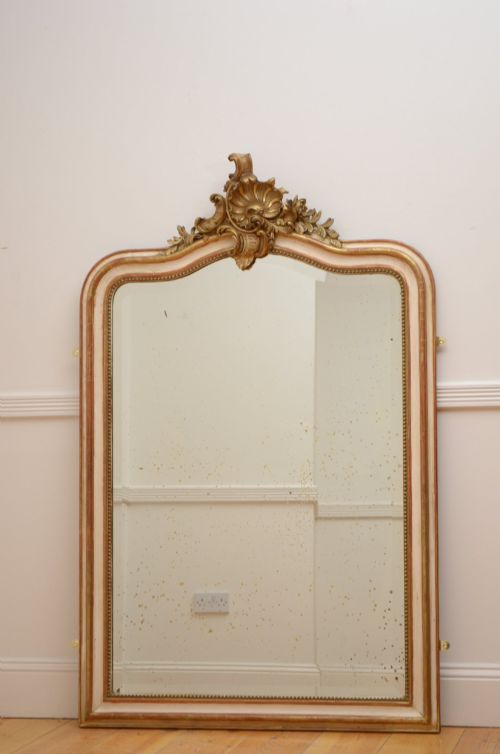
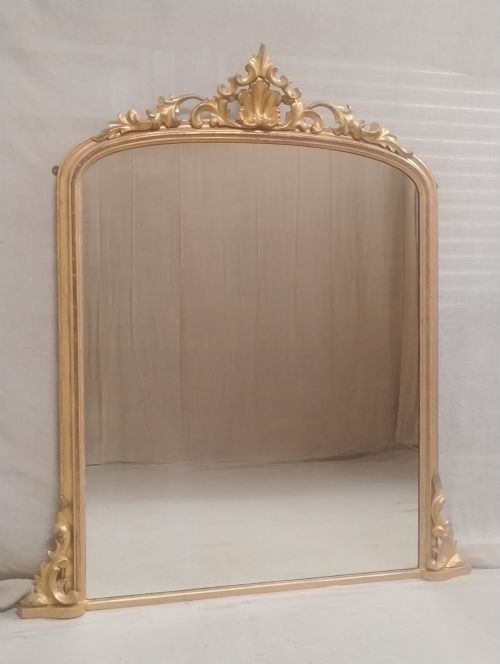
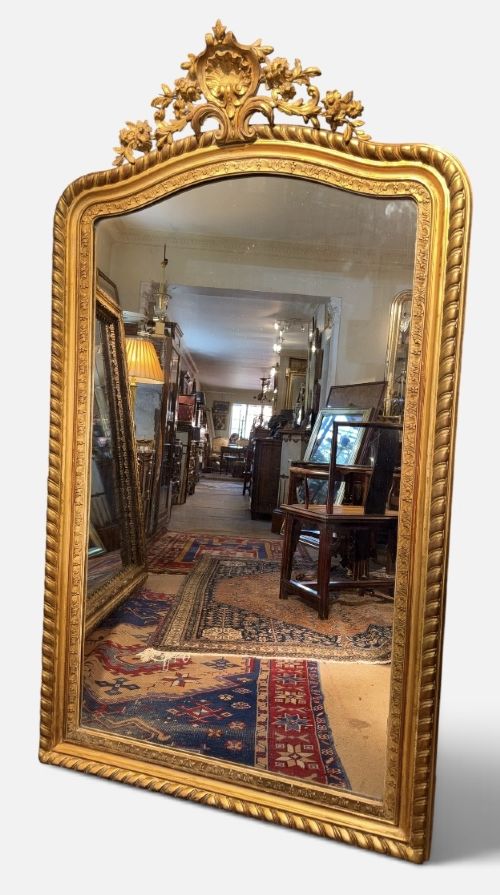
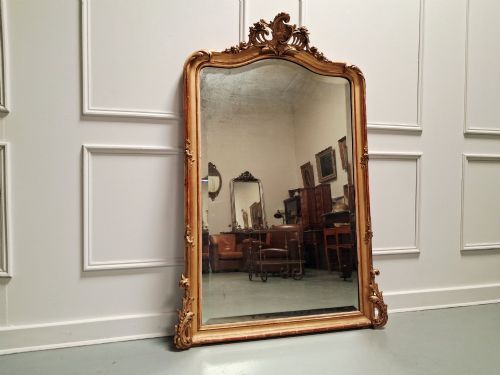
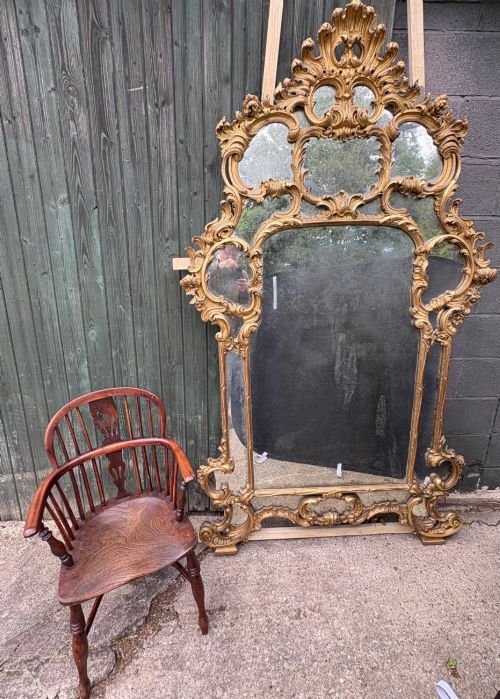
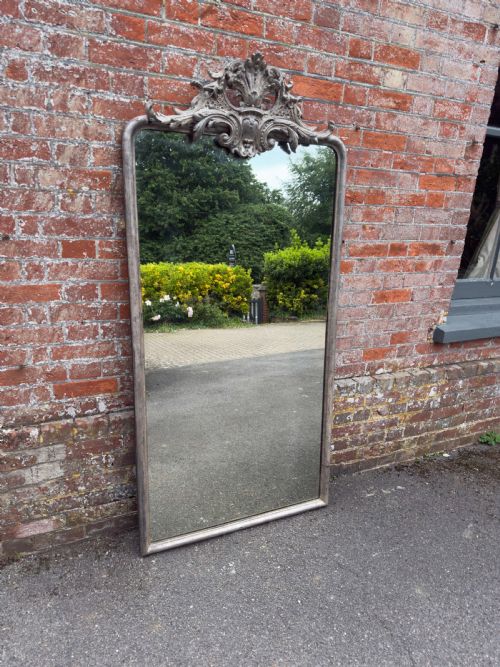

Large Rococo Mantel Mirror
These large rococo mantel mirror examples bring architectural presence and classical French or Victorian styling to a principal fireplace.
Large Rococo Mantel Mirror
A large rococo mantel mirror serves to anchor a room, designed specifically to sit above a fireplace hearth as an overmantel or wall mirror. These pieces originate predominantly from the nineteenth century, spanning periods such as the Victorian era, the French Second Empire, and the early twentieth century.
The dominant forms include arched top frames, crested designs, and trumeau mirrors that incorporate painted surfaces alongside gilding. Buyers encounter English and French interpretations, including specific regional expressions like Chinese Chippendale or Florentine styles.
Most examples measure significantly in height, often exceeding one and a half metres, designed to command attention within drawing rooms and country house reception spaces.
Materials and construction
Makers constructed the structural frames primarily from carved wood, utilising timber substrates such as pine alongside layered gesso to build up intricate surface ornamentation. Artisans then applied gold leaf, silvered finishes, or paint directly onto the gesso ground.
The optical component relies on heavy mirror glass fitted securely within the heavily decorated wooden housings. Many frames incorporate elaborate high-relief carving, sweeping mouldings, and central cartouches typical of the rococo revival aesthetic.
Country house mirrors often retain decades of accumulated patina hidden behind their monumental carved crests.
Distinctions in quality
Quality rests upon the depth, crispness, and hand-carved definition of the wooden and gesso ornament rather than superficial brightness. Superior pieces display fluid, organic scrollwork and secure joins where the structural timber meets the decorative moulding.
The proportion and integrity of the original gilding or painted finish determine the visual weight of the object. Heavier, monumental frames require sound internal construction to support the considerable combined weight of the timber and glass.
The Large Rococo Mantel Mirror Glossary
- Gesso
- A plaster-like mixture applied to wood frames to create a smooth surface for gilding or painting. Artisans mould and carve this material to achieve complex relief ornamentation.
- Giltwood
- Timber that has been coated with gold leaf or gold paint. This finish provides the characteristic metallic brilliance seen on nineteenth-century frames.
- Overmantel
- A large mirror or painting specifically scaled to hang on the wall directly above a fireplace mantelpiece. These pieces often feature horizontal or vertical proportions suited to chimney breasts.
- Trumeau
- A decorative wall mirror featuring a painted panel or artwork integrated into the upper section above the glass plate. This French decorative style gained popularity during the nineteenth century.
- Cartouche
- An ornamental tablet or frame resembling a rolled-up scroll, frequently placed at the apex of a mirror frame. It often serves as the central focal point for sculptural carving.
Large Rococo Mantel Mirror: Frequently Asked Questions
How do I hang a heavy mirror?
These substantial frames require professional wall anchoring directly into structural studs or masonry due to their considerable weight.
Hardware must distribute the vertical load evenly across the heavy wooden or gesso structure.
Where should I place an overmantel mirror?
Position the piece centrally above a fireplace mantel to reflect light and anchor the room's primary focal point.
Ensure the scale of the mirror complements the width of the fireplace surround and the ceiling height.
How can I date a nineteenth-century mirror?
Examine the construction methods, backing timbers, and the oxidation patterns visible within the mirror glass.
Stylistic markers such as Victorian swept frames or French Second Empire motifs also help narrow the period.