
Large Regency Wall Mirror
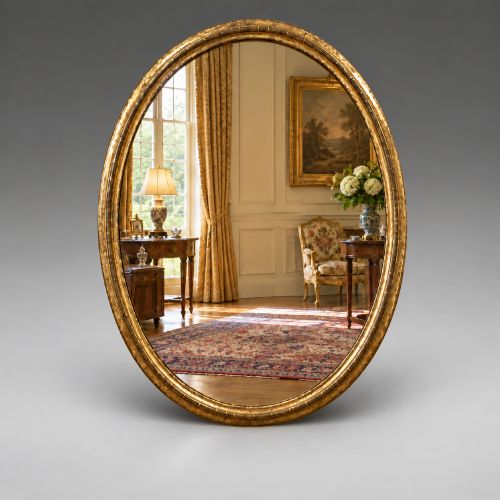
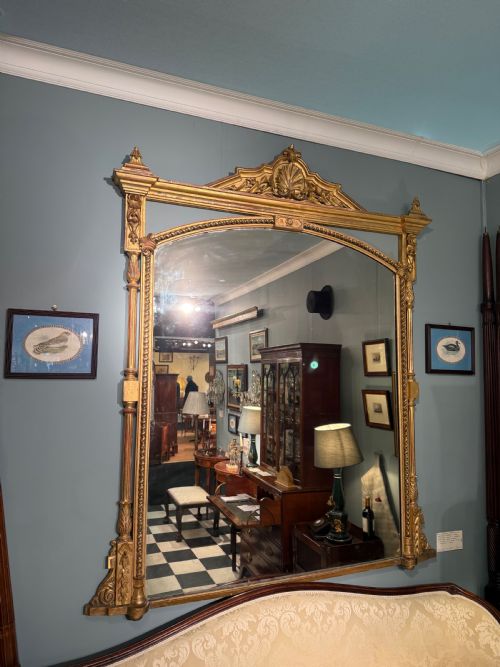
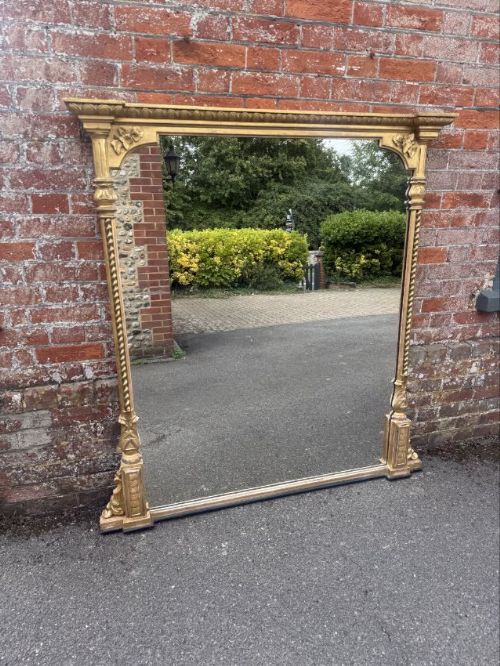
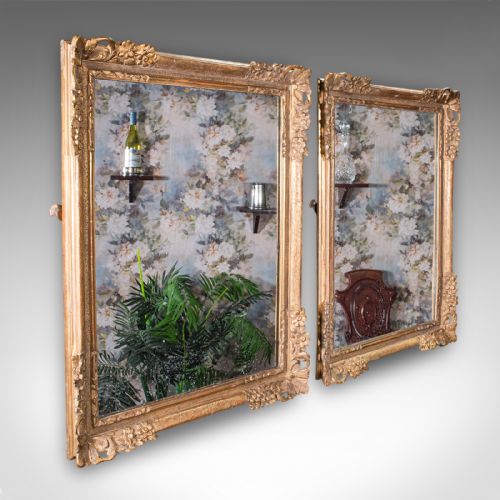
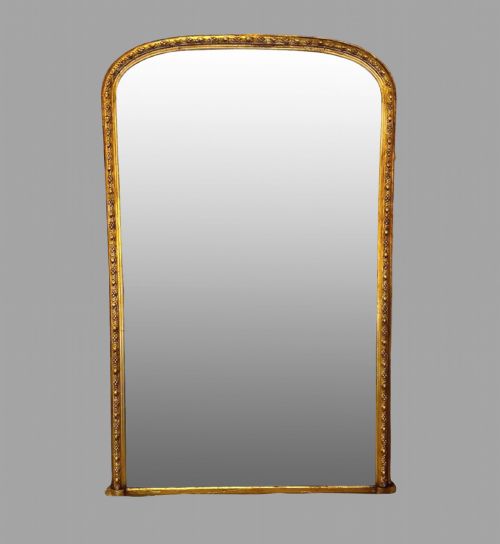
A large regency wall mirror brings monumental scale, burnished gold leaf, and architectural dignity to an interior.
Large Regency Wall Mirror
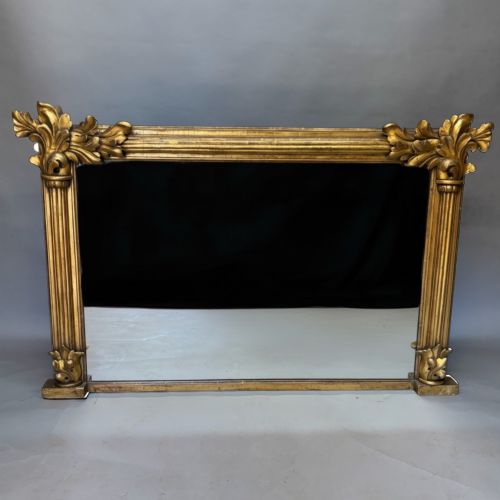
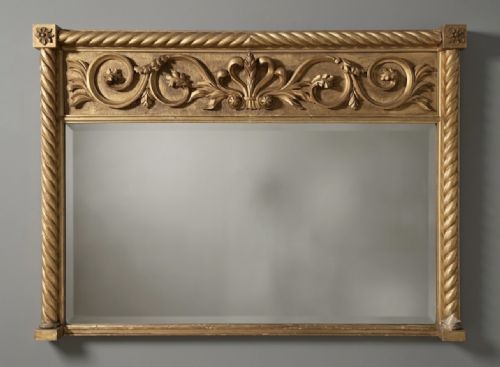
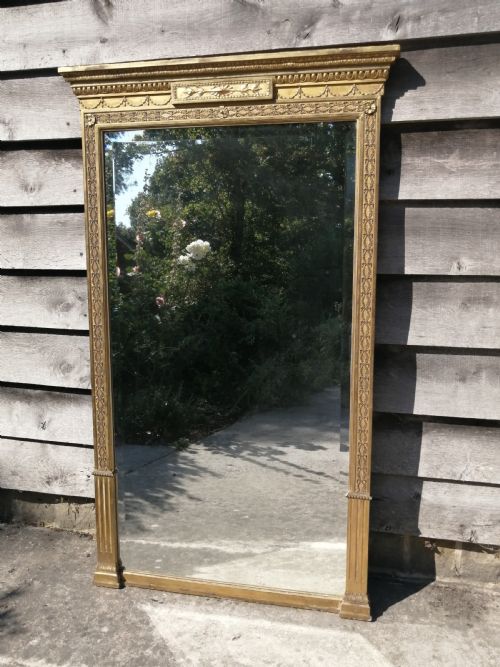
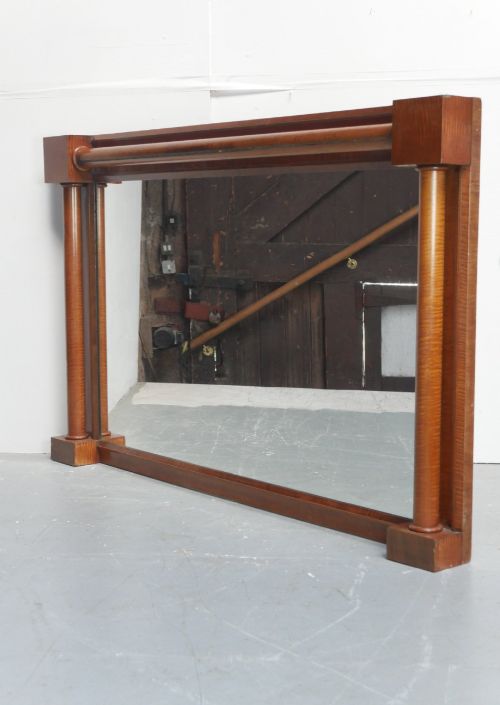
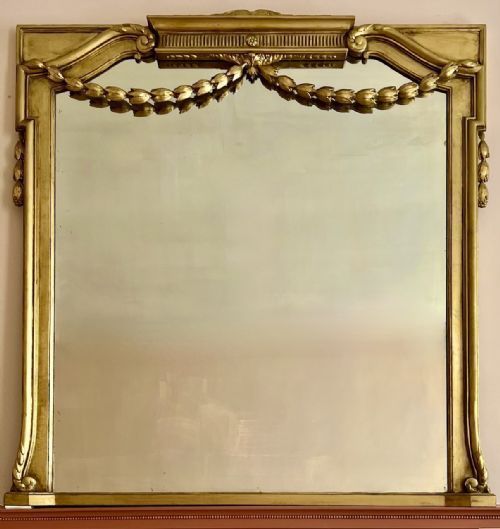
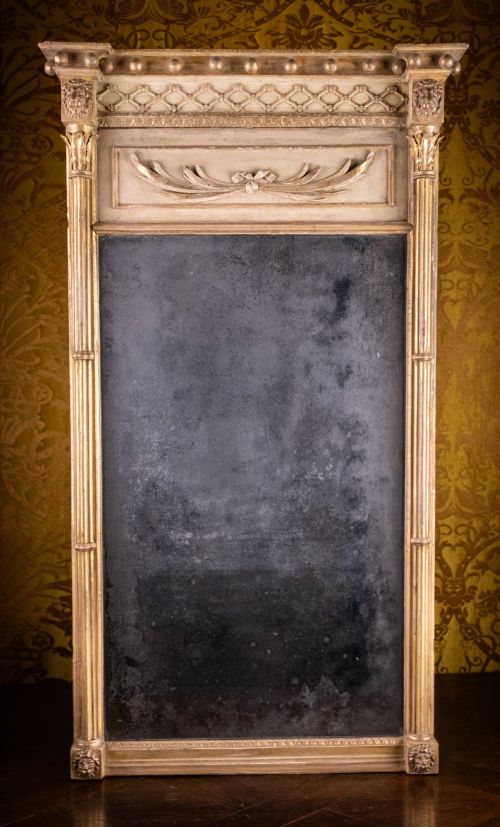
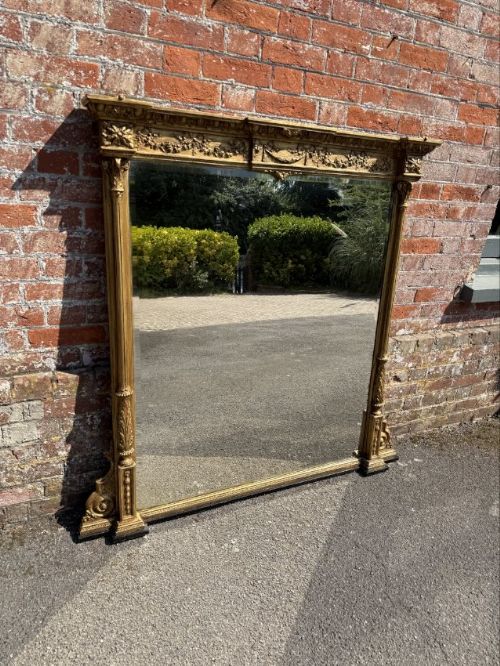
A large regency wall mirror encompasses grand overmantels, pier glasses designed to sit between windows, and circular convex forms that distort perspective delightfully.
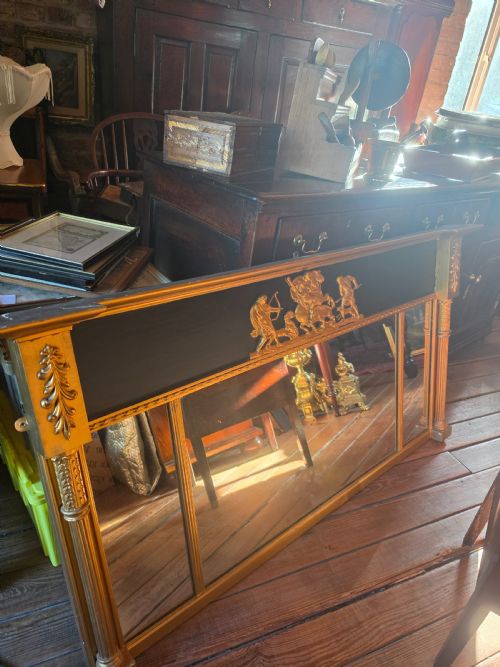
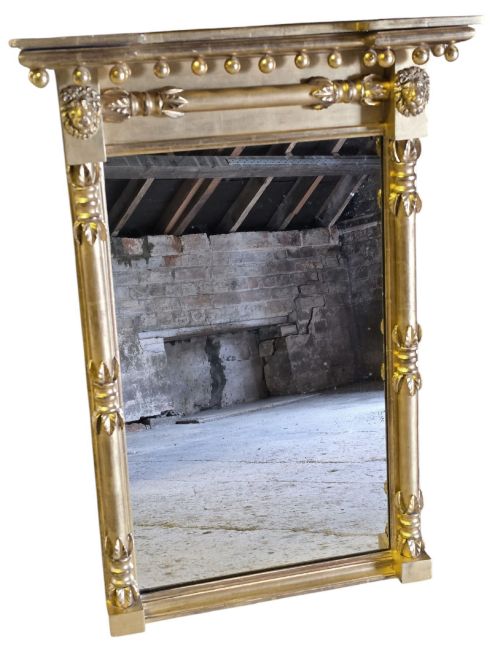
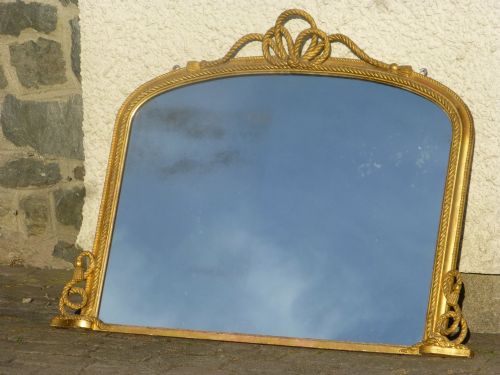
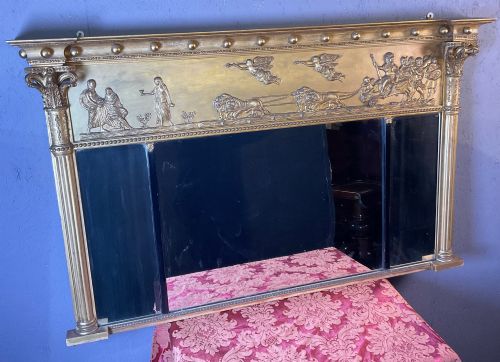
The version most frequently found on this page belongs to the nineteenth century, combining giltwood and gesso surfaces with classical motifs like rope twists, column supports, and lion masks.
These grand looking glasses served practical functions above fireplaces and dressing tables while reflecting natural light into darker rooms.
How they were made
Craftsmen shaped solid wood substrates before applying layers of gesso to carve intricate neoclassical details, rope twists, and columns with crisp precision.
Surfaces received fine applications of gold leaf or gilt finish, often paired with ebonised wood details or verre eglomise painted glass panels.
Mirror plates were cast or blown, resulting in original glass that frequently displays light foxing and historical depth.
A spread eagle perches proudly atop a convex mirror, keeping a watchful, gilded eye on the room below.
What varies in quality
The crispness of the carved wood and gesso ornamentation distinguishes ambitious architectural frames from simpler, flatter alternatives.
Survival of original mirror plates, gilding, and structural integrity without heavy restoration defines the upper tier of surviving examples.
The Large Regency Wall Mirror Glossary
- Giltwood
- Wood that has been coated with gold leaf. This finish produces a warm, reflective surface characteristic of formal period mirrors.
- Gesso
- A plaster mixture applied to wood frames and carved. It allows for sharp relief details and crisp ornamental moulding.
- Overmantel mirror
- A wide glass designed to hang above a fireplace mantelpiece. These pieces often span the full width of the chimney breast.
- Pier glass
- A tall mirror specifically proportioned to hang on the narrow wall space between windows. They frequently feature lower console tables or matching brackets.
- Verre eglomise
- A cold-painting and gilding technique applied to the rear of glass panels. It creates decorative borders or pictorial scenes above the main mirror plate.
Large Regency Wall Mirror: Frequently Asked Questions
Where should I hang a large overmantel mirror?
These large mirrors traditionally hang directly above a fireplace mantelpiece, anchored securely to masonry or solid wall studs to support their substantial weight.
Positioning them opposite a window maximises the reflection of natural light and visually expands the proportions of the room.
How do I identify original Regency mirror glass?
Original nineteenth-century plates typically exhibit subtle surface imperfections, gentle waviness, and light foxing where the silvering has aged gracefully.
Newer replacement glass appears completely uniform and lacks the characteristic depth and dark speckling found in period silvering.
What is the difference between pier glasses and overmantels?
Pier glasses are vertically proportioned to fit narrow expanses of wall between architectural openings such as windows or double doors.
Overmantels are built horizontally to dominate the wide wall space directly above a hearth or sideboard.
How do I care for antique giltwood frames?
Dust giltwood surfaces gently with a soft, dry brush to prevent abrasive particles from scratching the delicate gold leaf finish.
Avoid liquid cleaners entirely, as moisture can lift the gesso and accelerate the deterioration of the underlying wood and gilding.