
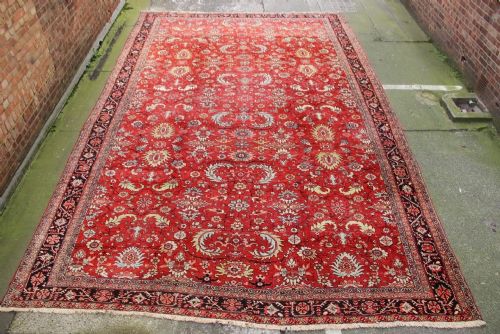
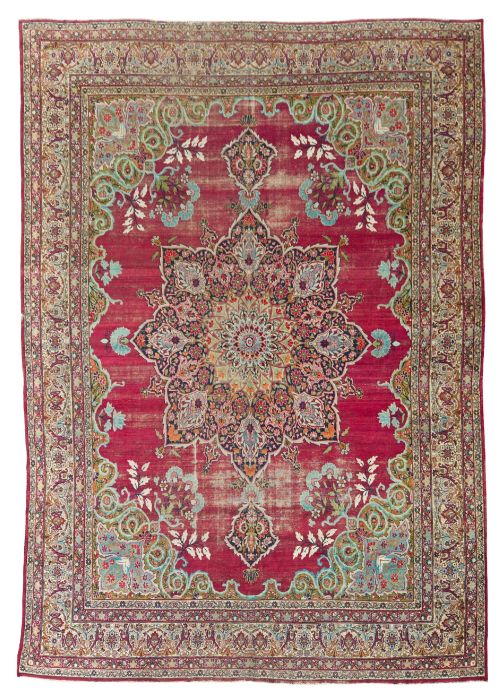
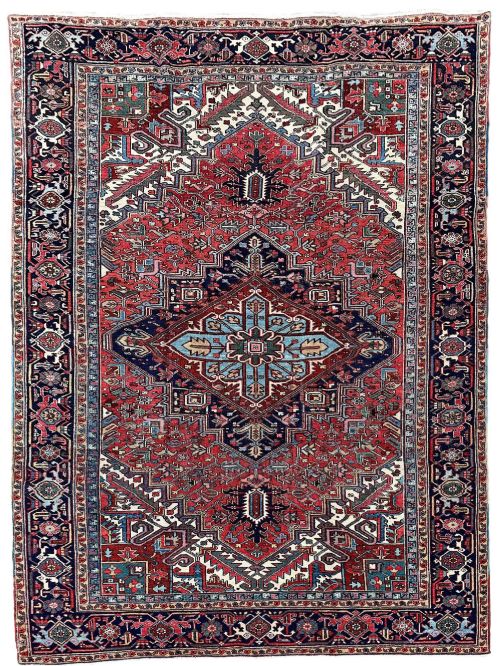
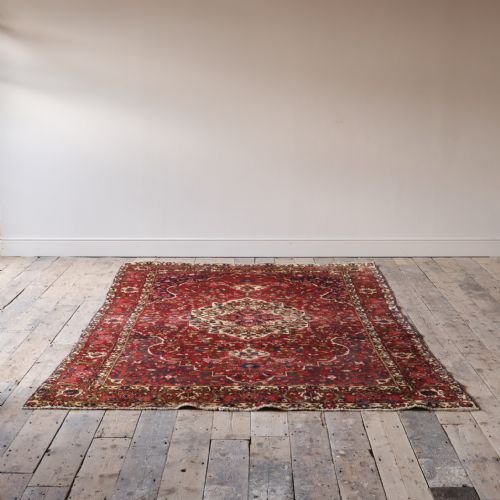

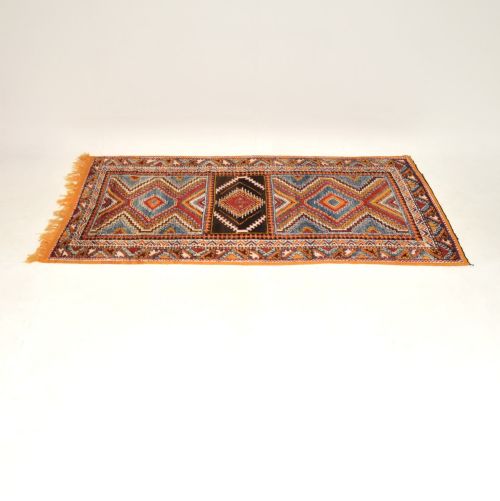
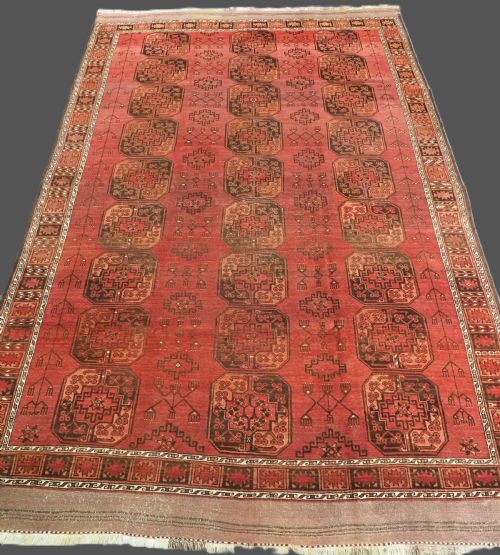
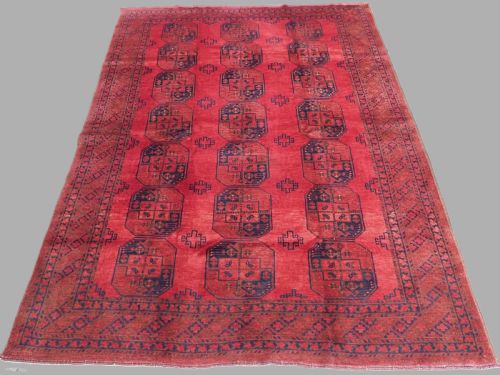
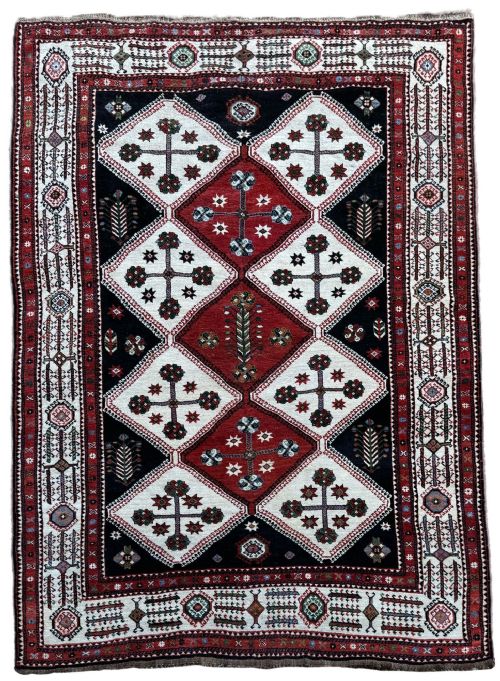

Large Red Wool Carpet
A large red wool carpet anchors a room with saturated warmth, offering heavy floor coverings woven across Persian and tribal workshops.
Large Red Wool Carpet
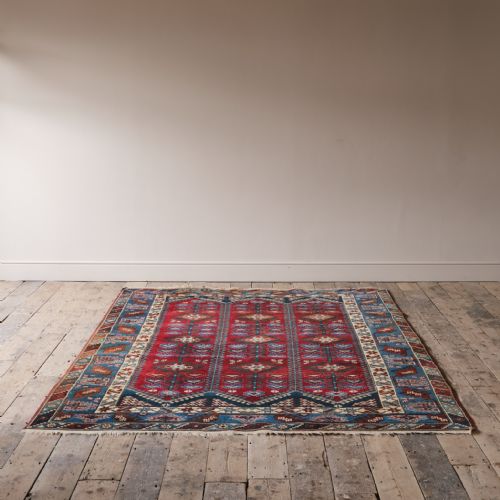
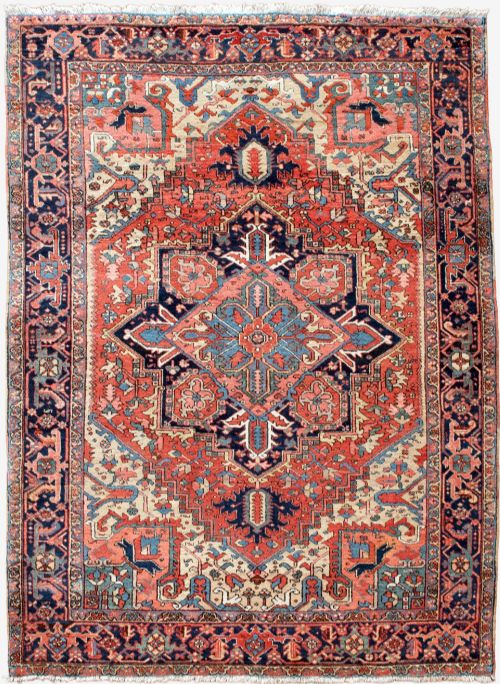
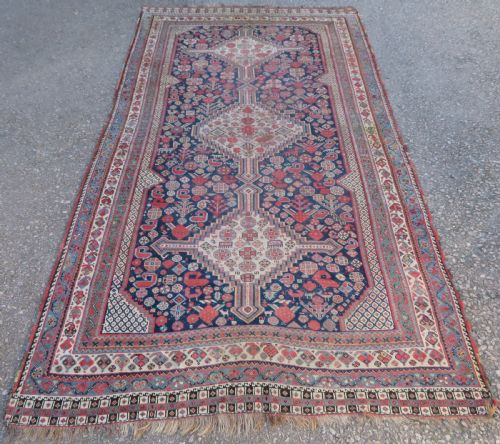
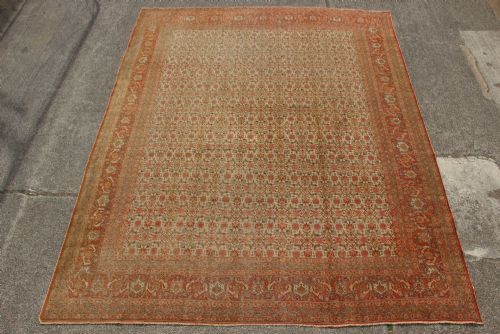
A large red wool carpet spans room sizes, village formats, and tribal room dimensions dating from the nineteenth century into the twentieth century. These floor coverings emerge primarily from Persian districts such as Heriz, Tabriz, Fereghan, and Serapi, alongside Turkmen, Afghan, and Anatolian tribal regions.
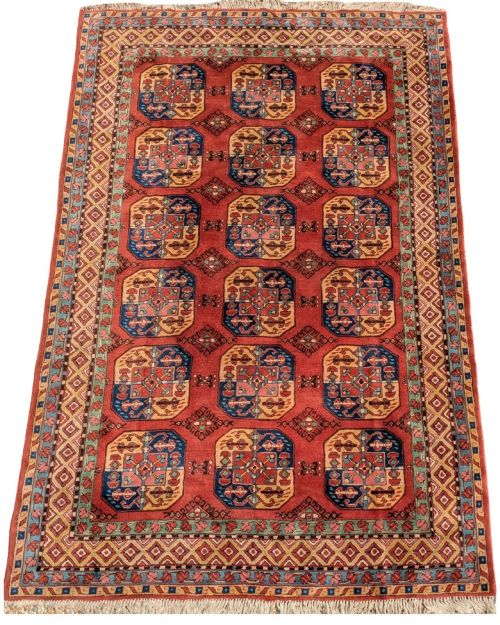
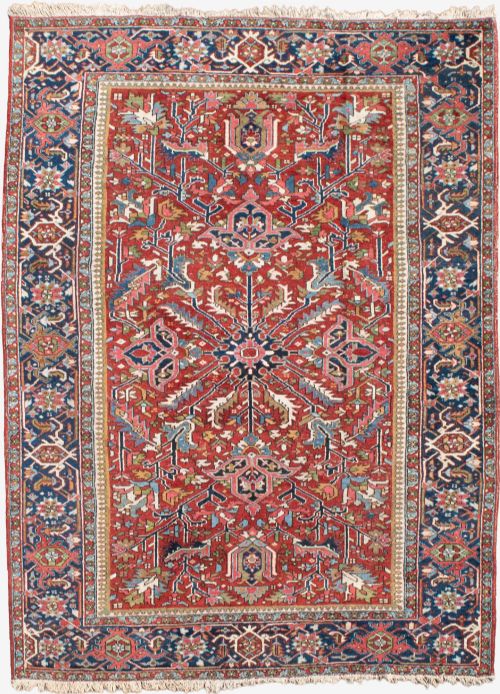
Buyers encounter distinct regional weaving traditions, from geometric Heriz medallions to repeating Turkmen gul motifs and open village fields. The palette centres on warm red grounds, balanced by indigo, ivory, and softer terracotta tones.
Forms range from broad square room formats to extended hallway runners and flatweave kilims. Pieces display traditional village compositions or formal workshop layouts executed in durable wool.
Materials and construction methods
Weavers construct these carpets using wool pile knotted onto sturdy cotton or wool foundations, employing hand-spun fibres for durability. Artisans utilise natural dyes to achieve deep red hues, blues, and contrast colours that mellow gradually over decades.
Village and tribal workshops knot foundations by hand, creating resilient structures designed for heavy domestic use. Flatweave kilims utilise interlocked warp and weft threads without pile, producing a lighter textile structure.
Some village weavers hid deliberate slight colour shifts in the red field to ward off the evil eye.
Assessing quality in antique carpets
Quality rests upon the fineness of the knotting, the stability of the foundation structure, and the integrity of the natural dyes. Tightly packed knots and robust wool retain structural clarity and resist heavy foot traffic better than loose structures.
Design precision and balanced proportions distinguish workshop masterworks from standard village output. Age-related wear alters the wool pile, yet original edge bindings and preserved end finishes indicate superior preservation.
The Large Red Wool Carpet Glossary
- Gul
- A repeating octagonal medallion motif common in Turkmen and Afghan tribal weaving. These geometric emblems often repeat in rows across the field.
- Warp
- The vertical foundation threads stretched tightly on the loom before knotting begins. Weft threads pass horizontally through these structural elements.
- Weft
- The horizontal threads interlaced between rows of knots to secure the pile. These foundation strands give the carpet body and lateral strength.
- Kilim
- A flatweave textile produced without pile by interlocking coloured warp and weft threads. These lightweight rugs serve distinct decorative and functional purposes.
- Medallion
- A central ornamental design motif placed in the middle of the carpet field. Heriz and Serapi formats frequently centre around this prominent geometric feature.
Large Red Wool Carpet: Frequently Asked Questions
How do I clean a large wool carpet?
Vacuum gently without a rotating brush roll to remove grit from the wool pile without pulling the knots.
Professional specialist rug cleaners handle deep washing to protect natural dyes and fragile cotton foundations.
Where should I place these carpets?
Room-size examples anchor sitting rooms, dining spaces, and libraries by defining furniture layouts and adding warmth beneath.
Longer formats and runners suit hallways and high-traffic corridors where durable wool withstands constant movement.
How do I date an antique carpet?
Examine the colour palette, wool texture, and structural materials to gauge whether a piece originates from the nineteenth or twentieth century.
Natural dye variations, hand-spun wool inconsistencies, and regional design traits help narrow the period of manufacture.
What is the difference between Heriz and Serapi?
Serapi carpets represent an earlier, finer Heriz subgroup featuring more open fields and subtle coloration.
Standard Heriz pieces display bolder geometric medallions and heavier outlines produced into the twentieth century.