
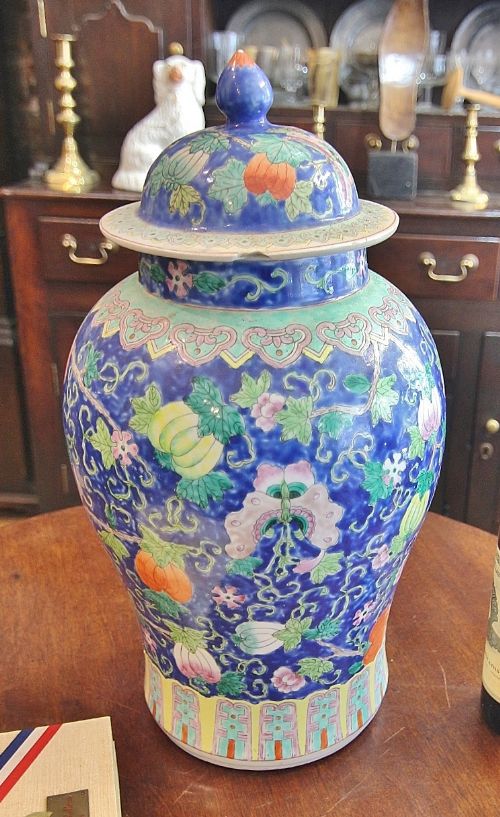


Large Porcelain Jars
Large porcelain jars bring monumental scale and intricate hand-painted detail to a room, drawing the eye with centuries of ceramic artistry.
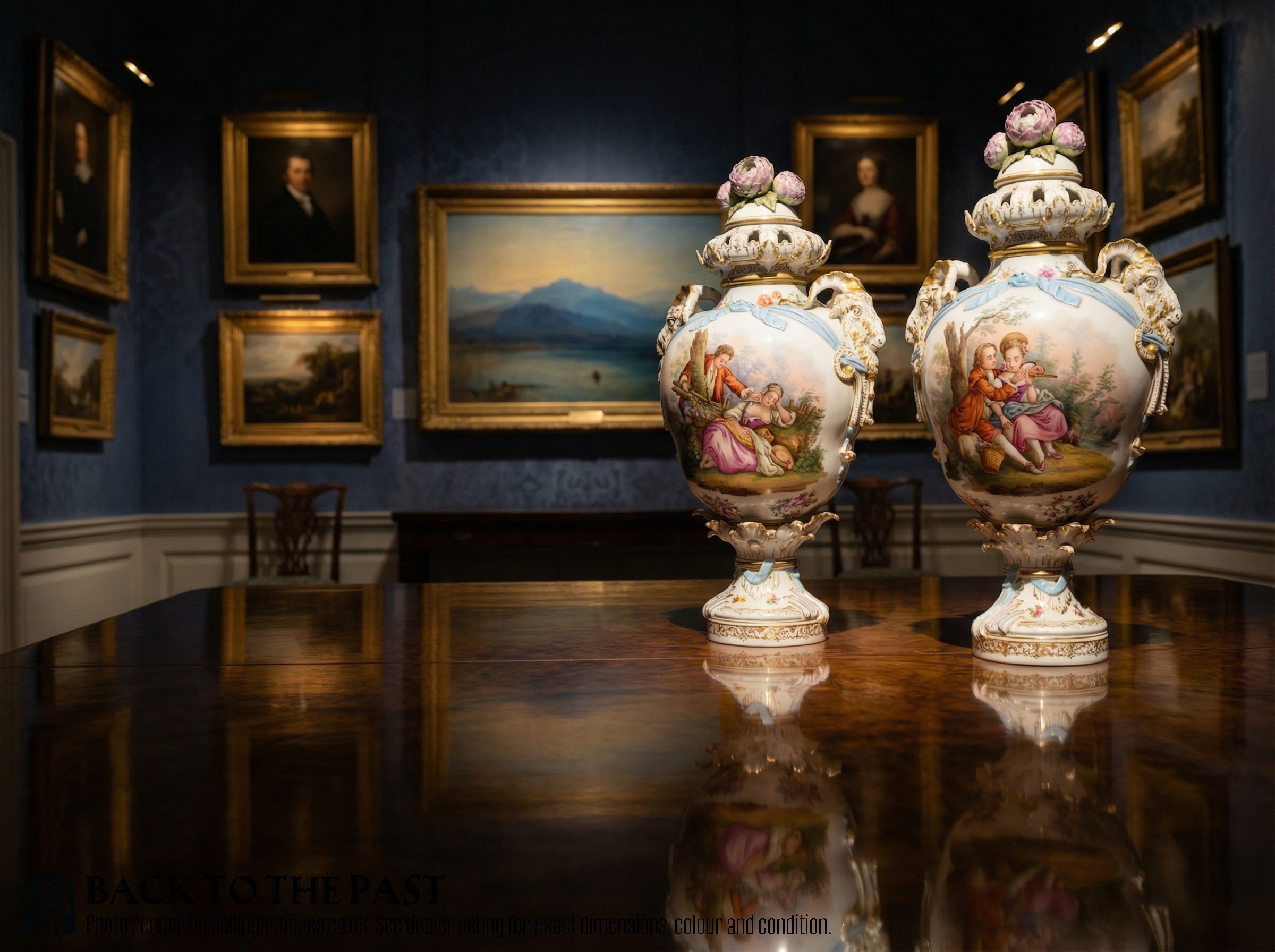
Large Porcelain Jars
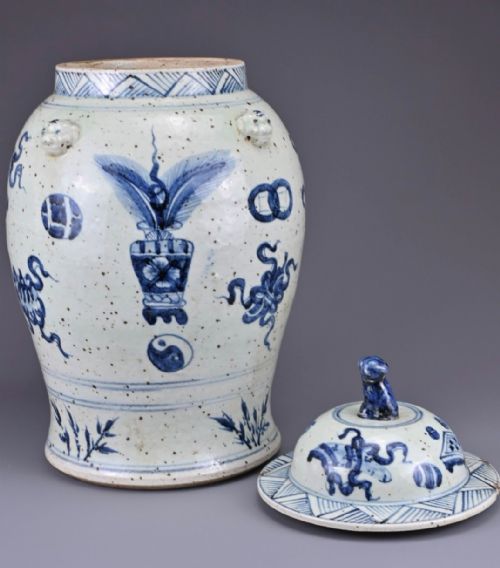
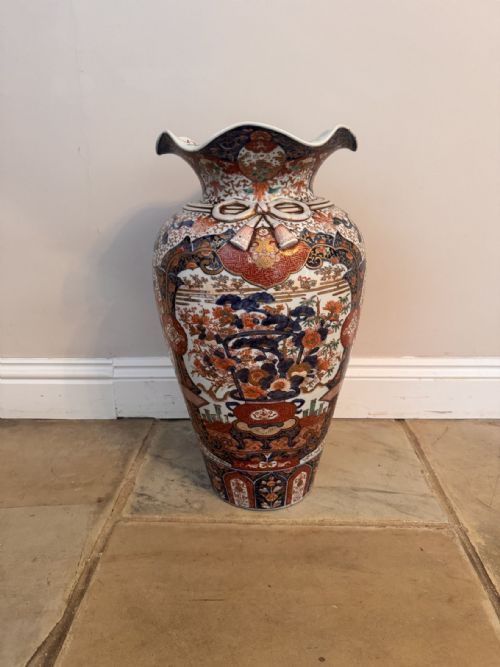
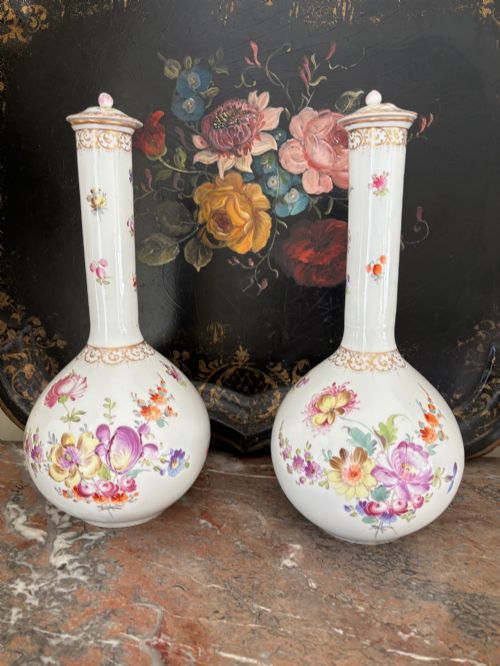
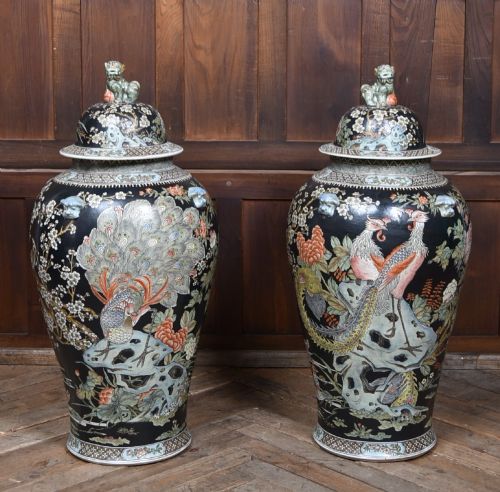
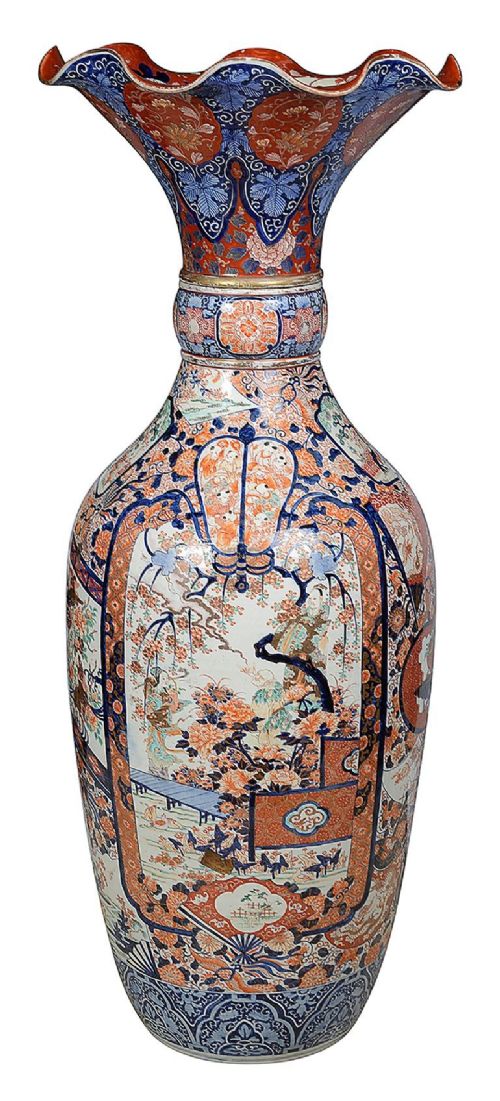
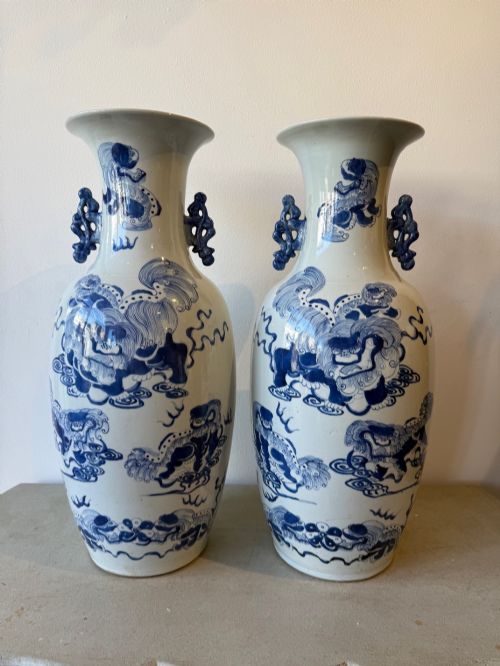
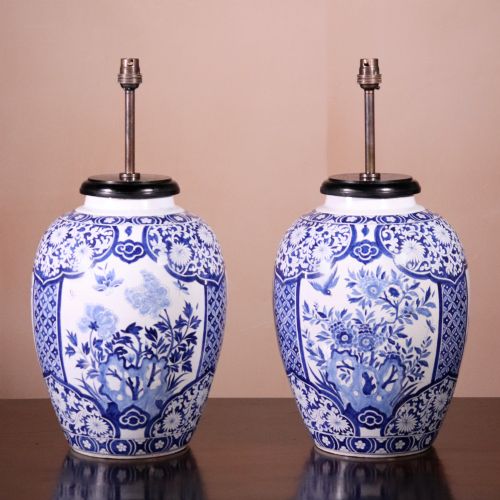
Large porcelain jars encompass grand floor-standing vessels, lidded ginger jars, and substantial display pieces originating from Asian and European kilns. When searching for large porcelain jars, buyers primarily encounter nineteenth-century Chinese blue and white pieces and Japanese Imari wares, alongside European interpretations from factories in France and Germany.
The forms range from bulbous temple jars and double-gourd silhouettes to monumental palace vases, many accompanied by matching covers. These vessels served historically as decorative focal points in stately homes and continue to function as striking interior accents or converted lamp bases.
How they were made
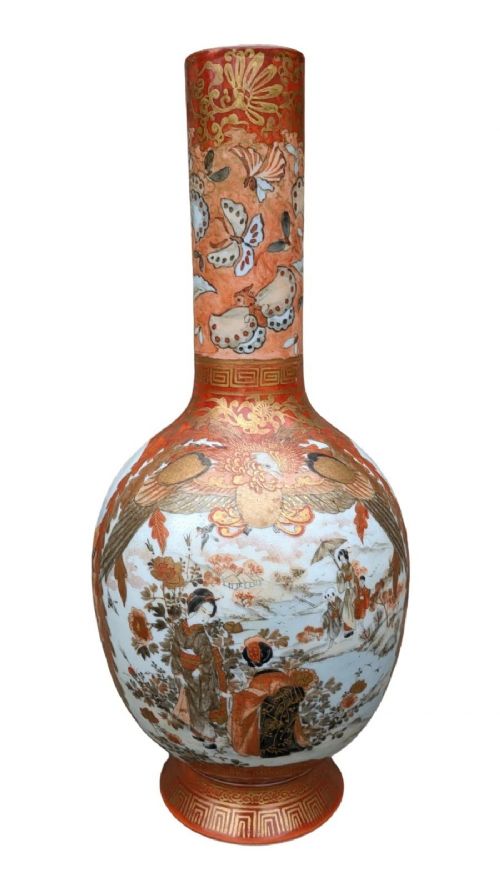
Potters shaped high-fired ceramic and porcelain bodies by hand or on large wheels before applying underglaze cobalt, enamel pigments, and occasionally gold leaf or gilding. Many examples incorporate intricate hand-painted floral, figurative, or landscape decoration requiring precise brushwork and multiple kiln firings.
European works frequently combined porcelain bodies with cast brass or gilt bronze mounts, creating elaborate handles and bases styled after French rococo or classical designs.
Listings feature nineteenth-century Chinese and Japanese porcelain alongside European copies from French and German factories.
What varies in quality
The standard of a piece rests heavily on the crispness and complexity of the hand-painted brushwork, particularly in detailed facial expressions, foliage, and geometric borders. Superior examples display vibrant, stable enamel palettes and rich underglaze blues without muddy blurring.
Structural ambition also dictates worth, as throwing and firing enormous porcelain cylinders without warping or cracking required exceptional technical mastery from the potter.
Sitzendorf·Masons·Makuzu Kozan·Helena Wolfsohn·Samson
The Large Porcelain Jars Glossary
- Imari
- A style of Japanese porcelain decorated in underglaze blue, iron red, and gold. This palette originated in Arita and became widely exported to Europe during the nineteenth century.
- Celadon
- A type of transparent green glaze applied to porcelain, often crackled. It mimics the appearance of jade and has a long history in Chinese ceramics.
- Ginger jar
- A wide-mouthed storage vessel with a rounded body and a flat or domed cover. Originally used in China for spices and oil, they became popular decorative cabinet items.
- Baluster
- A vase shape with a rounded lower portion tapering to a narrow neck and flared rim. The silhouette resembles architectural columns.
- Potpourri
- A decorated vessel featuring pierced lids designed to diffuse dried scents into a room. French nineteenth-century examples often combined porcelain bowls with gilt bronze mounts.
Large Porcelain Jars: Frequently Asked Questions
How do I style a large porcelain jar?
These vessels demand space and stand best on the floor, on sturdy pedestals, or atop heavy sideboards where their height can command the room.
Pair lidded jars with complementary ceramics or let them stand alone as sculptural centerpieces without overcrowding.
Are these jars waterproof for flowers?
While many nineteenth-century vessels were made as decorative lidded jars or temple pieces rather than utility vases, glazed porcelain interiors can hold water safely.
Take care with antique pieces that feature internal hairlines or unglazed bases to prevent moisture seepage onto furniture.
How do I distinguish Chinese from Japanese pieces?
Chinese wares of the nineteenth century frequently employ deep underglaze blue, celadon glazes, and formal imperial motifs such as dragons and lotus flowers. Japanese pieces from the same era often feature the distinct Imari palette of iron red and gold, or dense Satsuma crackle-glaze figural decoration.
Why do some jars have wooden bases?
Many large oriental jars were imported into Europe without fixed porcelain feet or were shaped with slightly rounded bottoms during the throwing process. Hand-carved wooden stands provided stability and elevated the vessel to protect delicate surfaces.