
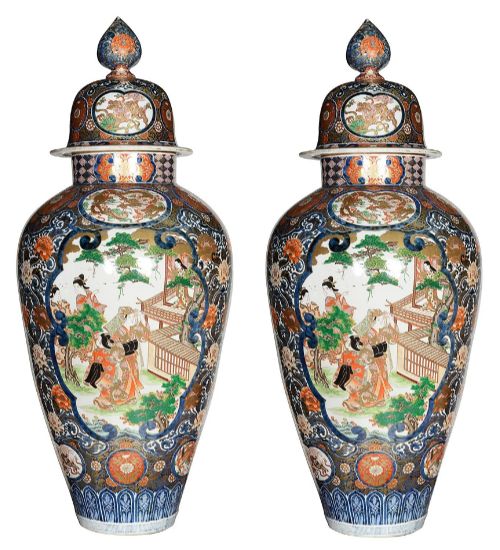
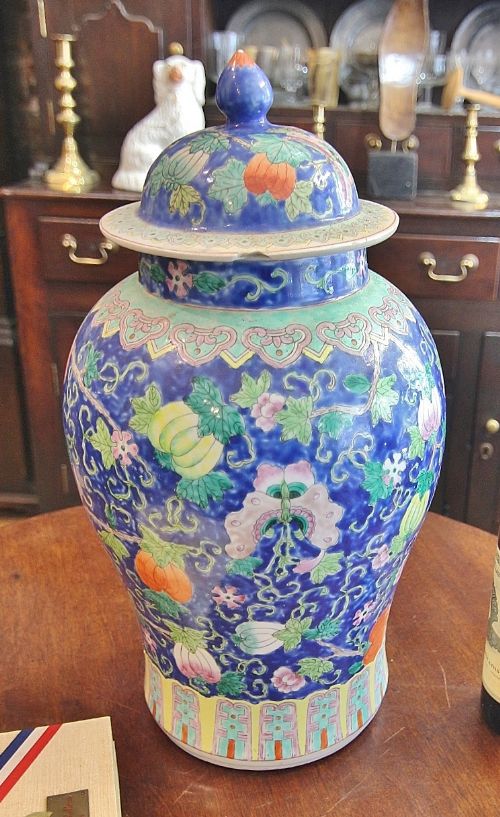


Large Polychrome Porcelain Jar
These large polychrome porcelain jar pieces are substantial vessels carrying vibrant painted palettes, offering a commanding presence in any room.
Large Polychrome Porcelain Jar
When you search for a large polychrome porcelain jar, you encounter substantial covered vessels and baluster vases created across the nineteenth and twentieth centuries. These impressive objects draw the eye through their scale and colourful painted surfaces, spanning diverse origins from China and Japan to European manufactories.
You are most likely to meet nineteenth-century Chinese Cantonese and Japanese Satsuma, Imari, or Kutani examples on this page, alongside twentieth-century Chinese pieces and German tobacco jars. They take the form of lidded vases, temple jars, and monumental floor pieces designed to dominate an interior space.
The aesthetic heritage behind these items stretches from the Qing Dynasty and Japanese Meiji periods to European Rococo Revival and Victorian interpretations. Each piece reflects the specific decorative traditions and firing techniques of its workshop and era.
How they were made
Makers formed these pieces from hard-paste porcelain or earthenware bodies, shaping them into robust vessels capable of supporting thick glazes and detailed overglaze enamel work. The foundational ceramic body provided a stable, white surface for subsequent painting stages.
Artisans applied vibrant polychrome enamels and gold leaf or gilding by hand, firing the pieces multiple times to fuse the mineral colours permanently to the glaze. This meticulous layering produced the rich surface textures and brilliant metallic accents characteristic of these jars.
The listings show diverse origins spanning nineteenth-century Japan, Qing Dynasty China, and European factories utilising porcelain, earthenware, and gold leaf.
What varies in quality
The distinction between tiers of work lies in the precision and complexity of the hand-painted overglaze enamel and the crispness of the porcelain form. Superior examples display exceptionally detailed brushwork, well-defined gilding, and balanced proportions across monumental scales.
Weight, potting thickness, and the refinement of the glaze also separate ordinary production from masterwork output. Pieces featuring intricate figural scenes or deeply saturated colour palettes generally demonstrate greater artistic ambition during manufacture.
The Large Polychrome Porcelain Jar Glossary
- Polychrome
- Decorated in several colours. This multi-coloured approach allowed artisans to create complex pictorial and floral scenes across the ceramic surface.
- Overglaze enamel
- Glassy pigments applied on top of a fired and glazed surface, then fixed with a lower temperature second firing. This technique produces raised, vibrant details that catch the light.
- Gilding
- The application of gold leaf or gold powder to the ceramic decoration. It highlights specific design elements and adds a reflective, luxurious quality to the piece.
- Baluster
- A vase or jar shape with a rounded body that tapers toward the base and swells near the lower centre. It provides a stable, pleasing silhouette for elaborate surface painting.
- Hard-paste porcelain
- A durable ceramic material composed of kaolin and petuntse, fired at very high temperatures. It results in a dense, vitrified body that resists scratching and moisture.
Large Polychrome Porcelain Jar: Frequently Asked Questions
What is a temple jar?
Temple jars are large covered vessels originally produced in China for domestic display and export markets during the Qing Dynasty and later eras. Their generous proportions and fitted lids made them striking decorative centrepieces.
Over time, collectors repurposed these monumental containers as standalone ornaments or paired them with matching vases to anchor grand architectural interiors.
How do I date a porcelain jar?
Dating relies on examining the painting style, glaze characteristics, and any baseline potting traits that align with known periods like the Meiji era or nineteenth-century production. Comparing the specific palette and subject matter to documented workshop examples helps narrow down the decade.
Materials such as hard-paste porcelain and the specific chemical makeup of overglaze enamels also offer reliable clues to a piece's age and geographical origin.
Where should I display a large jar?
These substantial vessels demand a secure, prominent location where their scale and colourful decoration can be fully appreciated without obstruction. Floor-standing monumental pieces work well in spacious hallways or corners, while smaller lidded jars suit heavy sideboards and mantels.
Ensure the supporting surface is stable and positioned away from high-traffic areas to protect the delicate overglaze enamels and gilding from accidental knocks.
How do I clean polychrome porcelain?
Dust the surface regularly with a soft, dry feather duster or a clean, dry microfibre cloth to prevent particulate buildup on the glaze and overglaze enamel. Avoid harsh chemical cleaners or abrasive scouring pads that can damage delicate gold leaf and painted details.
If deeper cleaning is necessary, use a damp cloth with mild soap, testing a small, hidden area first, and dry the vessel immediately with a lint-free towel.