


Chinese Export Porcelain Jar
A chinese export porcelain jar brings handsomely painted domestic and export motifs from the eighteenth and nineteenth centuries straight into a room.
Chinese Export Porcelain Jar
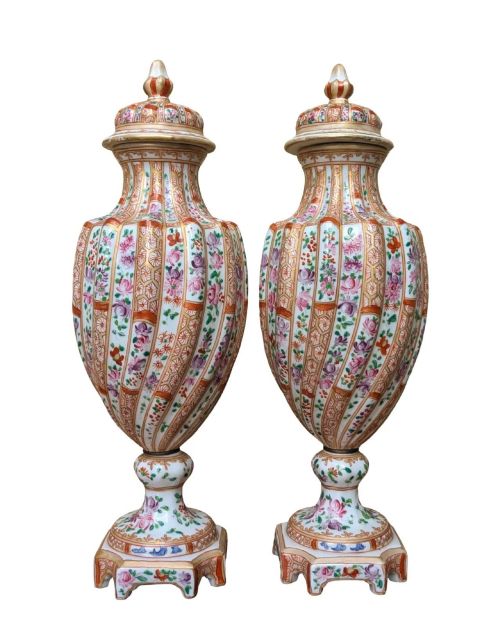
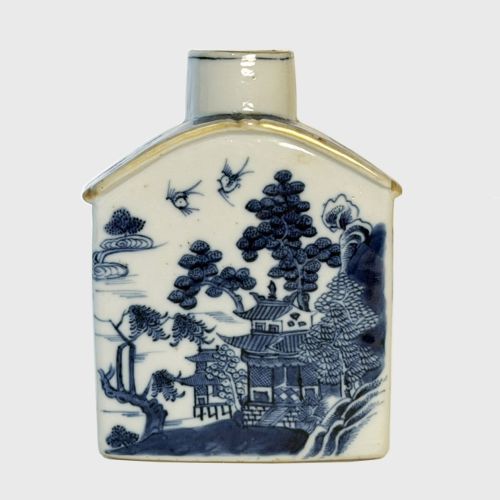
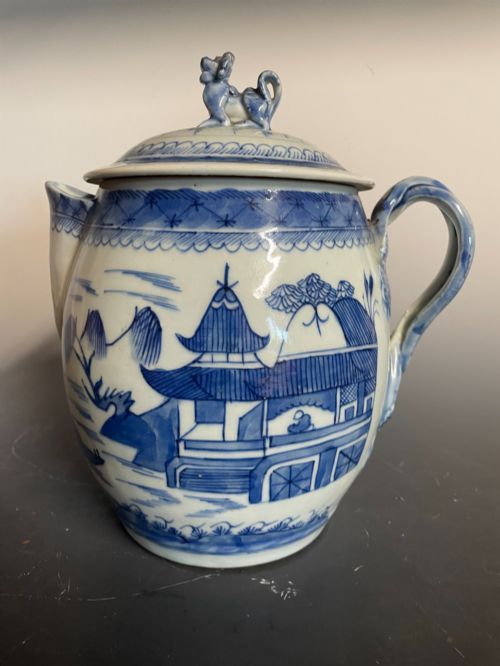
A chinese export porcelain jar covers lidded vessels, baluster shapes, and tea caddies produced for Western markets during the eighteenth and nineteenth centuries. The pieces on this page span the Qing dynasty, Victorian eras, and eighteenth century production, incorporating both authentic export goods and European interpretations.
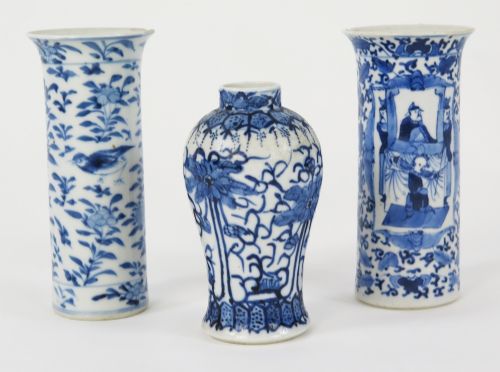
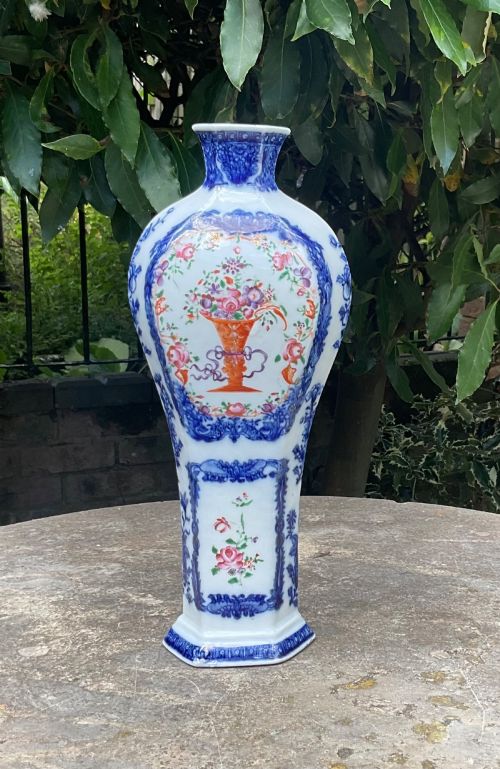
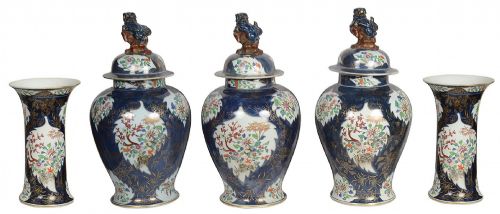
Buyers will frequently encounter nineteenth-century blue and white prunus blossom designs, Canton famille rose pieces, and larger baluster vases alongside table lamps adapted from older vessels. Forms range from tea caddies and ovoid lidded jars to monumental vases and garniture sets.
The aesthetic bridges traditional Chinese ceramic traditions with the decorative preferences of European buyers. Many examples exhibit the characteristic palettes of famille rose, famille verte, and cobalt blue against hard-paste porcelain.
Materials and construction
Makers utilised hard-paste porcelain as the primary ceramic body, fired at high temperatures to achieve a dense, durable material suitable for intricate hand-painting. Artisans applied vibrant enamels, gold leaf, and cobalt blue underglazes directly to the surface before secondary firings.
Many surviving examples incorporate added mounts of brass, ormolu, or wooden elements such as padouk wood bases, reflecting their later adaptation into lamps or decorative furnishings in European interiors.
Listings feature hard-paste porcelain vessels utilising cobalt blue underglaze, famille rose enamels, and ormolu mounts across the eighteenth and nineteenth centuries.
Judging quality in export ceramics
Quality rests in the precision of the hand-painted brushwork and the clarity of the enamel colours across the body. Pieces with finely delineated figures, crisp floral reserves, and well-preserved gilding sit at the upper end of the range.
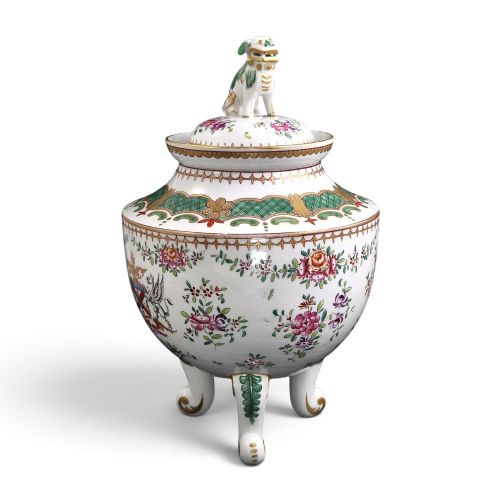
The integrity of the porcelain body and the crispness of moulded details, such as lion-dog finials or applied handles, also distinguish superior examples from standard production pieces.
Samson Paris
The Chinese Export Porcelain Jar Glossary
- Famille Rose
- A major palette of Chinese ceramic enamels introduced in the Qing dynasty, dominated by opaque pink or rose colours. This style allows for subtle tonal shading in floral and figural scenes.
- Famille Verte
- An enamel palette characterised by vibrant green hues, used extensively on Qing dynasty porcelain. It often appears alongside iron red, yellow, and blue pigments.
- Hard-Paste Porcelain
- A dense, vitrified ceramic material composed of kaolin and petuntse. It forms the robust body characteristic of true Chinese export pieces.
- Canton
- A style of export porcelain decorated in bustling famille rose patterns featuring panels of figures, birds, and flowers. Production centered in the port city of Guangzhou.
- Armorial
- Ceramics painted with specific European family coats of arms, commissioned specially through trade routes. These custom items represent a distinct category of export ware.
Chinese Export Porcelain Jar: Frequently Asked Questions
How do I date a chinese export porcelain jar?
Dating relies on stylistic markers, palette characteristics, and recorded reign marks, though many nineteenth-century pieces reference earlier periods like the Qianlong or Kangxi eras.
Examining the foot rim, glaze consistency, and enamel wear helps differentiate eighteenth-century production from later nineteenth-century revival and European Samson wares.
Were these jars made for domestic use in China?
Most pieces matching this description were manufactured specifically for export to Western markets through trading ports like Canton. The forms and decorative schemes often accommodated European tastes and functional requirements.
Over time, many of these vessels were later adapted in Europe into table lamps or mounted with ormolu for domestic interiors.
What is the difference between famille rose and famille verte?
Famille rose relies on an opaque pink enamel introduced during the Qing dynasty, permitting delicate shading and intricate floral rendering. Famille verte is defined by a dominant green palette combined with iron red and other contrasting pigments.
Both styles were widely utilised on export porcelain jars and vases destined for European collectors.
How should I care for an antique porcelain jar?
Clean the surface gently with a soft, dry cloth to remove dust, avoiding harsh chemical cleaners that can damage delicate hand-applied enamels and gold leaf. If the piece is mounted as a lamp or fitted with fabric and brass elements, keep it away from direct moisture.
Display the vessel away from areas of heavy traffic or vibration to protect fragile porcelain bodies and fitted lids.