

Large Pine Cupboard
When you search for a large pine cupboard, you find substantial storage furniture built from softwood for domestic and institutional use across centuries.
Large Pine Cupboard
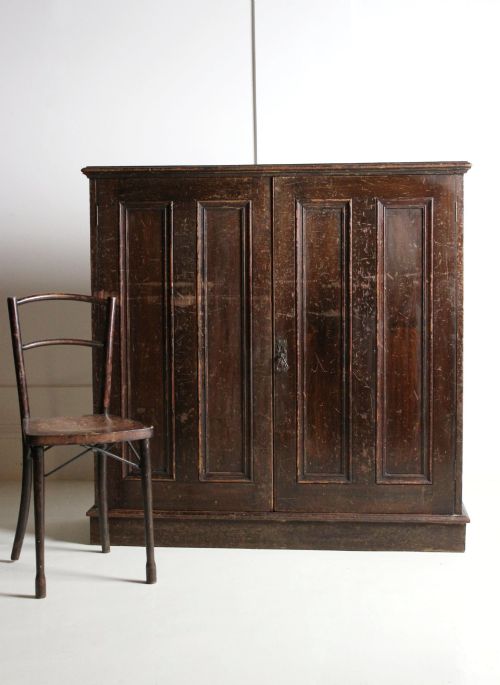
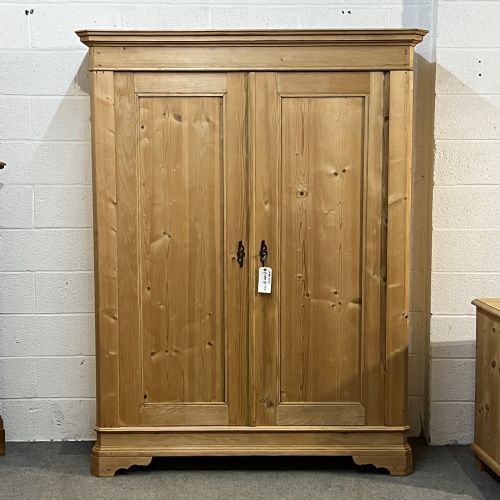
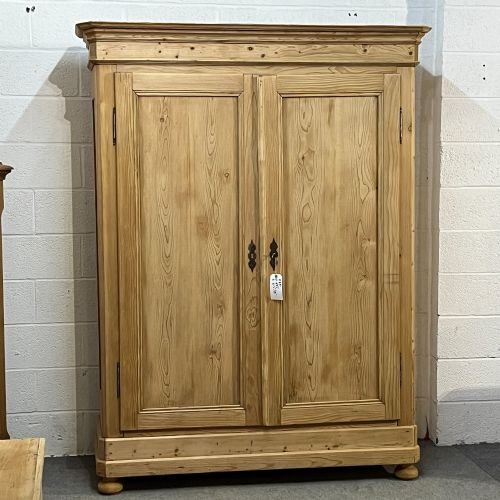
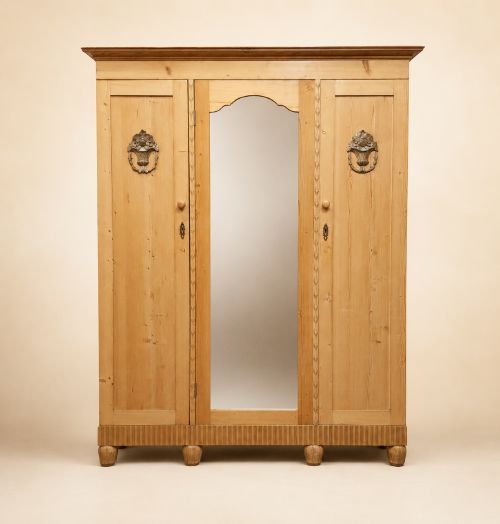
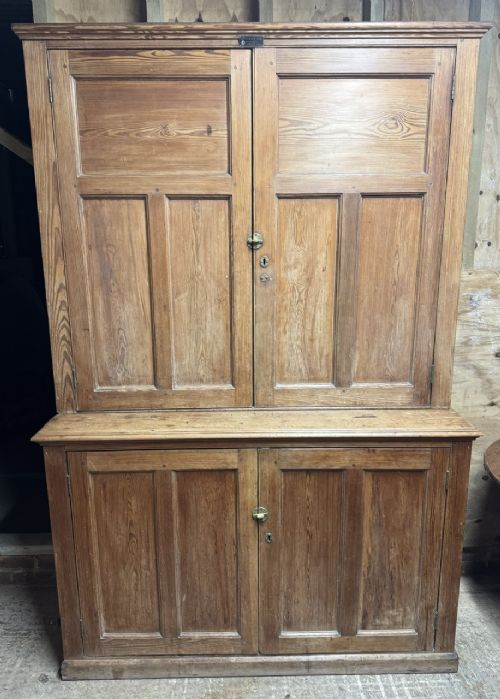
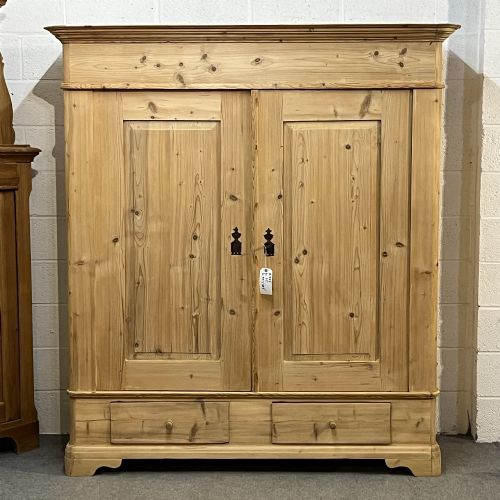
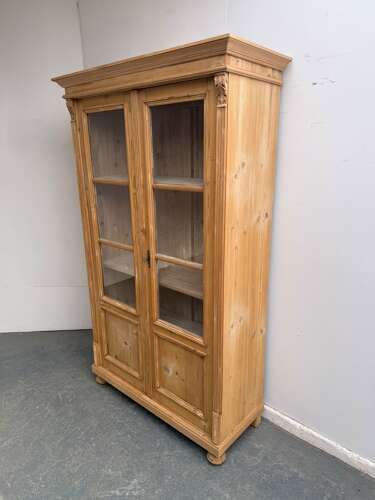
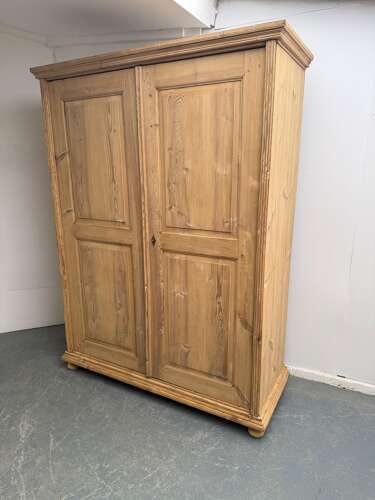
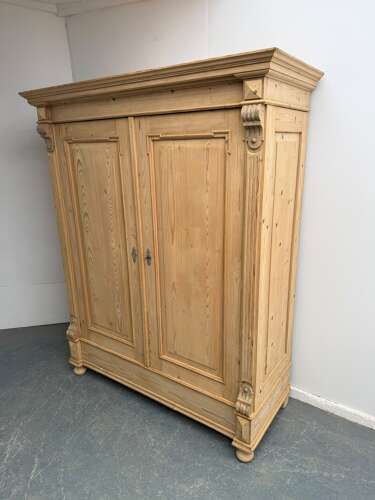
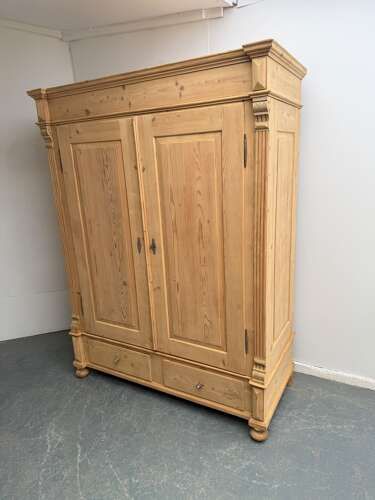
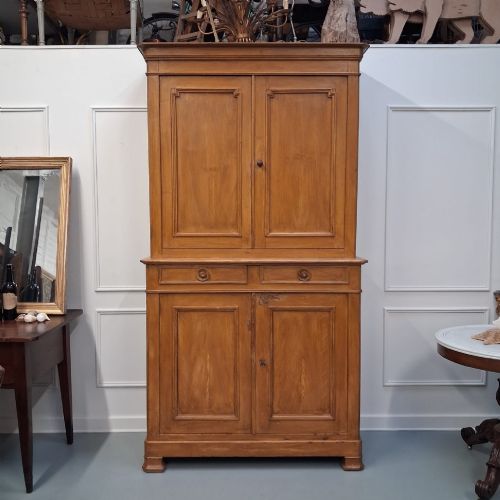
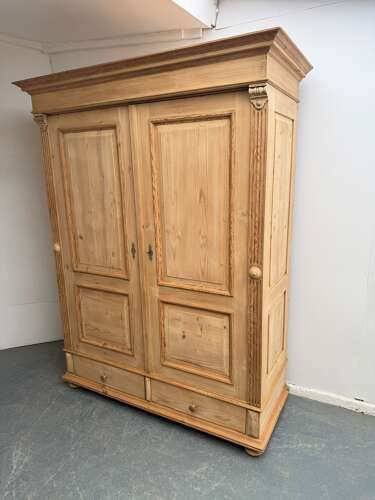
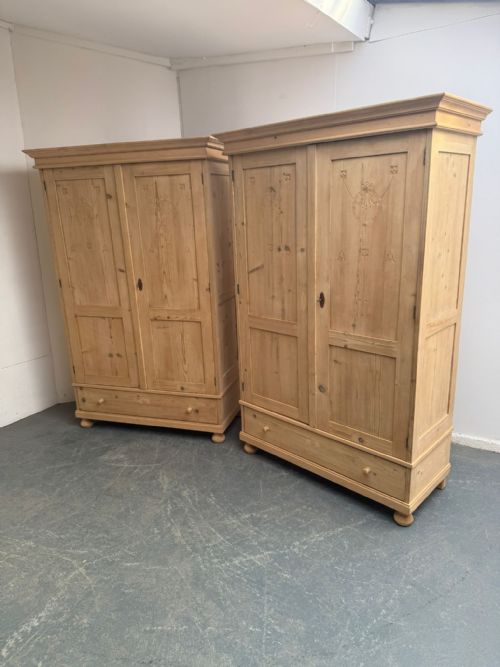
A large pine cupboard serves as a primary storage solution in domestic spaces, appearing in forms such as tall wardrobes, housekeeper cupboards, larder cupboards, and school cabinets. These pieces originate from various periods including the Georgian and Victorian eras, alongside continental workshops from France, Hungary, and Denmark.
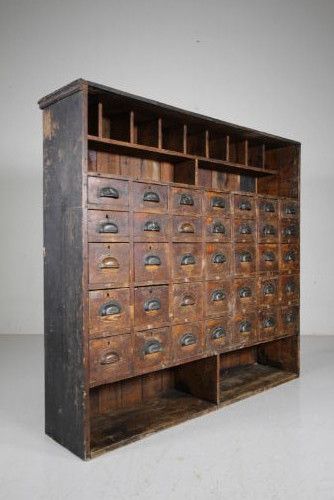
The domestic selection includes multi-door wardrobes, corner cabinets, and storage units featuring internal shelving and bottom drawers. Institutional examples, such as school cabinets and large drawer banks, provide robust utility with straightforward layouts.
Most items on this page span the nineteenth century, utilising sturdy timber construction designed to hold heavy loads of linen, provisions, or clothing. Many tall wardrobes feature knockdown construction, allowing the framework to separate into manageable sections for transport.
How They Were Made
Makers constructed these cabinets predominantly using solid pine timber, frequently incorporating secondary woods for internal components and backing panels. Iron and brass hardware, including hinges, latches, and escutcheons, secures the heavy doors and drawer elements.
Surface treatments vary between original painted finishes, scumble glazes, and natural waxed surfaces that highlight the grain of the softwood. Joinery techniques range from traditional mortise and tenon frames to robust tongue and groove panelling on backs and doors.
Several thirty-drawer bank units suggest someone once needed to sort an extraordinary amount of tiny workshop screws.
What Varies in Quality
The standard of construction depends on the thickness of the timber planks, the rigidity of the assembled frame, and the integrity of the original joints. Pieces that retain their original backboards, working locks, and structural hardware command higher regard than those altered over time.
Surface condition dictates much of the character, with untouched period paint finishes or patinated waxed surfaces showing greater integrity than stripped timber that has lost its historical context. The complexity of the joinery, such as panelled doors and moulded cornices, separates utilitarian workshop pieces from finer domestic furniture.
The Large Pine Cupboard Glossary
- Knockdown
- A piece of furniture designed to be dismantled into flat sections using wooden pins or internal bolts rather than fixed glue joints. This technique enabled large wardrobes to move easily between rooms.
- Housekeeper Cupboard
- A tall storage cabinet traditionally used for linens, dry goods, and household provisions. These items typically feature multiple internal shelves enclosed by large panelled doors.
- Scumble
- A decorative painting technique where a translucent glaze is dragged or manipulated over a base coat to imitate the grain of more expensive hardwoods like oak or mahogany. It appears frequently on nineteenth-century utility furniture.
- Dresser Base
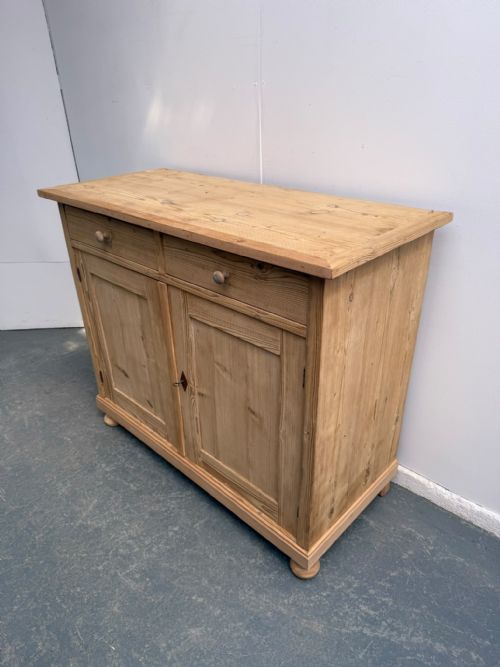
- A low sideboard or cabinet featuring cupboards and drawers beneath a solid top. These units provided heavy-duty workspace and storage for kitchens and dining rooms.
- Pitch Pine
- A dense, resinous softwood sourced primarily from North America that produces a harder, darker surface than standard European pine. It resists wear significantly better than ordinary softwood.
Large Pine Cupboard: Frequently Asked Questions
What is a knockdown wardrobe?
A knockdown wardrobe is a large cabinet built to be taken apart into separate panels and sections for transport and installation.
Craftsmen utilised wooden pegs and internal fittings so the massive pieces could move easily through narrow doorways.
How do I care for a waxed pine cupboard?
Maintaining a waxed pine surface involves applying traditional beeswax periodically and buffing the timber to preserve its natural lustre.
Avoid placing the furniture near direct heat sources or damp areas to prevent the softwood from warping or splitting.
Are painted finishes on these cupboards original?
Many cupboards retain their original historical paint, while others have been painted or stripped down to bare wood during later restorations.
Examining the layers of pigment and surface wear helps determine whether the finish dates to the period of manufacture.
What distinguishes a larder cupboard from a general storage cabinet?
A larder cupboard is specifically designed for food storage, often featuring deep internal shelving and specialised ventilation panels.
General storage cabinets usually focus on broader domestic organisation for clothing, books, or household linens.