


Large Pine Chest
When you search for a large pine chest, you open the door to utilitarian storage pieces spanning the Georgian, Victorian, and Edwardian periods.
Large Pine Chest
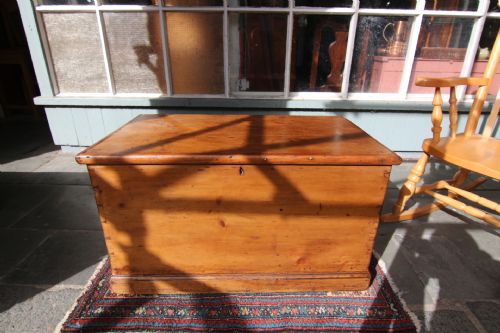
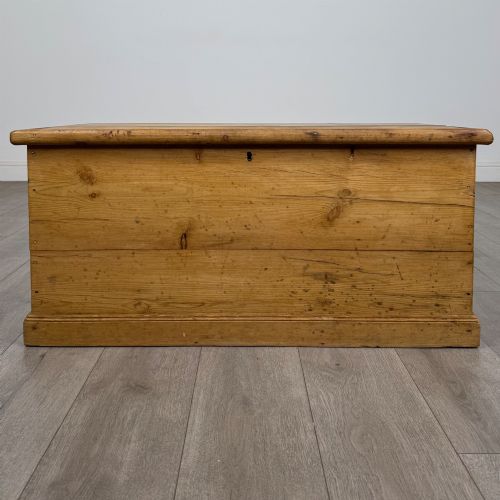
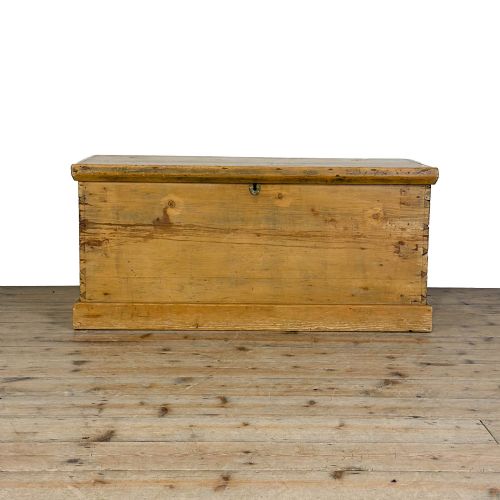
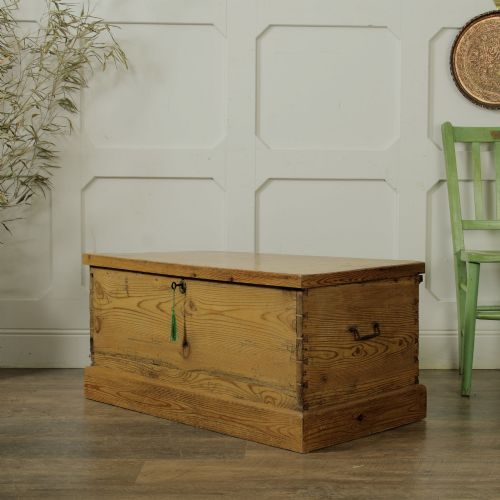
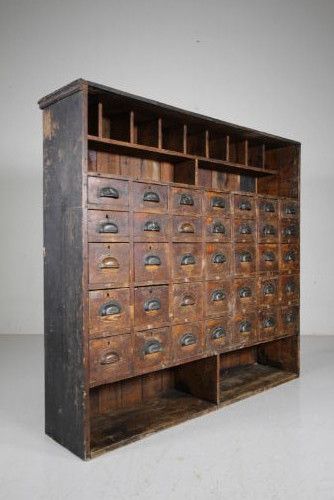
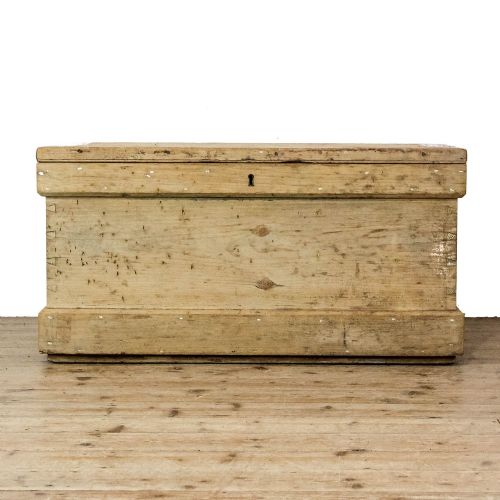
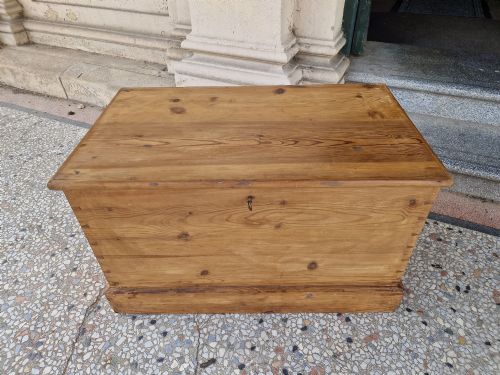
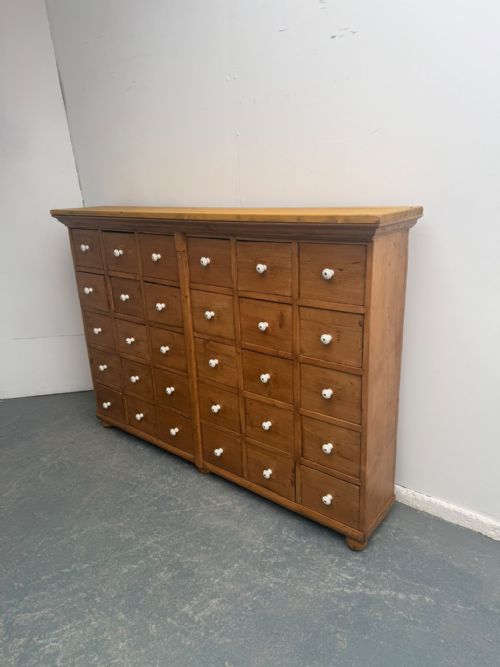
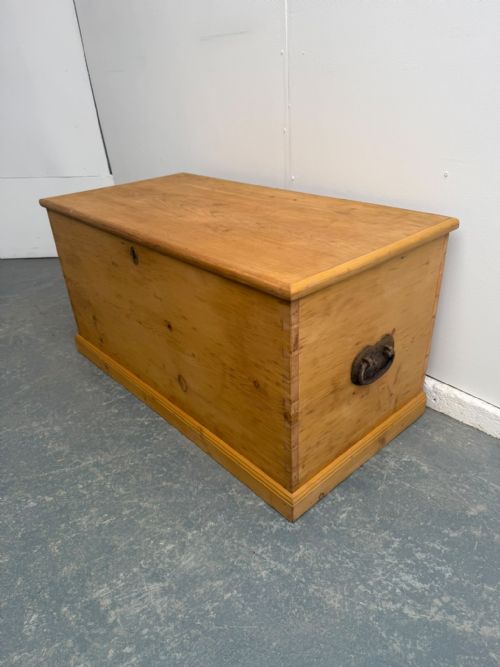
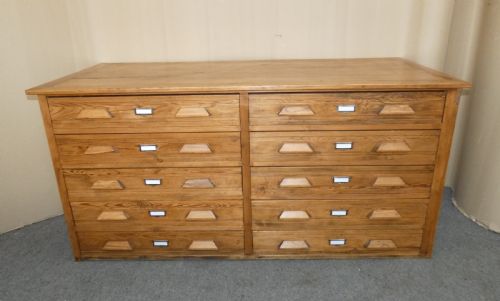
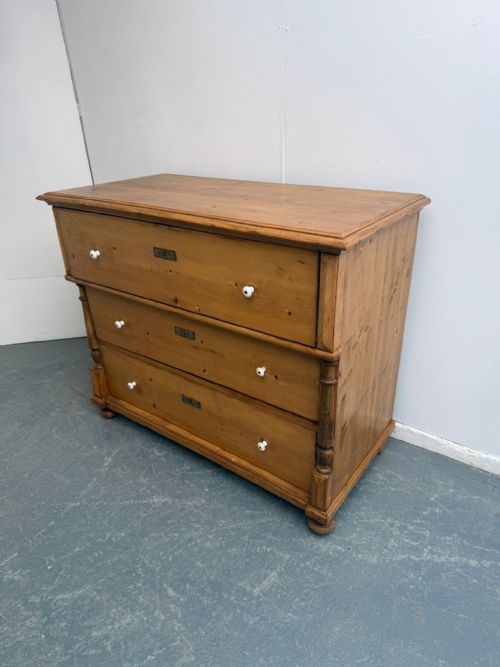
A large pine chest encompasses several utilitarian forms used for domestic storage across the Georgian, Victorian, and Edwardian eras. Buyers encounter lift-lid blanket boxes, mule chests fitted with lower drawers, and banks of multiple drawers designed for trade or domestic utility.
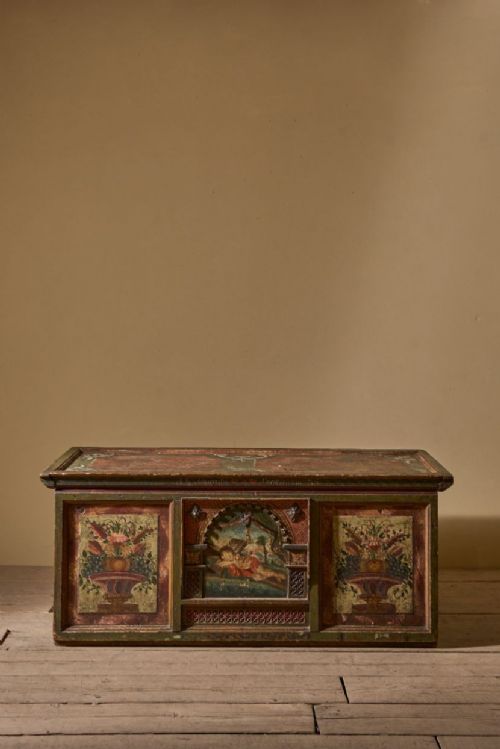
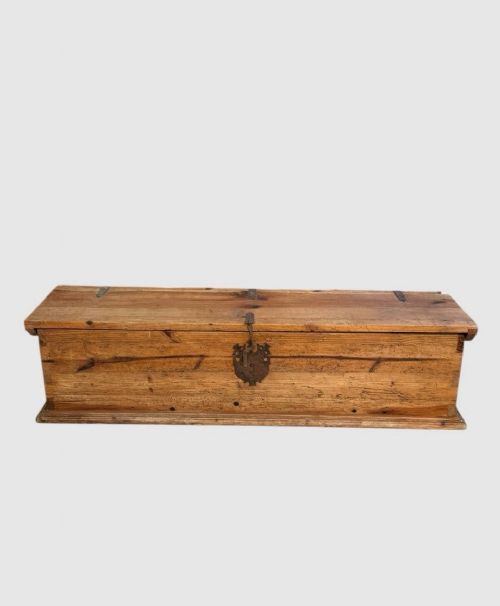
The regional origins of these pieces vary widely, spanning English workshops, Scottish households, Dutch rural centres, and Hungarian folk traditions. Many retain traces of original paint schemes, while others appear stripped or heavily waxed to highlight the grain.
Forms range from simple carpenter trunks with internal compartments to massive shop fittings containing dozens of small drawers. Domestic pieces frequently follow traditional configurations such as two short drawers over three long ones.
How they were made
Makers built these pieces primarily using solid pine and dense pitch pine, selecting timber for its durability in everyday utility furniture. Joinery relied on traditional methods suited to heavy service, while hardware often incorporates iron or brass handles, hinges, and lock plates.
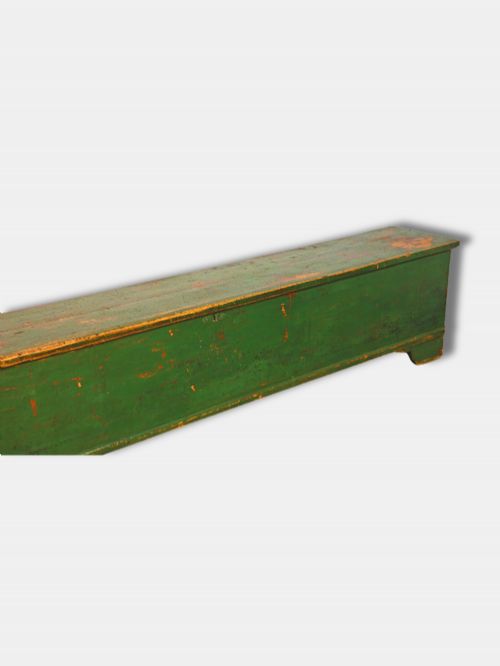
Surface treatments divide sharply between utilitarian wax finishes that mellow the natural wood and historic applied paint layers in teal, green, grey, cream, or black. Some specialised examples integrate ceramic knobs on drawer fronts or metal reinforcement bands on trunk edges.
Listings feature pieces spanning the Georgian, Victorian, and Edwardian periods, constructed primarily from pine, pitch pine, iron, and brass.
What varies in quality
Construction robustness also dictates distinction, separating simple vernacular boxes from refined multi-drawer chests with precise dovetail joinery. The presence of regional folk art decoration or unusual multi-drawer shop fitting configurations elevates the complexity of the piece.
The Large Pine Chest Glossary
- Mule chest
- A storage chest featuring a lift-up lid above one or more functional drawers built into the base. This hybrid form bridges the gap between traditional blanket boxes and modern drawer chests.
- Pitch pine
- A dense, resinous variety of pine known for distinct grain patterns and durability. Makers utilised this heavier timber for pieces subjected to harder daily service.
- Wellington chest
- A tall vertical chest of drawers secured by a hinged locking side flap that fastens over the drawer edges. This secure format appeared frequently in late nineteenth-century interiors.
- Blanket box
- A deep trunk with a hinged lid designed primarily for storing textiles and linens. Simpler versions lack exterior drawers and rely entirely on the top-loading compartment.
- Bank of drawers
- A multi-drawer cabinetry unit designed for workshops, shops, or administrative archives. These assemblies often feature dozens of small compartments for sorted storage.
Large Pine Chest: Frequently Asked Questions
What is the difference between a blanket box and a mule chest?
A blanket box consists solely of a top-loading compartment accessed via a hinged lid. It provides deep, uninterrupted volume for storing textiles and bulky garments.
A mule chest adds one or more drawers beneath the main lift-lid compartment. This hybrid layout allows access to frequently used items without lifting the heavy items stored on top.
How do I date a Victorian pine chest?
Dating relies on observing construction methods, hardware choices, and proportions. Early Victorian pieces often display hand-cut dovetails and simpler secondary timbers, while later examples incorporate machine-sawn elements.
Surface finishes also offer clues, as original paintwork or deep traditional wax patination builds up specific visual and tactile characteristics over decades of use.
Were these chests painted originally?
Many regional pieces, particularly Hungarian and Dutch examples, received coats of paint in colours such as teal, green, grey, cream, or black. Paint protected the softwood and formed part of local folk traditions.
Other pieces left the workshop with clear wax finishes to display the natural pine grain, and later owners sometimes stripped painted surfaces down to bare wood.
How should I care for a waxed pine surface?
Maintain waxed pine by dusting regularly with a dry, soft cloth to prevent particulate accumulation. Avoid placing pieces near direct heat sources or strong sunlight, which can dry out the historic timber.
Apply a quality beeswax periodically and buff gently to nourish the wood and preserve the surface sheen without building up excessive residue.