


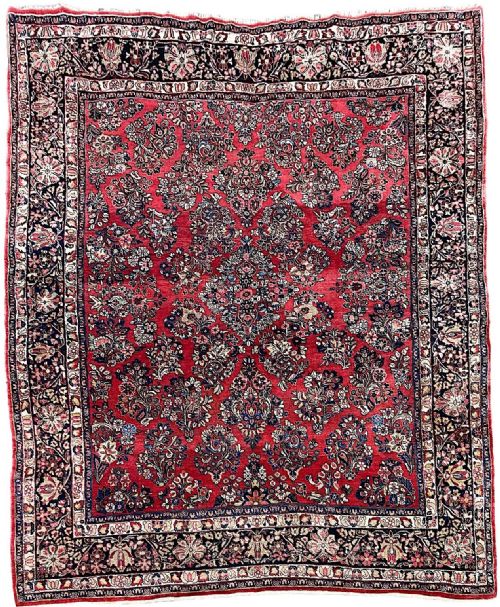


Large Persian Room Carpet
A large persian room carpet anchors a grand interior with traditional motifs, deep history and substantial wool construction.
Large Persian Room Carpet
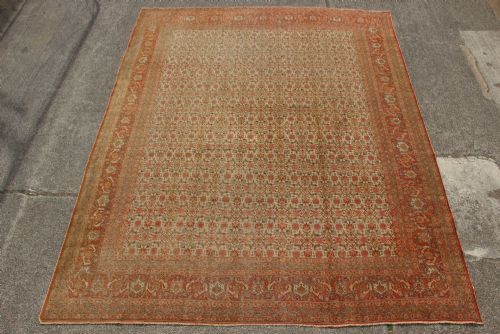
A large persian room carpet brings substantial scale and traditional artistry into a domestic interior. These floor coverings arrive from production centres across Persia and surrounding regions, often woven to room size proportions for country houses and formal spaces.
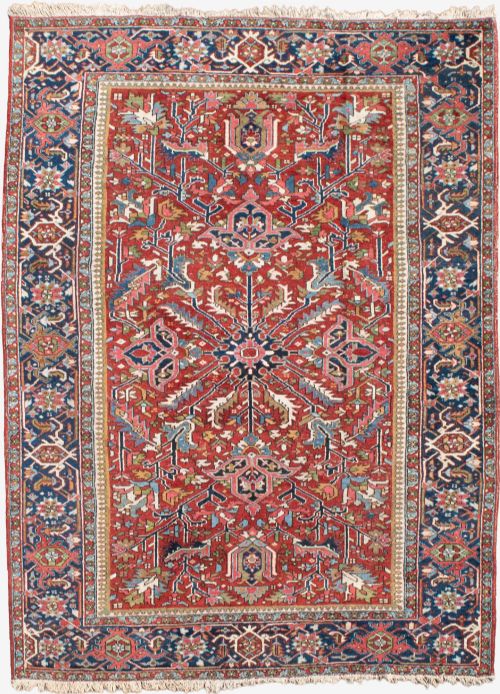
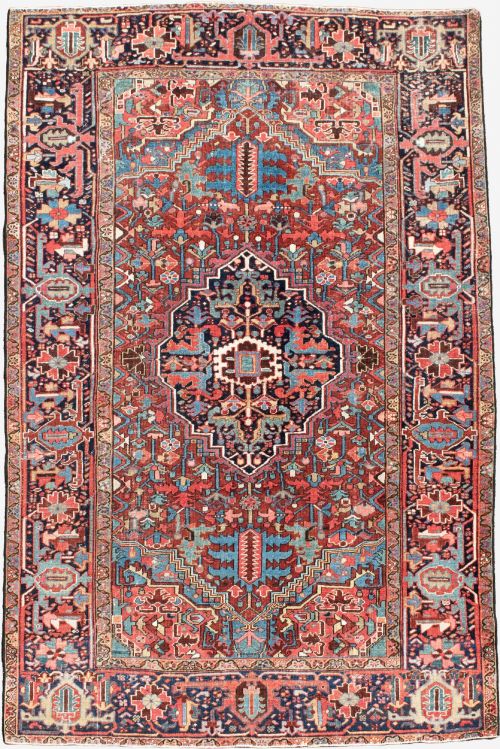
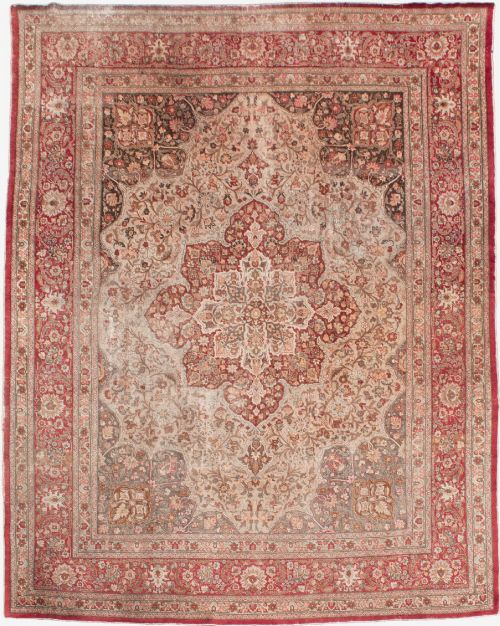
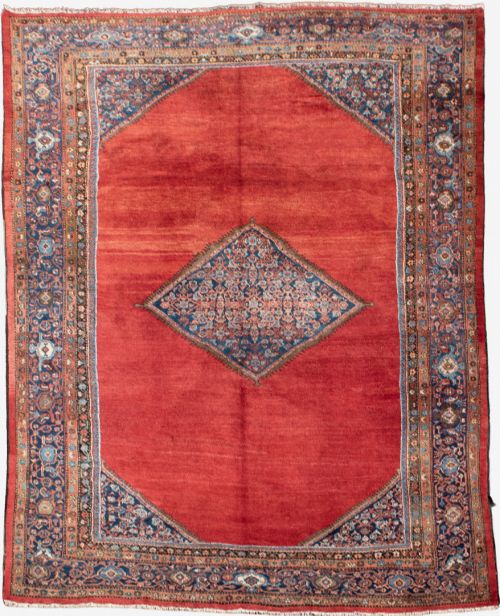
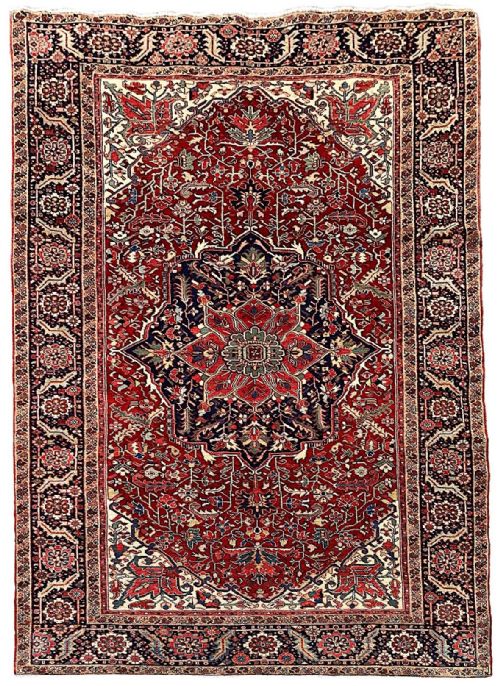
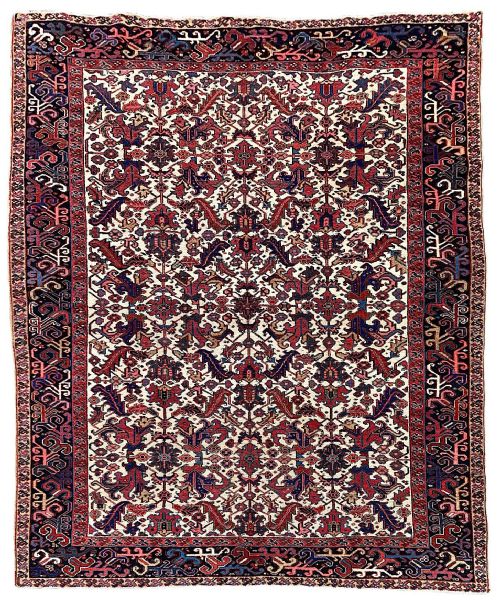
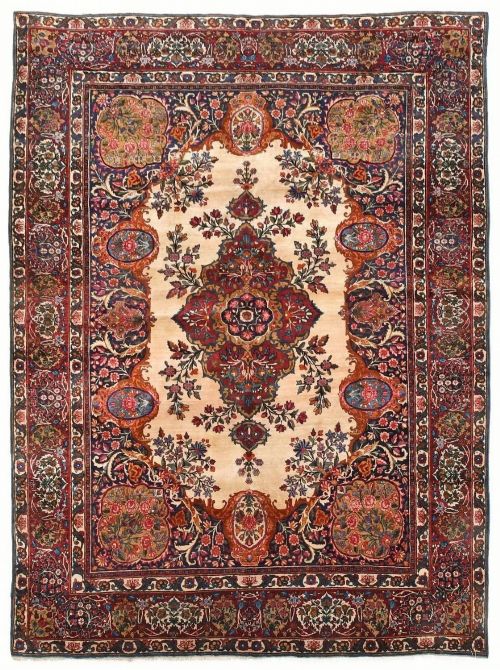
The selection encountered on this page spans distinct weaving traditions including Heriz, Tabriz, Kirman, Sarouk and Oushak. Each provenance brings characteristic medallion layouts, geometric frameworks or flowing floral palmettes executed in room filling dimensions.
Dated examples stretch from the late nineteenth century through to the early decades of the twentieth century. Buyers encounter both finely knotted city pieces and robust village formats designed for heavy daily use.
How they were made
Traditional weavers constructed these textiles using wool, cotton and occasionally silk foundations and pile. Hand knotted techniques dominated production, securing dense piles onto sturdy cotton warps and wefts to ensure long term durability.
Natural and early synthetic dyestuffs provided the rich palettes seen across the inventory. Dyers utilised roots, insects and minerals to achieve enduring shades of red, navy, sky blue and soft pastels.
Listings feature room carpets woven in wool, cotton and silk across production periods spanning the late nineteenth and early twentieth centuries.
What varies in quality
The fineness of the knotting and the complexity of the design determine the visual crispness of the pattern. Superior specimens demonstrate meticulous precision in the rendering of geometric medallions and curvilinear florals.
The integrity of the foundation and the uniformity of the pile wear dictate the overall structural condition. Master weavers achieved exceptional balance between supple handle and durable substance in the best examples.
Benlian Tabriz
The Large Persian Room Carpet Glossary
- Medallion
- A large central decorative motif set into the middle of the field. This focal design often dictates the geometry of the surrounding corners and borders.
- Warps
- The vertical foundation threads stretched tightly on the loom before knotting begins. Cotton or wool warps carry the structural load of the entire textile.
- Wefts
- The horizontal threads passed between rows of knots to bind the structure together. Multiple weft shots can create a rigid or supple handle in the finished weave.
- Pile
- The upright cut ends of yarn that form the usable surface of the carpet. Dense pile provides both comfort underfoot and protection for the structural foundation underneath.
- Palmette
- A stylised floral motif based on the fan shaped arrangement of palm leaves. This classical element appears frequently in Persian court and city designs.
Large Persian Room Carpet: Frequently Asked Questions
How do I place a large room carpet?
These generous floor coverings work best anchored beneath the main furniture grouping in a principal reception space. Leaving a uniform perimeter of exposed floorboards enhances the sense of scale.
Ensure heavy furniture legs rest evenly on the pile to distribute weight and prevent shifting across polished timber or stone floors.
How do I distinguish Heriz from Tabriz?
Heriz carpets generally display bold geometric medallions, angular corner spandrels and robust wool intended for heavy family use. The palette often relies on deep rusts, terracottas and strong blues.
Tabriz carpets typically feature finer, more curvilinear floral patterns with intricate medallion designs and complex border arrangements reflecting urban workshop traditions.
How should I clean my carpet?
Regular gentle vacuuming without a rotating brush roll prevents dust and grit from settling deep into the wool pile. Professional specialist cleaning remains essential every few years to protect the natural fibres.
Avoid excessive moisture and harsh chemical treatments which can damage the traditional dyestuffs and cotton foundations.
How do I date an older carpet?
Examination of the knot density, dye palette and structural materials provides clear indicators of the period of origin. Turn of the century workshops utilised distinct chemical and natural dye combinations that evolved over subsequent decades.
Stylistic shifts between late nineteenth century room formats and 1930s urban weaving also help narrow down the decade of production.