
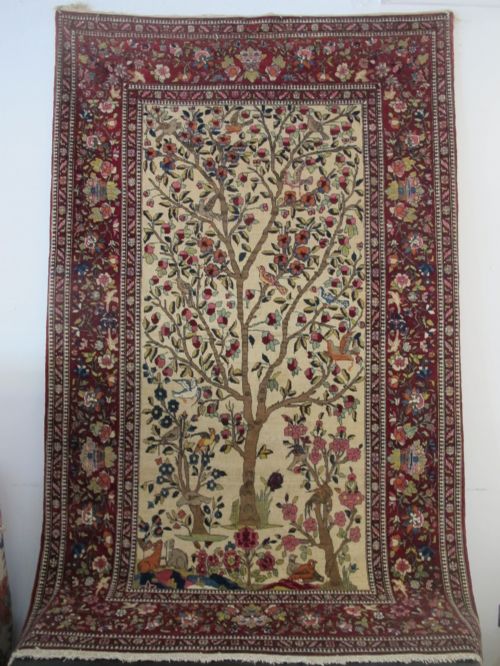


Isfahan Area Rug
An isfahan area rug brings centuries of central Persian weaving tradition into a room through intricate medallion designs and delicate floral motifs.
Isfahan Area Rug
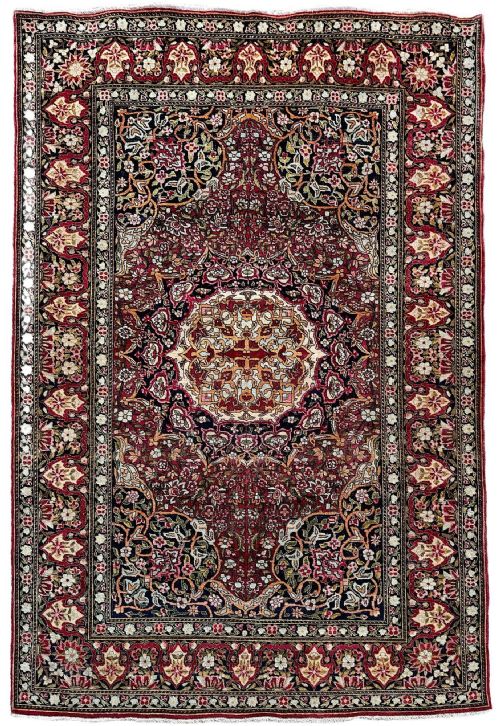
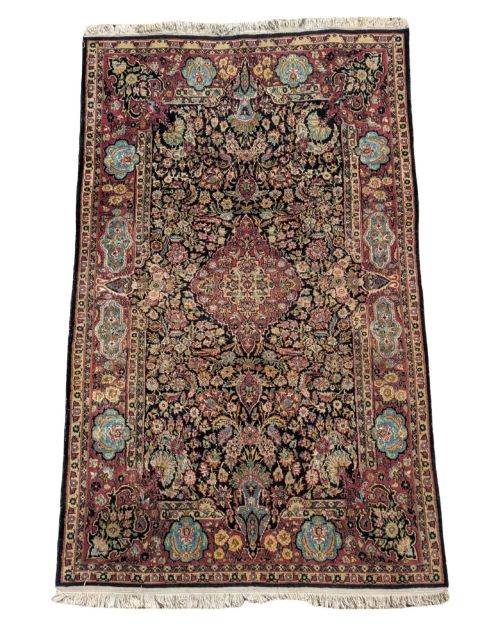
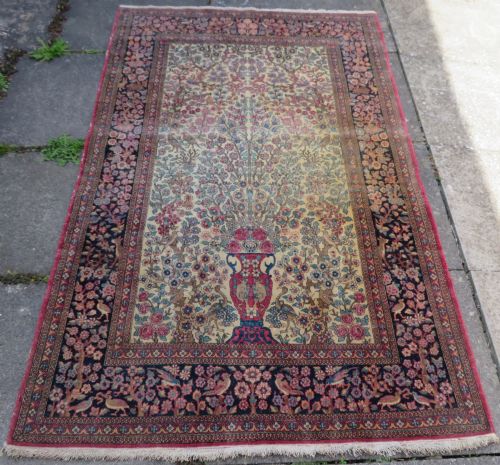
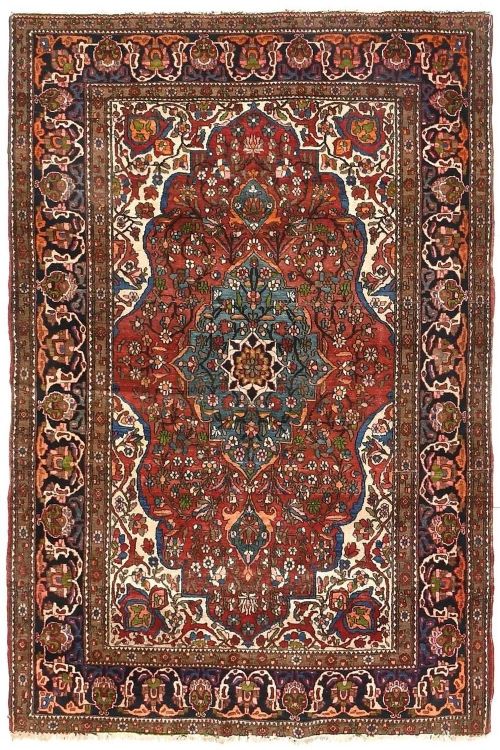
When you search for an isfahan area rug, you are looking at central Persian floor coverings that date from the late nineteenth century through to the interwar decades. These pieces typically display traditional Persian layouts, including classic small medallions and elaborate tree of life compositions.
The version you are most likely to meet on this page is an antique room-sized or smaller carpet woven around nineteen hundred or in the decades immediately following. They originate from central Persia and carry the formal design vocabulary associated with historic Isfahan workshops.
Materials and Weaving Techniques
Makers constructed these floor coverings using fine wool, lambswool, and cotton, occasionally incorporating silk highlights or building upon a silk foundation to achieve exceptional structural delicacy. The knot density is often notably tight, which allowed weavers to execute curves and floral details with high precision.
Weavers balanced durability with ornamentation by combining resilient wool piles with sturdy cotton or silk warp and weft foundations. Natural dyes yielded rich colour palettes that have mellowed gracefully over the decades.
Isfahan Area Rug Retail Price Guide 2026
Typical asking prices for isfahan area rug among the pieces listed under this phrase on Sellingantiques today, from the lower quarter to the upper quarter. They describe what is for sale here now, not the wider market.
Some weavers hid tiny irregularities in their intricate tree of life designs, leaving a quiet fingerprint of human handiwork for future generations to spot.
Quality Variations
The finest examples distinguish themselves through superior knot density, which allows for sharper definition in complex medallion and floral patterns. A finer weave supports greater intricacy in the central design and produces a more supple handle.
Material selection also defines the tier of a piece, particularly the inclusion of silk foundations or delicate silk highlights alongside standard wool. The crispness of the drawing and the depth of the dye work separate standard production from exceptional workshop output.
Ahmadi
The Isfahan Area Rug Glossary
- Medallion
- A central ornamental motif, often circular or oval, placed in the middle of the field. It forms the focal point of classical Persian carpet composition.
- Warp
- The stationary vertical threads stretched on the loom upon which the knots are tied. They form the structural skeleton of the rug.
- Weft
- The horizontal threads passed back and forth between the warp threads to hold the knots in place. Together with the warp, they constitute the foundation.
- Foundation
- The underlying grid of warp and weft threads that supports the pile. In finer pieces, this foundation may be spun from silk rather than cotton.
- Tree of Life
- A pictorial motif depicting a branching tree rising from a vase or the ground, symbolizing eternal life and growth. It is a frequent feature in classical Persian design.
Isfahan Area Rug: Frequently Asked Questions
How do I identify an Isfahan rug?
Look for balanced central medallion compositions, intricate floral field patterns, and roots in central Persian design traditions. Many period examples also display fine knot counts and traditional colour schemes.
Compare the border arrangements and floral motifs against documented pieces from the region to confirm stylistic origins.
Are these rugs suitable for high traffic?
Wool and lambswool piles on sturdy cotton foundations provide natural durability for domestic settings. Regular rotation helps distribute wear evenly across the surface.
Placing a quality underlay beneath the carpet prevents slippage and cushions the fibres against heavy footsteps.
How should I clean my antique rug?
Vacuum gently using a suction-only attachment without the beater bar to protect delicate pile fibres. Professional specialist cleaning remains essential for deep maintenance.
Address spills immediately by blotting with a clean, dry cloth rather than rubbing the affected area.
What does a silk foundation mean?
A silk foundation utilises fine silk threads for the structural warp and weft instead of cotton. This allows the weaver to pack knots extremely tightly.
This construction method produces a thinner, more flexible handle and enables exceptionally crisp detail in the final pattern.