



Qajar Persian Carpet
A qajar persian carpet is a woven textile of distinct pictorial and floral expression, sought after for its intricate portraiture and rich dye work.
Qajar Persian Carpet
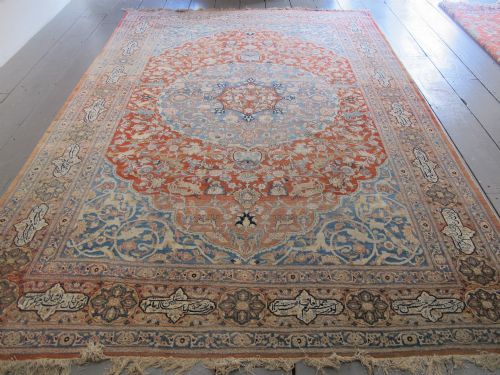
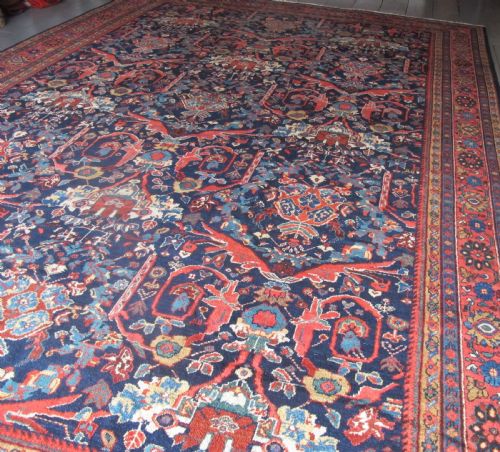
When you search for a qajar persian carpet, you encounter woven works originating from Persia during the late nineteenth and early twentieth centuries. These pieces encompass regional variations including Tabriz, Isfahan, Malayer, Kashan, and Mahal styles.
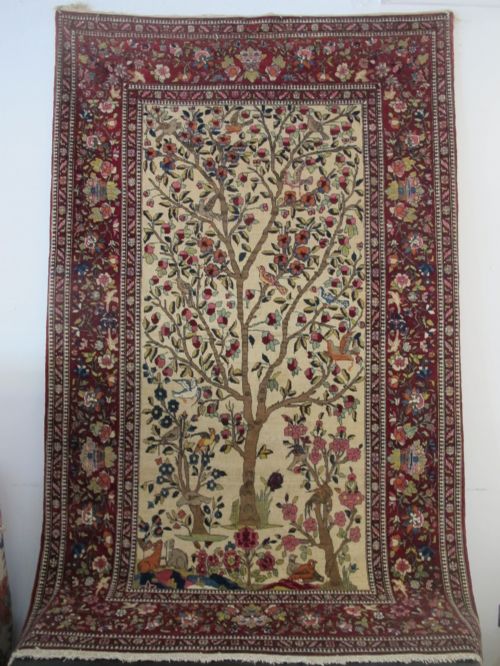
The most common forms on this page are hand-knotted area rugs and larger carpets featuring floral motifs, central medallions, or striking pictorial portraits. Examples range from nineteenth-century productions to pieces made around nineteen twenty depicting historical figures such as Ahmad Shah Qajar, Kaiser Wilhelm II, and Tsar Nicholas.
Materials and Construction
These textiles are produced using traditional hand-knotted techniques on foundations of cotton or wool. Artisans utilised fine wool and occasionally silk to achieve detailed knot density and lasting durability.
Regional weaving centres employed natural and early synthetic dyes to build contrasting palettes, setting ivory grounds against deep reds, blues, and intricate polychrome borders.
Current listings feature Persian rugs and carpets spanning the years nineteen hundred to nineteen twenty, utilising wool, cotton, and silk.
Assessing Quality and Execution
The distinction between standard output and the finest examples lies in knot density and the precision of the drawn design. Master weavers achieved exceptional clarity in pictorial portraits and complex floral arrangements.
Material choice also dictates grade, with finer wool selections and silk elements yielding softer handles and sharper definition in the central field and borders.
Haji Jalili·Mohtasham Kashan
The Qajar Persian Carpet Glossary
- Hand knotted
- A construction method where individual lengths of yarn are tied manually to the warp threads of the foundation. This labour-intensive process determines the durability and resolution of the woven pattern.
- Pictorial rug
- A textile featuring figurative imagery, human portraits, or narrative scenes rather than purely geometric or botanical motifs. These pieces often commemorate specific historical rulers or events.
- Ivory ground
- The pale, neutral background colour dominating the central field of certain carpets. This light tone makes surrounding colours and intricate border patterns stand out.
- Central medallion
- A prominent ornamental design placed at the exact centre of the carpet field. It serves as the visual anchor for the surrounding field ornamentation.
Qajar Persian Carpet: Frequently Asked Questions
How are Qajar pictorial rugs dated?
Dating relies on historical figures depicted in the weaving, such as specific monarchs or rulers whose reigns are well documented. Stylistic elements and structural materials further narrow the production period.
Comparison with documented examples from known workshops provides additional chronological clarity.
Where were these carpets originally woven?
Production centred in major Persian weaving cities and districts including Tabriz, Isfahan, Kashan, and Malayer. Each region imparted distinct structural characteristics and design vocabularies.
Master weavers in these urban centres catered to both domestic elites and international markets.
What materials make up these carpets?
Weavers constructed the foundations primarily using cotton or wool threads. The pile consists of wool, sometimes supplemented with silk to highlight specific design details.
Natural dyestuffs provided the rich colour palettes seen in the surviving specimens.
How should I display an antique carpet?
Placing these textiles on floors with moderate foot traffic or hanging them as wall art preserves their structural integrity. Protection from direct sunlight prevents fading of the dyed wool and silk.
Professional padding underneath helps cushion the foundation fibres during daily use.