




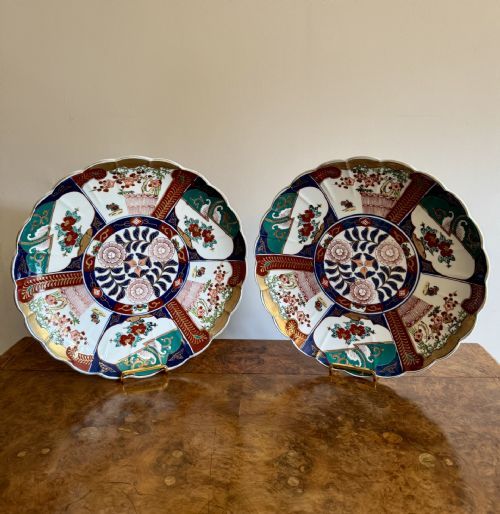


Large Oriental Porcelain Platter
A large oriental porcelain platter brings centuries of precise kiln work and painted detail straight to a wall or table.
Large Oriental Porcelain Platter
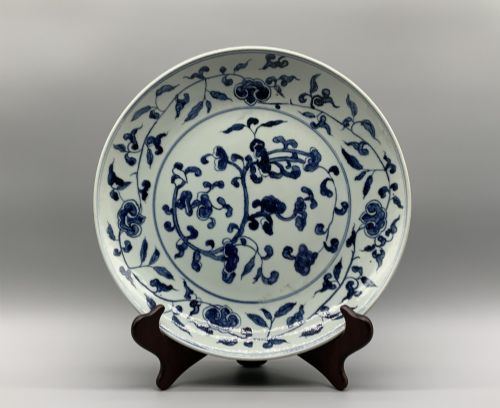
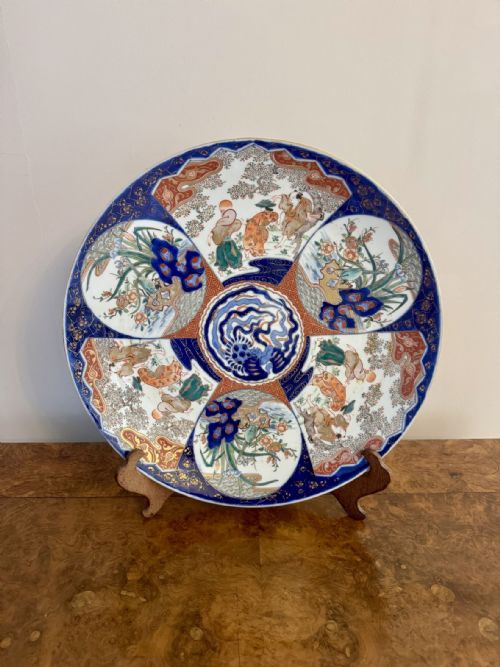
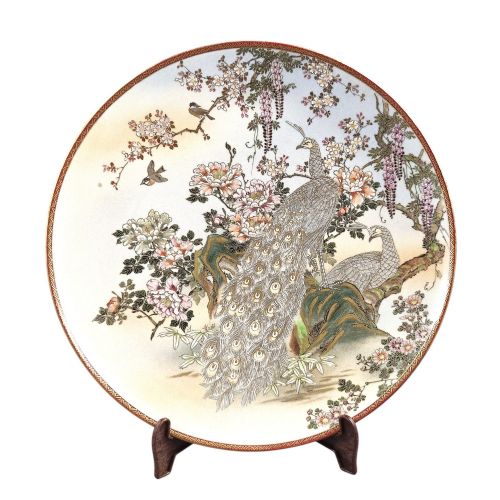
When you search for a large oriental porcelain platter, you encounter substantial ceramic dishes created for display and serving across Asian export and domestic markets. The pieces gathered here span several centuries, reaching from Ming and Qing dynasty pieces to later nineteenth century Japanese production. Japanese Imari and blue and white wares dominate the selection, alongside Satsuma, Kutani and Chinese export examples.
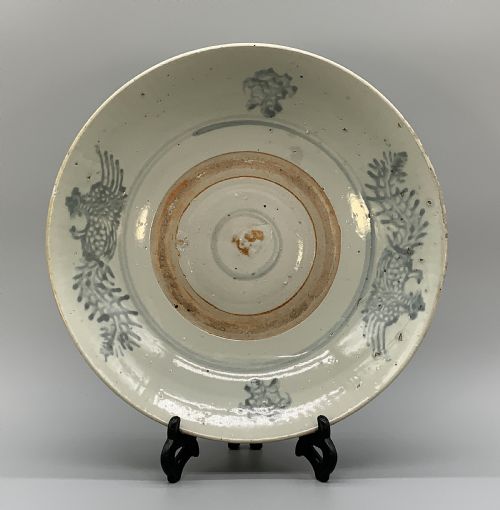
The physical form varies from deep circular chargers to scalloped edge plates and occasional square display plates. These items function as decorative chargers and wall plates, measuring considerably wider than standard dining ware. Most examples originate from the Meiji period or late nineteenth century production runs, though earlier seventeenth and eighteenth century Kangxi and Swatow pieces appear.
Makers and potteries worked within established regional traditions, utilising cobalt underglaze, enamel and occasional gold leaf. The designs range from traditional court life scenes and peaceful landscapes to depictions of koi carp and the Seven Lucky Gods. Each piece demonstrates the capacity of historic kilns to fire massive ceramic disks without warping.
How they were made
Potters shaped high-firing ceramic paste into wide disks, applying cobalt underglaze pigments before the initial kiln firing. Artisans then layered enamel colours and gold leaf highlights over the glaze for subsequent low-temperature fixation. This multi-stage process required precise temperature control to prevent the large surface area from cracking or slumping during firing.
Japanese Arita and Chinese kilns relied on mineral-rich clays combined with finely ground stone to achieve durable porcelain bodies. Painters used animal hair brushes to render intricate floral motifs, figures and geometric borders by hand. The resulting surface unites smooth translucent glaze with textured enamel relief work.
Several platters manage to squeeze the entire pantheon of the Seven Lucky Gods onto a single ceramic disk without losing an inch of decorative charm.
What varies in quality
Quality rests upon the crispness of the hand-painted decoration and the depth of the cobalt underglaze. Superior examples display confident brushwork with controlled pigment application, avoiding muddy lines or blurred borders. The application of enamel and gold leaf varies from thick, textured moriage relief to flat, simple washes.
The physical integrity of the ceramic body distinguishes standard domestic output from exhibition pieces. Finer platters maintain a flat, even plane across substantial diameters, showing minimal kiln distortion or warping during the high-temperature firing process.
The Large Oriental Porcelain Platter Glossary
- Imari
- A style of Japanese porcelain featuring a distinct palette of cobalt blue, iron red and gold on a white ground. This decorative tradition originated in Arita and gained immense popularity across European export markets.
- Charger
- A large decorative plate or platter utilised historically for ceremonial service or displayed upright on sideboards and walls. These substantial vessels measure significantly wider than standard dining plates.
- Cobalt Underglaze
- A blue pigment applied to the raw ceramic body before glazing and firing. This mineral withstands extreme kiln temperatures without fading or bleeding into the surrounding clay.
- Moriage
- A Japanese ceramic technique involving raised enamel applied in thick dots or lines to create a tactile, textured surface. This method frequently accentuates floral details and garments.
- Meiji Period
- An era in Japanese history spanning from eighteen sixty-eight to nineteen twelve, characterised by increased export trade and highly detailed decorative arts. Pieces from this time often combine traditional motifs with technical mastery.
Large Oriental Porcelain Platter: Frequently Asked Questions
How were these large platters used historically?
Historic households utilised these wide vessels primarily for formal presentation at feasts or as decorative wall furnishings. Their substantial size made them unsuitable for daily dining, reserving them instead for visual display in reception rooms.
Export demand in Europe and Britain turned these pieces into prized interior ornaments. Servants mounted them on heavy wooden stands or hung them securely on walls to showcase wealth and taste.
How do I hang a heavy charger safely?
Displaying a large ceramic platter requires a dedicated wall bracket or spring-loaded hanger designed to distribute weight evenly across the rim. Fixed steel prongs covered in protective tubing prevent the ceramic edge from chipping while taking the full load.
Avoid wire-only solutions that rely on friction alone against the sloping underside. Securing the mount directly into a wall stud ensures the heavy porcelain remains stable over time.
How can I tell a nineteenth century piece apart from an earlier one?
Nineteenth century Japanese Imari and Chinese export pieces typically feature brighter enamel palettes and slightly more uniform porcelain bodies resulting from industrial kiln improvements. Earlier seventeenth and eighteenth century examples, such as Kangxi or Swatow wares, often display deeper cobalt tones, heavier potting and subtle iron-foot discoloration.
Brushwork also offers clues, as earlier artisans executed looser, more spontaneous compositions compared to the dense, meticulous patterns found on later Meiji period output.
What is the difference between Imari and blue and white porcelain?
Blue and white porcelain relies exclusively on cobalt oxide under the glaze to produce monochrome blue designs against a white ceramic ground. This traditional aesthetic appears across Ming, Qing and later export production.
Imari porcelain incorporates that same blue underglaze but adds a vibrant secondary palette of iron red, green enamel and gold leaf over the glaze. This multi-coloured approach creates a much warmer, busier surface appearance.