
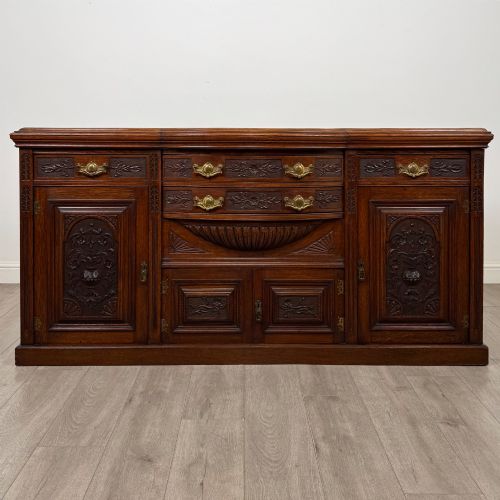
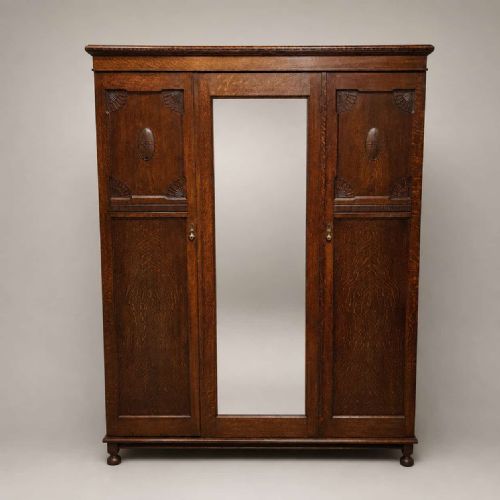
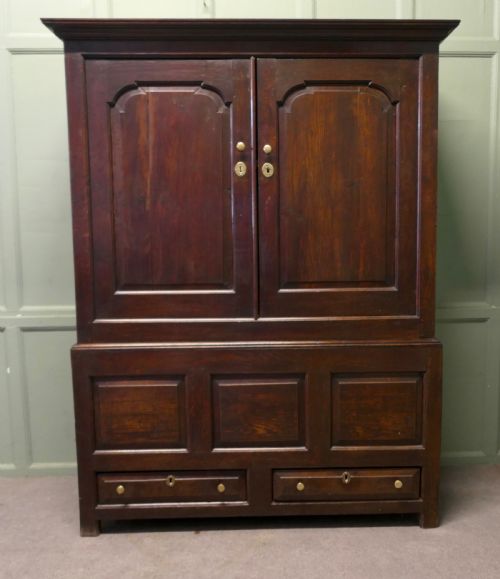
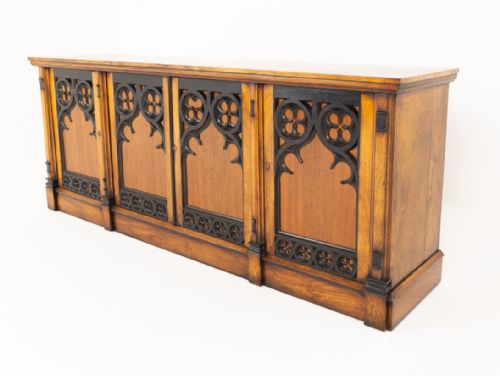



Large Oak Storage Cupboard
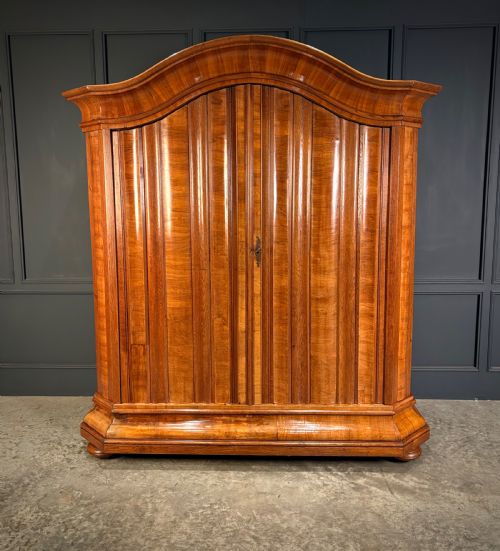
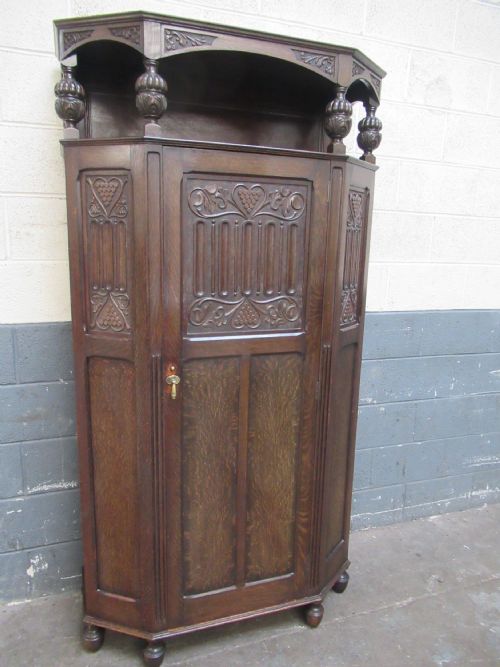
A large oak storage cupboard anchors a room through sheer timber presence, offering substantial utility spanning centuries of British and continental domestic life.
Large Oak Storage Cupboard
A large oak storage cupboard encompasses substantial timber furniture designed to contain linen, garments, provisions, and household goods across domestic interiors. These pieces range from early provincial court cupboards and housekeepers cupboards to later Victorian wardrobes, sideboards, and expansive armoires.
The versions most frequently met here span the eighteenth and nineteenth centuries, alongside early twentieth-century revival pieces. Georgian housekeepers cupboards and Victorian carved sideboards dominate the form, presenting deep shelves, panelled doors, and heavy timber construction.
Makers utilised resilient regional hardwoods, adapting vernacular traditions to serve utilitarian demands in large country houses, estate larders, and school utility rooms. Each object reflects the changing storage needs of domestic households through successive periods.
Evaluating the pieces
Quality rests upon the selection of timber, the integrity of the joinery, and the restraint or skill of the carving. Superior pieces display well-figured grain, cleanly struck mouldings, and original internal shelving or peg rails rather than later alterations.
Proportion and structural balance separate utilitarian workshop output from finer cabinet work. Retaining original brass hardware, working locks, and uncompromised backboards elevates an example above heavily adapted or poorly restored counterparts.
Listings feature oak storage pieces spanning the eighteenth century through to the 1930s.
Maple & Co
The Large Oak Storage Cupboard Glossary
- Housekeepers cupboard
- A large utility piece with upper cupboards and lower drawers or linen storage, traditionally used in large country houses for domestic provisions.
- Court cupboard
- An antique enclosed storage piece, often featuring a recessed upper section supported on carved pillars, originating in the sixteenth and seventeenth centuries.
- Armoire
- A large upright cupboard or wardrobe, typically of continental origin, featuring panelled doors enclosing hanging space or adjustable shelving.
- Linen press
- A tall cupboard specifically designed for storing folded linen, generally incorporating sliding trays behind upper doors and deeper drawers below.
- Ebonised wood
- Timber treated with a chemical stain or finish to simulate expensive ebony, frequently utilised for decorative mouldings or highlights during the nineteenth century.
Large Oak Storage Cupboard: Frequently Asked Questions
How do I date an oak cupboard?
Dating relies upon examining construction methods, tool marks, and hardware types used within the interior framing. Hand-cut dovetails, pegged joints, and regional timber characteristics often point towards specific centuries.
Stylistic details such as Jacobean revival motifs, Georgian proportions, or Victorian Gothic elements further narrow the period of manufacture.
Were these cupboards built in sections?
Many large cupboards and wardrobes were constructed in modular sections to facilitate transport through narrow corridors and up staircases. Cornices, midsections, and base plinths frequently separate for easier movement.
Checking for original knockdown bolts and internal alignment pegs reveals whether a piece was designed for disassembly.
How do I care for antique oak?
Antique oak benefits from stable room temperatures and protection from direct sunlight, which can dry and split older timbers. Applying traditional beeswax periodically maintains the lustre of the polished surface without sealing the grain.
Avoid placing these heavy pieces near active heat sources or damp exterior walls to preserve the structural stability of the wood.
What is the difference between a wardrobe and an armoire?
Wardrobes generally emphasise internal hanging space for garments, whereas traditional armoires often feature deeper shelf configurations for general storage. Regional origins also divide the terms, with armoire commonly describing continental European pieces.
Both forms utilise large panelled doors, but their internal configurations reflect differing domestic requirements across regions.