


Rustic Oak Housekeeper Cupboard
A rustic oak housekeeper cupboard brings honest vernacular warmth into a room, offering deep timber storage built to last generations.
Rustic Oak Housekeeper Cupboard
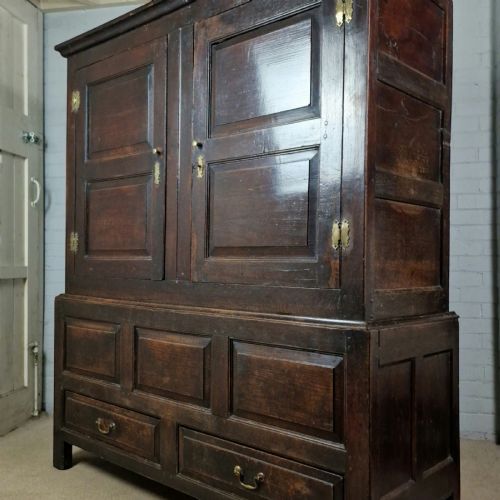
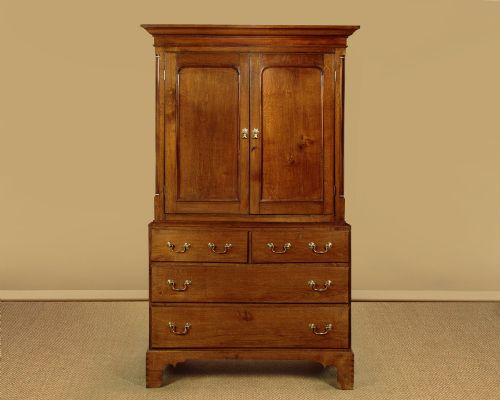
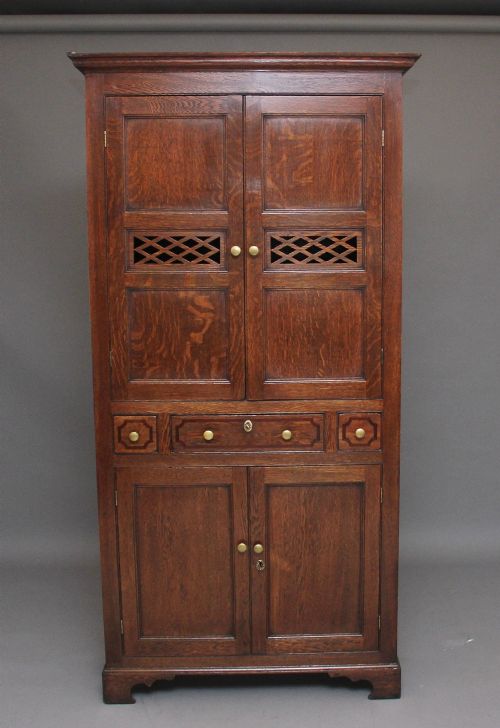
A rustic oak housekeeper cupboard is a substantial storage piece rooted in country traditions from the seventeenth century through to the twentieth century. These items encompass regional forms such as Welsh vernacular presses, hanging cupboards, and food larders used to store household provisions and linens.
The versions most commonly met here originate in the eighteenth century and the Georgian period, often displaying the robust proportions typical of country workshops. Makers constructed them primarily for utility in domestic settings, resulting in functional layouts with panelled doors and shelved interiors.
How they were made
Joiners built these pieces using solid oak boards, frequently combining pine for internal shelving or backing components. Iron hinges and brass escutcheons secure the doors, while surface treatments range from bare waxed timber to historic layers of paint.
Construction relies on traditional mortise and tenon joinery alongside pegged frames to handle the heavy weight of dense hardwood. Regional carpenters shaped panels by hand, resulting in subtle surface irregularities that reveal the early tools used.
Several cupboards retain the faint aroma of dried herbs and decades of old beeswax locked inside their heavy oak doors.
What varies in quality
The distinction between ordinary and exceptional examples lies in the integrity of the timber and the refinement of the original proportions. Finer pieces retain their untouched surface patination and authentic hardware without extensive modern timber replacement.
Regional character also dictates the appeal, with specific Welsh and French provincial variants showing distinctive carving or moulding details. The harmony between the heavy oak panels and the underlying structure defines a more successful domestic design.
The Rustic Oak Housekeeper Cupboard Glossary
- Livery cupboard
- A traditional storage cabinet originally used for keeping food, wine, or candles. These pieces often feature panelled doors and interior shelving.
- Linen press
- A tall storage unit designed for folding and storing textiles, typically featuring upper shelving sections and lower drawer configurations.
- Vernacular furniture
- Domestic pieces built by local regional carpenters rather than urban cabinetmakers, following traditional local styles. This approach prioritises utility and sturdy timber construction over fashionable ornament.
- Escutcheon
- A protective plate surrounding a keyhole, usually fashioned from brass or iron. It prevents the timber around the lock from splitting during daily use.
Rustic Oak Housekeeper Cupboard: Frequently Asked Questions
What is a housekeeper cupboard used for?
These large cupboards served as the central storage hub in historic homes for linens, dry goods, and household provisions. Their deep internal shelving accommodated bulky items that standard furniture could not hold.
Today, they function well in modern kitchens, hallways, or living areas as generous pantries or wardrobe storage solutions.
How do I date an oak cupboard?
Dating relies on examining the construction methods, tool marks left on the timber, and the style of the panel mouldings. Eighteenth-century examples often display hand-sawn boards and pegged joints that differ from later Victorian machine production.
Hardware styles and the presence of historic paint or original wax finishes also provide reliable clues regarding the period of origin.
Are these cupboards made entirely of solid oak?
While the primary external structure and visible panels consist of solid oak, secondary timbers like pine frequently appear in internal shelves and backboards. Regional country makers utilised locally available woods for parts hidden from view.
This mixed construction is entirely standard for vernacular country furniture and does not detract from the authenticity of the piece.
How do I care for antique oak furniture?
Maintain the timber by applying traditional beeswax periodically to nourish the dry wood and preserve the surface sheen. Avoid placing the cupboard near direct heat sources or in areas with fluctuating humidity to prevent the oak from splitting.
Gentle dusting with a soft, dry cloth is sufficient for daily maintenance, avoiding harsh chemical sprays that strip historic patination.