



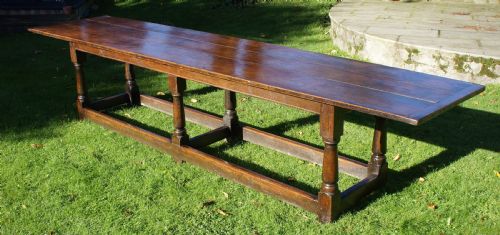


Large Oak Banquet Table
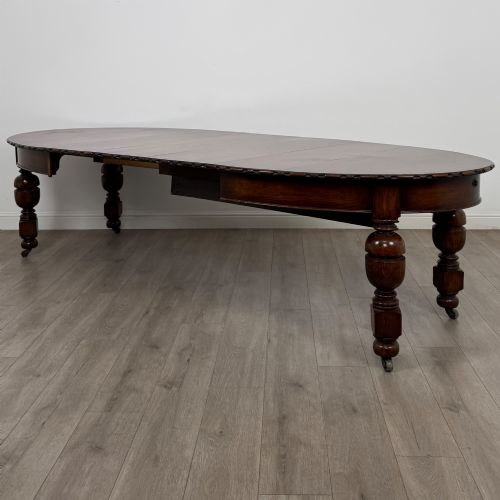
A large oak banquet table brings weight and presence to a room, offering vast surface space built to seat many.
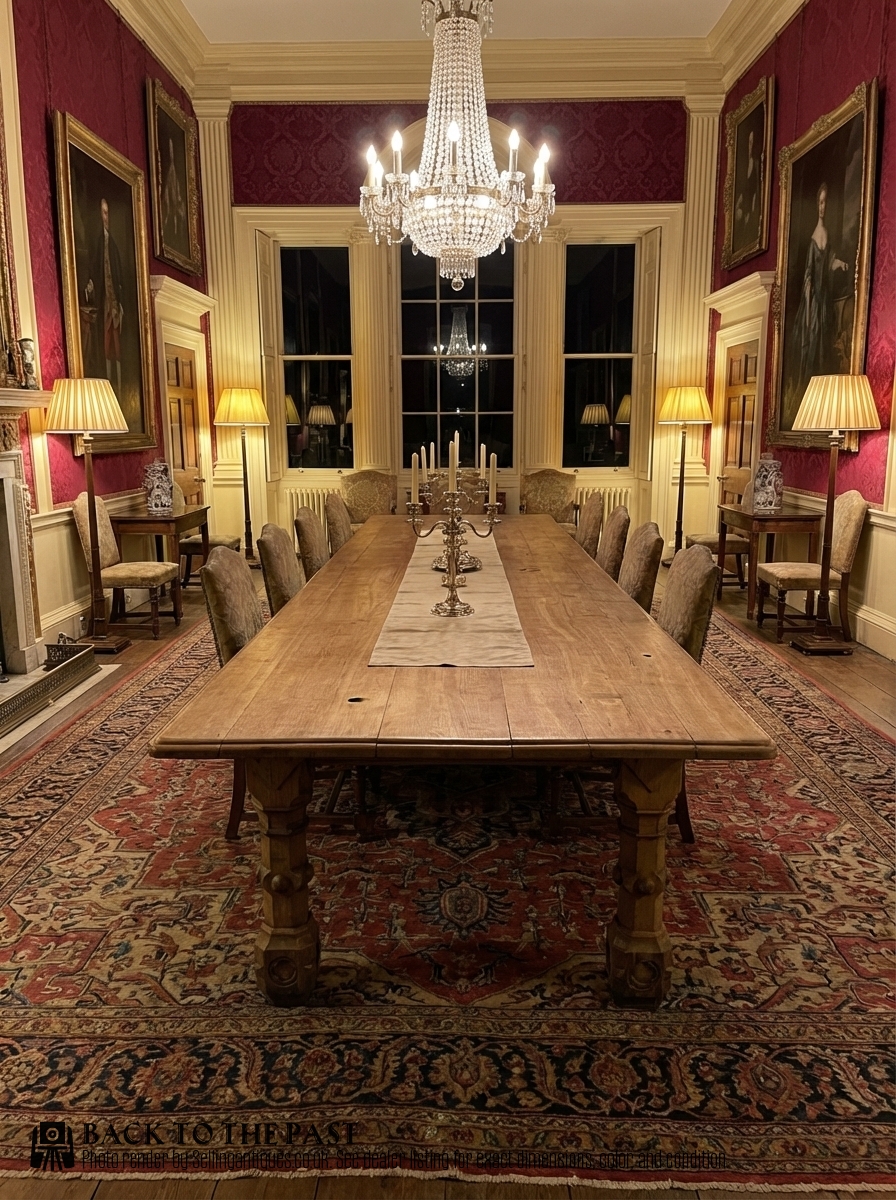
Large Oak Banquet Table
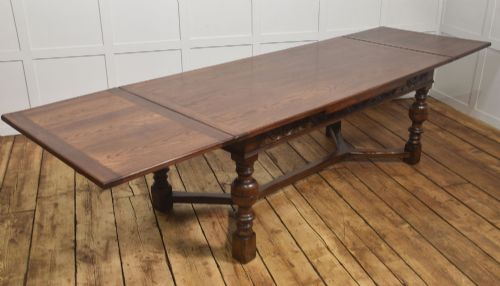
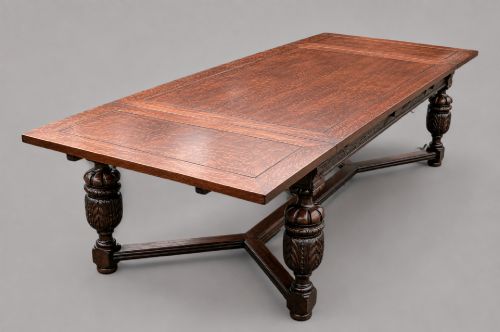
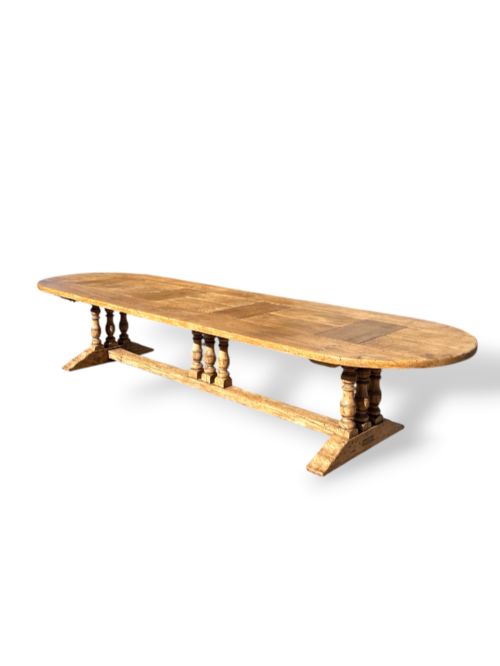
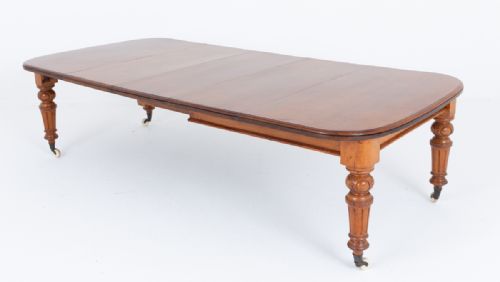
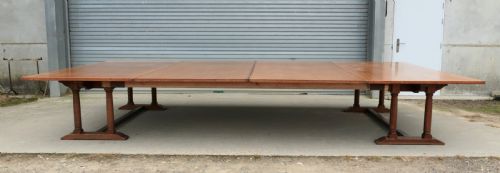
A large oak banquet table forms the centrepiece of a grand dining room, hall or boardroom, designed to accommodate large gatherings with ease. Buyers seeking this phrase encounter substantial formats, including refectory designs, extending tables with multiple leaves, and trestle structures.
The selections span several centuries and revivals, reaching from authentic seventeenth-century foundations through Victorian, Edwardian, and Arts and Crafts interpretations. These pieces originate primarily from British and European workshops, utilising robust timber to create surfaces of considerable length and breadth.
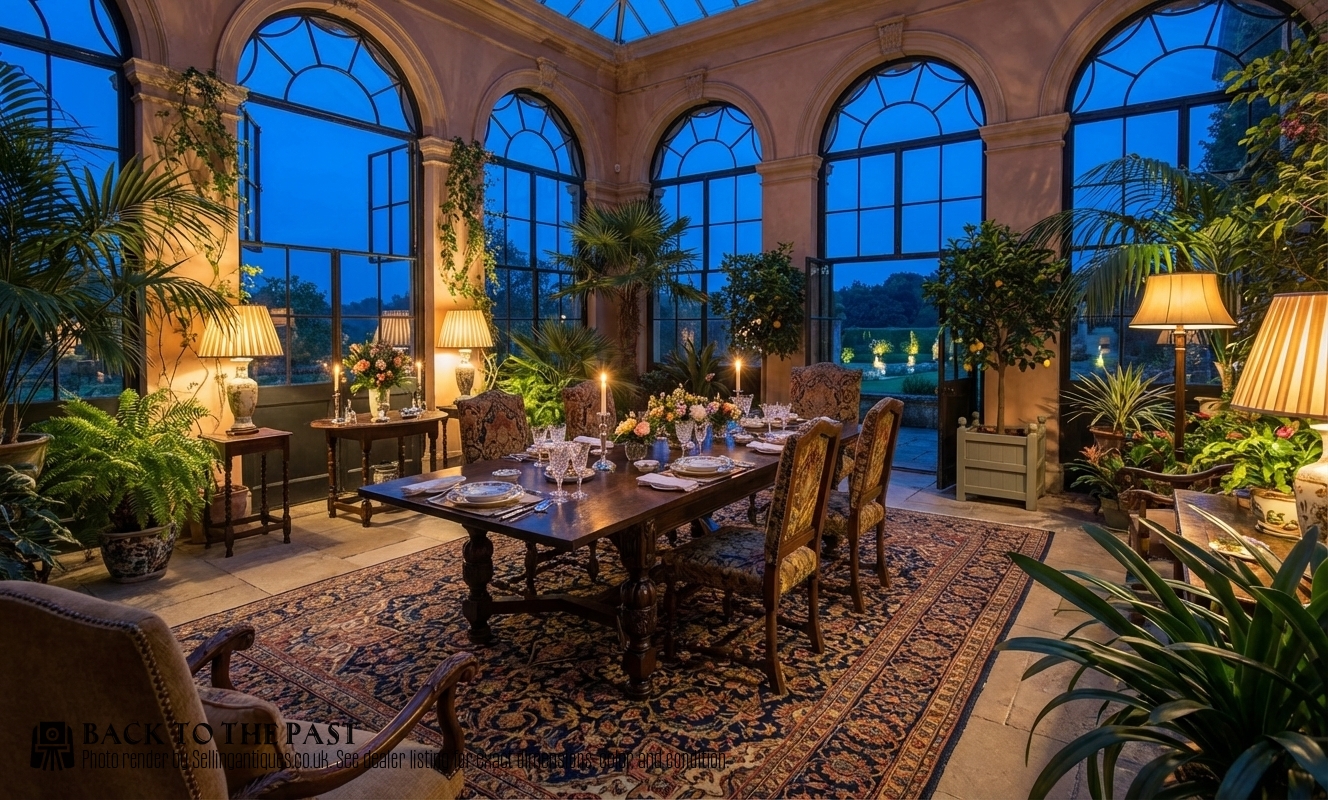
What varies in quality
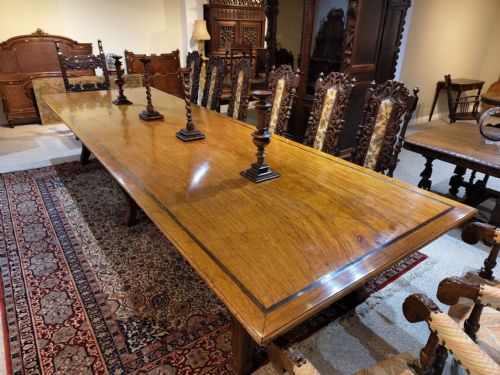
Quality rests in the selection of the timber and the integrity of the structural frame beneath the surface top. Superior examples employ thick, quartersawn oak boards that display rich medullary rays, joined without excessive warping across spans exceeding several metres.
The sophistication of the carving and the precision of the extending mechanism distinguish high workshop output from simpler utilitarian pieces. Refined mouldings, stable cruciform or trestle bases, and original brass or bronze hardware elevate the execution of the design.
Large Oak Banquet Table Retail Price Guide 2026
Typical asking prices for large oak banquet table among the pieces listed under this phrase on Sellingantiques today, from the lower quarter to the upper quarter. They describe what is for sale here now, not the wider market.
Listings feature oak tables spanning the seventeenth century through to the Edwardian era, incorporating styles from Gothic Revival to Arts and Crafts.
Maple and Co
The Large Oak Banquet Table Glossary
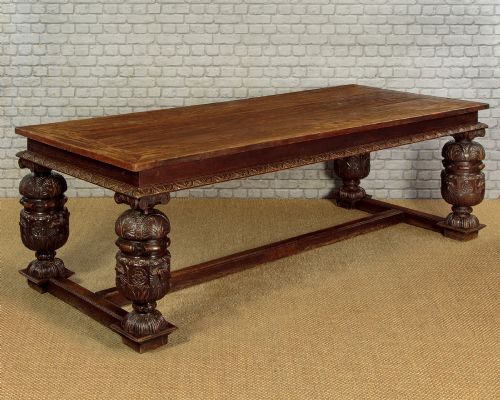
- Refectory table
- A long, narrow dining table traditionally used in monasteries and great halls, characterised by substantial legs connected by low stretchers.
- Draw-leaf
- An extending table mechanism where two hidden leaves slide out from beneath the main top, automatically raising to level when pulled.
- Pollard oak
- Timber taken from trees that were cut back close to the trunk to promote dense, highly figured, decorative branching patterns.
- Mortise and tenon
- A joint joining two pieces of wood where a protruding tongue fits tightly into a matching cavity, secured with wooden pegs.
- Quartersawn
- Timber cut radially from the log, producing boards with greater dimensional stability and prominent grain figuring.
Large Oak Banquet Table: Frequently Asked Questions
How many people can sit at a banquet table?
Seating capacity depends on the overall length of the surface and the presence of extension leaves. Many large formats accommodate ten to thirty guests comfortably.
Buyers should measure their dining space carefully, allowing clearance around the perimeter for chairs to pull out fully.
Are extending banquet tables difficult to operate?
Most extending versions utilise wooden runners or mechanical screws designed to glide smoothly despite the weight of the timber leaves. Proper lubrication of the tracks ensures the mechanism functions without binding.
Second leaves store separately when not in use, requiring dry storage space nearby.
How do I care for an antique oak surface?
Oak surfaces respond best to regular dusting with a dry cloth and occasional treatment with quality beeswax to nourish the timber. Avoid placing hot dishes directly onto the bare wood to prevent marking the finish.
Maintaining consistent room humidity prevents the solid timber from splitting or warping over seasonal changes.
What is the difference between refectory and trestle tables?
Refectory tables feature four or more legs joined by a continuous stretcher running near the floor for added stability. Trestle tables rely on two or more vertical end supports connected by a central beam.
Both forms provide unobstructed legroom along the length of the table edges.