

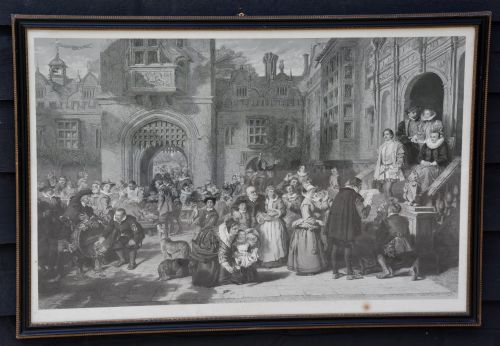
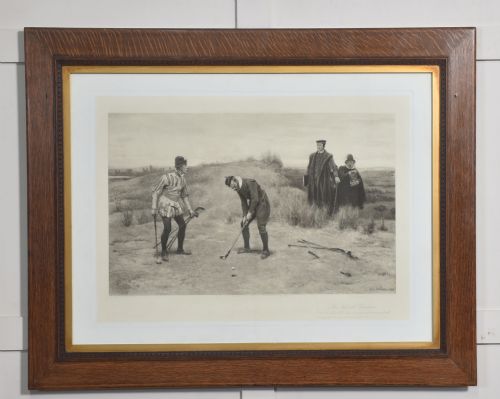
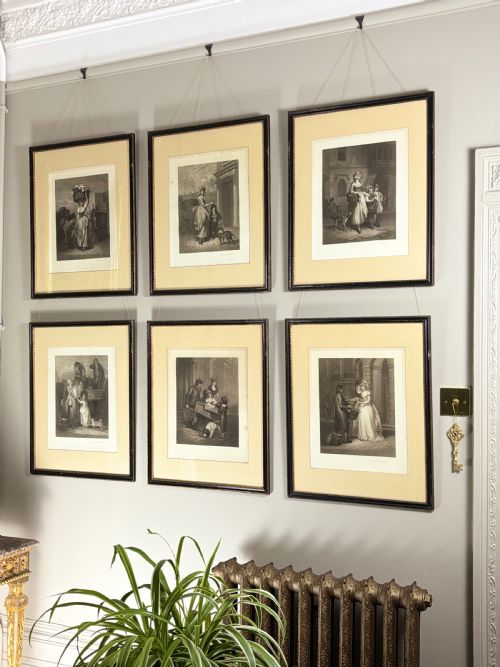


Large Monochrome Wall Print
These large monochrome wall print selections bring substantial historical imagery into a room, offering graphic visual weight through centuries-old paper works.
Large Monochrome Wall Print
When searching for a large monochrome wall print, a buyer encounters significant works on paper spanning the eighteenth century, nineteenth century, and mid-twentieth century. The dominant forms on this page are engravings, mezzotints, and architectural drawings housed in period frames.
The selection ranges from classical antiquity studies and gothic art histories to nautical photography and brass rubbings. Eighteenth-century architectural subjects engraved by James Basire appear frequently alongside Victorian engravings and twentieth-century decorative pieces.
How they were made
These works utilise ink on paper, executed through manual printing methods like engraving and mezzotint, or captured as original photographs and brass rubbings. The resulting monochrome palette relies on tonal graduation rather than applied colour.
Framing materials include oak, ebonised wood, and gold leaf or gilt mouldings, often paired with protective glass. The mounting hardware and timber surrounds reflect the period of production, from Hogarth frames to simpler twentieth-century mouldings.
Cardigan Bay shipping makes a surprise appearance alongside ancient Greek gods and medieval satyrs.
What varies in quality
Quality rests upon the clarity of the ink impression and the preservation of the paper sheet over centuries. Fine line work in architectural engravings and deep tonal richness in mezzotints distinguish the finest examples.
The integrity of the original frame and the association with noted printmakers or draughtsmen elevate specific pieces. Hand-signed impressions or commissions add distinct provenance to the visual impact.
James Basire·Thomas G Appleton
The Large Monochrome Wall Print Glossary
- Engraving
- A printmaking technique where an artist cuts an image into a metal plate using a burin. The resulting lines hold the ink for transfer under pressure onto paper.
- Mezzotint
- A tonal printmaking process that works from dark to light by roughening a metal plate to achieve smooth gradations of shade. It creates velvety dark areas without relying on line.
- Brass rubbing
- A method of recording incised monumental brasses by laying paper over the metal and rubbing over it with a dark medium. This captures the exact design in monochrome.
- Hogarth frame
- A distinctive wooden picture frame profile characterised by a stepped or ogee shape, often finished in black lacquer or gilt highlights. It gained popularity during the eighteenth century.
- Neoclassical
- A style rooted in the art and culture of classical antiquity, frequently seen in eighteenth-century architectural drawings and engravings of Greek gods and Athens.
Large Monochrome Wall Print: Frequently Asked Questions
How do I hang a heavy framed print?
Large framed works require secure fixings into wall studs or solid masonry to support the combined weight of the timber, glass, and paper. Using two hanging points distributes the load evenly.
Position the centre of the print at standard eye level, accounting for the substantial proportions typical of these historical wall pieces.
How should I care for antique paper?
Keep monochrome prints away from direct sunlight to prevent the ink and paper from fading over time. Stable indoor humidity protects the paper fibres from warping.
Ensure the glass is clean and check that the backing boards allow the paper to breathe without trapping moisture.
How do I identify an eighteenth-century engraving?
Look closely at the paper margins for plate marks, which are indented lines left by the metal printing plate under pressure. Examine the paper texture for handmade characteristics like laid lines.
Typography, subject matter relating to classical antiquities, and attribution to engravers such as James Basire point toward the eighteenth century.