
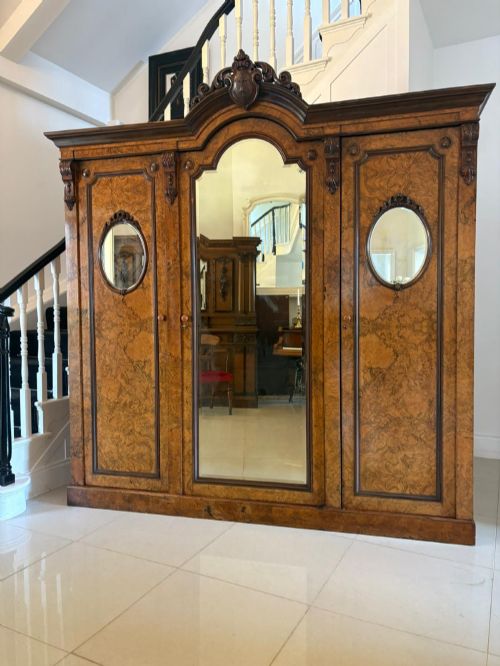
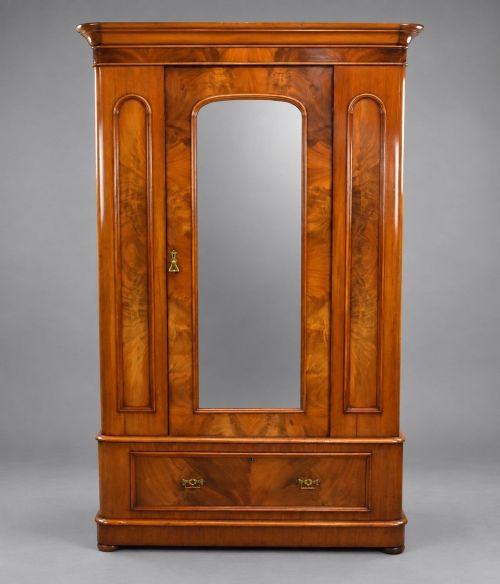
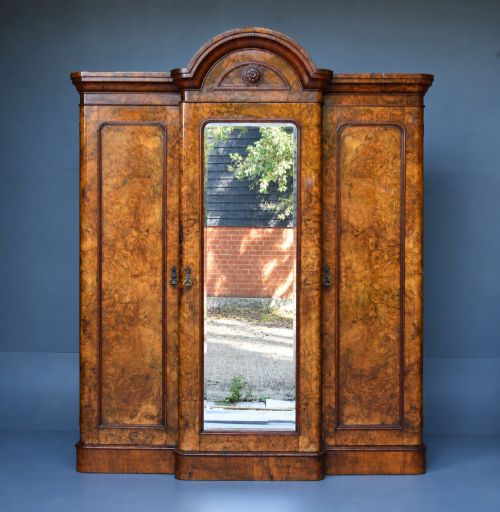
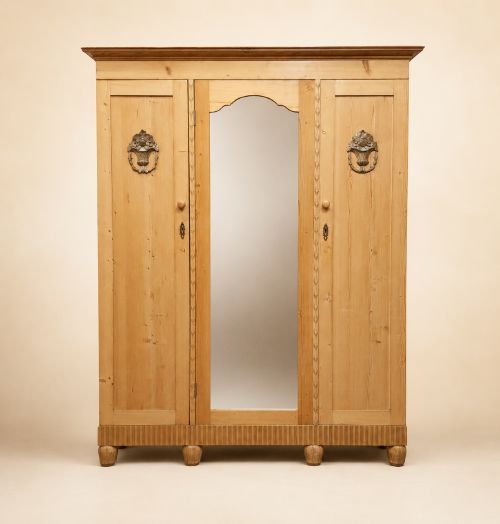
Large Mirrored Armoire
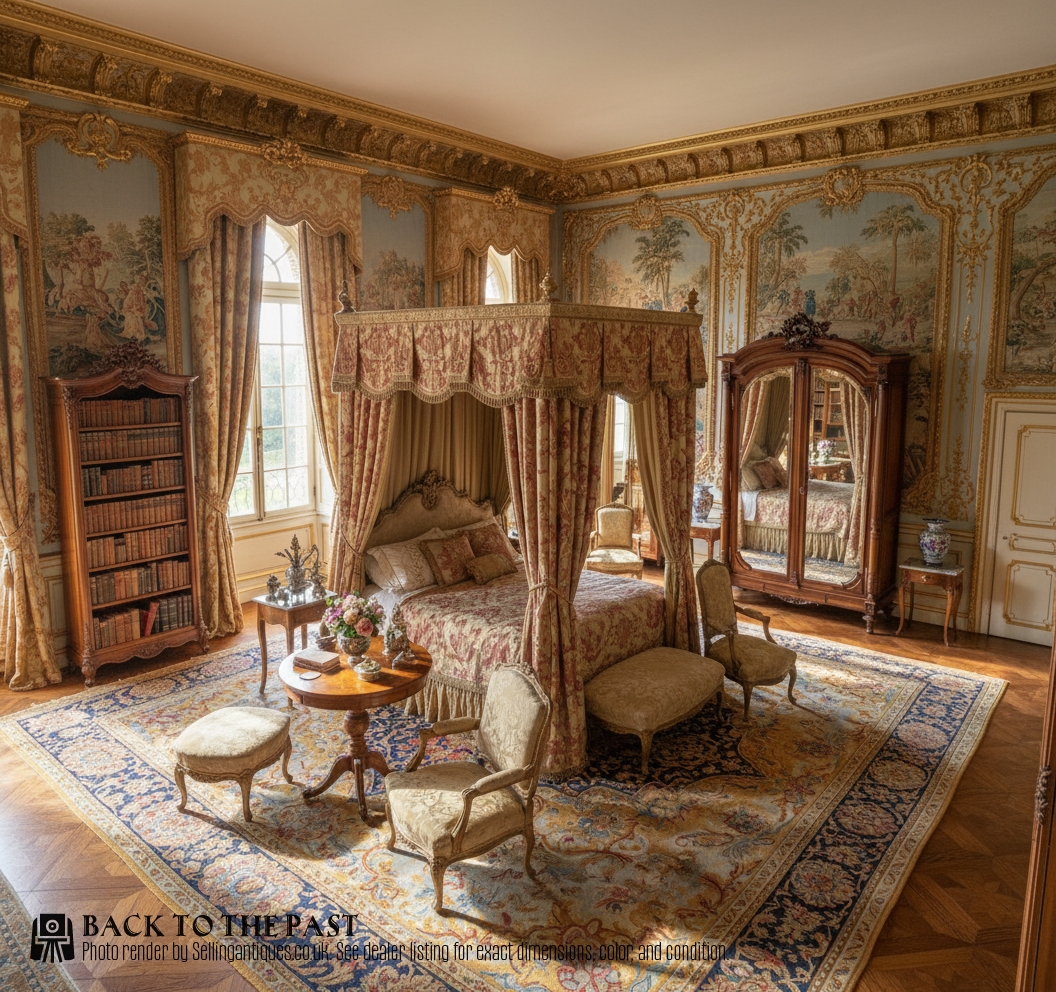
A large mirrored armoire offers generous proportions and reflective glass, bringing scale and utility to a bedroom.
Large Mirrored Armoire
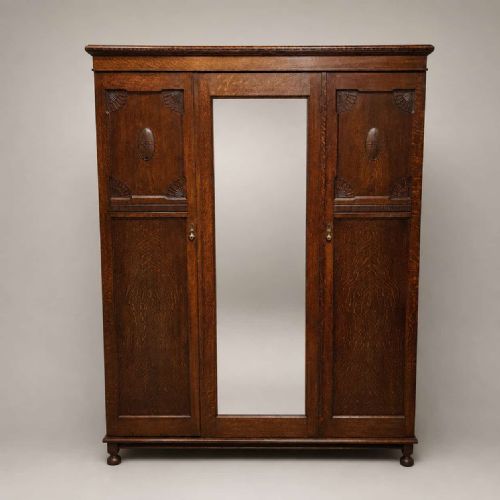
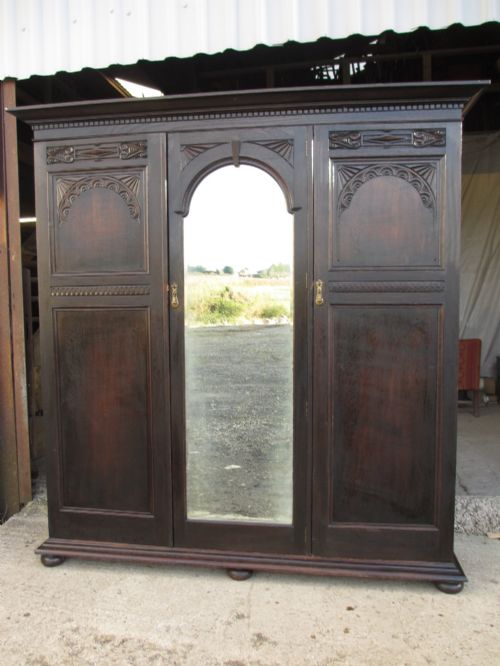
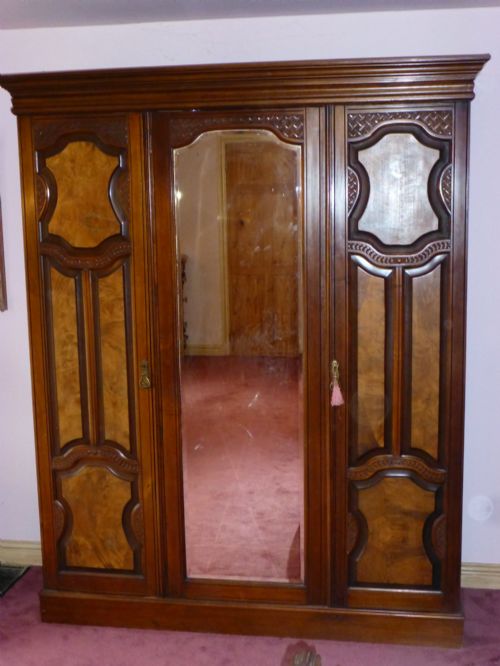
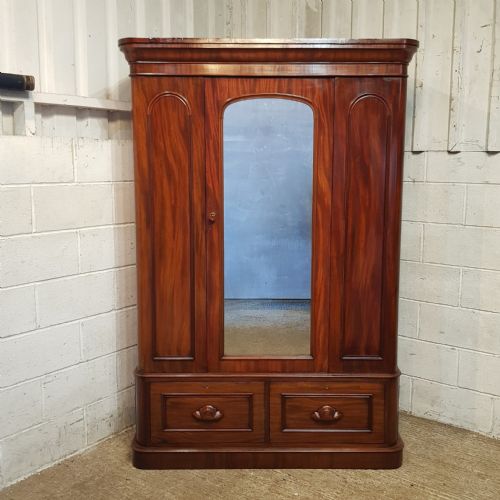
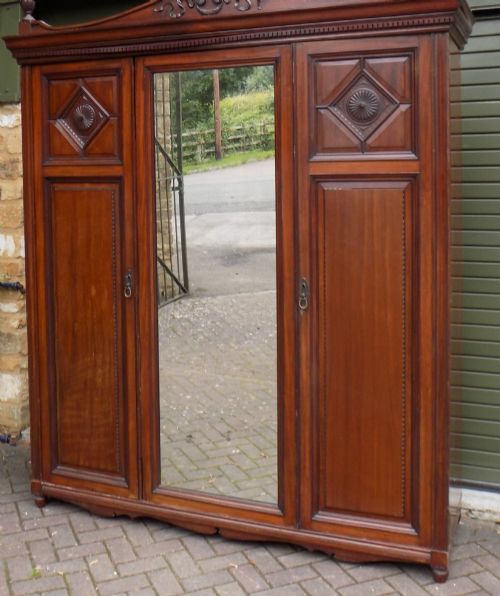
A large mirrored armoire functions as a substantial storage piece, combining hanging space with full-length glass doors. These items appear primarily in Victorian and Edwardian periods, alongside nineteenth-century and early twentieth-century examples.
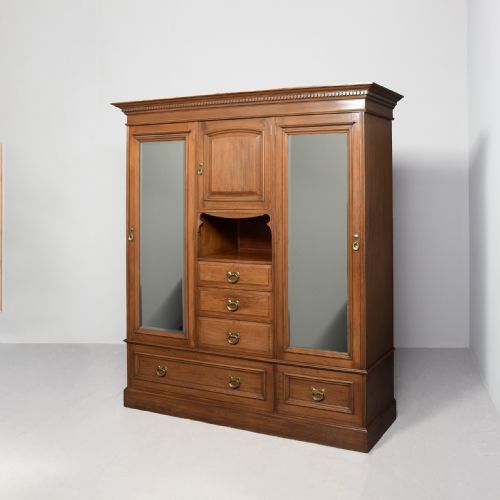
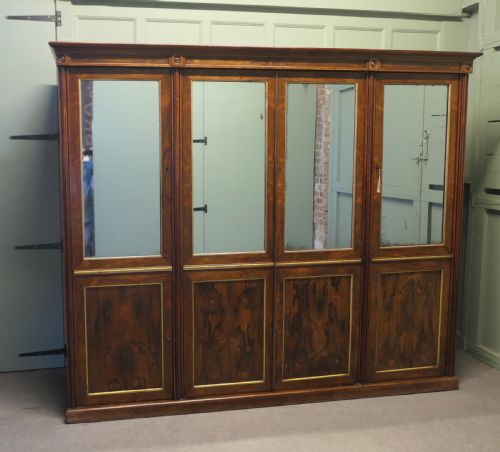
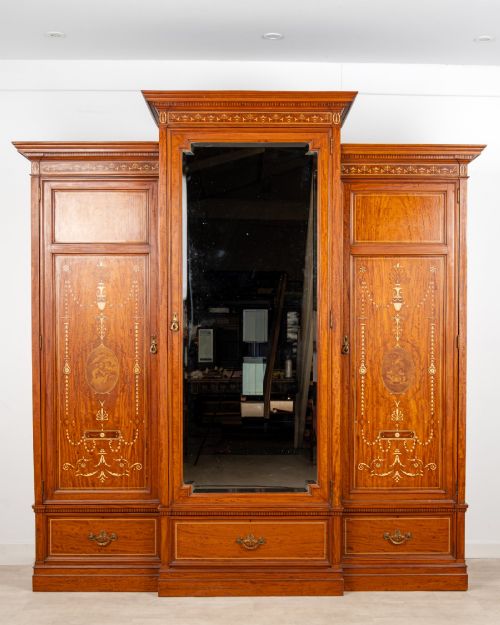
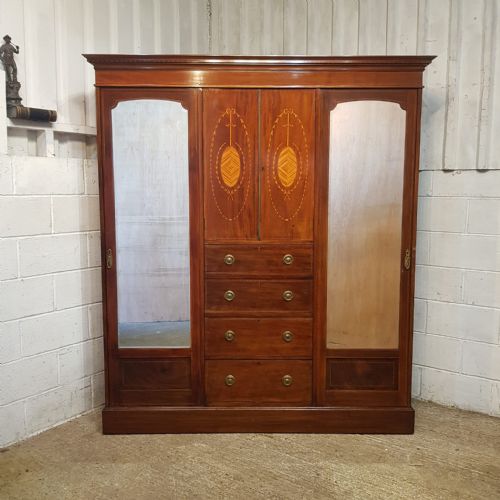
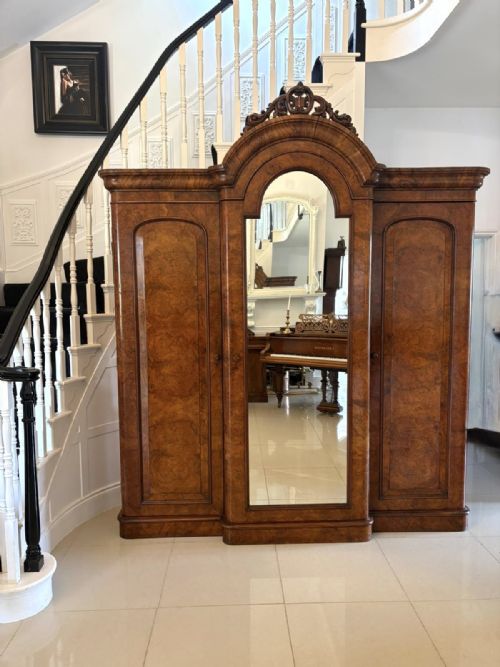
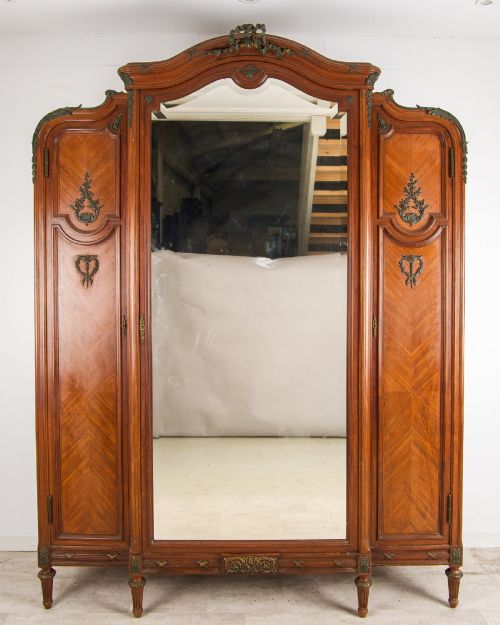
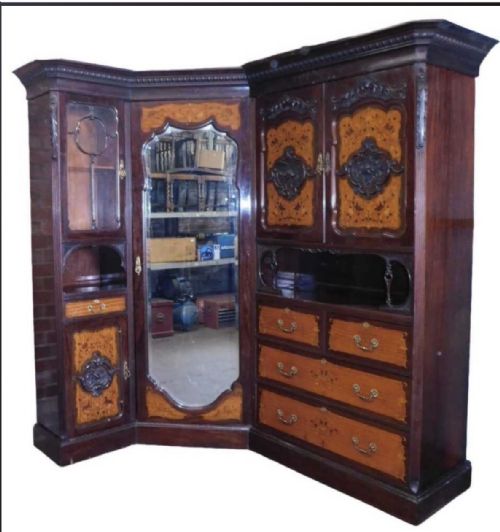
The pieces emerge in forms such as triple wardrobes, compactums, and French armoires. Oak, mahogany, walnut, and burr walnut dominate the construction, often housing multiple sections for garments and linen.
Buyers seeking this phrase most frequently encounter nineteenth-century walnut and Edwardian mahogany multi-door wardrobes fitted with central mirror glass.
Materials and Construction
Cabinet makers utilised dense hardwoods like mahogany, oak, and walnut for the structural carcass and drawer linings, frequently applying burr walnut or satinwood veneers to the principal facade.
Glass panels were bevelled and set into heavy timber doors, while brass hardware, gilt bronze ormolu mounts, and carved details completed the exterior ornamentation.
Listings span Victorian, Edwardian, and Regency periods, utilising mahogany, walnut, oak, satinwood, and rosewood.
Assessing Quality
Quality rests upon the selection of timber figures, such as matched burr walnut or straight-grained mahogany, and the depth of hand-carved ornamentation on the cornices and panels.
Superior examples demonstrate precise joinery in multi-section compactums and breakfront frames, alongside heavy cast brass handles and original bevelled mirror glass.
Holland and Sons·Maple and Co
The Large Mirrored Armoire Glossary
- Armoire
- A large wardrobe or cupboard, traditionally of continental European origin, designed for hanging garments. French armoires frequently arrive in bleached oak or rosewood.
- Compactum
- A fitted wardrobe that incorporates internal drawers, shelves, and hanging space within a single multi-door unit. These pieces often date from the Victorian period.
- Burr walnut
- A veneer taken from the warted growths on walnut trees, prized for its swirling, highly figured grain pattern. Cabinet makers used it on prominent exterior surfaces.
- Breakfront
- A piece of furniture where the central section projects forward from the flanking outer wings. This configuration breaks the linear facade of large wardrobes.
- Pollard oak
- Timber sourced from oak trees that were cut back near the trunk to produce dense, clustered growth rings. The resulting wood displays a distinctive speckled figure.
Large Mirrored Armoire: Frequently Asked Questions
Do large mirrored armoires dismantle for transport?
Many large wardrobes and armoires separate into distinct modular sections, cornices, and bases to ease movement through doorways.
Buyers should confirm dismantling capabilities with individual pieces, as solid multi-door carcasses often require professional delivery teams.
How do I distinguish Victorian from Edwardian wardrobes?
Victorian examples generally employ heavier timbers, rich burr walnut, and darker mahogany finishes with deep cornices and dense carving.
Edwardian pieces tend to display lighter satinwood inlays, brighter mahogany, or pollard oak with cleaner, airier lines.
What is the difference between an armoire and a compactum?
An armoire functions primarily as a tall cupboard or wardrobe with hanging space behind large doors, often stemming from French traditions.
-A compactum integrates internal linen presses, sets of drawers, and compartments alongside hanging sections into one combined unit.
Can these wardrobes fit modern clothes hangers?
Older wardrobes occasionally feature shallow interior depths designed for antique coat hangers rather than modern broad shoulder shapes.
Checking internal depth dimensions ensures contemporary wooden or wire hangers clear the closed mirrored doors.