


Rosewood Linen Press
These rosewood linen press pieces are substantial storage furniture, built from rich dark timbers to hold household linens and garments.
Rosewood Linen Press
When you search for a rosewood linen press, you are looking at substantial storage furniture designed to hold household linens and garments, often combining upper cupboard doors with lower drawer sections. These items appear in various forms, including traditional presses, wardrobes, and cabinets, spanning periods from the seventeenth century through to the Edwardian era.
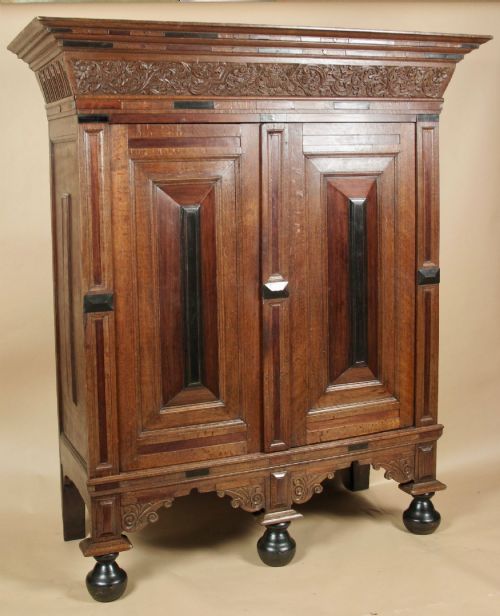
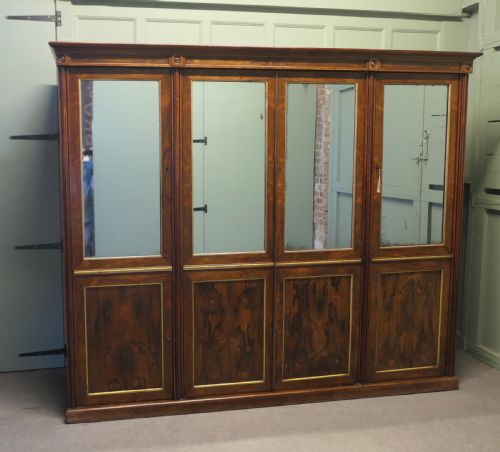
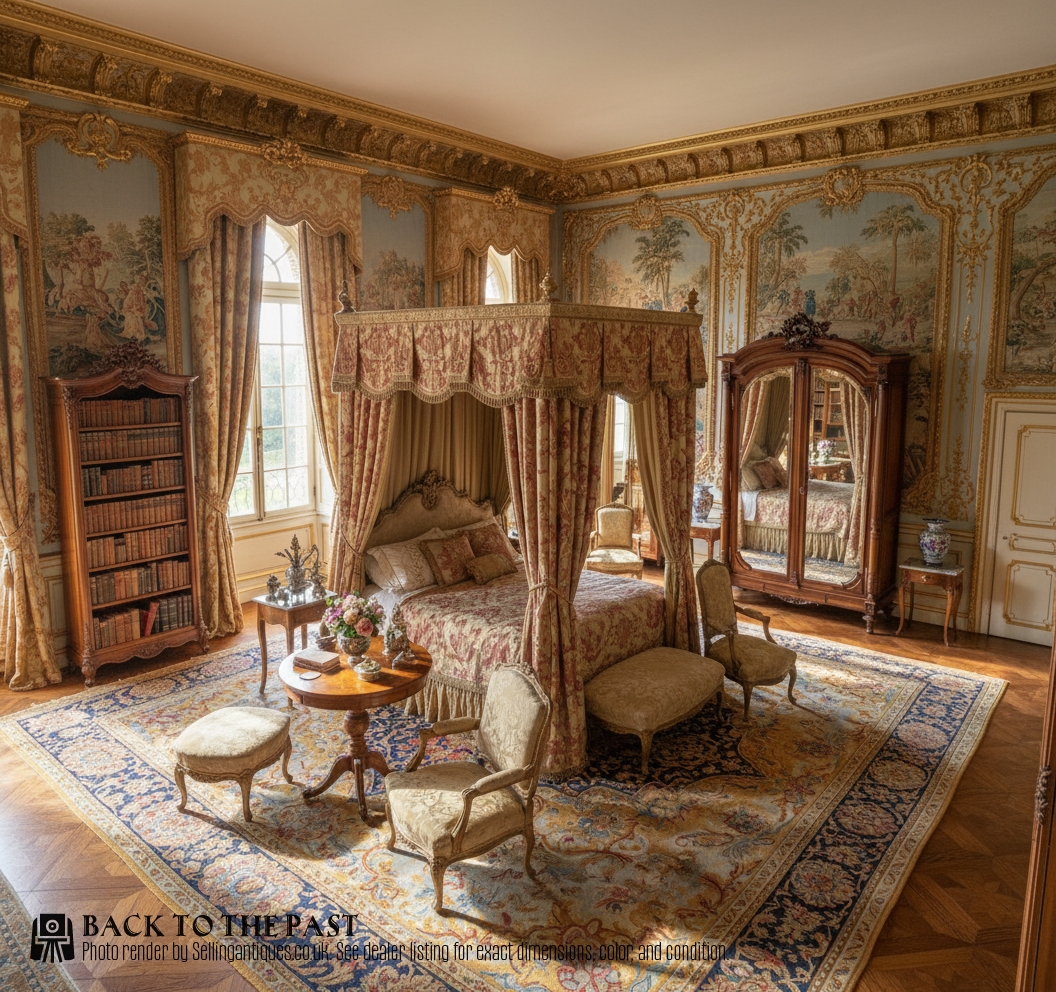
The version you are most likely to meet on this page is a nineteenth-century or Regency piece, frequently displaying rich crossbanding or inlaid details. Alongside these standard English forms, the selection encompasses Dutch Baroque kussenkast designs, French chateau armoires, and Anglo-Indian colonial cupboards, reflecting a wide geographical range.
Makers and craftsmen utilised diverse stylistic influences for these storage pieces, ranging from Renaissance Revival and Flemish Baroque to Georgian and Edwardian designs. Each specimen demonstrates how master woodworkers adapted the dense, figured grain of rosewood to grand architectural proportions and practical domestic storage.
Materials and construction
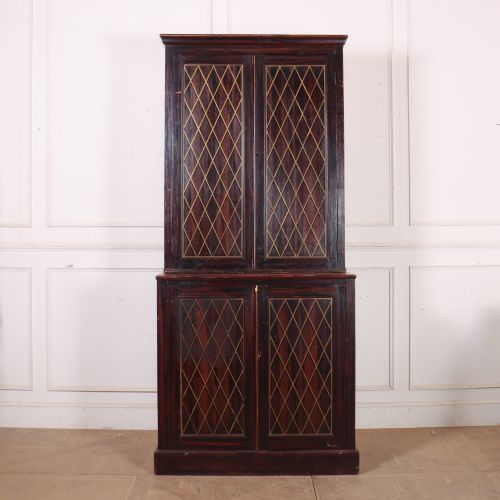
The primary construction relies heavily upon solid rosewood and supportive secondary timbers such as oak and pine, frequently enhanced with contrasting ebony or mahogany elements. Craftsmen applied these dense materials alongside brass hardware, gilt accents, and occasional painted finishes to create durable, highly decorative furniture facades.
Surface ornamentation on these pieces includes intricate line inlay, rosewood crossbanding, and profuse marquetry, particularly in later Victorian and Edwardian examples. Structural forms range from heavy seventeenth-century Dutch kussenkast framing to grand French armoire proportions and compact Regency configurations.
Some seventeenth-century Dutch cupboards feature cushion-moulded panels so pillowy they make you want to rest your head right against the timber.
Quality variations
The distinction between standard examples and top-tier items rests in the selection of timber veneers and the precision of the joinery. Superior pieces display book-matched rosewood grain and crisp, detailed inlay work rather than simpler surface decoration.
Construction methods also dictate quality, with heavier, solid framing and original brass mounts separating exceptional seventeenth and nineteenth-century examples from later, more basic utility cupboards.
The Rosewood Linen Press Glossary
- Rosewood
- A dense, heavy timber featuring dark brown and black grain patterns that takes a high polish. It was favoured for fine cabinetmaking throughout the nineteenth century.
- Linen press
- A tall piece of furniture featuring upper doors enclosing sliding trays or shelves for textiles, placed above a chest of drawers.
- Crossbanding
- A decorative border technique where veneer strips are laid perpendicular to the main grain of the panel. This frames the primary wood surface with a contrasting border.
- Kussenkast
- A heavy seventeenth-century Dutch cupboard featuring prominent cushion-moulded panels. These cabinets are constructed from oak with rich rosewood and ebony veneers.
- Compactum
- A fitted wardrobe or combination piece designed with internal partitions, hanging space, and drawers to maximise storage efficiency.
Rosewood Linen Press: Frequently Asked Questions
What is a rosewood linen press used for?
These pieces were originally built to store household linens, sheets, and garments on internal sliding shelves or trays. Lower drawer sections provided additional space for folded clothing and textiles.
Today, many buyers utilise them as versatile wardrobes or living room storage cabinets. Their deep proportions accommodate modern clothing rails and shelving while retaining period character.
How do I date a rosewood piece?
Dating relies on observing structural characteristics, timber usage, and decorative styles across different eras. Seventeenth-century examples feature heavy architectural mouldings and oak foundations, whereas Regency and Victorian pieces utilise finer crossbanding and inlays.
Secondary timbers like pine or oak behind the rosewood veneer also offer clues. Earlier pieces show hand-cut joints, while Edwardian items may incorporate machine precision.
How do I care for rosewood furniture?
Rosewood requires stable indoor humidity levels to prevent the dense timber and underlying veneers from splitting or warping. Keep pieces away from direct heat sources and strong sunlight to preserve the rich colour.
Routine maintenance involves gentle dusting with a dry, soft cloth. Avoid silicone-based polishes, opting instead for traditional beeswax applied sparingly to nourish the polished surface.