

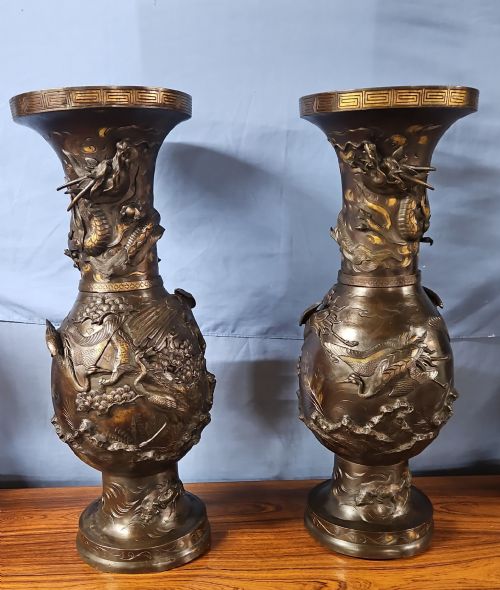


Large Japanese Bronze Vase
A large japanese bronze vase brings a heavy sculptural presence to a room, cast during the Meiji period and the nineteenth century.

Large Japanese Bronze Vase
When searching for a large japanese bronze vase, collectors encounter substantial vessels cast primarily during the late nineteenth and early twentieth centuries. These objects range from standard decorative vases to amphora forms, temple vessels, and large garden urns.
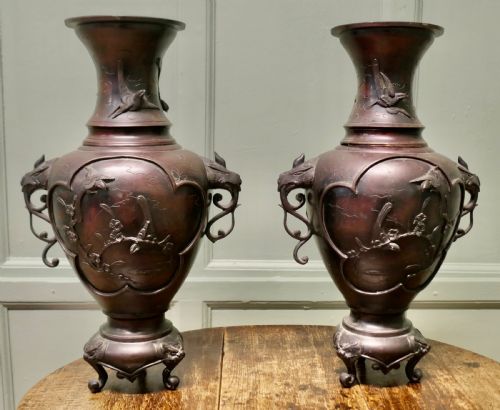
The pieces often bear association with the Meiji period, reflecting the intricate metalwork traditions of Japanese workshops from that era. Many examples survive as pairs, while others appear as single monumental pieces designed for prominent display.
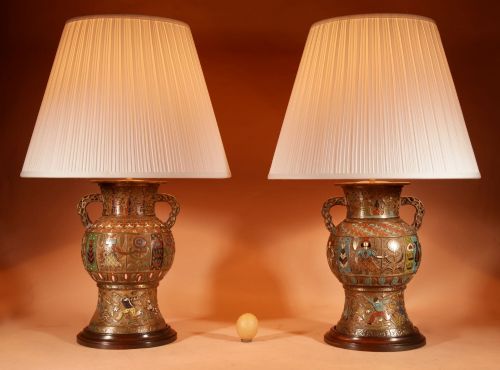
Beyond standard vases, the category extends to related forms such as jardinieres, planters, and table lamps adapted with mounts. The sheer scale of these objects marks them out as focal points within interior spaces.
How they were made
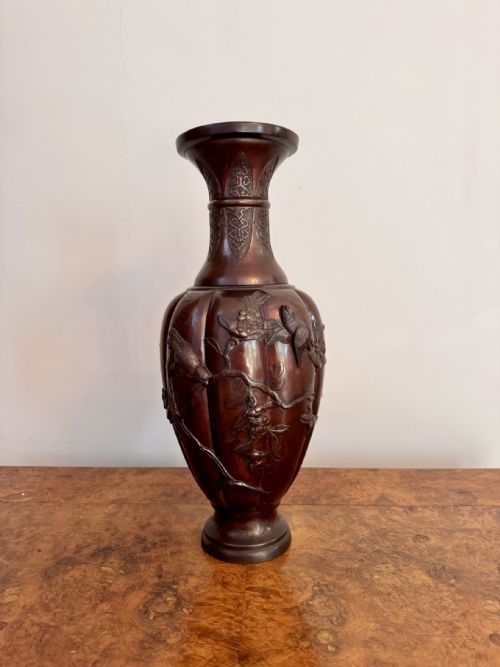
The foundational material is bronze, frequently patinated to achieve deep brown, black, or variegated surfaces through chemical treatments. Workshops also utilised mixed metal applications, fusing copper, brass, and gilt elements onto the bronze body.
Surface decoration often incorporates cloisonne and champleve enamel work, where coloured pastes fill recessed metal channels before firing. Inlaid details are meticulously applied, depicting natural motifs such as birds, fish, and flora.
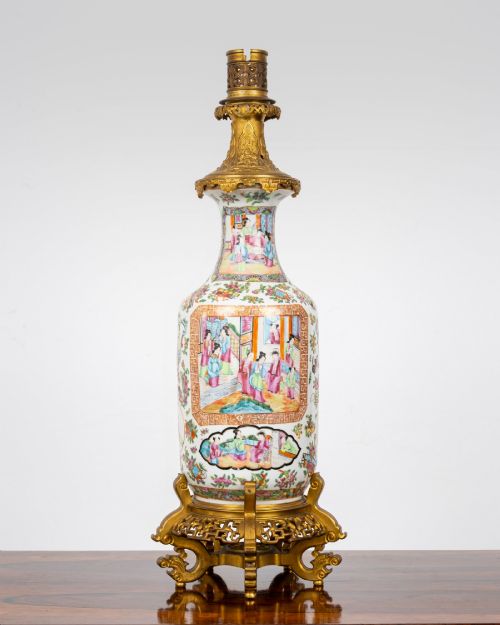
Listings feature nineteenth century and Meiji period works in bronze, patinated bronze, and mixed metal, alongside enamel and porcelain variations.
What varies in quality
Quality rests in the crispness of the casting and the precision of the metal inlay work. Finer examples display deeply undercut reliefs and harmonious multi-patinated surfaces rather than flat, uniform finishes.
The integration of mixed metal elements, such as silver or gold highlights on carp and cranes, demonstrates the artisan's skill level. Weight and structural stability also distinguish superior heavier castings from lighter production pieces.
Genryusai Seiya·Miyao Eisuke·Takusai Honma·Suzuki Chokichi·Kanaya Gorosaburo XI·Miyabe Atsuyoshi·Nogawa·Hamada Yoshifumi·Kiyomitsu·Chikatoshi
The Large Japanese Bronze Vase Glossary
- Meiji Period
- The era in Japanese history spanning from 1868 to 1912, noted for a surge in artistic metalwork exports. Pieces from this time frequently feature complex patination and mixed metal inlay.
- Champleve
- An enamelling technique where troughs are dug into the bronze surface and filled with vitreous enamel before firing. This creates raised metallic outlines between coloured areas.
- Cloisonne
- A method of decorating metal objects by affixing wires to the surface to form compartments that receive enamel paste. The piece is then fired and polished smooth.
- Usubata
- A specific type of Japanese bronze vase traditionally used for flower arrangement, featuring a wide flaring mouth and often a pedestal base. These vessels are frequently found in larger garden or hall sizes.
- Mixed Metal
- A decorative approach combining bronze with contrasting metals such as brass, copper, and precious alloys. This technique creates varied tonal effects across the body of the vase.
- Patinated Bronze
- Metal treated with chemical solutions to alter the surface colour and create aged or nuanced tones. The resulting patination ranges from rich dark browns to mottled greens.
Large Japanese Bronze Vase: Frequently Asked Questions
How do I clean a bronze vase?
Dust gently with a soft, dry cloth to protect the original patination and any delicate metal inlays. Avoid using chemical polishes, water, or abrasive cleaners that can strip the historic surface finish.
Allow a natural protective layer to remain rather than attempting to achieve a bright metallic shine. For accumulated grime, consult a specialist in antique metal conservation.
Where should I place a heavy vase?
Position these heavy vessels on sturdy, level furniture or directly on the floor if dealing with monumental garden urns. Ensure the supporting surface can safely bear the substantial weight of the bronze.
Keep pieces away from direct heat sources and strong sunlight to prevent thermal stress and surface degradation. Placing them in low-traffic corners protects both the object and passersby from accidental knocks.
Were these vases made for export?
Many large bronze pieces were produced specifically for Western export markets during the Meiji period following international exhibitions. Japanese metalworkers adapted traditional forms and motifs to appeal to European and American collectors.
At the same time, domestic demand continued for temple vessels, presentation pieces, and garden ornaments. This dual market explains the variety of scales and decorative styles found today.
How can I tell the period?
Examine the casting quality, the composition of the patination, and the style of any signature or seal on the base. Nineteenth-century and Meiji period pieces typically display hand-finished details and heavier, more complex metal mixes.
Look for traditional motifs such as dragons, carp, and floral sprays rendered in high relief. Comparing the weight and construction methods with documented workshop examples helps narrow down the date of production.