
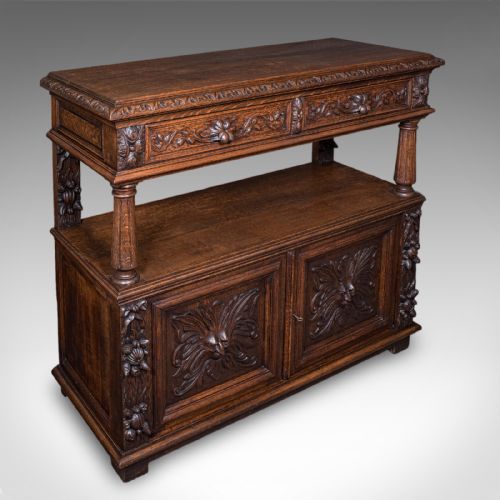


Large Green Cupboard
A large green cupboard brings substantial storage and centuries of character into a room through painted wood, oak and pine.
Large Green Cupboard
A large green cupboard encompasses major storage pieces such as housekeepers cupboards, kitchen dressers, sideboards, buffets, linen cupboards and bookcases originating from English, Scottish, Dutch and Danish contexts. These items span the eighteenth and nineteenth centuries, taking forms from Georgian country houses and Victorian Gothic Revival rooms to Scandinavian country interiors.
The version most commonly met on this page is the painted kitchen or housekeeper's cupboard in pine or oak, often finished in tones like lichen green or later green paint. These large pieces provide deep shelving, drawers or linen storage while establishing a strong visual anchor within a room.
Alongside traditional domestic cupboards, the selection includes monumental carved oak library bookcases, corner cupboards, armoires and industrial banks of drawers. Each variant reflects the domestic or commercial storage needs of its period, united by substantial proportions and functional design.
How they were made
Construction relies primarily on sturdy timber frameworks of oak and pine, joined by traditional methods to support heavy daily use over centuries. Carpenters selected timber for structural durability, often pairing solid boards for carcass backs and heavy shelves with framed doors.
Surface treatments combine bare wood with paint and gilding, utilising historic paint layers or later green painted finishes applied over wood. Brass hardware such as hinges and handles provides functional contrast, while bevelled glass panels appear in display variants.
Object forms span kitchen dressers, linen cupboards, sideboards, armoires and multi-drawer industrial cabinets.
What varies in quality
Quality reveals itself in the architectural integrity of the timber carcass and the balance of its proportions, separating straightforward utility pieces from grander architectural examples. The depth of hand-carving on oak elements, such as Gothic details or Green Man motifs, marks the distinction between standard workshop production and high-status commissions.
The character and history of the painted surface also influence the piece, with early or undisturbed paint layers offering a different visual weight compared to later applications. Original brass ironmongery, well-fitted panelled doors and intact interior shelving further distinguish finer examples.
The Large Green Cupboard Glossary
- Housekeeper's cupboard
- A large storage piece traditionally used in large country houses for linen, dry goods and household accounts. It typically combines upper doors with lower banks of drawers.
- Dresser base
- The lower section of a kitchen dresser, featuring cupboards and drawers beneath a flat top surface. These served as primary work surfaces and storage units in country kitchens.
- Green Man
- A sculptural architectural motif depicting a face carved from or entwined with leaves and foliage. It appears frequently in Gothic Revival and Victorian carved oak furniture.
- Lichen green
- A muted, earthy shade of green reminiscent of moss and lichen growth on stone or bark. It is frequently found on country house furniture from the Georgian period onward.
- Bevelled glass
- Glass panes shaped with an angled, polished border around the edge to catch the light. This technique is often seen in Victorian display cabinets and bookcases.
Large Green Cupboard: Frequently Asked Questions
Where did large green cupboards go in a house?
These large pieces were traditionally placed in kitchens, sculleries, housekeepers rooms or grand libraries to hold household stores, linens and books.
Today, their substantial scale makes them suited as freestanding larders in modern kitchens, statement storage in dining rooms or focal points in spacious hallways.
How do I tell an 18th-century cupboard from a Victorian one?
Eighteenth-century examples, such as Georgian and Dutch country pieces, often display simpler architectural lines, pegged joinery and older timber patination. Later nineteenth-century pieces frequently incorporate heavier Victorian carvings, Gothic Revival details or industrial elements like multi-drawer banks.
Examining the internal construction, backboards and hardware helps clarify the period of manufacture.
Are painted finishes on these cupboards original?
Many pieces feature later painted green finishes applied over earlier timber surfaces to suit changing interior tastes across the nineteenth and twentieth centuries. Some examples retain historic or lichen green paint dating back to the Georgian or Victorian eras.
The presence of layered paint adds texture and depth to the exterior character.
How do I live with a large wooden cupboard?
Living with these pieces involves acknowledging their substantial proportions and ensuring adequate wall space and floor clearance in a room. They offer deep, concealed storage that helps keep living areas clear of clutter.
Maintaining stable room humidity protects the antique oak and pine timbers from excessive expansion or contraction.