



English Country Buffet
An english country buffet brings genuine utility and historic character to a room, offering robust storage shaped by centuries of domestic craft.
English Country Buffet
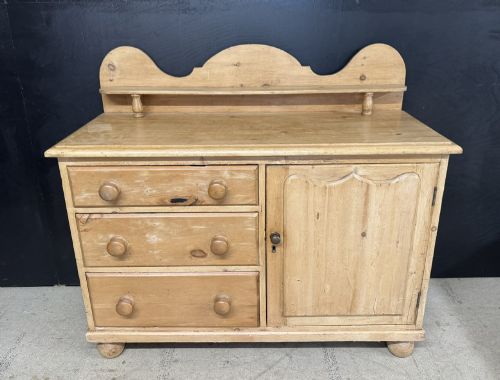
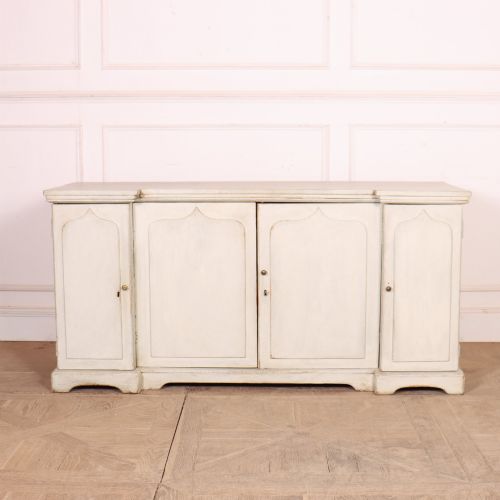
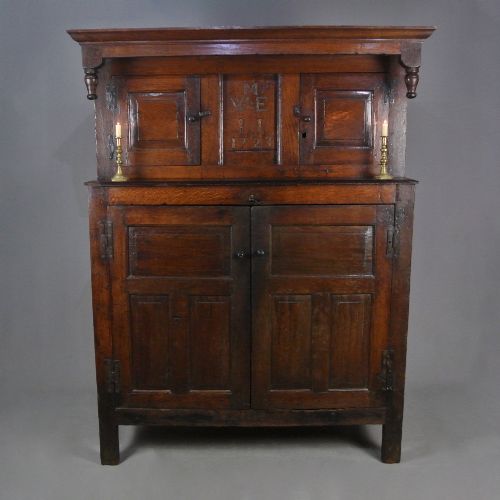
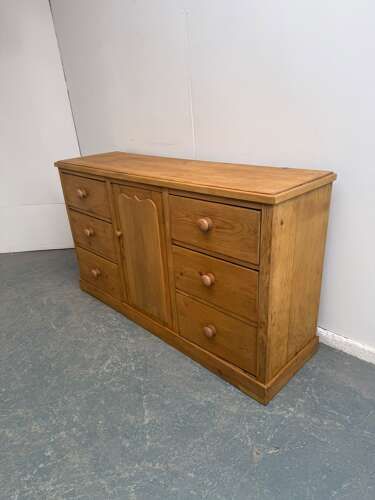
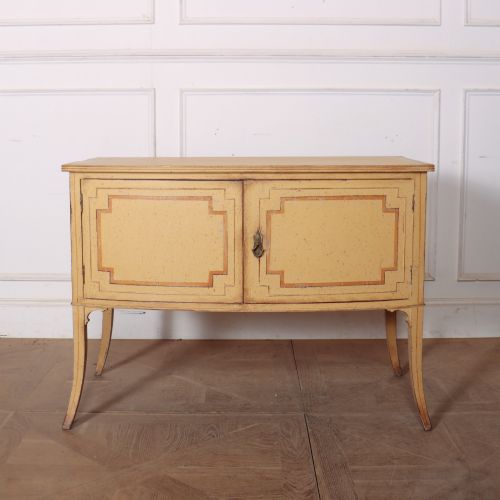
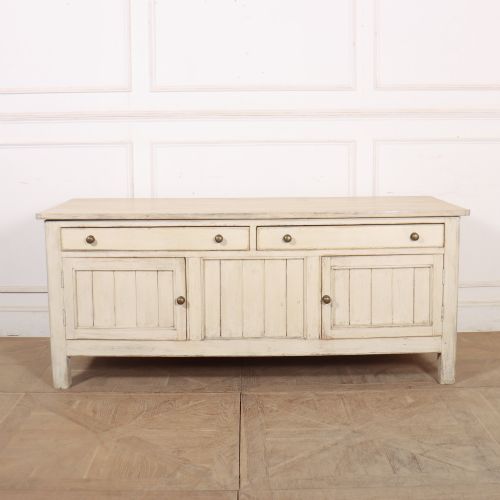
An english country buffet encompasses sturdy kitchen furniture built for daily service, including dresser bases, sideboards, potboards, and court cupboards. These pieces emerge from periods ranging from the late seventeenth century through the Edwardian era, reflecting rural utility rather than urban formality.
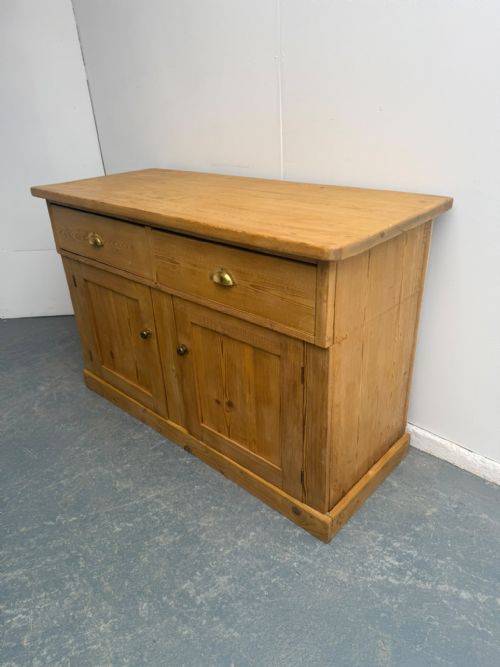
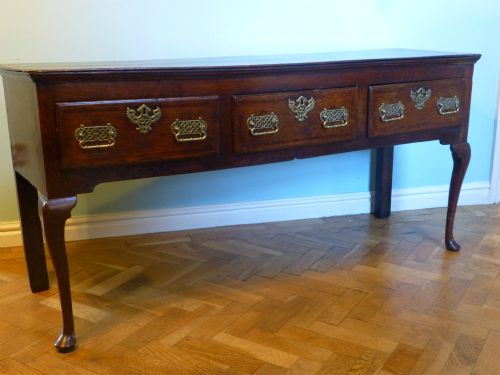
The most common examples on this page are oak and pine dresser bases originating from the eighteenth and nineteenth centuries. Such pieces often feature timber potboards beneath or banks of drawers designed to hold household provisions and dining ware.
Regional variations appear across the selections, with West Country pieces showing distinct local character alongside Georgian and Victorian iterations. Buyers encounter everything from rustic pine servers to formal George III oak cabinetry adapted for country houses.
Evaluating construction and finish
The integrity of the timber framing and the preservation of original surfaces separate exceptional examples from standard utilitarian pieces. Early items featuring undisturbed oak patination and period brass handles command attention for their historical survival.
Proportion and structural honesty dictate the caliber of these items, where unaltered drawer linings and stable potboard bases demonstrate superior regional craftsmanship. Pieces retaining authentic painted finishes or early waxed surfaces offer distinct visual depth compared to later alterations.
Several pieces include integrated wine racks, proving that country households prioritized accessible refreshment just as much as we do today.
The English Country Buffet Glossary
- Dresser base
- A low cabinet featuring drawers and sometimes a lower shelf or potboard, originally designed for food preparation and storage in the kitchen.
- Potboard
- An open lower shelf beneath a dresser base or sideboard, traditionally used for storing pots, pans, and heavy earthenware.
- Court cupboard
- A heavy enclosed wooden cupboard from the seventeenth century featuring carved panels and recessed upper tiers, used for displaying plate.
- Breakfront
- A piece of furniture where the central section projects forward from the flanking outer cabinets, creating a tiered facade.
- Cabriole leg
- A furniture leg that curves outward and then tapers inward toward a foot, common on finer eighteenth-century Georgian pieces.
English Country Buffet: Frequently Asked Questions
What is an english country buffet used for?
These pieces function brilliantly as sideboards in dining rooms or living spaces, providing practical surface area and substantial drawer storage.
They serve equally well in modern kitchens to hold tableware, linens, or culinary equipment while adding historical weight to the interior.
How do I date an oak dresser base?
Dating relies on examining construction methods, timber selection, and hardware styles across different centuries of production.
Seventeenth and eighteenth-century examples display hand-cut joinery and heavy oak framing, whereas Victorian and Edwardian pieces often incorporate softer pine and machine-sawn elements.
Are these pieces made of solid wood?
The listings consist of solid timbers such as oak and pine, reflecting traditional furniture construction before the widespread use of veneers.
This solid construction allows the wood to develop a rich patina through centuries of waxing and daily handling.
What is the difference between a sideboard and a dresser base?
A dresser base typically originates from a kitchen or pantry context, often including an open potboard shelf underneath for heavy items.
Sideboards generally emerged in more formal dining settings, focusing on enclosed cabinet storage and serving surfaces.