



Large Gilt Mantle Glass
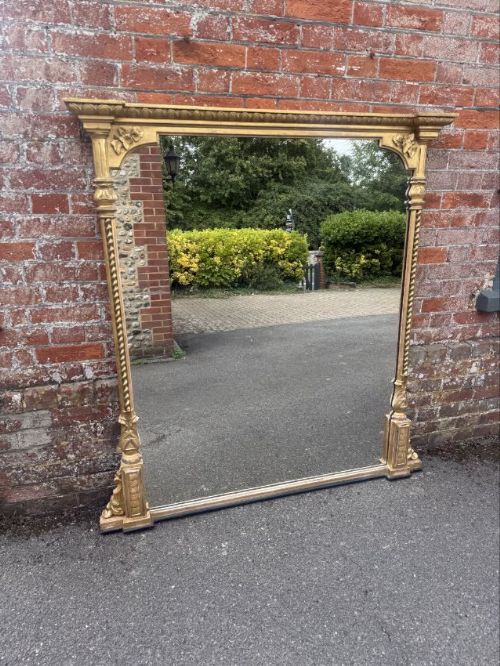
A large gilt mantle glass brings warmth and reflected light to a room, anchoring a chimney breast with substantial nineteenth-century presence.
Large Gilt Mantle Glass
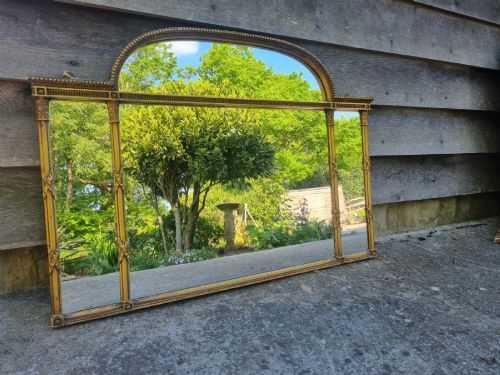
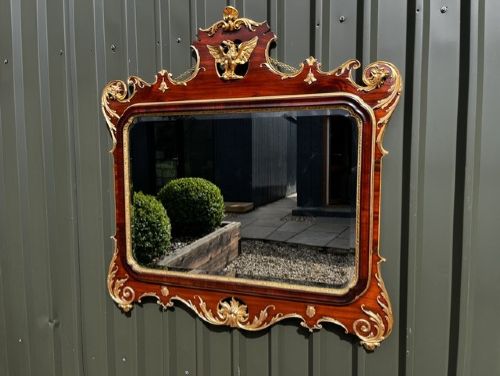
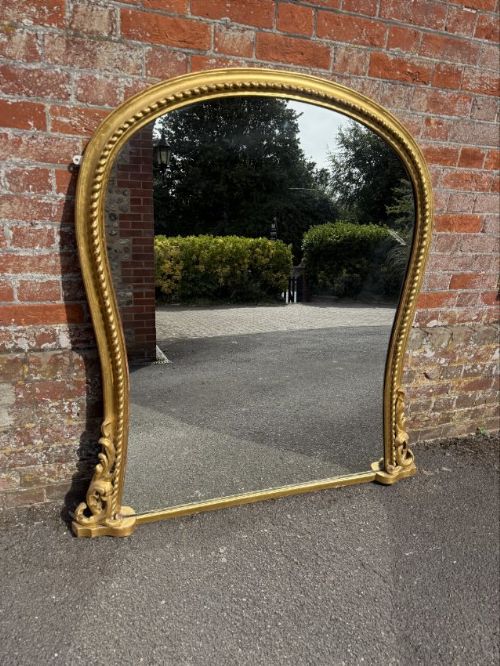
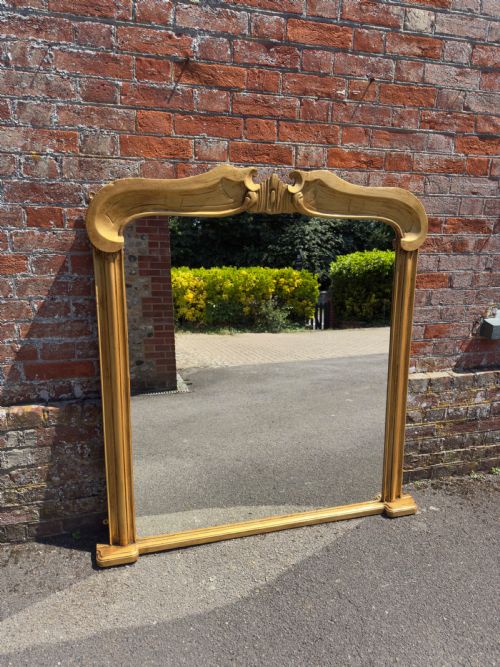
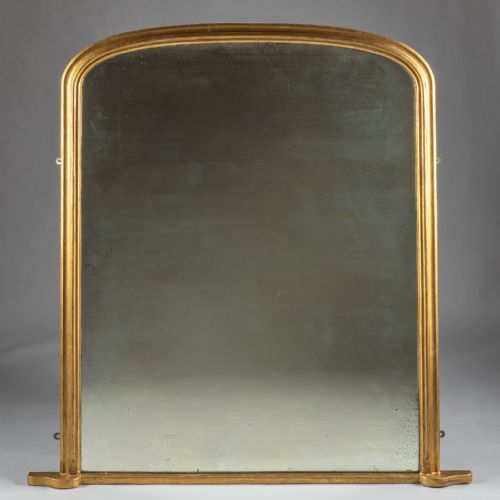
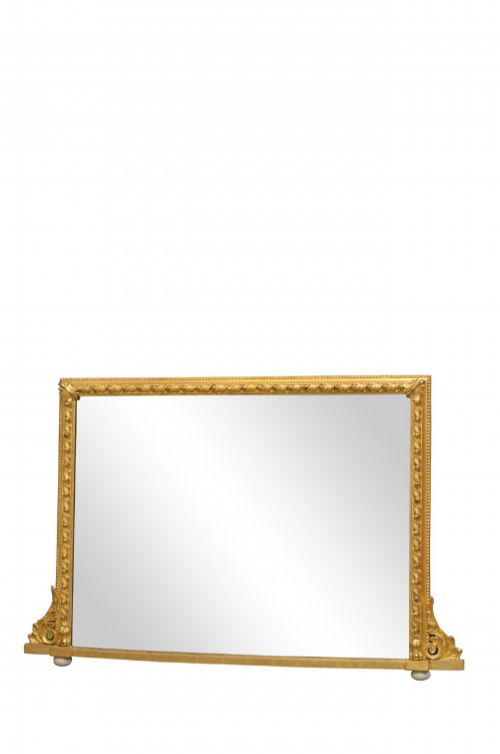
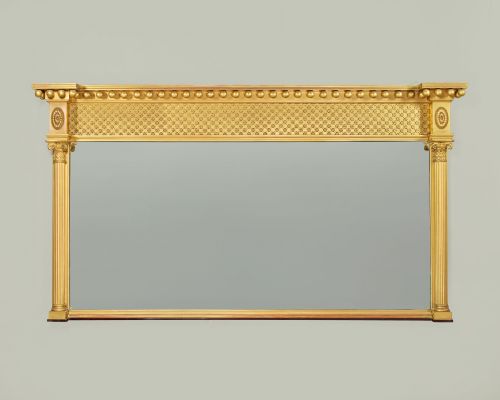
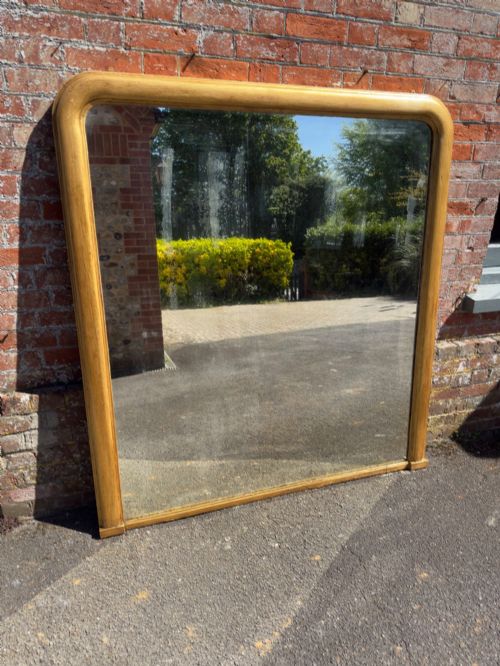
A large gilt mantle glass primarily takes the form of an overmantel mirror designed to sit above a fireplace, alongside occasional wall mirrors and mantel clocks. The selection spans the Georgian, Victorian, and Edwardian periods, with nineteenth-century English and French examples appearing most frequently.
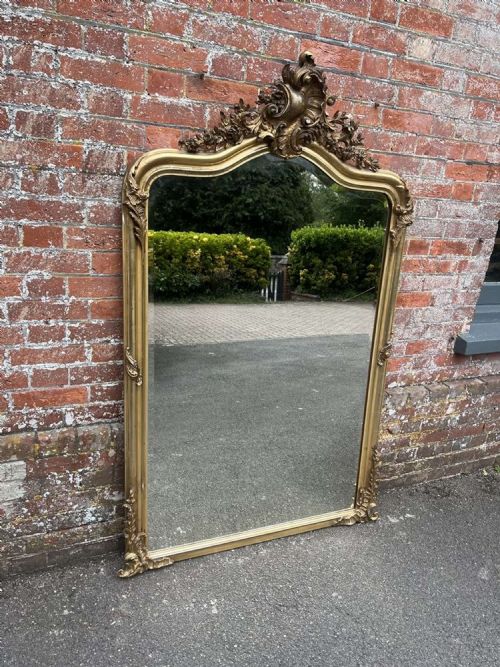
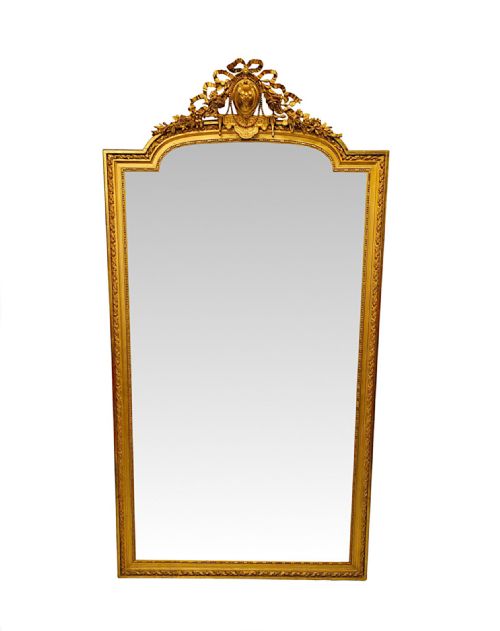
Makers and designers drew on Regency, Rococo Revival, and classical styles, producing shaped tops, arched profiles, and rectangular formats. These pieces often feature decorative motifs such as rope twists, floral embossing, ribbons, and ribbed framing.
Materials and construction methods
Frames combine wood, carved wood, and composition or gesso applied over a wooden base to hold intricate ornamentation. Gilding is achieved through the application of gold leaf or parcel gilt finishes.
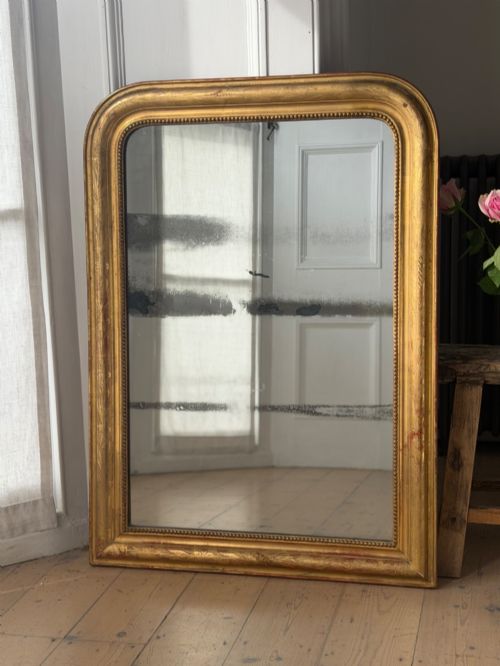
The glazing consists of mirror glass, frequently retaining original bevelled edges or period characteristics such as foxed mercury glass.
Several mirrors retain foxed mercury glass that reflects rooms with a dreamy, softened silver haze.
Markers of quality
Quality rests in the crispness of the carved wood and gesso ornament, where deeply defined mouldings and clean floral or rope-twist details show the hand of a skilled maker. Lesser examples rely on heavy composition plaster that can obscure crisp lines.
The integrity of the original mercury or bevelled mirror glass and the retention of the original backing boards add considerable weight to a piece's historical authenticity.
The Large Gilt Mantle Glass Glossary
- Gesso
- A plaster mixture applied to wooden frames as a smooth base for gilding. It allows for intricate moulded details and high-relief carving.
- Overmantel mirror
- A large mirror specifically proportioned to hang on the wall directly above a fireplace mantelpiece. These pieces frequently feature horizontal or arched formats.
- Trumeau mirror
- A decorative wall mirror fitted into a wood-panelled pier or combined with an oil painting above the glass. French examples often incorporate painted panels.
- Mercury glass
- A type of silvered glass produced using a mercury amalgam before modern vacuum-deposition techniques were invented. It often develops a mottled or foxed appearance over time.
- Rococo Revival
- A nineteenth-century design style drawing on eighteenth-century French motifs. It is characterised by asymmetrical scrolls, C-scrolls, and naturalistic floral elements.
Large Gilt Mantle Glass: Frequently Asked Questions
How do I hang a large gilt mantle glass safely?
These mirrors carry substantial weight due to their timber frames and thick glass plates. Professional wall anchors suited to your specific wall construction are essential.
Position the mirror securely into structural studs or masonry rather than relying solely on standard plasterboard fixings.
Were these mirrors always meant for fireplaces?
While the majority served as overmantel mirrors placed above hearths, similar grand scales were utilised for hall and dressing mirrors. Some Victorian examples were built with proportions suited for floor-standing use.
Their primary function remained the capture and reflection of natural daylight into darker Victorian and Edwardian rooms.
How do I clean an antique gilt frame?
Gilded surfaces require gentle dusting with a soft, dry brush to prevent damage to the delicate gold leaf or gesso. Avoid all liquid cleaners and chemical solvents.
Moisture can strip or darken historic gilding, so dry maintenance is the safest approach.
What is the difference between English and French styles?
English nineteenth-century frames often favour architectural lines, rope twists, and restrained classical moulding. They lean towards sturdy rectangular or arched forms.
French pieces from the same era frequently embrace Rococo Revival curves, cushion frames, and floral ribbon crestings with lighter decorative flourishes.