










Large Gilt Framed Art
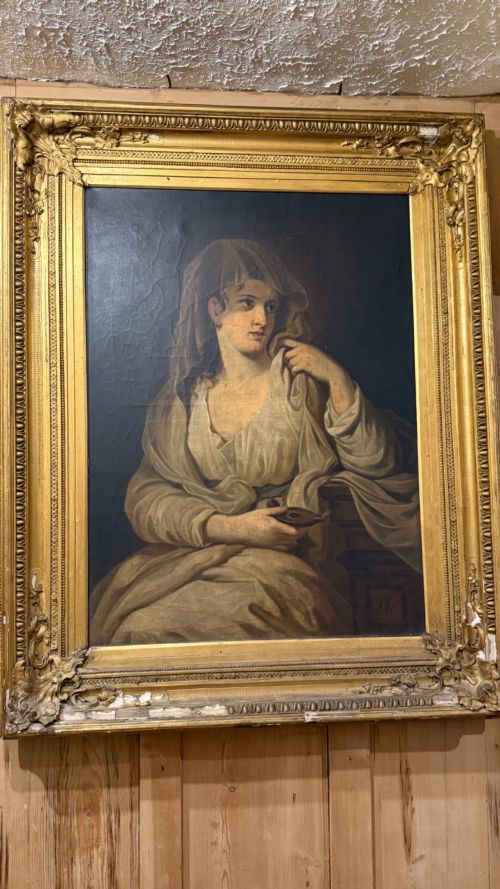
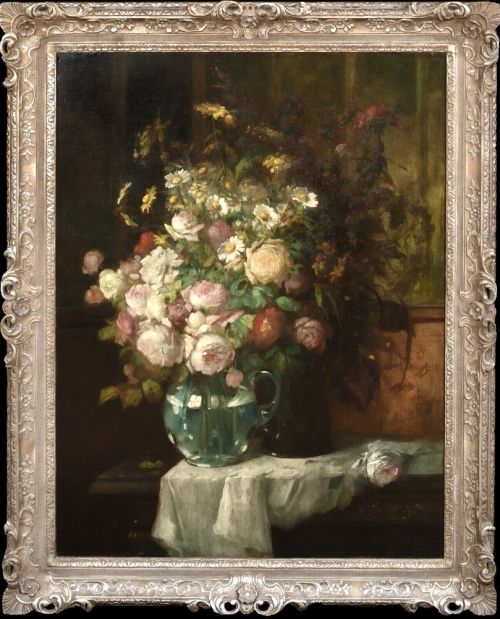
Large gilt framed art dominates a room through heavy scale and reflective metallic surrounds that draw the eye straight to the canvas.
Large Gilt Framed Art
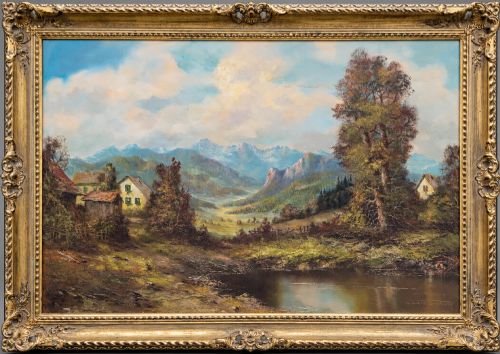
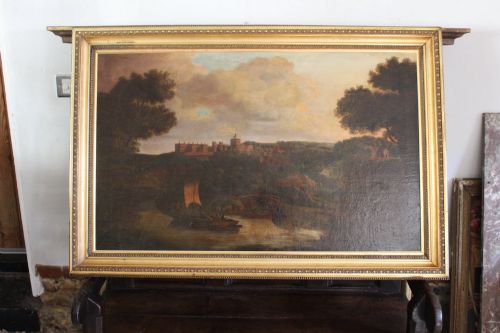
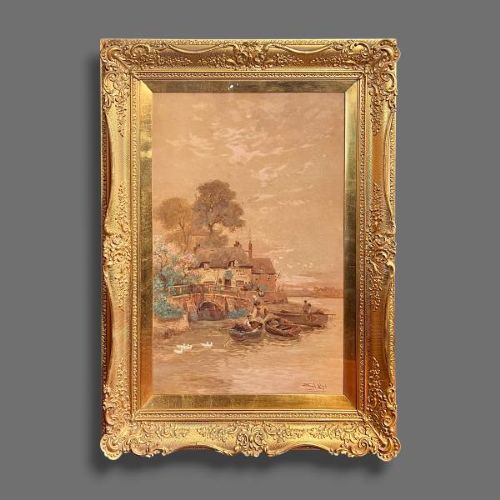
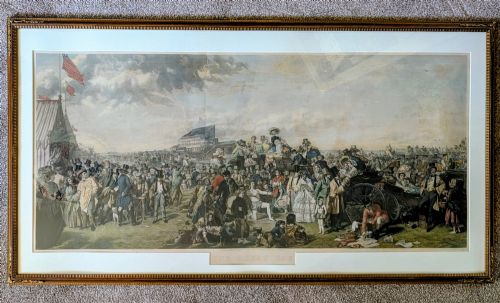
Large gilt framed art comprises substantial paintings, prints, and pastels housed within ornate metallic surrounds, offering a commanding presence on any wall. Buyers seeking this category encounter an array of historical oil paintings, portraits, landscapes, and still lifes dating from the eighteenth century through the mid twentieth century.
The nineteenth century provides a strong showing of Victorian and continental works, alongside Georgian portraits and later impressionist or revival pieces. Common subjects range from pastoral scenes and maritime views to historical figures and equestrian studies.
Most examples combine heavy wooden structures with gilded finishes, frequently paired with canvas or paper supports housed behind glass or left open. These works serve as focal points in large spaces, carrying centuries of stylistic evolution from baroque revivals to mid-century interpretations.
Materials and Construction
Makers built these pieces using timber frames coated in gesso, a plaster-like mixture applied to create smooth surfaces for gilding with thin metal leaf. Canvases received layers of oil paint applied with brushes, while other works utilised pastel, gouache, or print techniques on paper and board.
The wooden substructures often relied on joined corners and carved ornamentation, providing the rigid support necessary for heavy formats. Gilding methods involved laying gold or imitation metal leaf over bolus, creating the characteristic warm sheen seen across centuries of framing tradition.
Listings feature oil on canvas as the dominant medium, supported by gesso, wood, and glass components across eighteenth and nineteenth-century periods.
Assessing Quality
Quality reveals itself in the depth of hand-carved detail on the frame and the purity of the gilding materials used to catch the light. Superior works display confident brushwork and anatomical precision in the painted subject, whereas simpler pieces rely on standard moulded ornament and repetitive composition.
The integration between the artwork and its surround dictates visual harmony, with top-tier examples retaining their original matching frames rather than later replacements. The preservation of the underlying canvas and the subtlety of the gesso application separate standard production from exceptional craftsmanship.
Richard Sebastian Bond·Felix Stone Moscheles·Thomas Smythe·Konstantin Stoitzner·John Opie RA·Harold Knight RA·Robert Cleminson·Erich Mercker
The Large Gilt Framed Art Glossary
- Gesso
- A prepared mixture of plaster of Paris, chalk, and glue used as a base for moulding or gilding on wooden frames. This layer provides the smooth white surface onto which metal leaf is applied.
- Giltwood
- Timber that has been coated with gold leaf or a metallic substitute for decorative effect. It forms the primary visual boundary for many historic paintings.
- Pastel
- A dry drawing medium consisting of pigment mixed with a binder, typically worked on paper. These delicate pieces require glass protection to prevent the pigment from smudging.
- Impressionist
- A style of painting emphasising light, visible brushstrokes, and open compositions rather than tight academic finish. Artists in this tradition prioritized the immediate visual impression of a scene.
- Canvas
- Heavy woven fabric stretched across a wooden stretcher bar to serve as a support for oil painting. It provides the flexible yet durable ground found in most large works.
Large Gilt Framed Art: Frequently Asked Questions
What lighting suits a gilded frame best?
Warm, directional picture lights mounted above the frame enhance the metallic sheen of the gilding without washing out the colours in the oil painting below. Incandescent or warm LED bulbs bring out the historical warmth of the gold leaf.
Positioning the art away from direct, harsh sunlight prevents the pigments and gesso from degrading. Controlled accent lighting allows the reflective surfaces to interact naturally with the room.
How do I clean a gilt frame?
Dusting requires a very soft, dry brush or feather duster to remove loose particles without disturbing delicate raised gesso ornament. Moisture can damage old water gilding instantly.
Avoid chemical cleaning agents or abrasive cloths entirely, as they strip the metallic leaf from the timber. Professional conservators should handle any deep cleaning or repair work on flaking surfaces.
Are these frames original to the paintings?
Many works retain their period surrounds, though historical framing practices often paired paintings with updated mouldings matching contemporary tastes. Examining the rabbet and the fit of the canvas reveals whether the union is long-standing.
Differences in wear between the canvas and the frame can indicate a later pairing. Both original combinations and sympathetic period replacements hold distinct historical interest.