


Cattle in Landscape Art
Cattle in landscape art captures the rural serenity of the British countryside through oil paintings and watercolours spanning the Victorian era and early twentieth century.
Cattle in Landscape Art
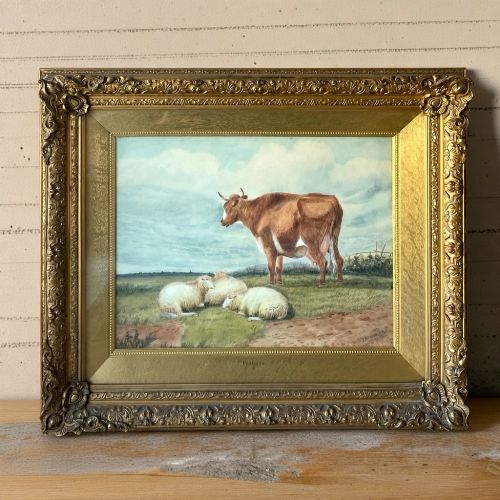
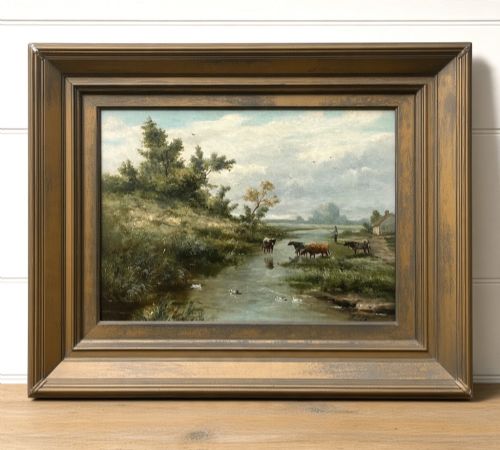
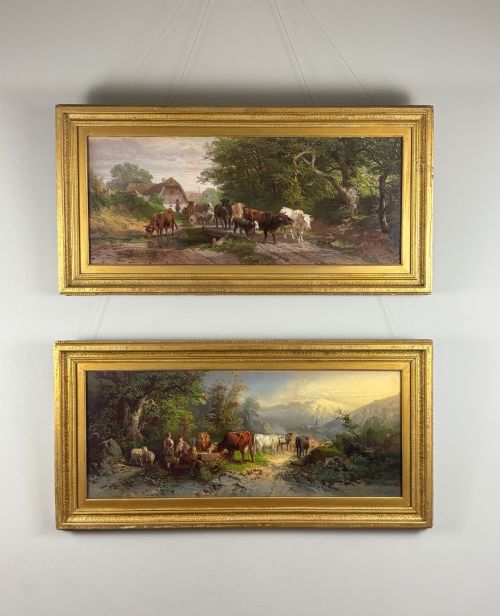
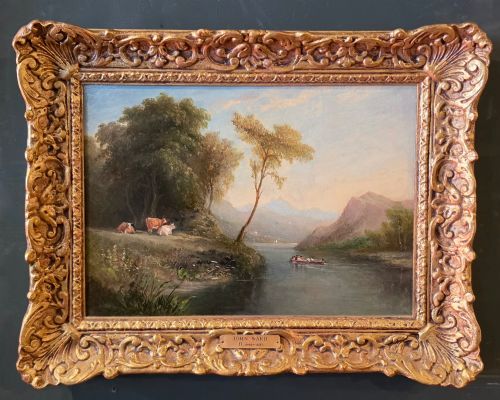
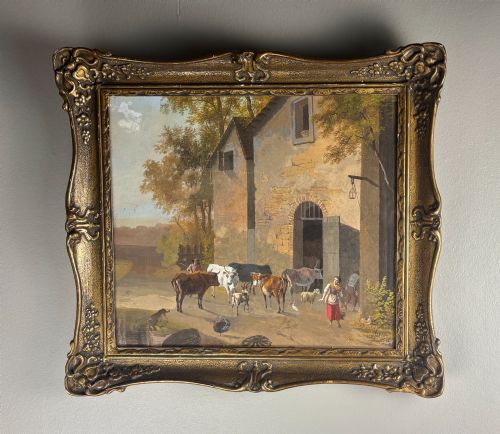
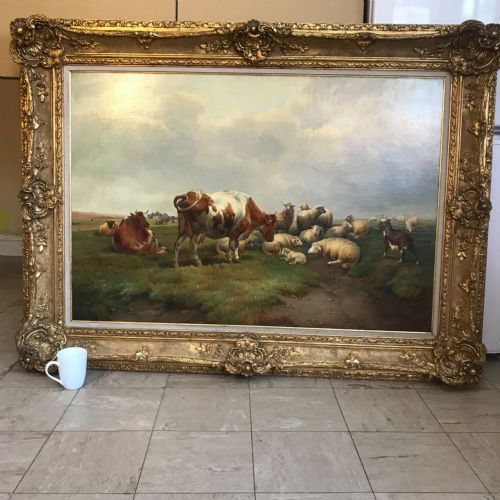
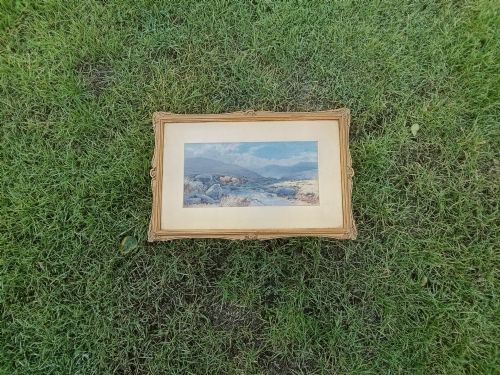
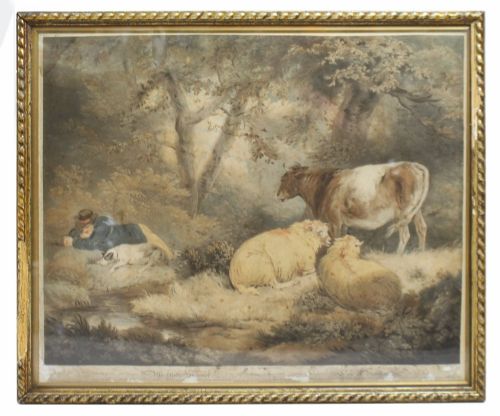
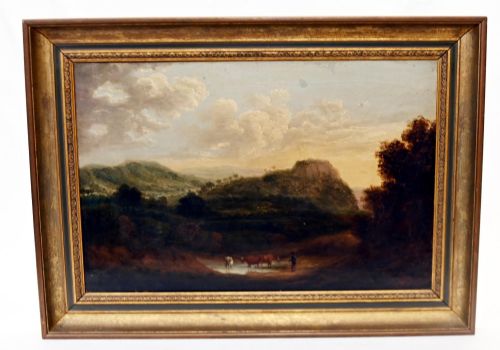
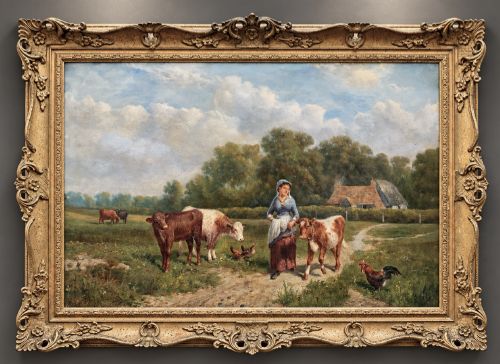
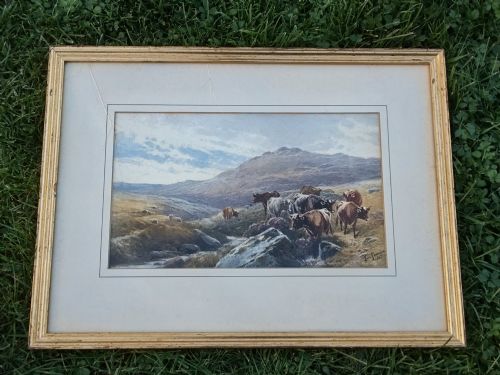
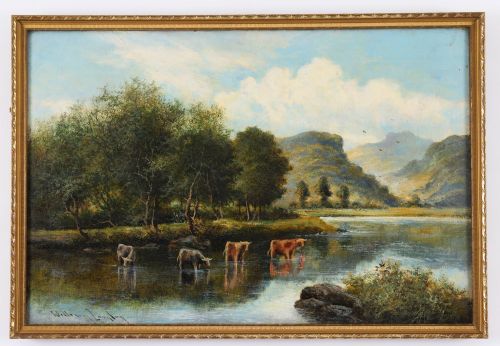
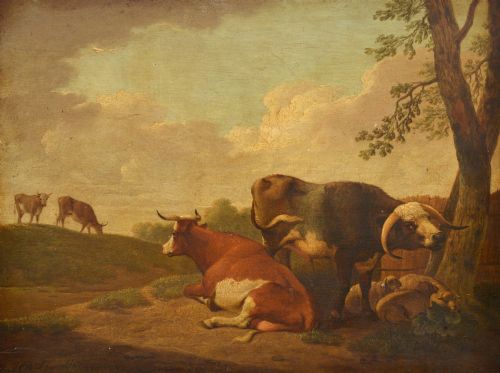
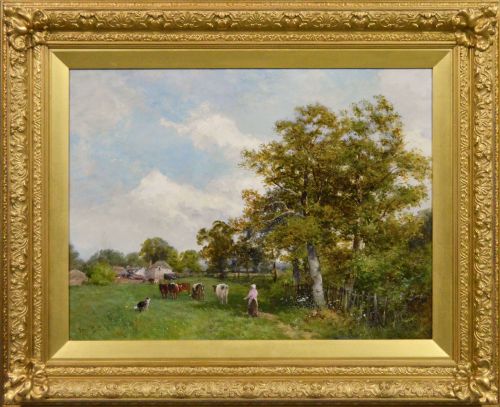
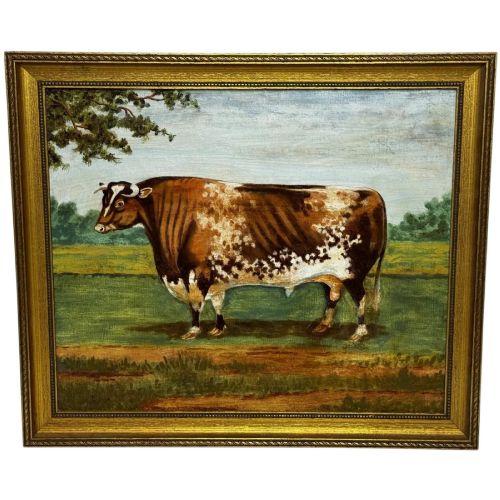
Cattle in landscape art depict pastoral scenes, farmyards, and riverbanks populated by cows, bulls, and sheep alongside herdsmen or milkmaids. These works range from grand Highland loch views to intimate moorland stream watercolours.
Buyers will most frequently encounter nineteenth-century and Edwardian interpretations, often framed in period giltwood. The compositions combine detailed animal portraits with expansive British and European countryside settings.
Materials and Techniques
Artists relied primarily on oil paint applied to canvas or wood panel, as well as watercolour on paper. These mediums allowed painters to capture the texture of animal coats and the atmospheric light of rural landscapes.
Framing often utilised heavy giltwood mouldings, sometimes retaining original glass for works on paper or lithographs. Gold leaf accents completed the presentation of these framed artworks.
Cattle in Landscape Art Retail Price Guide 2026
Typical asking prices for cattle in landscape art among the pieces listed under this phrase on Sellingantiques today, from the lower quarter to the upper quarter. They describe what is for sale here now, not the wider market.
Several cows in these pastures appear entirely unbothered by the nearby castle ruins.
Assessing Quality
Quality rests upon the artist's ability to render the anatomy and expression of the animals with realism while maintaining a balanced, atmospheric composition in the surrounding landscape. Softer, more mechanical brushwork separates standard decorative pieces from accomplished works by recognised painters.
The preservation of the original canvas, paper support, and period frame contributes significantly to the integrity of the piece.
Thomas Sidney Cooper·Tom Rowden·George Morland·William Langley·Samuel Joseph Clark·William H Myers·Hendrik Willem Schweickhardt·David Bates·Ernest Higgins Rigg·Frederick James Kerr·Henry H Parker·Robert Watson·T C Hofland·Johannes de Haas·A M Gauci·Oswald Garside·Henry Robinson Hall·Ernest Pile Bucknall·William Sydney Cooper·Thomas Hunn·George Vicat Cole·Andre de Moller·Sidney Richard Percy·Frederick James Knowles·Robert Thorne Waite
The Cattle in Landscape Art Glossary
- Oil on Canvas
- Pigment mixed with drying oil applied to a stretched cloth support. This technique provides rich colour depth and durable texture.
- Watercolour
- Paint consisting of colour suspended in a water-soluble binder, traditionally used on paper. It creates luminous, transparent washes of light.
- Giltwood
- Wood carved and coated with a thin layer of gold leaf. It is typical of traditional nineteenth-century picture frames.
- Lithograph
- A print made from a flat stone or metal plate on which an image is drawn with a greasy substance. This method allowed for the reproduction of original artwork.
Cattle in Landscape Art: Frequently Asked Questions
What periods do these artworks cover?
The available selection spans from the eighteenth century through the Victorian period and into the early twentieth century.
Most pieces date from the nineteenth century, reflecting the era's strong interest in pastoral realism and agricultural life.
How should I care for an antique watercolour?
Watercolours on paper are sensitive to direct sunlight, which can cause the pigments to fade over time.
Keep them hung away from bright windows and maintain stable indoor humidity to protect both the paper and the original frame.
What is the difference between oil paintings and watercolours here?
Oil paintings utilise heavy pigments on canvas or board, offering rich textures and deeper colour saturation.
Watercolours employ translucent washes on paper, yielding a lighter, more delicate representation of rural light and mist.
Are the frames original to the paintings?
Many pieces retain their period giltwood frames, which reflect the framing styles popular during the Victorian and Edwardian eras.
Such original mountings complement the age of the artwork and add historical context to the piece.