


Traditional Pastoral Artwork
Traditional pastoral artwork captures the quiet charm of rural life through painted scenes of shepherds, cattle, and countryside vistas.
Traditional Pastoral Artwork
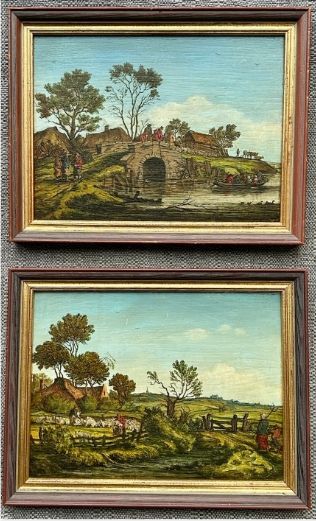
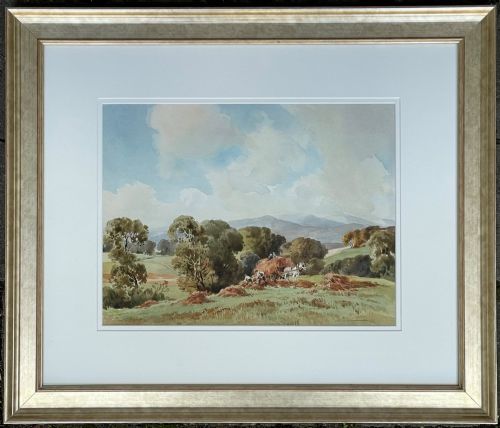
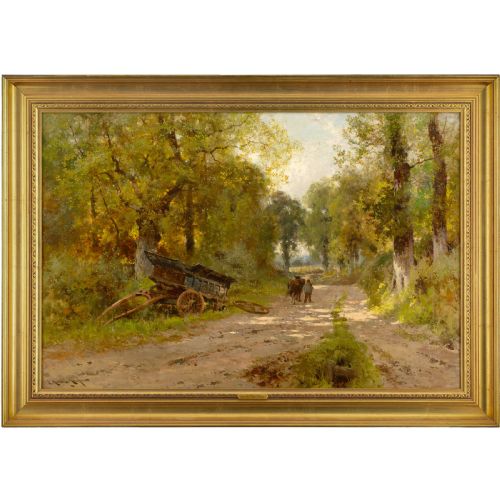
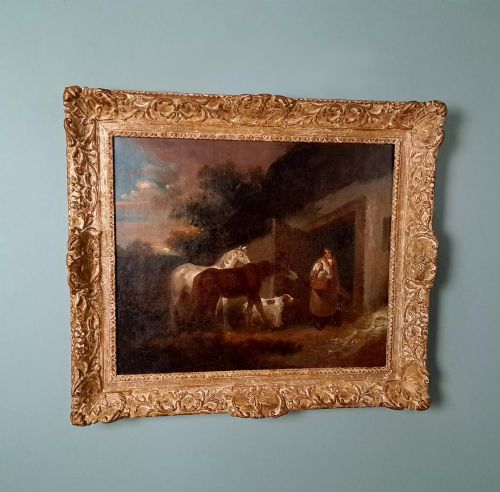
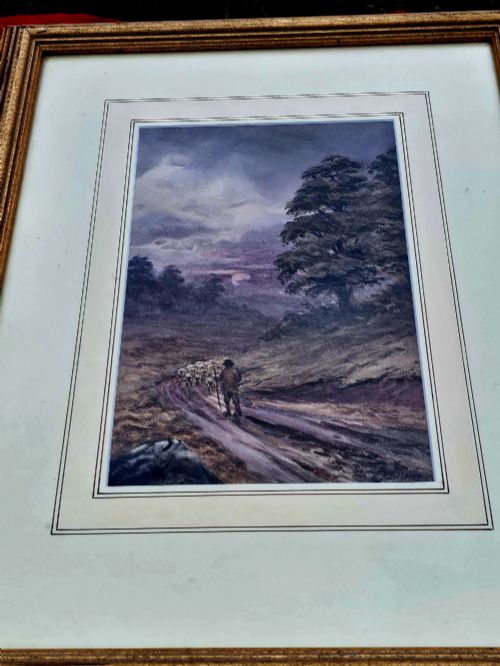
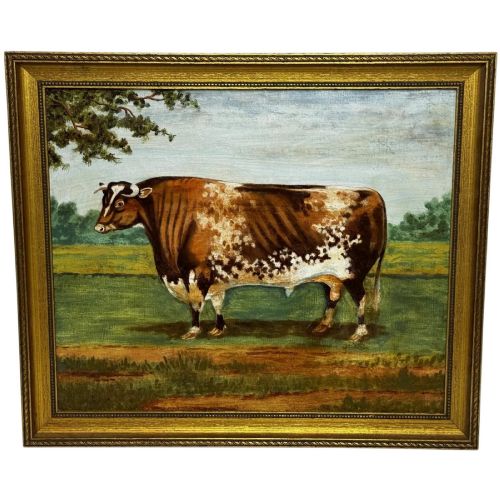
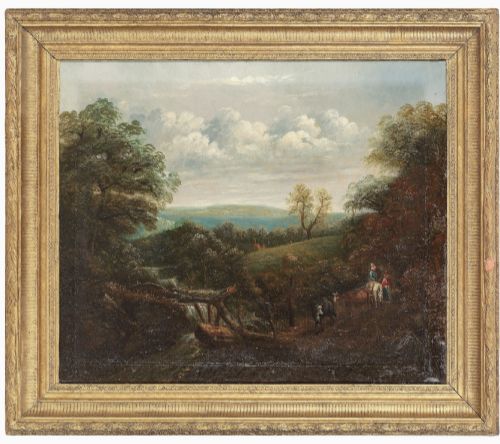
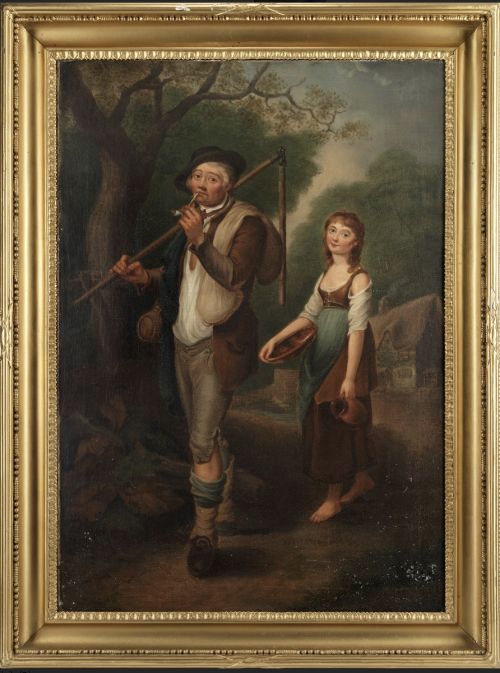
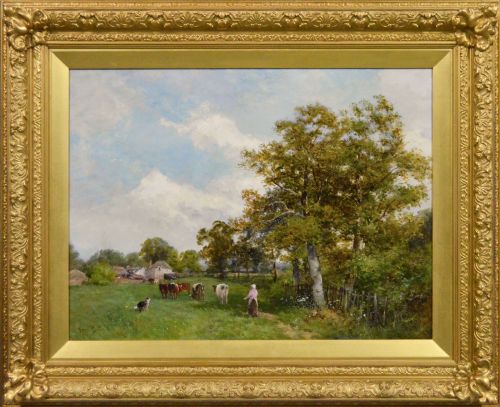
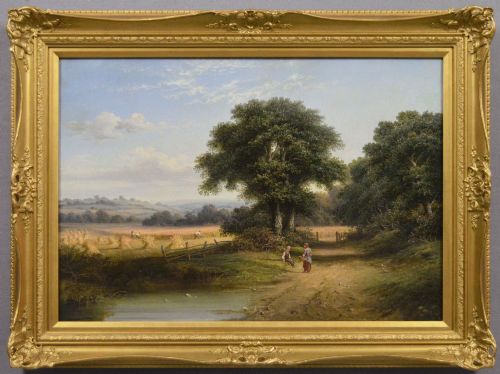
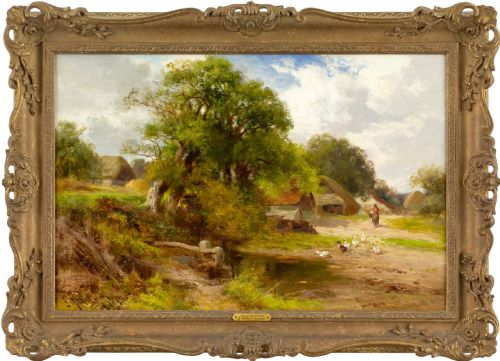
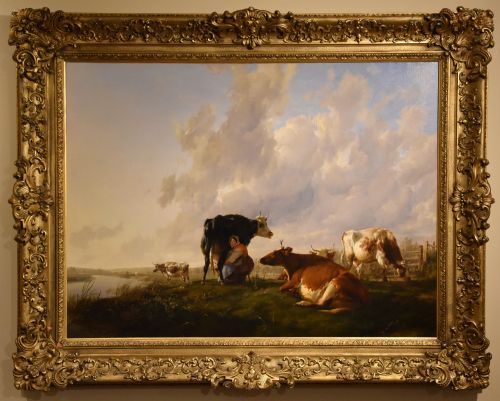
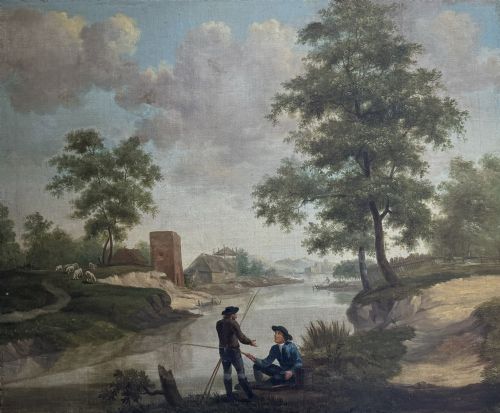
Traditional pastoral artwork depicts rural idylls, featuring herds of cattle, grazing sheep, figures by rivers, and rustic cottages set within nineteenth-century or early twentieth-century landscapes. Buyers encounter oil paintings on canvas and wood panels alongside watercolours on paper, often housed in period giltwood and gesso frames.
The subjects draw heavily on British and European rural traditions, spanning Victorian realist scenes, Edwardian watercolours, and Flemish styles. Common motifs include milkmaids, drovers moving livestock to market, and tranquil riverbanks under morning or sunset light.
Most examples date from the Victorian and Edwardian eras, reflecting a widespread nineteenth-century fascination with untamed and agricultural countryside. These works range in scale from intimate watercolours to large oil paintings signed by listed regional artists.
Materials and construction
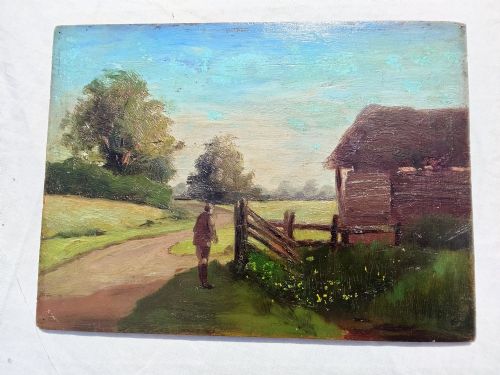
Artists working within this tradition relied primarily on oil paints applied to stretched canvas, wooden boards, or wooden panels, as well as watercolour pigments brushed onto heavy paper. These mediums allowed for subtle blending of light across pastoral skies and rich textures in foliage and animal coats.
Techniques varied between the fine detail of realist oil paintings and the fluid washes characteristic of period watercolours. Lithographs and engravings also appear, reproducing pastoral compositions for a broader audience using printed ink on paper.
Nineteenth-century cows evidently possessed infinite patience, standing perfectly still while generations of artists recorded their every spot.
Assessing quality and execution
Quality in traditional pastoral artwork rests upon the artist's ability to render light, atmosphere, and anatomy with conviction, particularly in the depiction of livestock and human figures. Weaker examples often display stiff, formulaic compositions, whereas superior pieces capture a genuine sense of morning or evening mood.
The handling of the medium distinguishes the finest works, showing confident brushwork in oil or delicate control in watercolour washes. The integration of figures and animals into the surrounding landscape determines the overall visual balance of the piece.
Framing plays a secondary role in overall quality, though period giltwood and gesso frames that complement the age and scale of the artwork enhance the presentation. Signed pieces by established nineteenth and early twentieth-century painters generally exhibit higher technical precision.
Tom Campbell·David Bates·Thomas Sidney Cooper·George Oyston·Henry Charles Fox
The Traditional Pastoral Artwork Glossary
- Giltwood
- Wood carved and coated with gold leaf or gold paint. This finish frequently appears on nineteenth-century picture frames.
- Gesso
- A plaster-like mixture applied to wood frames before gilding. It provides a smooth base for intricate moulded ornament.
- Wood Panel
- A solid wooden support used by artists instead of canvas. These boards are common in nineteenth-century Flemish and British oil paintings.
- Watercolour
- A painting method where pigment is suspended in a water-based solution on paper. Edwardian artists used this technique for luminous pastoral scenes.
- Realism
- An artistic movement focusing on everyday subjects without idealisation. Victorian pastoral realism depicts authentic rural labour and livestock.
Traditional Pastoral Artwork: Frequently Asked Questions
What subjects define pastoral art?
These works primarily depict rural scenes involving livestock, shepherds, agricultural workers, and quiet river valleys. Cows, sheep, and horses frequently populate the foreground alongside figures engaged in traditional country labour.
The settings reflect nineteenth-century British and European countryside aesthetics, capturing specific moods such as morning light, sunset, or seasonal harvests.
How do I care for antique oil paintings?
Oil paintings on canvas or wood require stable indoor humidity and protection from direct sunlight to prevent cracking in the paint and warping of the support. Dusting should be done gently with a dry, soft brush without applying pressure to the canvas.
Professional cleaning and restoration should be left to specialists, particularly when dealing with aged varnish or delicate giltwood frames.
What is the difference between oil and watercolour pastoral pieces?
Oil paintings utilise pigmented oil on canvas or wooden boards, offering rich textures, deep tones, and high durability. Watercolours apply transparent pigments to paper, resulting in lighter, more luminous effects that typically require protective glass framing.
Oils were generally favored for major gallery works, while watercolours captured spontaneous field studies and finished cabinet pieces.
How can I tell the period of a pastoral painting?
Dating relies on stylistic clues, framing materials, artist signatures, and the physical characteristics of the canvas or wood panel. Nineteenth-century and Edwardian works often feature specific framing styles and subject matter reflecting the rural preoccupations of the era.
Biographical details of signed artists provide precise chronological anchors for many pieces in this tradition.