


Pair Classical Oil Paintings
Pair classical oil paintings bring formal symmetry and mythological or landscape subjects to a room, offering matched visual weight for hanging.
Pair Classical Oil Paintings
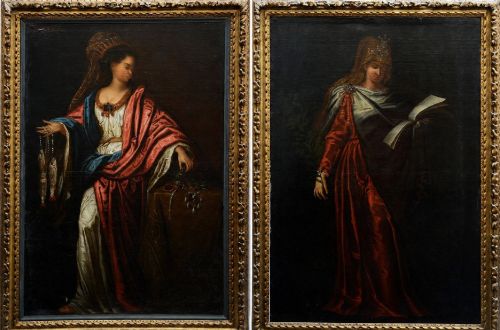
Pair classical oil paintings comprise two matched artworks sharing a common subject, palette, and period, designed to be displayed together. The selection spans the eighteenth and nineteenth centuries, taking in French Rococo, Baroque, Neoclassical, and later revival styles.
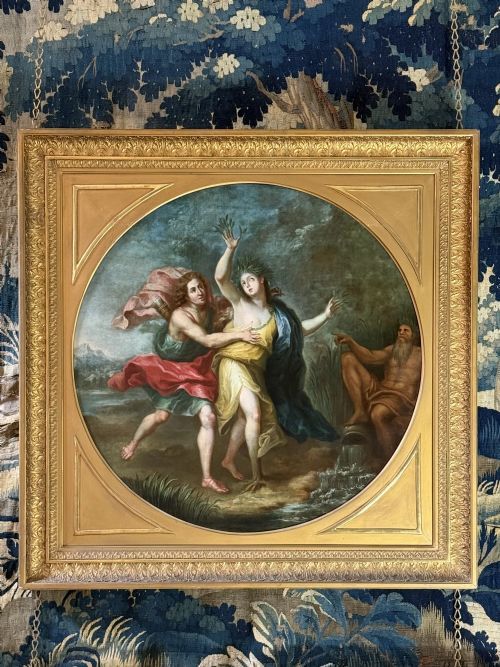
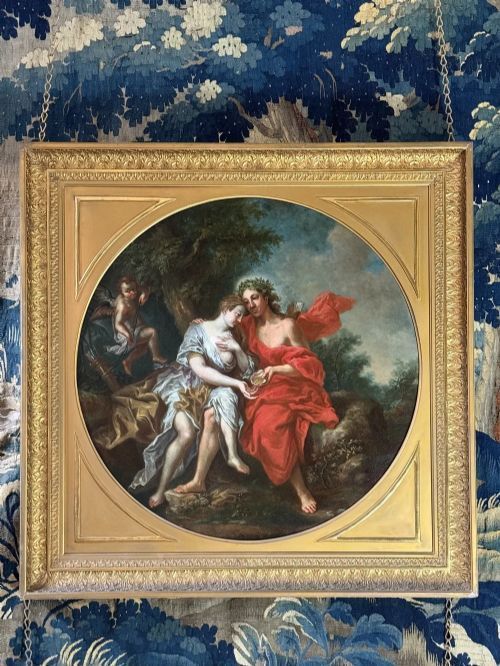
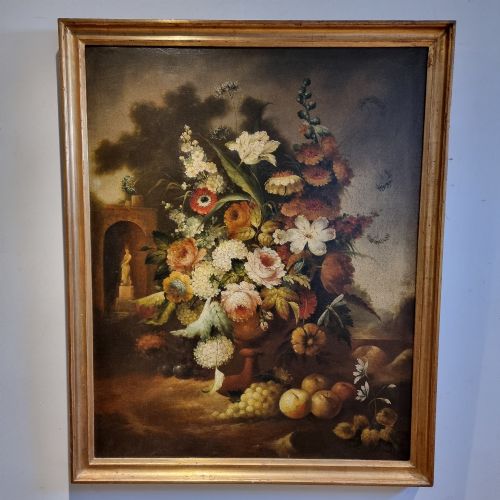
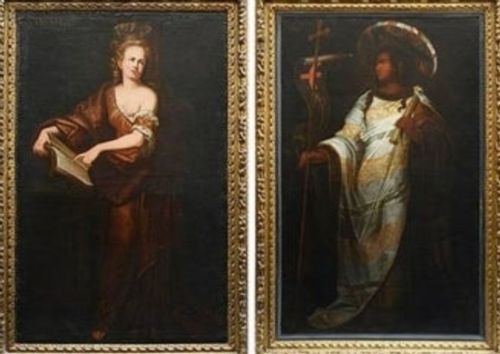
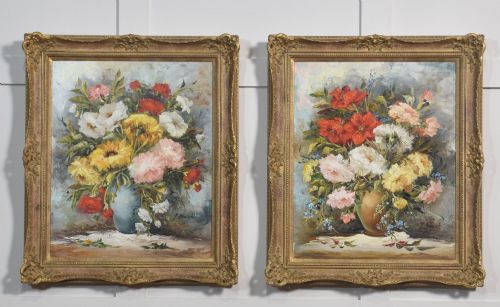
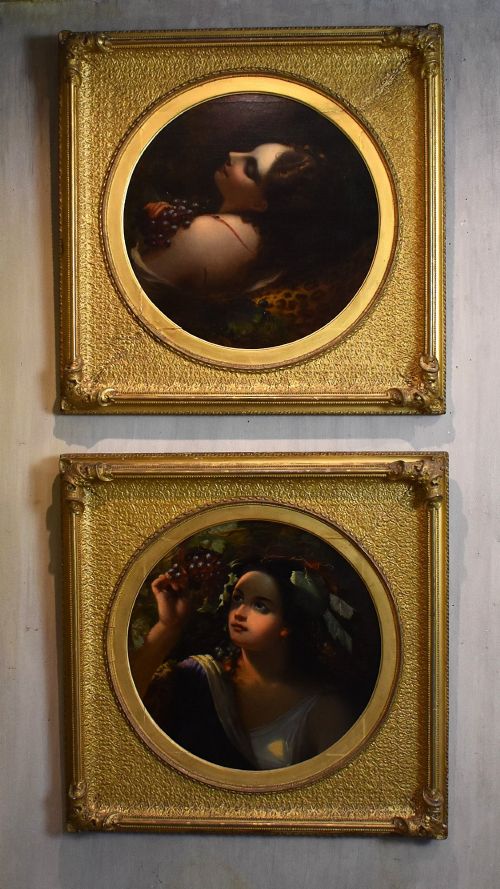
Subjects range from mythological figures like Apollo, Daphne, and the Sibyls to landscape scenes with classical ruins, still life compositions, and character studies. These works appear on canvas or board, frequently framed in gilded wood and gesso.
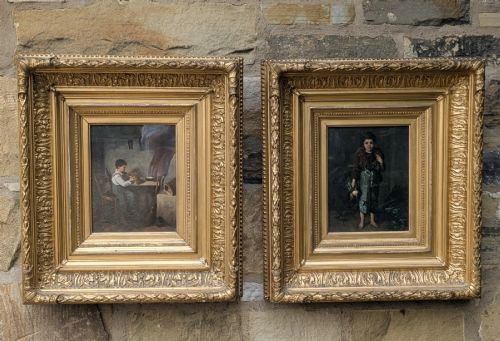
Examples on this page include eighteenth-century mythological depictions, nineteenth-century realism, floral still lifes, and trompe l'oeil works. Buyers encounter both period originals and later nineteenth-century interpretations of earlier classical aesthetics.
How they were made
These works rely on oil paint applied to canvas or board, utilising the rich pigmentation and slow drying times characteristic of the medium to build depth and tone. Canvases are stretched over wooden frames, providing the flexible foundation necessary for detailed brushwork.
Frames are constructed from wood, embellished with gesso, and finished with gilding to create ornate decorative borders that complement the traditional subjects of the paintings.
Listings feature oil paintings on canvas and board, paired with gilt wood and gesso frames across eighteenth and nineteenth-century styles.
What varies in quality
Quality rests in the precision of the brushwork, the handling of light and shadow, and the anatomical or architectural accuracy within the composition. Master works demonstrate confident draughtsmanship and nuanced colour mixing that lesser decorative pieces lack.
The sophistication of the accompanying gilt wood and gesso frames also indicates the status of the commission, as superior frames are carved with finer detail and deeper relief.
Charles-Antoine Coypel·Manuela Bonati·Theodore Jensen·Giovanni Paolo Panini·Ferruccio Vitale·Hermann Armin Kern·Jan Evert Morel·Henry Schouten·Francois Boucher
The Pair Classical Oil Paintings Glossary
- Oil on canvas
- Pigments suspended in a drying oil, typically linseed, applied to a woven fabric support. This combination allows for rich colour saturation and blended tones.
- Gilt wood
- Timber substrates coated with gold leaf or metallic powder, providing a luminous border to the artwork. It is frequently paired with gesso mouldings.
- Gesso
- A plaster mixture applied to wooden frames as a smooth base for gilding and carving. It allows artisans to create intricate decorative relief patterns.
- Grand Tour
- A cultural journey undertaken by wealthy young Europeans to view classical antiquities and art. Works from this tradition often depict classical ruins and mythic figures.
Pair Classical Oil Paintings: Frequently Asked Questions
How should I hang pair classical oil paintings?
Display the two pieces at eye level with consistent spacing between them to maintain the visual symmetry intended by the format. Matching frames help anchor the pairing on the wall.
Ensure they are placed away from direct sunlight and heat sources to protect the oil paint and gilded wood frames from environmental damage.
What subjects do these paintings feature?
The subjects include classical mythology, such as figures from ancient legends and Sibyls, alongside landscape scenes with ruins. Other examples show floral still lifes and character portraits.
These themes reflect the enduring influence of classical antiquity and traditional European art schools across different centuries.
How do I care for oil on canvas paintings?
Dust the surface and the carved frames gently with a soft, dry brush without applying pressure to the paint layer. Avoid using water or chemical cleaners.
Maintain stable room humidity to prevent the canvas from slackening and to protect the gesso and gilding on the wooden frames.
How can I tell the period of the artwork?
Examine the materials of the stretcher, the weave of the canvas, and the style of the frame for clues about the date of creation. Eighteenth-century works often show distinct Baroque or Rococo stylistic choices.
Signatures, inscriptions, and attribution notes recorded on the pieces also provide direct evidence of the artist and the era.