


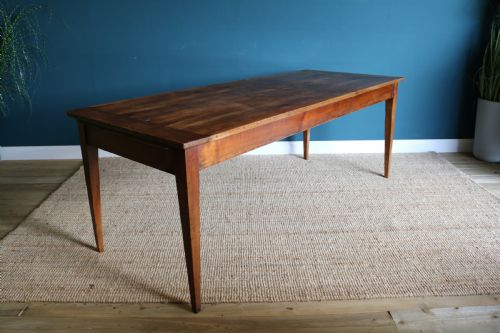

Large Farm Table
When you need a large farm table, you are looking for a robust centrepiece built to gather people for daily meals.
Large Farm Table
A large farm table serves as the primary gathering surface for kitchens and dining rooms, designed for heavy daily use and large gatherings. These tables accommodate numerous diners, often seating ten to twelve people comfortably for meals.
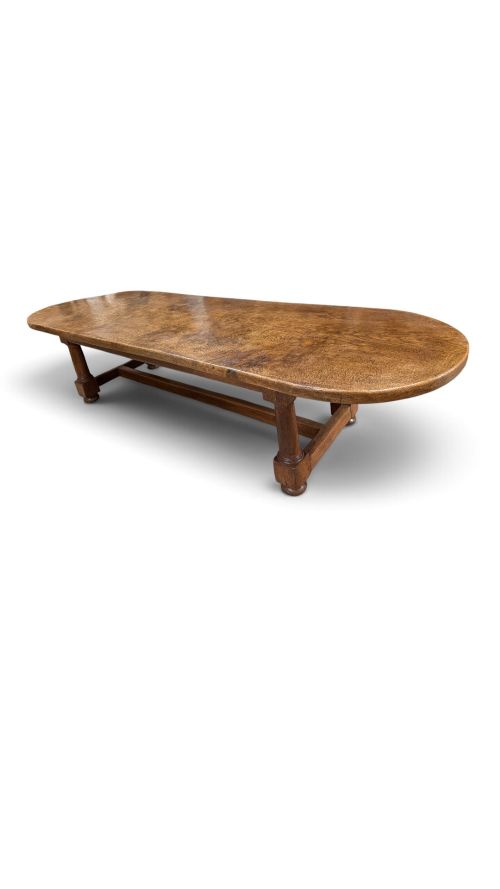
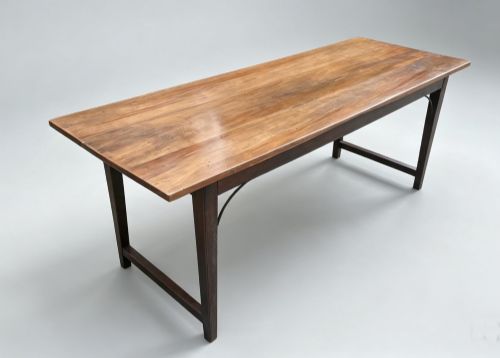
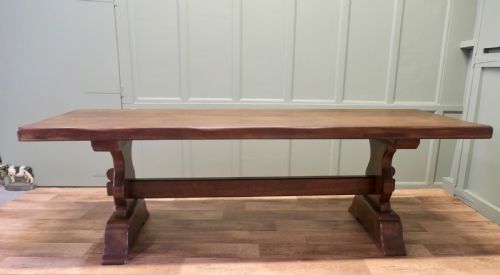
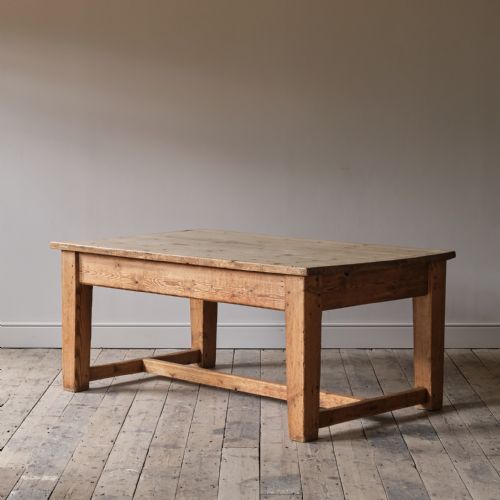
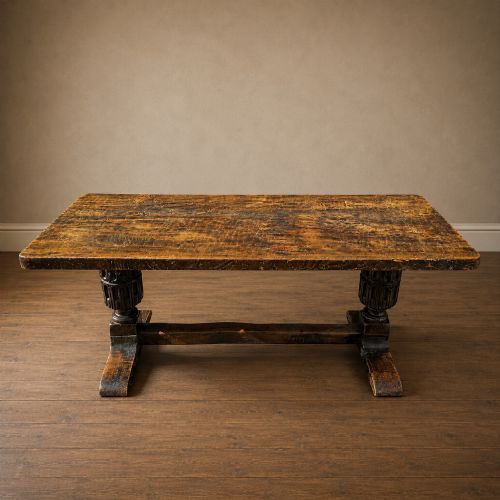
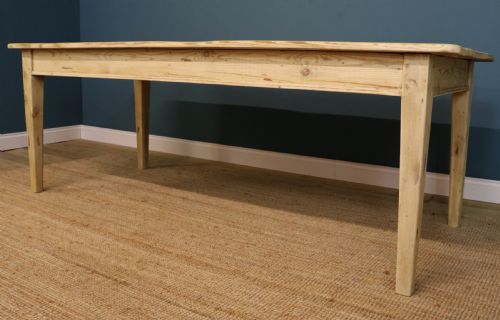
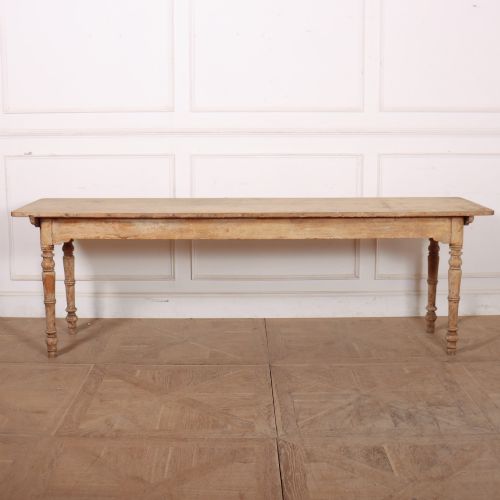
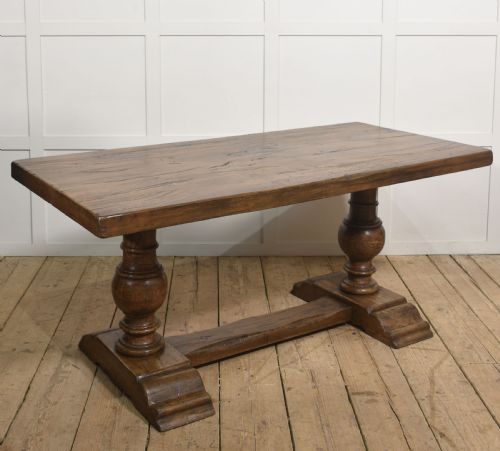
The pieces on this page span several centuries, with examples originating from the seventeenth century through to the early twentieth century. Common forms include classic refectory designs, trestle tables, and traditional kitchen harvest tables.
Origins vary across English, French, Italian, and Scandinavian traditions, each bringing distinct regional proportions and timber choices. Oak and pine appear most frequently, alongside fruitwood, cherry wood, and elm.
How they were made
Cabinet makers built these tables using sturdy domestic timbers such as oak, pine, and elm, often selecting single planks for substantial table tops. Construction relied on pegged mortise and tenon joints to ensure stability under heavy loads.
Workshops utilised local regional woods, incorporating fruitwood, cherry wood, and walnut depending on availability. Surfaces were left plain or treated with historical paint finishes, wax, or bleaching over generations of use.
Listings span multiple eras from the seventeenth century to the twentieth century, constructed in oak, pine, elm, and fruitwood.
What varies in quality
Quality rests primarily on the integrity of the timber selection and the retention of original structural elements. Tables featuring single plank tops and robust trestle or refectory bases represent superior craftsmanship.
The depth of the patina accumulated through centuries of domestic use distinguishes exceptional examples from lesser pieces. Original surfaces and untouched hardware elevate the standing of a table within the range.
The Large Farm Table Glossary
- Refectory table
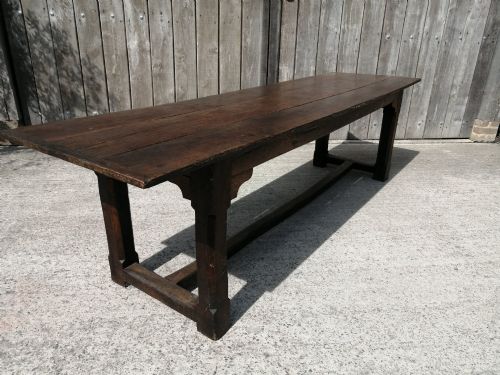
- A long narrow dining table originally built for monastic dining halls. These pieces typically feature sturdy stretchers and heavy legs.
- Harvest table
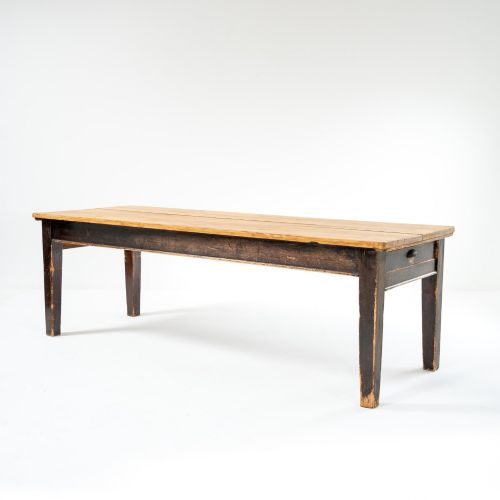
- A utilitarian table traditionally used during seasonal agricultural gatherings. They often feature narrow proportions and extended seating capacity.
- Trestle table
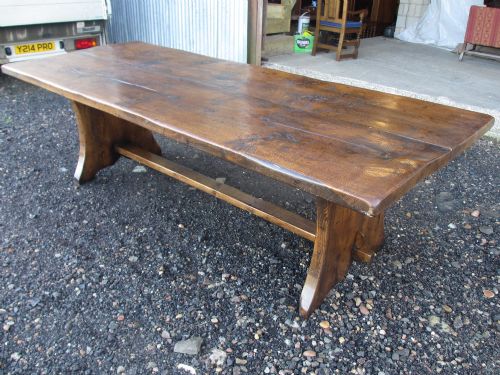
- A table consisting of two or more support frames connected by a horizontal beam. This construction provides unobstructed legroom along the length of the table.
- Single plank top
- A table top fashioned from one wide piece of timber rather than multiple joined boards. This feature indicates superior tree selection by the maker.
- Patina
- The deep sheen and surface alteration developed through age and regular handling. It serves as an indicator of authenticity and historical depth.
Large Farm Table: Frequently Asked Questions
How many people do they seat?
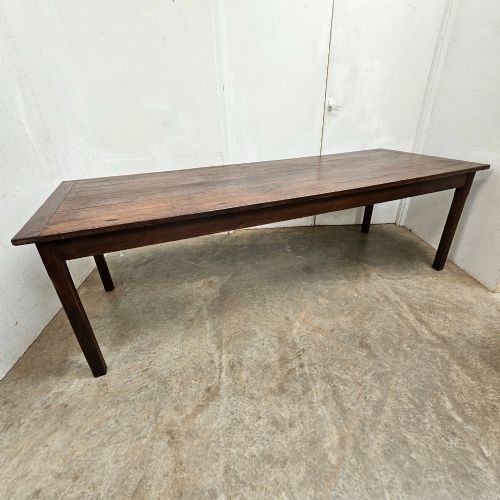
Many of these large tables accommodate ten to twelve diners comfortably due to their generous lengths exceeding two or three metres.
Longer harvest and refectory formats provide ample side clearance for benches or multiple chairs along each flank.
Which woods are most common?
Oak and pine form the majority of surviving examples across both English and continental European workshops.
Elm, cherry wood, and fruitwood appear frequently in regional French and Italian pieces.
What is a refectory table?
A refectory table is a long, narrow dining table originally designed for communal dining in monasteries and large estates.
They are characterised by solid timber construction, thick legs, and low stretcher rails running between the base supports.
How do I care for the top?
Maintain timber surfaces by applying natural beeswax periodically to nourish the wood and protect the historic patina.
Avoid excessive moisture and use placemats to prevent heat marks on unsealed or antique finishes.