

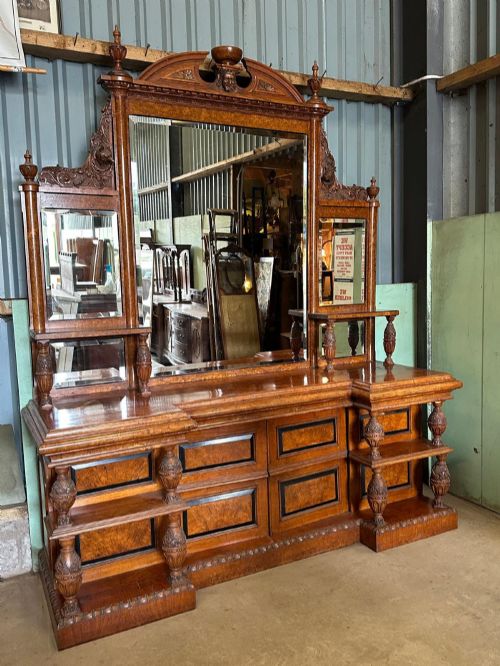
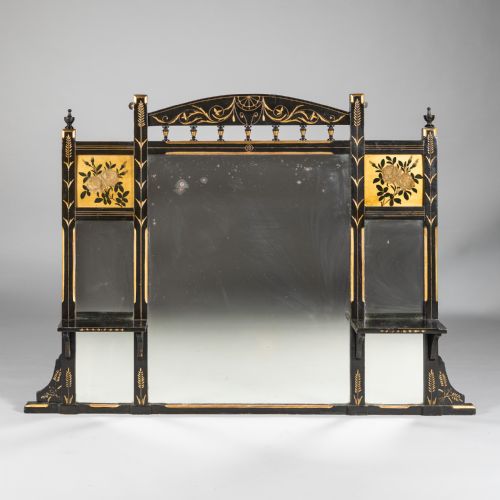
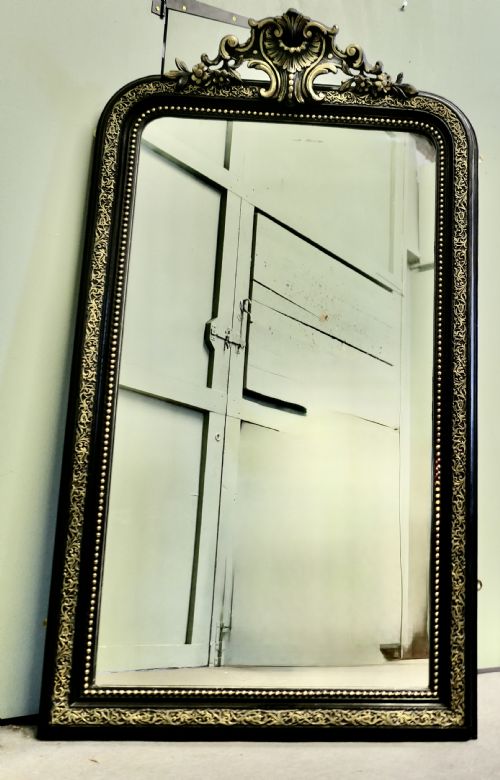
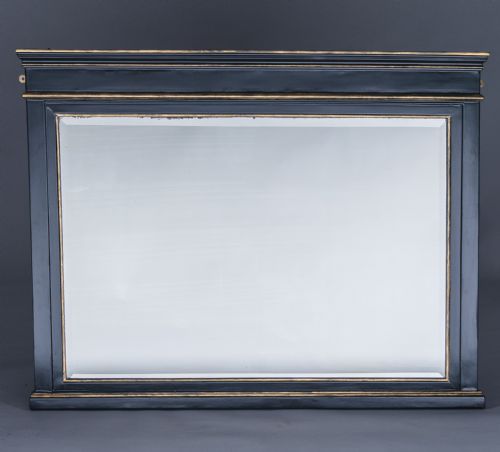



Large Ebonised Mirror
A large ebonised mirror brings architectural presence and deep dark tones to an interior, drawing the eye with contrasting metallic highlights.
Large Ebonised Mirror
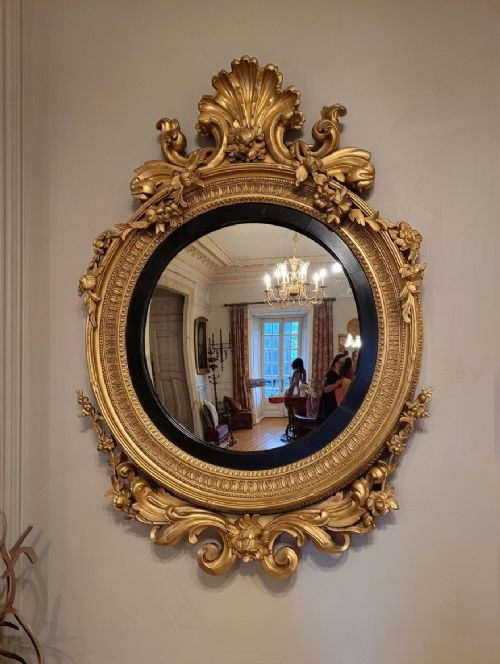
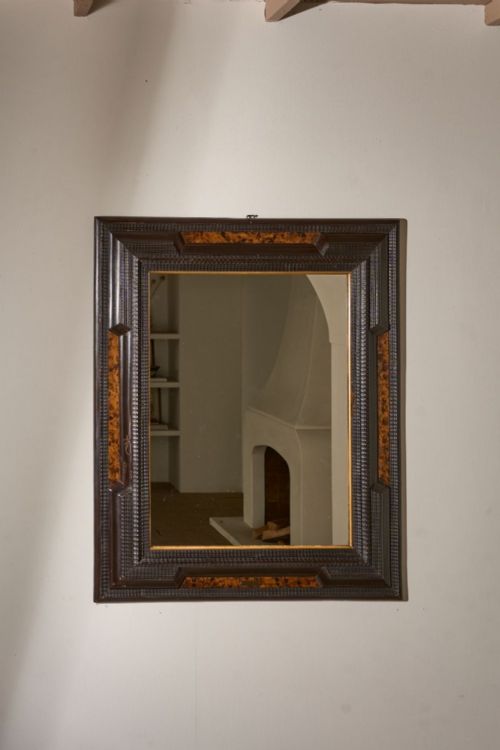
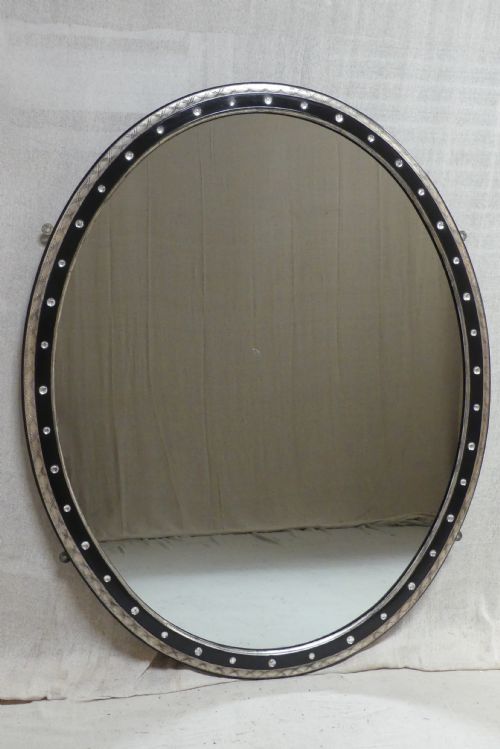
Makers and craftsmen applied deep black finishes to woods such as walnut or pine, frequently pairing the dark surfaces with gilt, silver, or faux tortoiseshell details. These furnishings range from simple architectural frames to ornate revival designs displaying Italian Baroque or Aesthetic Movement influences.
How They Were Made
Makers utilised timber bases coated with gesso to create smooth surfaces suitable for gilding with gold leaf or applying ebonised finishes. Carved wooden elements and moulded composition details were secured to structural frames before receiving their final decorative treatments.
Glass plates were silvered and fitted into heavy rebated frames, sometimes incorporating ebonised slips or cushion mouldings to add depth. Secondary woods and traditional joinery methods provided the necessary structural integrity for large-scale wall and overmantle mirrors.
Large Ebonised Mirror Retail Price Guide 2026
Typical asking prices for large ebonised mirror among the pieces listed under this phrase on Sellingantiques today, from the lower quarter to the upper quarter. They describe what is for sale here now, not the wider market.
Listings demonstrate a strong presence of nineteenth-century Victorian and Regency overmantle mirrors utilising ebonised wood, gesso, and gold leaf.
What Varies in Quality
The sophistication of the carved ornamentation and the crispness of the gesso mouldings distinguish finer examples from standard production. Artisanal execution in the parcel-gilt highlights and the depth of the ebonisation indicate the level of care invested in the piece.
The preservation of the original mirror glass and the stability of the heavy wooden frames heavily influence the overall integrity. Pieces retaining genuine mercury plates or undisturbed original finishes demonstrate higher desirability among collectors.
The Large Ebonised Mirror Glossary
- Ebonised
- Wood treated with a chemical stain, dye, or paint to imitate expensive ebony. This dark finish became particularly popular during the Victorian and Aesthetic periods.
- Overmantle
- A large mirror specifically proportioned to hang on the wall directly above a fireplace mantelpiece. These pieces often feature horizontal formats or arched tops.
- Gesso
- A plaster-like mixture applied to wood frames to create a smooth surface for gilding or painting. Skilled artisans moulded and carved this compound to form intricate decorative reliefs.
- Parcel-gilt
- A decorative technique where selected portions of an object are gilded with gold or silver leaf while the rest remains ebonised or painted. This creates a striking contrast between the dark wood and bright metallic highlights.
- Convex mirror
- A round mirror with a curved glass plate that provides a wide, distorted panoramic reflection. These frames frequently include ebonised slips and gilded spheres.
Large Ebonised Mirror: Frequently Asked Questions
Where should I hang a large ebonised mirror?
These mirrors suit principal reception rooms where their dark frames can anchor a space above a fireplace or low sideboard. Their reflective surfaces amplify natural light while the substantial scale commands attention on a prominent wall.
Ensure the wall construction supports heavy timber frames and secure fixings into structural studs or masonry. Positioning them opposite windows maximises daylight distribution throughout the room.
How do I date a nineteenth-century ebonised mirror?
Examine the construction methods, backboards, and framing styles to establish the period of manufacture. Nineteenth-century examples often display specific regional characteristics, such as Italian faux tortoiseshell or English Victorian gesso work.
Stylistic cues like Aesthetic Movement motifs or Napoleon III cushion profiles help narrow down the decade. Original mirror plates with minor foxing also provide clues regarding the age of the piece.
Are these mirrors suitable for modern interiors?
The dramatic contrast of black wood and metallic leaf integrates effectively into contemporary design schemes. Their strong architectural lines provide a focal point that balances minimalist surroundings with historical texture.
Scale is key when placing large antique mirrors in modern spaces with lower ceilings or open floor plans. A well-placed piece adds depth and a sense of historical gravitas to contemporary rooms.
How do I care for ebonised wood and gilt frames?
Dust surfaces gently with a soft, dry cloth to prevent the accumulation of particles on delicate gesso and leaf work. Avoid chemical cleaners and moisture, which can damage the ebonised finish or lift the historic gilding.
Keep the mirrors away from direct sunlight and excessive humidity to protect the wood and silvered glass plates over time. Professional framing support helps maintain the structural stability of particularly heavy examples.