
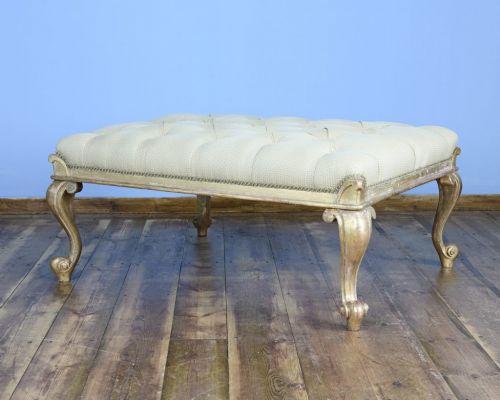
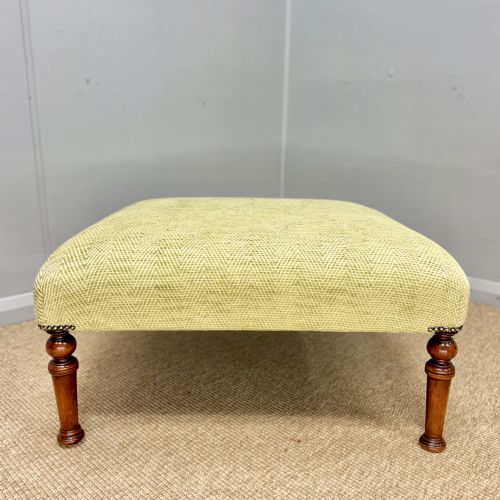

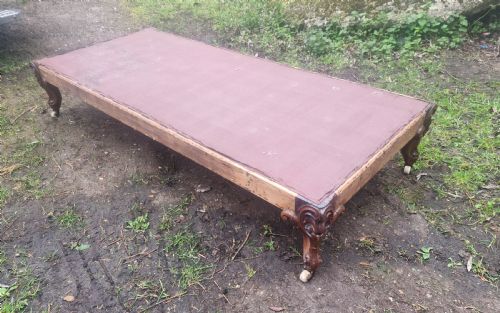


Large Coffee Table Ottoman
A large coffee table ottoman brings substance to a sitting room, offering a generous upholstered surface suited to use as a low table or footrest.
Large Coffee Table Ottoman
A large coffee table ottoman spans substantial proportions, frequently taking the form of a heavily upholstered footstool or centre stool adapted for modern living. These pieces appear primarily across nineteenth-century styles, drawing on Victorian, Regency, and Georgian influences.
Originating as footstools, centre stools, or ottomans, these items now function naturally as coffee tables while retaining their traditional timber frames and padded tops.
Materials and construction
Makers constructed these frames from solid timbers including mahogany, walnut, oak, and rosewood, occasionally incorporating parcel gilt or brass detailing. Structural joinery supports substantial proportions designed to bear weight as tables or seats.
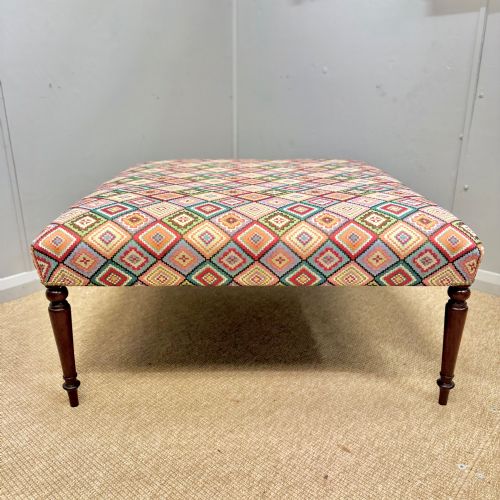
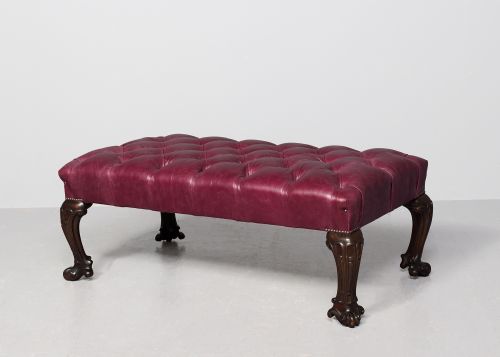
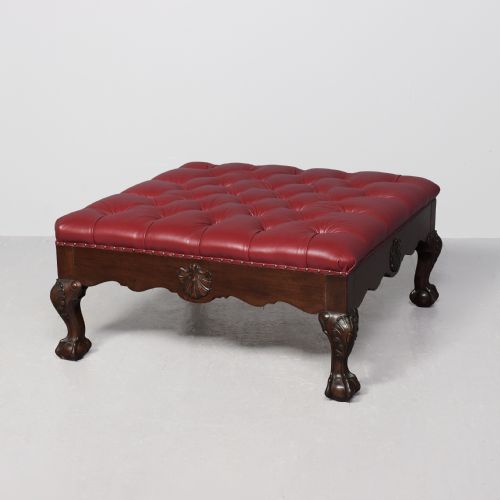
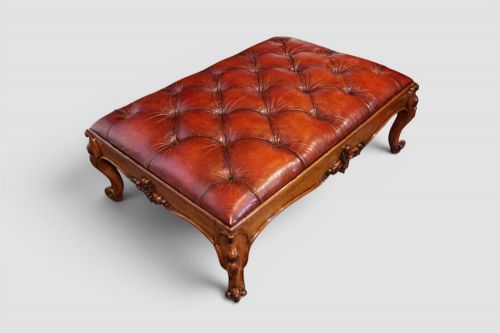
Upholstery techniques involve deep buttoning on red, burgundy, or hand-dyed hides, alongside geometric fabric and herringbone textiles. Many pieces retain traditional webbeding and stuffing beneath durable leather or cloth covers.
Judging quality in large coffee table ottomans
Quality rests in the weight of the timber frame and the precision of the carving, visible in details like Chippendale-style mahogany or carved rosewood. Substantial mahogany and walnut structures command attention for their timber selection and stability.
The finish of the hide and the execution of buttoning differentiate standard items from pieces of exceptional character. Hand-dyed English leather and well-preserved hides indicate superior material choice.
The Large Coffee Table Ottoman Glossary
- Centre stool
- A freestanding piece designed to sit in the middle of a room, often featuring a substantial upholstered top on a timber frame. These items serve effectively as large coffee table ottomans.
- Buttoned hide
- Leather upholstery secured with deep tufting and buttons, creating a cushioned surface with distinctive geometric indentations. This treatment appears frequently on Victorian examples.
- Parcel gilt
- A decorative technique where specific carved areas of the wood frame receive a thin application of gold leaf while the rest of the timber remains exposed.
- Chippendale Revival
- A nineteenth-century stylistic movement reproducing eighteenth-century designs characterised by solid mahogany frames and intricate carved details.
Large Coffee Table Ottoman: Frequently Asked Questions
Can I use an antique ottoman as a coffee table?
These large upholstered stools function well as coffee tables, providing a stable surface for trays and books while offering a softer edge than wood tables.
The sturdy timber frames and substantial padding handle daily domestic use comfortably.
How do I care for antique leather upholstery?
Maintain antique leather by applying suitable balms or waxes to keep the hide supple and prevent cracking over time.
Keep these pieces away from direct heat sources and strong sunlight to preserve the colour and finish of hand-dyed hides.
What is the difference between an ottoman and a centre stool?
Ottomans and centre stools share similar large proportions and upholstered tops, though nineteenth-century terminology often varied by regional workshop.
Both forms offer the expansive surface area required for modern coffee table conversion.
How do I identify a Victorian footstool?
Victorian examples frequently feature buttoned leather upholstery supported by turned walnut, mahogany, or oak frames.
Construction details and timber choices align with nineteenth-century manufacturing methods seen across English country house furnishings.