


Victorian Turned Leg Ottoman
Victorian turned leg ottoman pieces are classic low seating and footstools that bring period character and comfortable utility to a room.
Victorian Turned Leg Ottoman
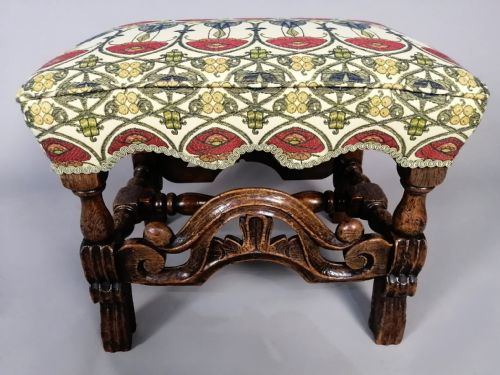
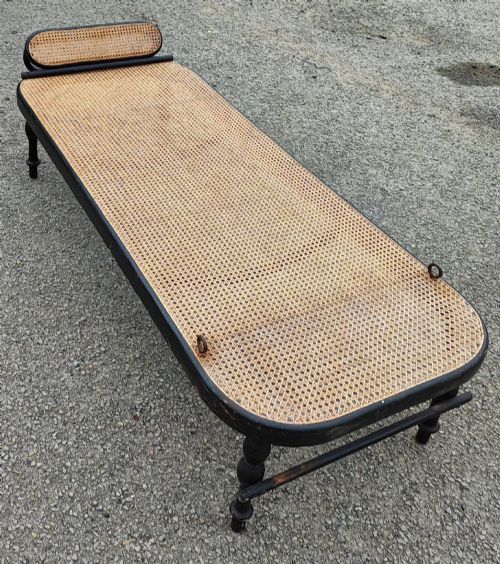
When you search for a victorian turned leg ottoman, you are looking at nineteenth-century footstools, window seats, and day beds supported by turned wooden legs. These pieces originate primarily from the nineteenth century, including specific decades such as the eighteen fifties, eighteen sixties, eighteen eighties, and eighteen nineties.
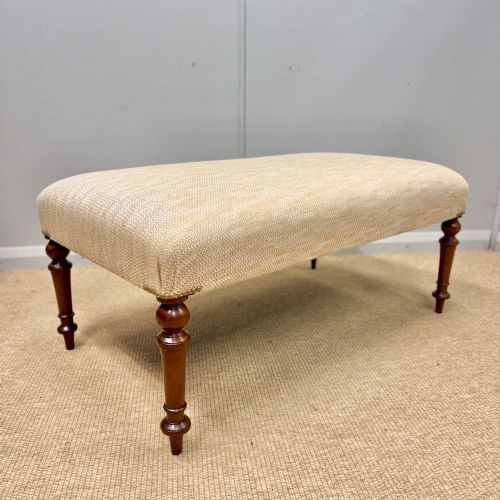
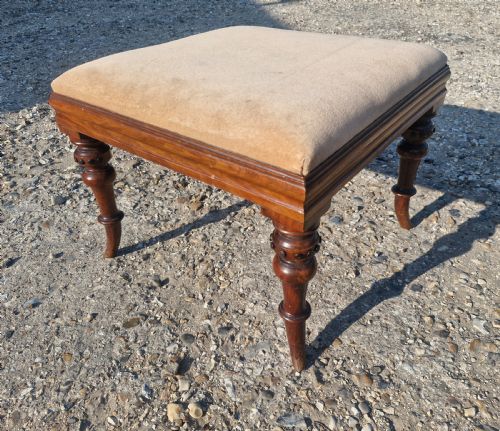
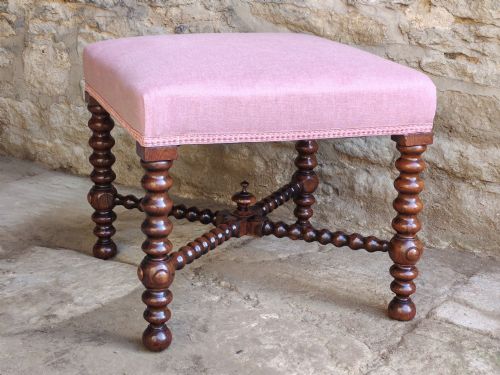
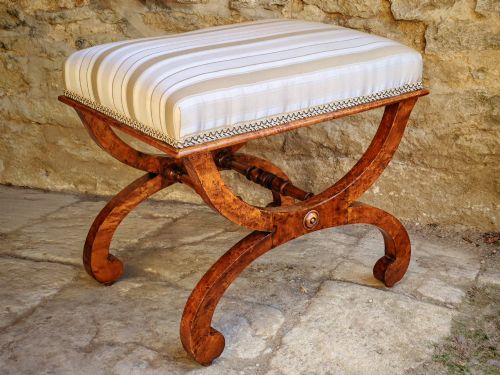
The version you are most likely to meet on this page is an upholstered footstool or long stool featuring mahogany or walnut timber frames. Many examples display practical brass castors, while others take the form of window seats or larger country house ottomans.
Object types span footstools, day beds, and hall benches, reflecting the varied domestic seating needs of the nineteenth century. Stylistic influences range from English Country House and Regency to Carolean Revival and French Country.
Materials and construction methods
Framing timbers rely heavily on hardwoods such as mahogany, walnut, rosewood, oak, and burr maple, sometimes with ebonised or ebony finishes. These sturdy timbers provide the structural foundation for both small footstools and larger window seats.
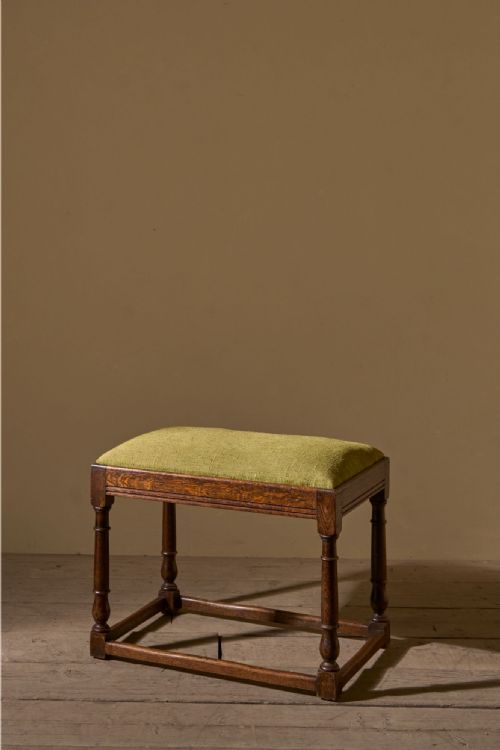
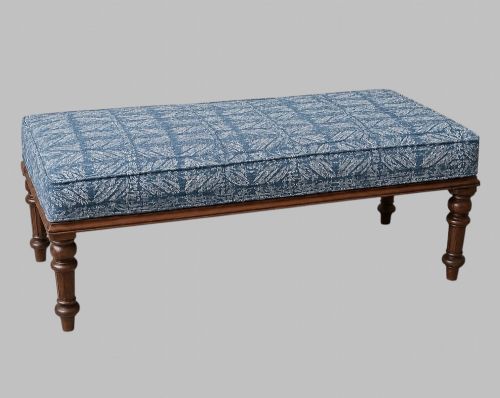
Legs are shaped using traditional turning techniques, often paired with brass castors for mobility. Upholstery materials include buttoned leather, heavy green linen, beige linen, tapestry, and various contemporary textiles.
Listings feature nineteenth-century items incorporating mahogany, walnut, rosewood, oak, fabric, leather, brass, and linen.
Distinctions in quality
Quality separates through the selection of timber and the precision of the frame construction and leg turning. Dense hardwoods like rosewood and burr maple indicate finer regional or workshop production compared to standard utility items.
The execution of the upholstery and the choice of covering materials, from plain linen to deep buttoned leather, mark the distinction between simpler domestic items and substantial country house pieces.
The Victorian Turned Leg Ottoman Glossary
- Ottoman
- A low upholstered seat or footstool without a back or arms. These versatile pieces often stand on turned wooden legs with castors.
- Turned leg
- A wooden leg shaped on a lathe to create cylindrical or decorative profiles. This technique defines the support structure of many nineteenth-century stools.
- Castor
- A small wheel mounted on a swivel attached to the base of a leg. They allow heavy nineteenth-century seating to move smoothly across floor coverings.
- Buttoned
- An upholstery technique where depressions are formed in the padding by stitching or tufting through to the frame. This creates a secure, textured surface seen on leather and fabric stools.
Victorian Turned Leg Ottoman: Frequently Asked Questions
What is a turned leg ottoman?
A turned leg ottoman is a nineteenth-century upholstered stool or low seat supported by lathe-turned wooden legs. They function as footstools, window seats, or day beds.
These pieces utilise timbers such as mahogany, walnut, and rosewood, frequently fitted with brass castors for ease of movement.
How do I date a Victorian stool?
Dating relies on examining the timber species, framing construction, and turning styles characteristic of the nineteenth century. Specific decades like the eighteen fifties or eighteen eighties often appear in records.
Secondary indicators include the style of brass castors and the remnants of original or later upholstery materials beneath the fabric.
Where should I place an ottoman?
These low stools fit naturally at the foot of a bed, beneath a window, or beside primary seating in a living space. Their compact height makes them suitable for resting feet or providing extra casual seating.
Larger versions function effectively as central coffee table substitutes when topped with a stable tray.
What fabrics are used for upholstery?
Historical and replacement coverings include deep buttoned leather, heavy green linen, beige linen, tapestry, and various woven textiles. Many pieces arrive recently or professionally upholstered.
Choice of fabric ranges from robust utilitarian linens to decorative patterned textiles suited for country house interiors.