





Large Circular Centre Table
A large circular centre table anchors a grand room, offering generous dining space and striking classical form.
Large Circular Centre Table
A large circular centre table is a freestanding piece designed to sit in the middle of a room rather than against a wall. When you search for a large circular centre table, you encounter substantial dining tables, breakfast tables, and library tables built to command a spacious interior.
Originating as versatile furnishings for halls, libraries, and principal dining rooms, these tables often incorporate tilt mechanisms or heavy pillar supports. Their circular geometry encourages gathering, making them practical centerpieces for large domestic spaces.
How they were made
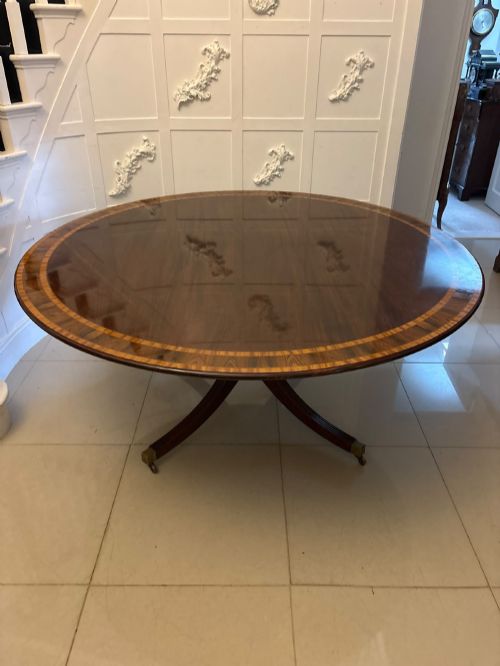
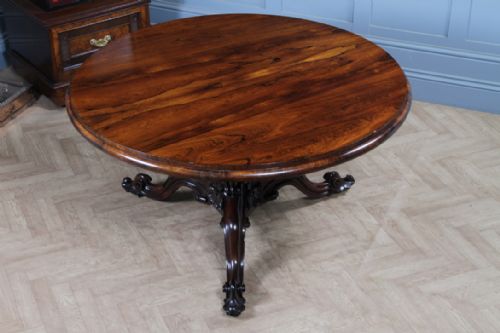
Cabinet makers utilised dense timber foundations of mahogany, rosewood, walnut, and oak, often applying finely figured veneers to the expansive tops. Crossbanding in satinwood or yew wood frames these surfaces, while brass castors and gilt bronze mounts provide mobility and decorative contrast.
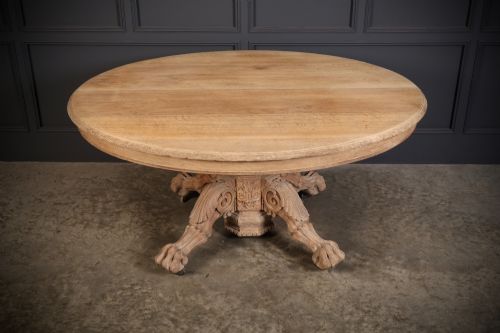
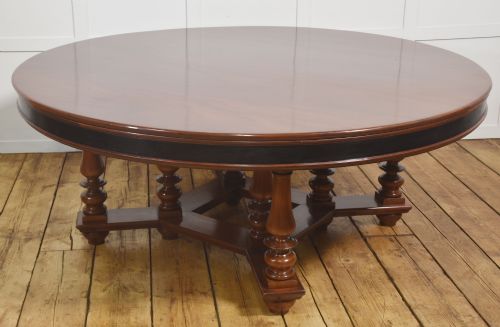
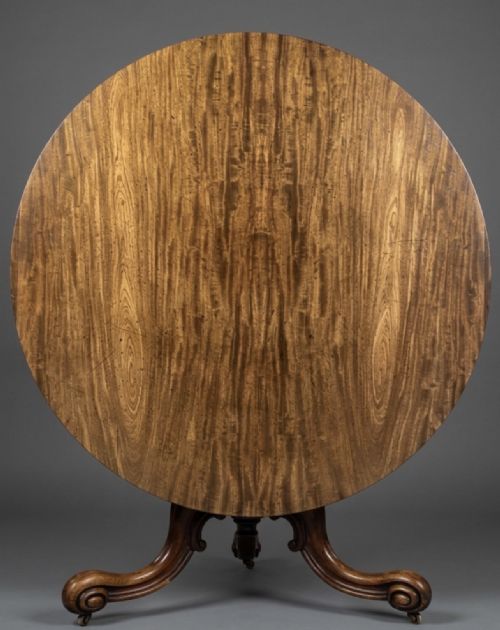
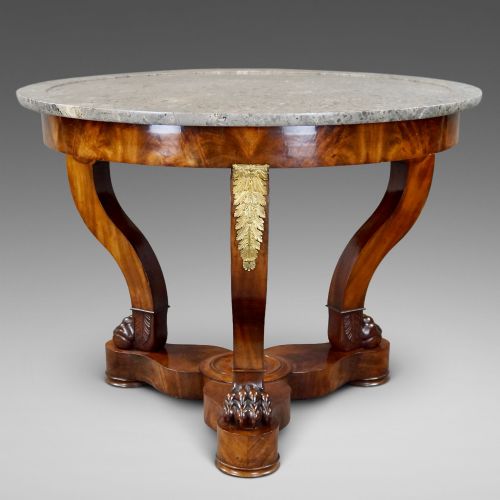
Structural integrity relied on heavy central pedestals, sometimes carved with acanthus leaves or supported on tripartite platforms with paw feet. Tilt-top mechanisms required precise iron latches and pivot blocks to allow the substantial timber surfaces to store upright when not in use.
Large Circular Centre Table Retail Price Guide 2026
Typical asking prices for large circular centre table among the pieces listed under this phrase on Sellingantiques today, from the lower quarter to the upper quarter. They describe what is for sale here now, not the wider market.
Listings feature nineteen-century periods including Regency, George IV, and Victorian alongside twentieth-century revivals.
What varies in quality
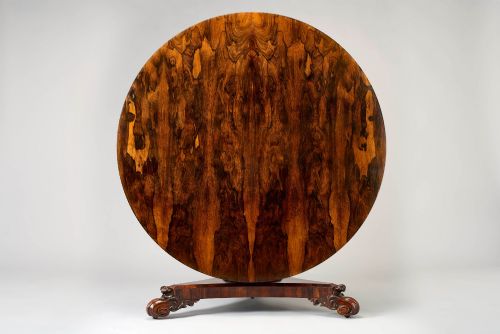
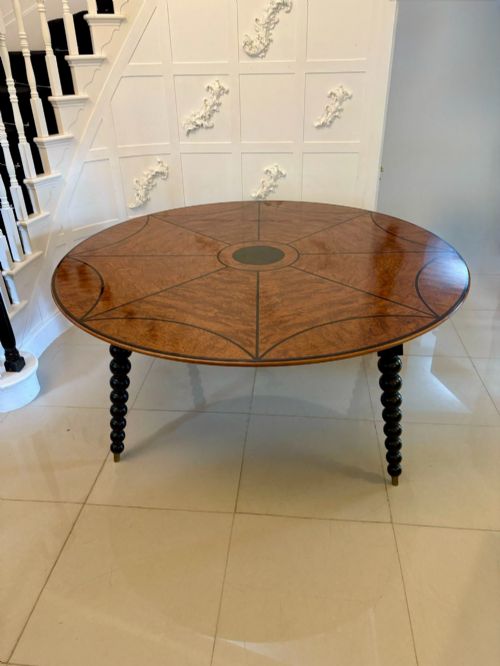
The selection of timber grain dictates visual appeal, with flame mahogany, burr walnut, and pollard oak representing the upper tier of cabinet making. Master workshops employed bookmatching and radial veneering to create symmetrical patterns across wide surfaces.
Carving depth and hardware execution separate standard production from exceptional pieces. Crisp hand-carving on pedestal mounts and heavy brass castors indicate skilled craftsmanship, whereas softer moulded details point to simpler workshop output.
Gillows
The Large Circular Centre Table Glossary
- Crossbanding
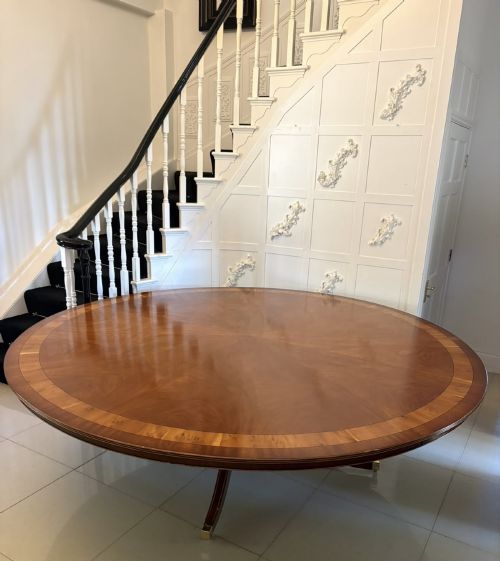
- A decorative border of veneer laid perpendicular to the grain of the main surface. This technique frames the circular top with a contrasting band of timber such as satinwood or rosewood.
- Gueridon
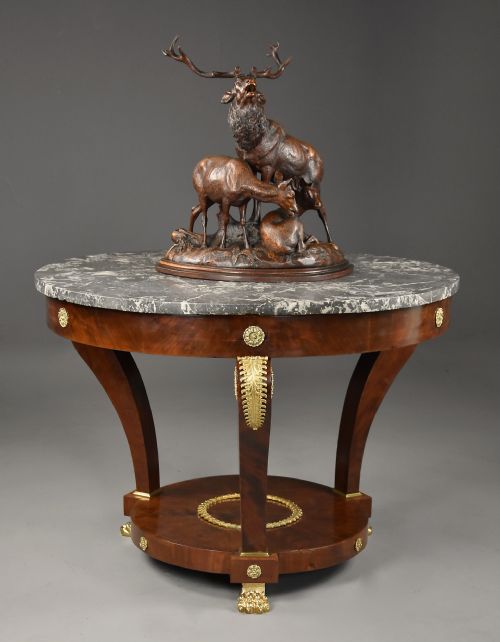
- A small or medium circular table supported by a central column or figures. Originating in France, these tables frequently feature marble tops and decorative mounts.
- Drum table
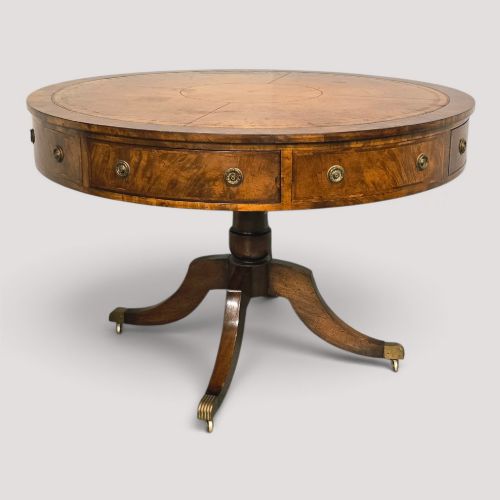
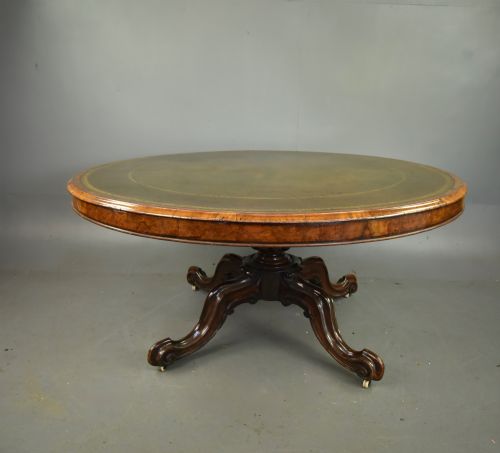
- A circular library table with a deep frieze containing drawers, resembling the shape of a drum. These pieces often feature inset leather writing surfaces.
- Tilt-top
- A hinged tabletop mechanism that pivots vertically to save space. This design allows the heavy circular top to rest flat against a wall when not in use.
- Radial veneer
- Wood veneers arranged outwards from a central point like spokes on a wheel. This method highlights the natural grain pattern of the timber across a round surface.
Large Circular Centre Table: Frequently Asked Questions
How were large circular centre tables used?
These tables served multiple functions in grand houses, acting as breakfast tables, library desks, or formal dining surfaces. Their central placement allowed guests to gather easily from all sides.
In larger rooms, they held heavy lamps, books, or decorative centrepieces while remaining accessible for daily family meals.
Where should I place a centre table?
A large circular table requires an open space with clearance around the perimeter for movement and seating. Placing it beneath a central ceiling rose or chandelier highlights its symmetrical form.
Ensure doorways and surrounding furniture allow enough room to pull out chairs comfortably from beneath the wide pedestal base.
How do I identify a Regency period table?
Regency tables rely on classical architectural proportions, often featuring dark mahogany timbers, reeded column supports, and brass paw feet. Clean lines and restrained brass inlay define this neoclassical aesthetic.
Many examples from this era include tilt mechanisms and heavy platform bases designed to support wide circular tops.
What is the difference between a breakfast and dining table?
Breakfast tables of the nineteenth century frequently feature tilt-top mechanisms for convenient storage against room walls. Dining variants generally maintained fixed pedestal bases to support heavier daily loads.
Both types share large circular tops, though breakfast tables often appeared in private morning rooms rather than formal dining halls.