


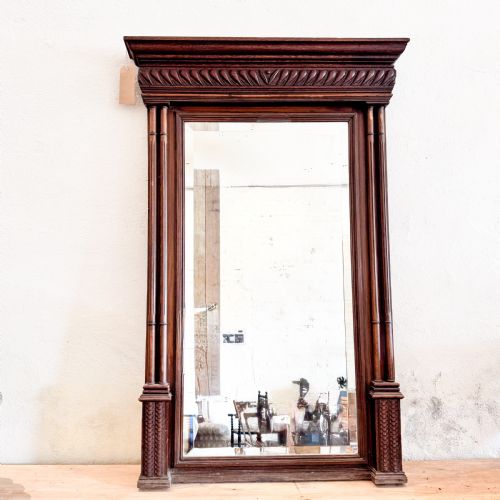

Large Chimney Glass Mirror
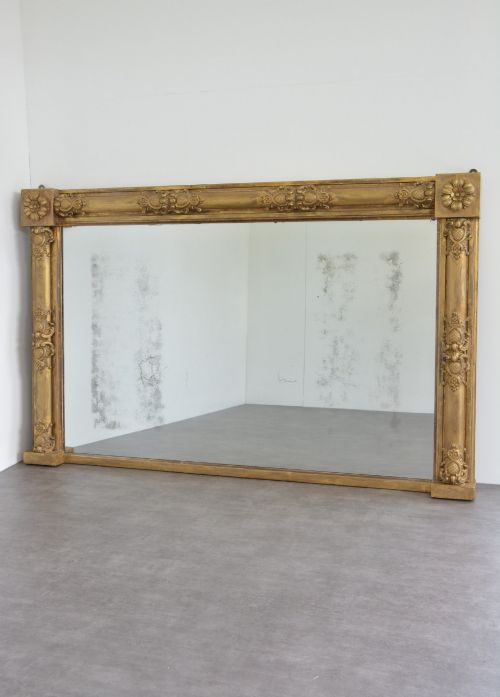
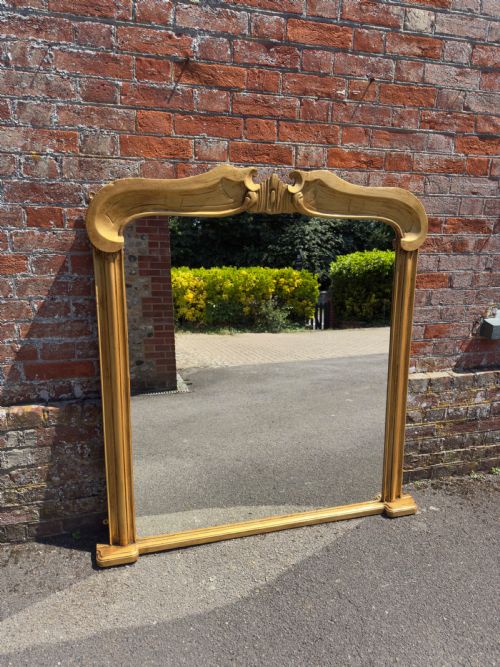
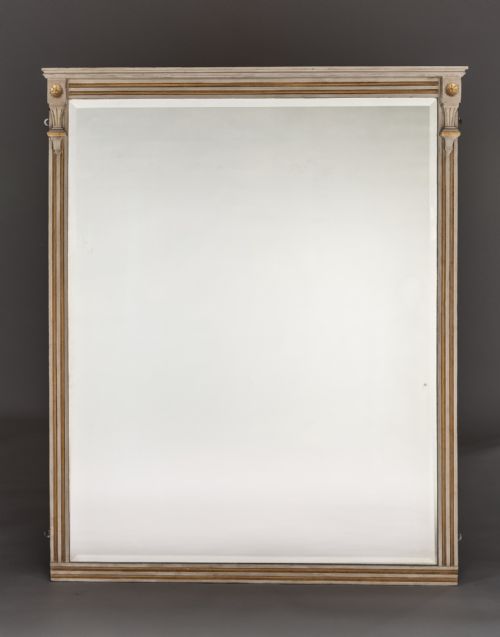
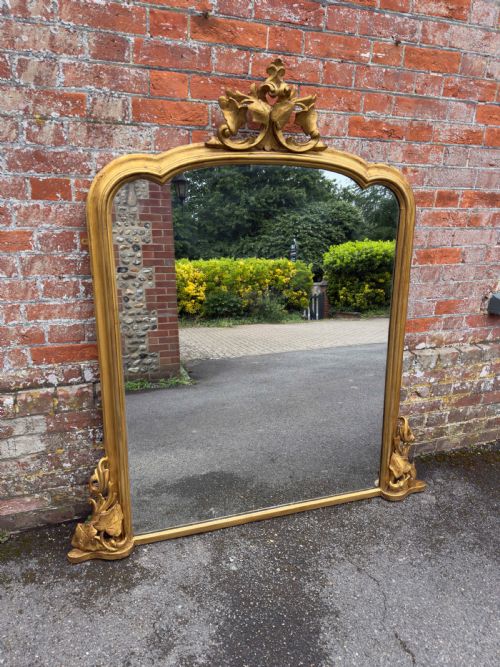
These large chimney glass mirror examples are substantial nineteenth-century overmantel pieces designed to anchor a principal room and reflect daylight.
Large Chimney Glass Mirror
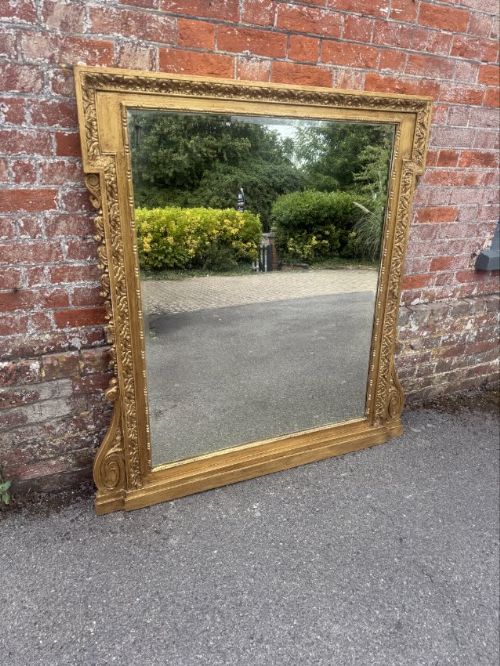
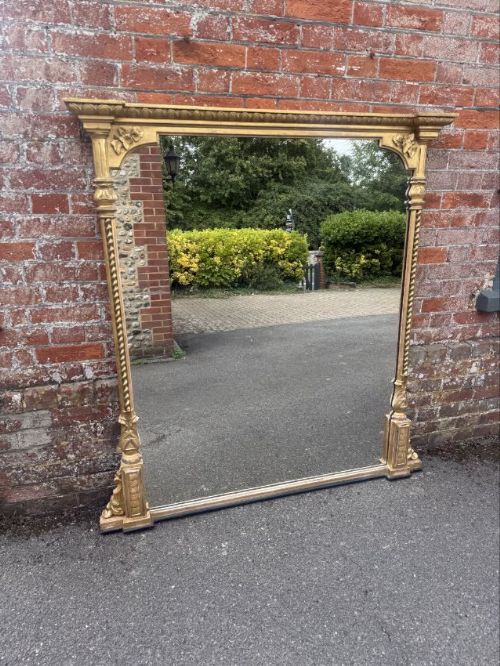
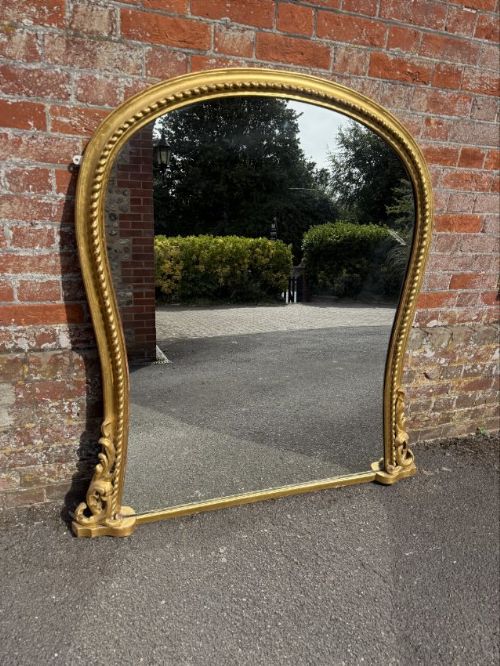
A large chimney glass mirror sits above a fireplace, taking the form of an overmantel mirror designed to fill the chimney breast. The pieces seen here span the Victorian, Regency, and Edwardian periods, manifesting chiefly as English and Irish examples made for principal reception rooms.
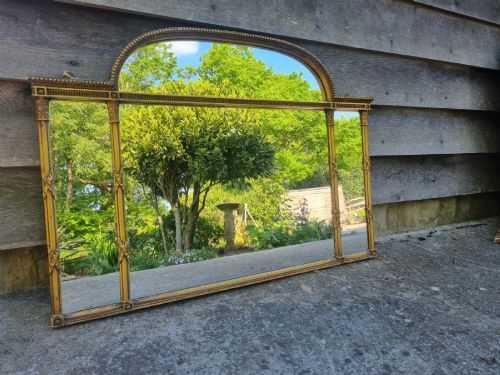
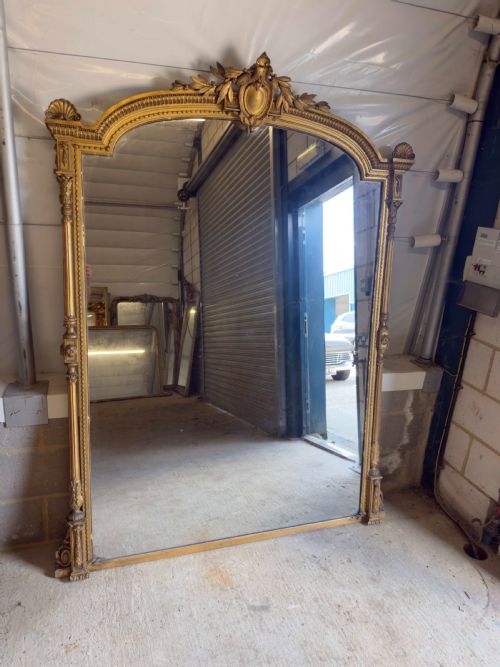
The dominant format on this page is the giltwood and gesso overmantel mirror, often featuring an arched top, rope twist framing, or classical column details. Surviving forms include rectangular wall mirrors, trumeau mirrors, and waisted frames shaped to follow the architectural lines of period mantelpieces.
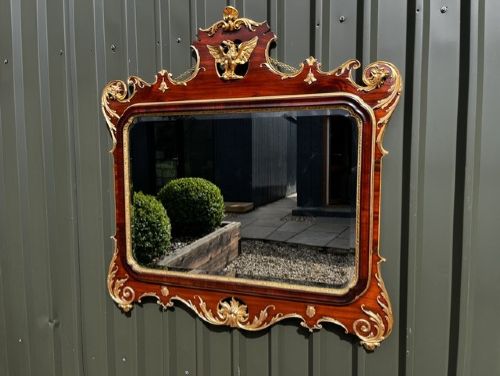
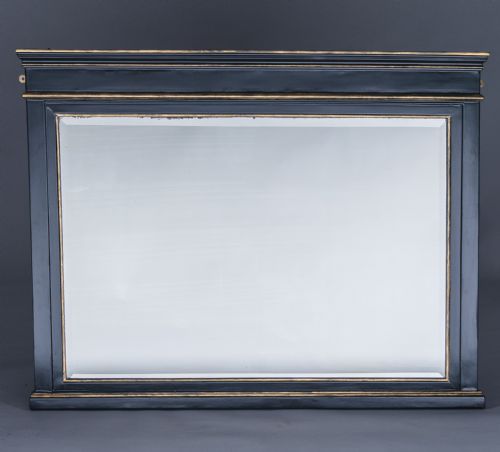
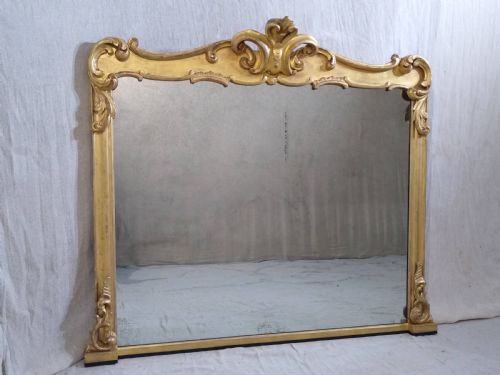
Makers and craftsmen of the nineteenth century built these large wall mirrors to command the room, utilising substantial timber frames covered in applied ornament. Buyers encounter pieces ranging from plain mahogany and ebonised wood to heavily gilded rococo and neoclassical revival designs.
How they were made
Makers constructed the carcass from carved wood, utilising timber such as mahogany, oak, or walnut for structural strength. Over this wooden base, artisans applied layers of gesso, a plaster-like mixture, to build up crisp surface ornamentation before gilding.
Decoration relied on gold leaf or liquid gold applied over the gesso ground, complemented by composition ornaments moulded and fixed to the frame. Glass plates were set into the rebate, occasionally backed with silvering that shows light foxing through age.
Listings span the nineteenth and early twentieth centuries, featuring Victorian, Regency, and Edwardian periods in giltwood, gesso, and carved wood.
What varies in quality
Quality rests in the depth and crispness of the carved wood and gesso ornamentation, distinguishing hand-carved relief work from mass-pressed composition mouldings. The architectural cohesion of the frame, from pediments to rope twist columns, dictates the visual success of the piece.
The integrity of the original gilt surface and the character of the mirror glass itself define the upper tier of surviving examples. Frames retaining their original gilding without heavy re-touching demonstrate superior preservation over centuries.
The Large Chimney Glass Mirror Glossary
- Overmantel mirror
- A large looking glass specifically proportioned to hang on the wall directly above a fireplace mantelpiece. These pieces often feature horizontal widths designed to match the span of the hearth below.
- Gesso
- A dense preparation of chalk and size applied to wooden frames as a smooth base for subsequent gilding. It allows artisans to carve or impress intricate relief decoration before applying gold leaf.
- Giltwood
- Timber frames coated with gold leaf over a prepared ground. It provides a luminous surface that catches and reflects ambient room light.
- Foxing
- The natural degradation of the mirror plate backing, visible as small dark spots or cloudiness within the glass. This chemical ageing process authenticates early mirror plates.
- Trumeau mirror
- An architectural wall glass incorporating a painted or carved panel above the main mirror plate. These pieces originate from classical interior design traditions.
Large Chimney Glass Mirror: Frequently Asked Questions
Where should I hang a large chimney glass mirror?
These pieces traditionally anchor the wall directly above a fireplace mantelpiece, where their generous proportions reflect light across the room.
They also function effectively on any principal wall in a high-ceilinged reception space as a standalone focal point.
How do I date a nineteenth-century overmantel mirror?
Dating relies on stylistic clues, such as Regency classical columns, Victorian rococo scrolls, or Edwardian neoclassical symmetry.
Construction methods, including the type of wood in the carcass and the condition of the mirror plate, provide further chronological markers.
Are these mirrors heavy to hang?
These frames possess substantial weight due to their timber construction, thick gesso layers, and large glass plates.
Professional installation into solid masonry or well-anchored wall studs is essential to support the load safely.
What is the difference between an overmantel and a wall mirror?
Overmantel mirrors are specifically proportioned to sit above mantelpieces, often featuring wide horizontal formats designed to span chimney breasts.
Standard wall mirrors follow more balanced vertical or square dimensions suited for general room placement.