


Large Ceramic Statuettes
Large ceramic statuettes bring character and presence to a room, ranging from Staffordshire lions to finely painted French pairs.
Large Ceramic Statuettes
Large ceramic statuettes encompass figures, figurines, and decorative statuettes produced across the eighteenth and nineteenth centuries. When you search for large ceramic statuettes, you encounter varied forms including pairs of French porcelain figures, Staffordshire lions, and biscuit porcelain pieces.
The pieces on this page span the Victorian era, the eighteenth century, and the late nineteenth century, reflecting diverse origins such as England, France, Germany, and Japan. You are most likely to meet Staffordshire figures, Royal Worcester works, and continental porcelain pairs on this page.
How they were made
Manufacturers utilised porcelain, earthenware, and biscuit porcelain, often applying hand-painted enamel and glaze to the surface. Many examples incorporate gilding, gilt, or gold leaf highlights to accentuate the sculptural details.
Makers shaped these large forms through specialised moulding and casting techniques before firing the clay or paste at high temperatures. Specialised workshops then added detailed hand painting and metallic finishes, such as Patent Metallic glazes.
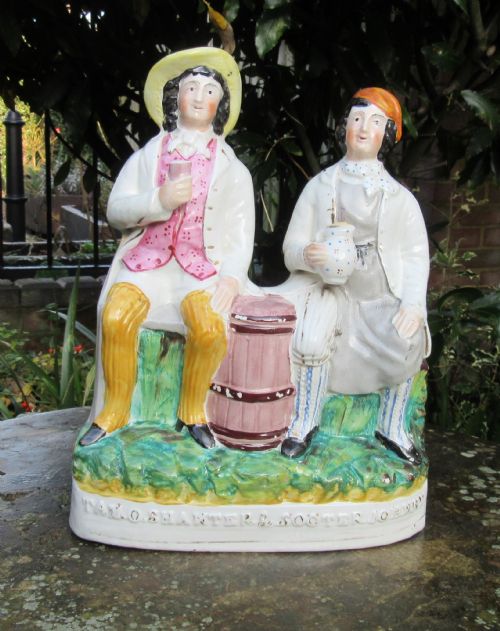
Tam O'Shanter and Souter Johnny immortalise Robert Burns' hard-drinking local Scots in sturdy Staffordshire earthenware.
What varies in quality
The distinction between ordinary and superior pieces also involves the complexity of the form and the clarity of factory marks or signatures. Well-executed bases, such as circular rustic mounts, add to the overall cohesion of the sculpture.
James Hadley·Royal Worcester·Ernst Wahliss·Carl Thieme Dresden
The Large Ceramic Statuettes Glossary
- Biscuit Porcelain
- Unglazed ceramic material fired once to create a matte, marble-like surface. It is frequently used for detailed nineteenth-century figures.
- Staffordshire
- Earthenware figures and animals produced in the Staffordshire potteries during the Victorian period. These pieces are typically hand-painted in robust colours.
- Gilt
- A thin layer of gold applied to the surface of the ceramic to highlight specific decorative elements. It adds a reflective quality to the finished statuette.
- Figurine
- A small sculptural statuette representing a human, animal, or mythical subject. In ceramic contexts, these objects range from simple earthenware to complex porcelain groups.
Large Ceramic Statuettes: Frequently Asked Questions
How do I date large ceramic statuettes?
Dating relies upon identifying factory marks, stylistic traits, and the specific type of clay or glaze used. Victorian pieces often show distinct earthenware bodies, whereas eighteenth-century figures utilise early hard-paste porcelain.
Examining the base and any hand-written or impressed numbers provides further clues to the period of manufacture. Comparing the subject matter to known historical periods also helps narrow down the decade.
Where should I display large ceramic statuettes?
Because of their substantial size, these statuettes suit sturdy surfaces such as sideboards, mantelpieces, or dedicated pedestals. Placing them away from direct foot traffic prevents accidental knocks.
Ensure the display area receives stable lighting to highlight the hand-painted details and gilding. Avoid placing delicate biscuit porcelain or earthenware in damp environments.
What subjects do these statuettes depict?
The subjects range from classical figures such as Zeus and Jupiter to literary characters like Tam O'Shanter and Souter Johnny. You also find historical portraits, orientalist figures, and animals including lions and elephants.
Decorative studies of young girls, water carriers, and monks reflect the Victorian taste for genre scenes and exoticism. These varied subjects mirror the popular culture and artistic interests of their respective periods.