

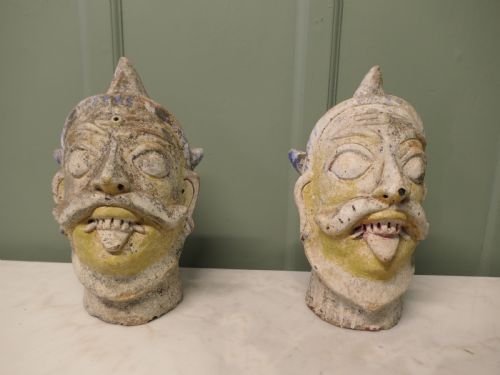
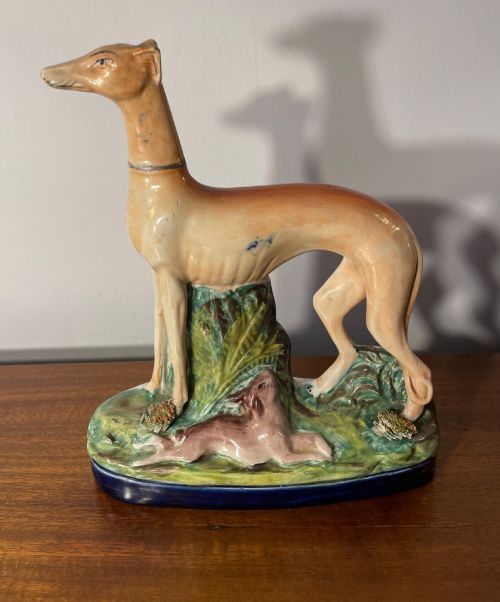




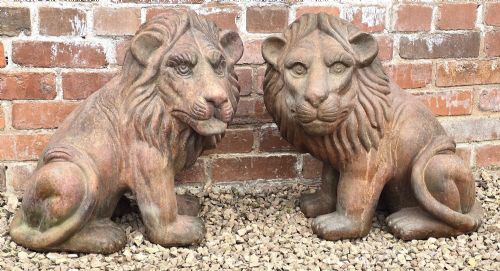


Large Ceramic Sculptures
Large ceramic sculptures bring commanding presence and intricate detail to interior spaces and gardens alike.
Large Ceramic Sculptures
Large ceramic sculptures encompass substantial figures, animal studies, and garden statuary produced across the nineteenth and early twentieth centuries. When searching for large ceramic sculptures, buyers encounter works ranging from monumental earthenware lions and terracotta garden figures to glazed porcelain maidens and Orientalist subjects.
The pieces on this page span diverse stylistic traditions, including Victorian figures, Art Nouveau studies, and pieces executed in Chinese Imperial and Japanese Meiji styles. Forms include water carriers, classical Roman subjects, mythical figures, and detailed animal groups designed for prominent display.
How they were made
Makers utilised various ceramic bodies, including terracotta, earthenware, soft-paste and hard-paste porcelain, bisque porcelain, and Parian statuary. Terracotta works were often hand-sculpted or press-moulded in sections for large architectural and garden figures.
Surface finishes include polychrome glazes, sancai glazes, copper lustre, shot enamels, and hand-painted gilt highlights. Porcelain pieces frequently underwent multiple firings to fix delicate enamels and metallic leaf before final assembly.
Large Ceramic Sculptures Retail Price Guide 2026
Typical asking prices for large ceramic sculptures among the pieces listed under this phrase on Sellingantiques today, from the lower quarter to the upper quarter. They describe what is for sale here now, not the wider market.
Several terracotta lions on offer have guarded gardens for over a century without ever catching a single hare.
What varies in quality
Scale and ambition also dictate standing, with monumental figures requiring advanced kiln technology to prevent warping during firing. Factory provenance and artist signatures, such as those from recognised European potteries and named modellers, elevate individual works.
Royal Dux Bohemia·Royal Worcester·Goldscheider·Vion & Baury·Ernst Wahliss
The Large Ceramic Sculptures Glossary
- Bisque porcelain
- Unglazed white porcelain fired once to produce a matte, marble-like surface texture. It is frequently employed for detailed figural groups.
- Terracotta
- Fired brownish-red clay utilised for substantial garden statues and architectural ornaments. It can be left unglazed or coated with surface finishes.
- Parian statuary
- A fine-grained, white porcelain developed to imitate carved marble. It gained popularity in the nineteenth century for classical figural subjects.
- Sancai glaze
- A three-colour lead glaze tradition originating in China, typically employing amber, green, and cream tones. It is seen on figures influenced by Ming styles.
Large Ceramic Sculptures: Frequently Asked Questions
Where should I place a large ceramic sculpture?
Substantial sculptures suit grand hallways, living spaces, or sheltered garden settings depending on the clay body. Terracotta and salt-glazed pieces withstand outdoor environments, while delicate porcelain figures require indoor placement.
Ensure the display surface supports the substantial weight of these pieces safely.
How do I clean antique ceramic figures?
Dust surfaces gently using a soft, dry brush to prevent accumulation in crevices and painted details. Avoid harsh chemical cleaners or abrasive cloths that might damage painted enamels or gilt highlights.
Unglazed terracotta and bisque porcelain require particular care to avoid staining from moisture.
How do I identify the period of a sculpture?
Examine the style of modelling, clothing, and base markings for clues to the date of manufacture. Art Nouveau pieces display characteristic organic flowing lines, while Victorian works often favour classical or Orientalist themes.
Factory stamps and impressed numbers on the underside provide definitive manufacturing eras.
Are these sculptures solid or hollow?
Most large ceramic sculptures are hollow-cast or built in sections to reduce weight and ensure even firing in the kiln. Solid construction is generally limited to smaller elements or specific architectural components.
Sectional construction often leaves internal seams visible on the underside of unglazed pieces.