






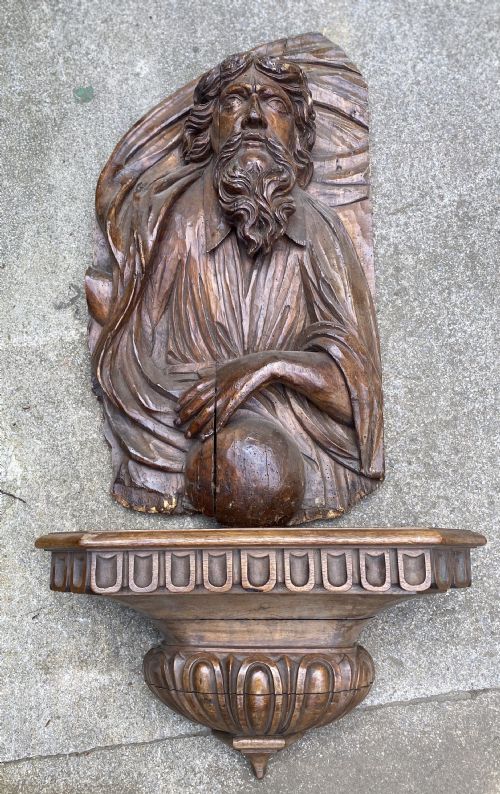
Large Carved Wood Corbels
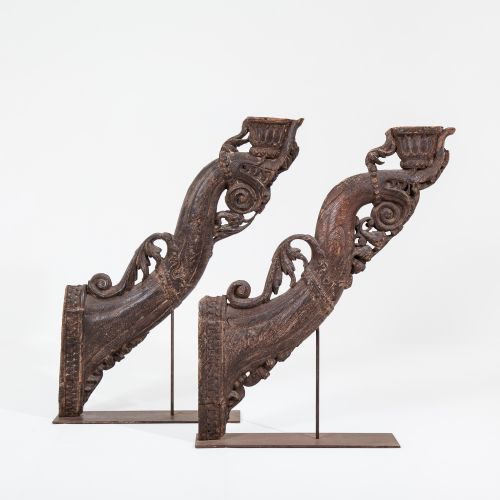
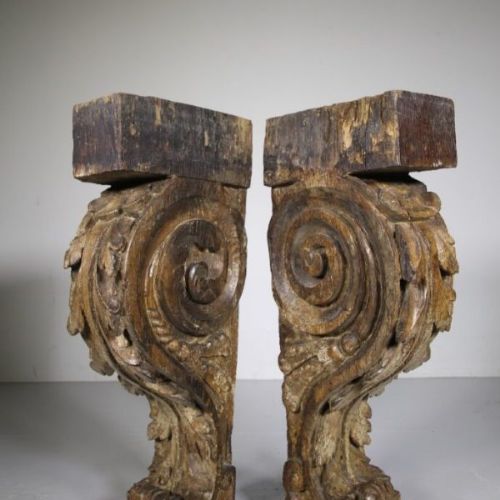
Large carved wood corbels bring structural strength and bold sculptural presence to any room, serving as striking architectural accents.
Large Carved Wood Corbels
Large carved wood corbels function as substantial architectural brackets and wall supports, designed to project outward and carry weight beneath shelves or mantelpieces. When you search for large carved wood corbels, you encounter architectural salvage and decorative brackets spanning from the seventeenth century through the Victorian era.
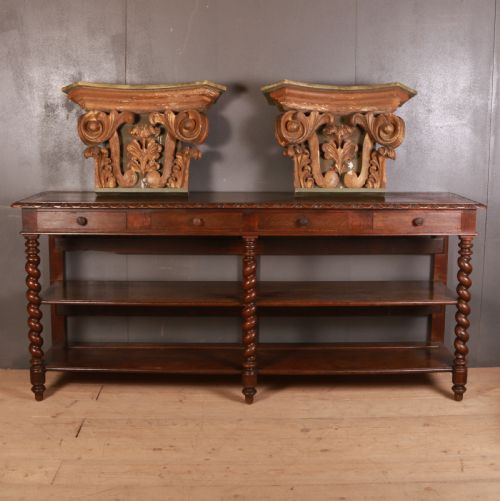
The pieces appearing on this page encompass various regional traditions and forms, including pairs of Italian capitals, Black Forest walnut lion heads, and traditional Chinese carved wooden corbels. Many originate as architectural elements from continental Europe and Britain, reflecting Baroque and Georgian design idioms.
Beyond standard architectural supports, the selection includes related wall brackets and architectural figures carved from timber. These range from eighteenth-century walnut lion heads to seventeenth-century religious figures carrying symbolic or decorative weight.
Materials and construction
Makers shaped these architectural supports primarily from dense hardwoods like oak, walnut, and rosewood, which accepted deep chisel work and sustained heavy loads. Surfaces often display remnants of original paint or gesso preparations applied to seal the timber before finishing.
Craftsmen utilised hand chisels and gouges to carve complex three-dimensional forms directly into the solid timber block. Iron elements occasionally appear in the construction or mounting apparatus, providing necessary reinforcement for structural wall brackets.
Large Carved Wood Corbels Retail Price Guide 2026
Typical asking prices for large carved wood corbels among the pieces listed under this phrase on Sellingantiques today, from the lower quarter to the upper quarter. They describe what is for sale here now, not the wider market.
The listings on this page span multiple centuries, incorporating oak, walnut, rosewood, and iron components across various European and Asian traditions.
Judging quality in carved corbels
The distinction between ordinary supports and superior examples lies in the depth and vitality of the carving. Master carvers achieved crisp undercut details and anatomical precision in figures like lion heads, whereas lesser pieces display stiff, shallow execution.
The integrity of the timber and the retention of original surface patination dictate desirability. Surviving historical finishes and untouched walnut surfaces elevate an architectural fragment from mere salvage to a piece of fine sculpture.
The Large Carved Wood Corbels Glossary
- Corbel
- A structural piece of stone or wood projecting from a wall to carry a weight. Most function as architectural supports beneath beams or shelves.
- Capital
- The uppermost member of a column or pilaster. Classical examples often feature carved acanthus leaves or volutes.
- Gesso
- A plaster mix applied to wood surfaces as a base for paint or gilding. It provides a smooth ground for decorative finishes.
- Architectural salvage
- Building elements rescued from structures slated for demolition. This material preserves historical craftsmanship for modern interiors.
Large Carved Wood Corbels: Frequently Asked Questions
How do I hang a heavy wooden corbel?
Hanging large wooden corbels securely requires locating wall studs or masonry anchors capable of supporting considerable weight.
Many antique corbels feature integrated iron brackets or hidden mounting slots engineered into the timber for stable wall attachment.
Are these corbels suitable for outdoor use?
Most antique wood corbels were carved for interior architectural placement and lack modern exterior weatherproofing treatments.
Exposing historic timber, gesso, and paint finishes to outdoor moisture and temperature fluctuations causes rapid deterioration of the material.
How can I tell the age of a carved corbel?
Dating relies on examining tool marks left by hand chisels, wood shrinkage patterns, and stylistic indicators typical of periods like the Baroque or Georgian eras.
Comparing the species of timber, such as seventeenth-century oak versus Victorian walnut, also helps narrow the period of manufacture.