




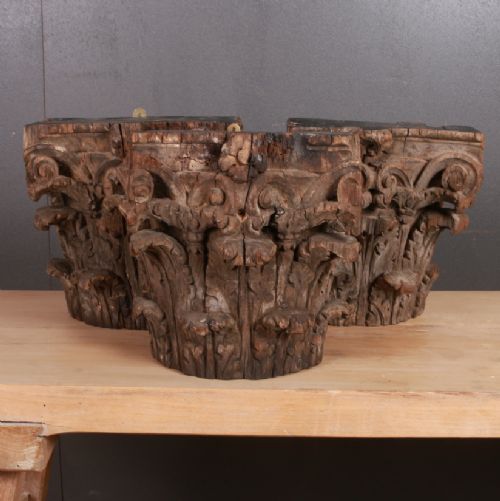
Antique Architectural Capitals
Antique architectural capitals are sculptural crowning elements carved from stone and timber, bringing grand classical presence into domestic interiors.
Antique Architectural Capitals
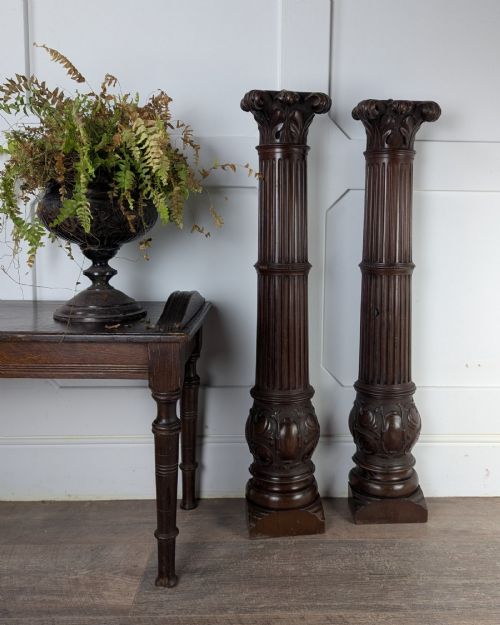
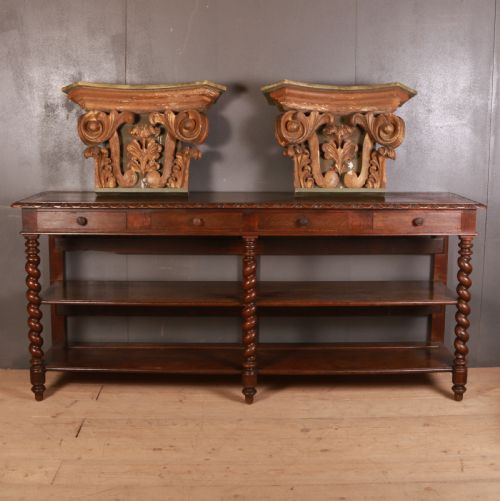
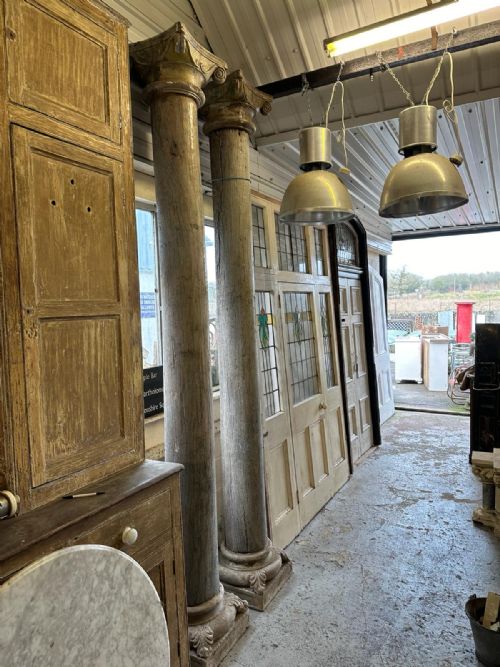
Antique architectural capitals are structural or decorative fragments salvaged from historic buildings, ranging from timber wall brackets to stone column tops. When you search for antique architectural capitals, you find pieces spanning the seventeenth through to the early twentieth century, originating from British, French and Italian sources. The selections on this page encompass carved wooden Corinthian orders, limestone fragments, and monumental Continental Baroque pillars.
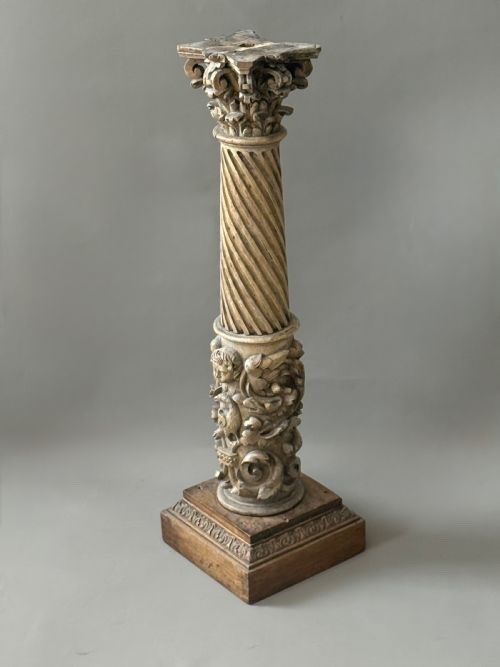
The most common forms encountered here are pairs of carved wooden capitals in the Corinthian style, alongside sandstone fragments and limestone examples. Many of these items originate as salvaged architectural salvage, repurposed over time as lamp bases, pedestals, or standalone sculptural wall displays. Pieces date from the mid-eighteenth century through the Victorian era and into the early twentieth century, showing diverse regional interpretations of classical orders.
How they were made
Makers shaped these antique architectural capitals primarily from dense hardwoods such as mahogany and chestnut, or from workable natural materials like limestone, sandstone, and plaster. Artisans utilised hand-carving techniques to define intricate acanthus leaves, volutes, and reeded shafts directly into the timber or stone. Surface treatments often involved applied gesso, historic paint, or gilding to enhance the sculptural relief.
Stonemasons worked sandstone and limestone with chisels to achieve robust profiles suitable for structural support or monumental display. Woodcarvers employed gouges and chisels on hardwood blocks, sometimes building up fine details with gesso before finishing the surface with paint or gold leaf.
Antique Architectural Capitals Retail Price Guide 2026
Typical asking prices for architectural capitals among the pieces listed under this phrase on Sellingantiques today, from the lower quarter to the upper quarter. They describe what is for sale here now, not the wider market.
Several stone capitals began their journeys holding up roofs before spending centuries as garden ornaments.
What varies in quality
The distinction between ordinary and exceptional antique architectural capitals lies in the depth and sharpness of the hand-carved relief work. Finer examples display crisply undercut acanthus leaves and well-proportioned volutes that reflect a confident grasp of classical geometry. Lesser pieces may feature softer, shallower carving where surface details rely heavily on thick layers of gesso rather than crisp chisel work.
Material integrity and the survival of original surface finishes also dictate the standing of a piece. Capitals retaining genuine historic paint, untouched hardwood grain, or natural weathering on stone command greater visual authority than heavily restored or stripped items. The precision of the proportions and the symmetry of paired components further separate utilitarian architectural salvage from masterworks of interior ornament.
The Antique Architectural Capitals Glossary
- Capital
- The uppermost member of a column or pilaster, serving to convey the weight from the beam or architrave down to the shaft below. It forms the most decorative part of a classical order.
- Corinthian
- A classical architectural order characterised by slender fluted columns and elaborate capitals decorated with acanthus leaves and scrolls. It represents the most ornate of the ancient Greek and Roman systems.
- Volute
- A spiral, scroll-like ornament that forms the distinctive feature of the Ionic capital, and appears smaller in the corners of Corinthian capitals. Carvers shape them with tight geometric curves.
- Herm
- A sculptural pillar terminated below by the head, or head and shoulders, of a human figure. These objects often taper towards the base and derive from ancient boundary markers.
- Acanthus
- A Mediterranean plant whose serrated leaves provide the principal ornament for Corinthian and Composite capitals. Sculptors render these foliage motifs in stone, wood, and plaster.
Antique Architectural Capitals: Frequently Asked Questions
How were antique architectural capitals used originally?
In historical architecture, these capitals sat atop columns or pilasters to support structural loads or frame doorways and mantelpieces within grand public and domestic buildings. They distributed weight while providing a focal point for classical ornamentation.
Today, surviving examples function primarily as decorative interior objects, mounted on walls as brackets or displayed as sculptural centerpieces and lamp bases.
Can antique architectural capitals be used outdoors?
Stonework such as limestone or sandstone capitals generally withstand external environments if protected from severe frost and standing water. However, many surviving pieces have spent centuries indoors or retain delicate historic paint, gesso, or softwood surfaces that degrade rapidly in damp weather.
Wooden and plaster examples require indoor placement to preserve the integrity of the carved timber and applied finishes against moisture and temperature fluctuations.
How do I distinguish stone capitals from wooden ones?
Stone capitals, typically fashioned from limestone or sandstone, exhibit heavy density, cool tactile temperatures, and tool marks characteristic of masonry chisels. They often show natural weathering, mineral inclusions, or the gradual patina of age.
Wooden capitals, carved from mahogany, chestnut, or other hardwoods, display natural grain patterns, lighter weights, and occasional joins where larger decorative blocks were laminated together before carving.
What is the difference between an architectural capital and a wall bracket?
A capital is specifically designed as the crowning member of a column or pilaster, featuring geometry intended to sit atop a vertical shaft. Even when salvaged as fragments, they retain the proportions of a column top.
A wall bracket is engineered specifically to project horizontally from a vertical wall surface to support a shelf, bust, or lighting fixture, lacking the characteristic circular or square crowning geometry of a capital.