



Antique Corbel Pair
An antique corbel pair provides structural support and sculptural presence, bringing architectural depth and historic character into a room.
Antique Corbel Pair
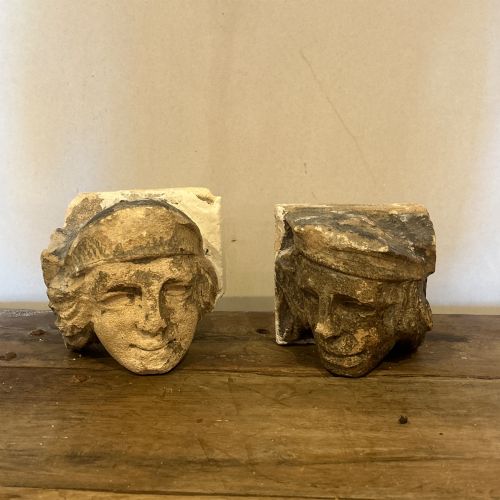
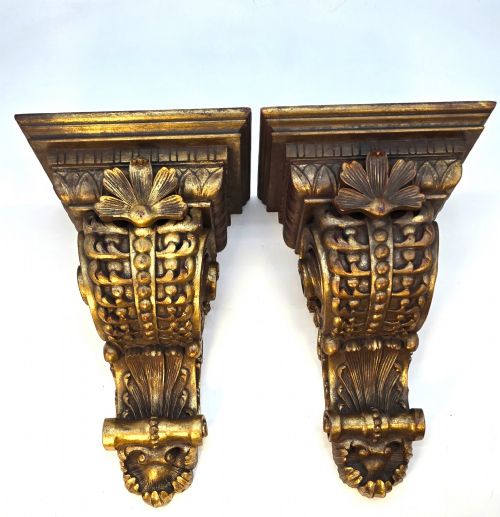
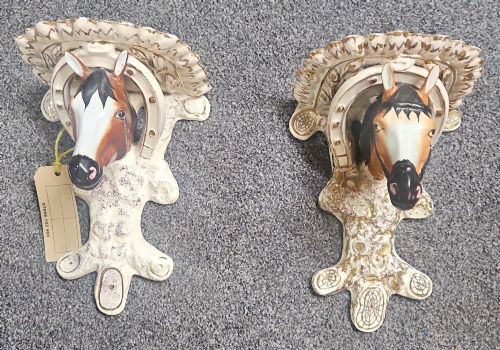
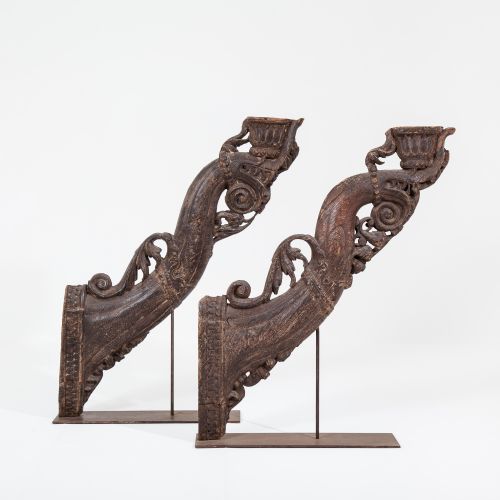
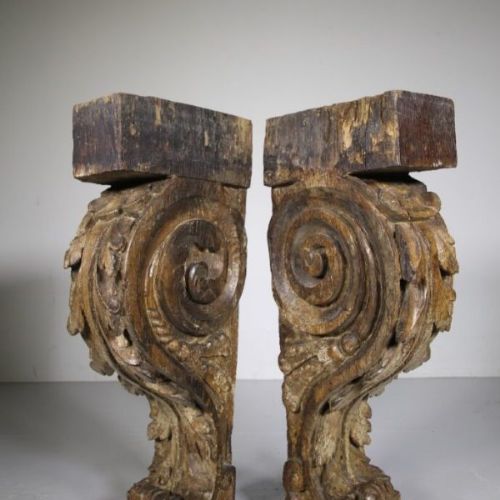
An antique corbel pair consists of projecting architectural supports designed to carry weight beneath a shelf, mantel, or beam. When searching for an antique corbel pair, buyers encounter items functioning primarily as decorative wall brackets or salvaged architectural elements rather than structural load-bearers. The selection spans centuries of design, with items originating from English, French, Flemish, and Italian workshops.
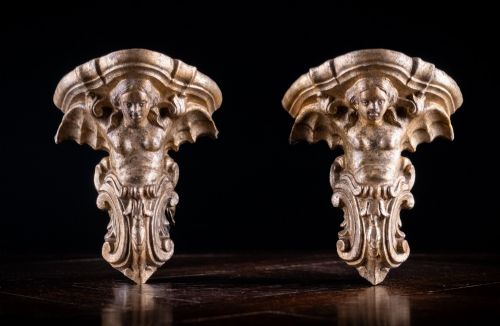
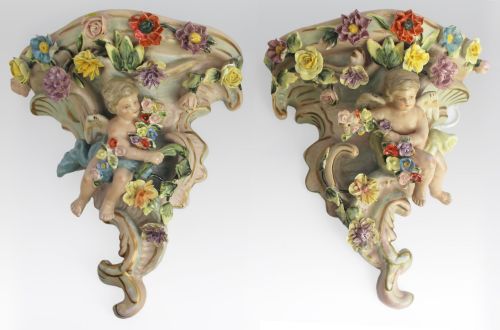
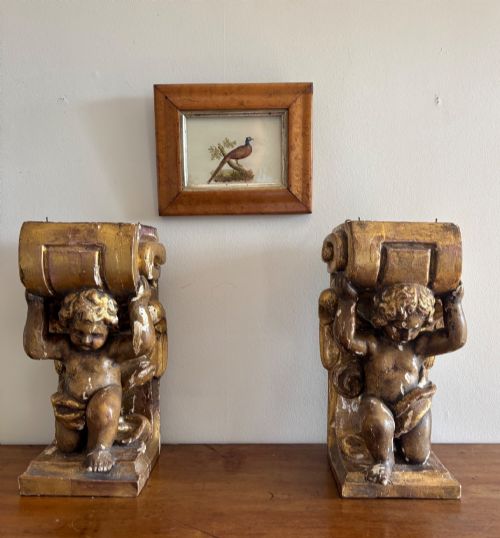
The materials vary widely across the inventory, ranging from solid oak, pine, limewood, and fruitwood to terracotta, plaster, terracotta, cast iron, and porcelain. Styles shift from medieval limestone and 17th-century carved wood to Victorian, Rococo Revival, Baroque Revival, and Italian Neoclassical designs. Many pieces display sculptural figures such as cherubs, lions, and sirens, alongside classic motifs like the Corinthian capital and oak leaf patterns.
Materials and construction
Carved timber corbels rely on traditional hand-tool methods applied to dense hardwoods like oak and fruitwood, or softer timbers such as pine and limewood. Artisans shaped these supports using chisels and gouges to create deep relief carvings of foliage, figures, and architectural scrolls. Painted, gilt, and gesso finishes were frequently applied to wooden surfaces to enhance texture and reflect light.
Moulded and cast materials form the other primary method of production seen in the archive. Terracotta, plaster, cast iron, and porcelain items were cast from moulds, sometimes finished with hand-painted details or gilt layers. These techniques allowed makers to replicate complex Rococo and Classical motifs with consistent symmetry across both matching components.
Several listings feature winged sirens and partridge carvings, proving that historical builders enjoyed surprising visitors with whimsical wildlife on structural supports.
Distinguishing quality in architectural carvings
The standard of carving dictates the upper tier of wooden supports. Superior examples exhibit crisp undercutting, confident chisel marks, and anatomical precision in figural subjects like cherubs or lions. Lesser examples display softened details, shallower relief, and mechanical smoothing that obscures the hand of the maker.
Material integrity and finish preservation also divide the collection. Original paint, untouched giltwood, and stable historic surfaces command greater interest than heavily stripped or excessively restored items. The weight and density of the chosen timber or ceramic further separate robust architectural fragments from lighter decorative brackets.
The Antique Corbel Pair Glossary
- Corbel
- A structural piece of stone, wood, or metal jutting from a wall to carry a superincumbent weight. In domestic settings, they frequently transition into decorative shelf brackets.
- Giltwood
- Wood that has been treated with gold leaf or gold paint. This finish appears frequently on 19th-century Italian and French wall brackets.
- Capital
- The uppermost member of a column or pilaster, often carved with acanthus leaves or classical scrolls. These are frequently adapted into standalone wall brackets.
- Architectural salvage
- Building elements rescued from structures slated for demolition. This category includes stone, timber, and plaster components removed from historic interiors.
- Terracotta
- Baked clay utilised for durable architectural ornaments and figural brackets. It appears in Victorian and earlier garden and interior contexts.
Antique Corbel Pair: Frequently Asked Questions
How were corbels used historically?
Corbels served as load-bearing projections supporting heavy ceiling beams, overhanging lintels, and projecting balconies in masonry or timber-framed buildings. They transferred downward forces safely into the vertical wall.
Over time, smaller versions evolved into decorative brackets specifically designed to support wooden shelves, wall-hung cabinets, and mantelpieces within domestic rooms.
Where should I mount wall brackets?
Wall brackets mount securely into structural wall studs or solid masonry using appropriate heavy-duty fixings to ensure stability. They support display shelves for books, ceramics, or small sculptures.
Placing them at eye level highlights the hand-carved details and figural subjects without placing excessive strain on the supporting wall fixings.
How do I care for carved wood?
Carved wooden brackets require a stable indoor environment away from direct heat sources and excessive moisture to prevent timber splitting. Dusting gently with a dry, soft cloth preserves the historic surface.
Avoid applying modern furniture polishes or oils, particularly on gilded, painted, or waxed antique surfaces, as these substances can attract dirt and degrade the finish.