


Large Carved Oak Buffet
A large carved oak buffet brings substantial storage and heavy timber presence into a room, spanning Victorian, Edwardian, and earlier revival styles.
Large Carved Oak Buffet
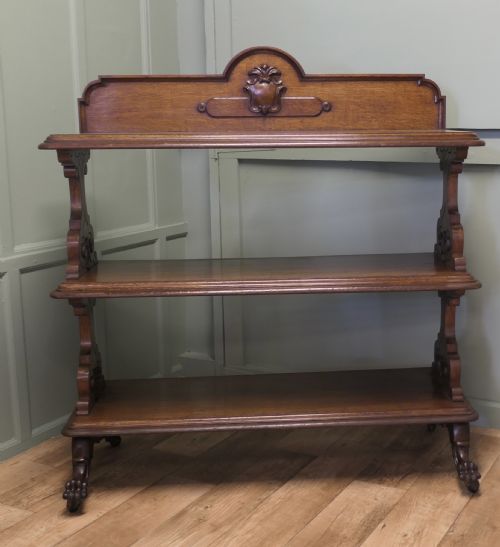
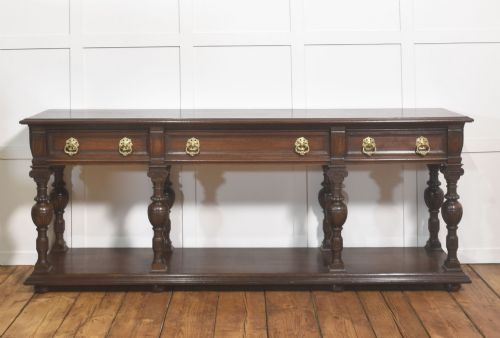
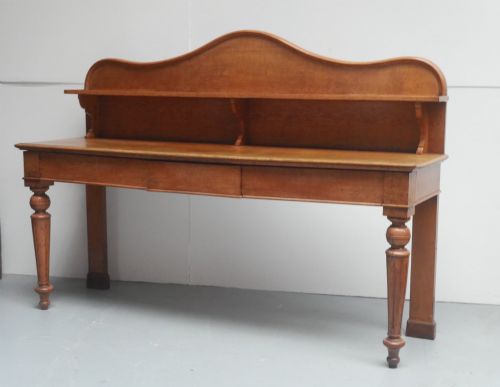
A large carved oak buffet serves as a principal dining room or hallway storage piece, encompassing heavy sideboards, servers, credenzas, and dresser bases. You will frequently encounter Victorian and Edwardian examples featuring substantial timber construction and deep relief carving.
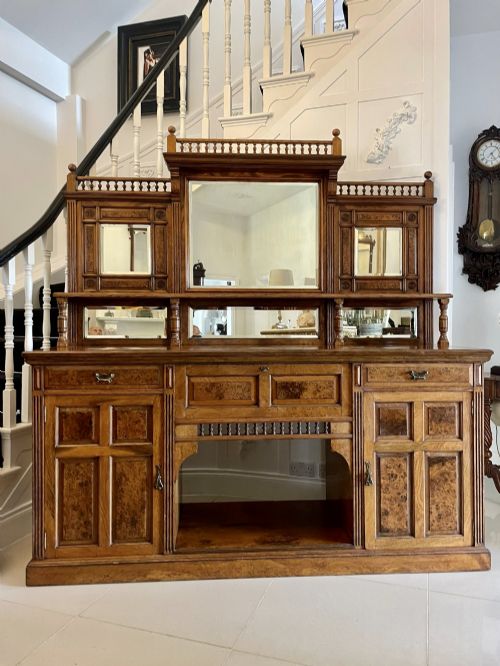
Many of these pieces incorporate architectural elements, mirror backs, or upper display cabinets, originating from Scottish, English, and continental workshops. The form acts as a functional serving station while displaying prominent regional revival aesthetics.
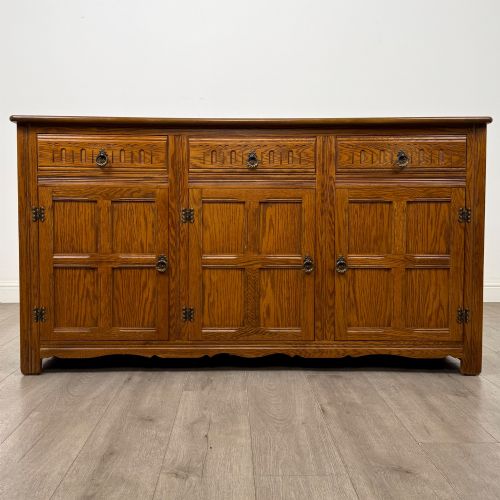
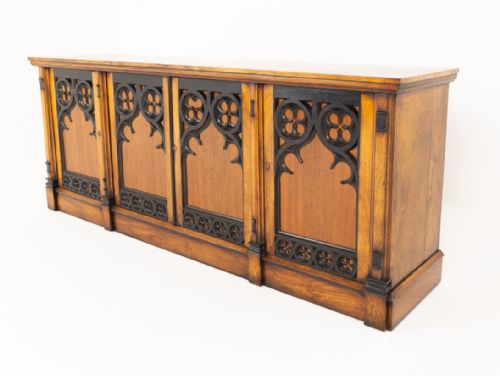
The selection ranges from robust nineteenth-century Gothic and Jacobean styles to later bleached and golden oak variations. Each variant provides expansive cupboard space and surface area suited to traditional domestic interiors.
What varies in quality
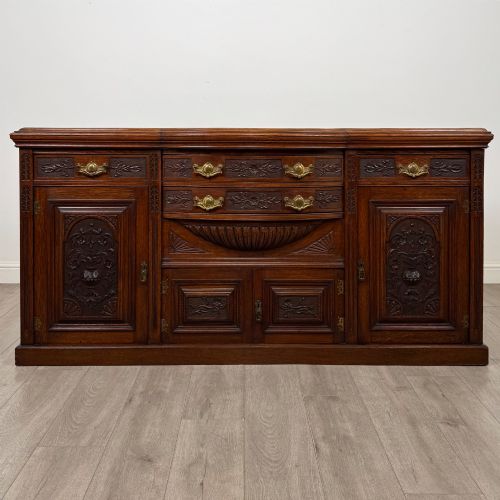
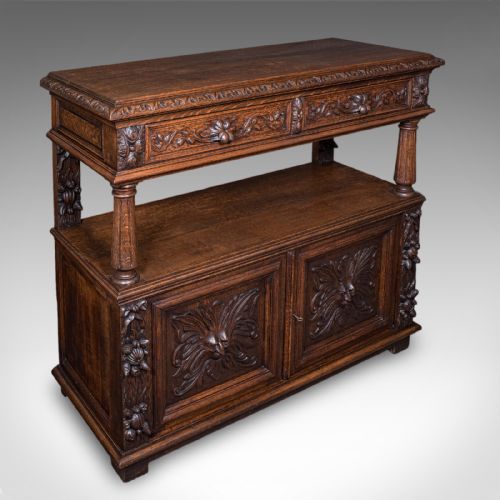
Depth and crispness of the hand-carving separate standard production items from exceptional workshop commissions. Superior pieces display intricate relief work on doors and pediments rather than shallow machine stamping.
Selection of timber figure, particularly choice pollard oak or carefully matched grain patterns, distinguishes finer examples. Structural integrity and original hardware, such as heavy brass hinges and pulls, also mark the distinction between tiers.
Several pieces feature carved Green Man masks glaring from the woodwork, watching over the dining room with leafy determination.
The Large Carved Oak Buffet Glossary
- Pollard oak
- Timber taken from trees that have been pollarded, producing a highly figured, clustered grain pattern. This decorative wood was favoured for high-status Victorian cabinet doors and drawer fronts.
- Dresser base
- A low sideboard or serving table featuring cupboards and drawers beneath a flat top. These pieces originated in kitchens and dining rooms for food preparation and tableware storage.
- Court cupboard
- An antique enclosed cupboard with upper and lower tiers, often supported by heavy turned columns. They provide deep storage behind panelled wooden doors.
- Credenza
- A grand sideboard or serving cabinet typically standing low to the ground. Victorian versions often incorporate mirrored backs and elaborate carved mouldings.
- Flemish carved
- A distinct style of deep, ornate wood carving characterised by scrolling cartouches, fruit garlands, and grotesque masks. It draws inspiration from seventeenth-century continental craftsmanship.
Large Carved Oak Buffet: Frequently Asked Questions
What is a large carved oak buffet used for?
These large pieces serve as prominent storage cabinets and serving tables in dining rooms and grand hallways. They provide extensive cupboard space for tableware, linen, and bottles.
The wide top surface also functions as a display area for silver, ceramics, or serving dishes during meals.
How do I distinguish Victorian from Edwardian pieces?
Victorian examples generally feature heavier, darker timber with dense Gothic Revival or Renaissance ornamentation and deep relief carving. Mirror backs on these pieces are frequently framed by elaborate crests.
Edwardian pieces often appear lighter in tone, including golden or bleached oak finishes, with simpler Arts and Crafts or Edwardian revival lines.
How do I clean and maintain oak furniture?
Dust the timber regularly with a soft, dry cloth to prevent dirt accumulation within the carved crevices. Avoid placing the piece near direct heat sources or strong sunlight to protect the wood and finish.
Apply a quality beeswax periodically to nourish the oak and maintain a natural lustre without building up heavy residue.
Are mirror-backed sideboards original?
Many large Victorian and Edwardian sideboards were designed and built with integrated mirror backs as a unified piece. The mirrored glass helps brighten darker dining spaces and reflects room lighting.
Check the rebate and framing to confirm the mirror plate matches the age and construction methods of the lower cabinet.