
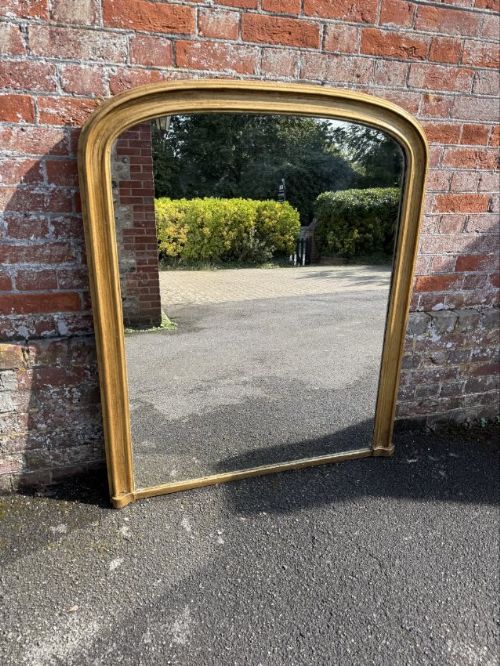
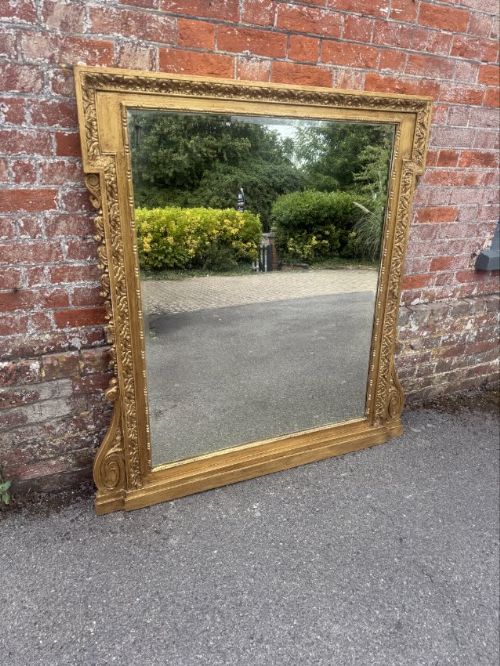
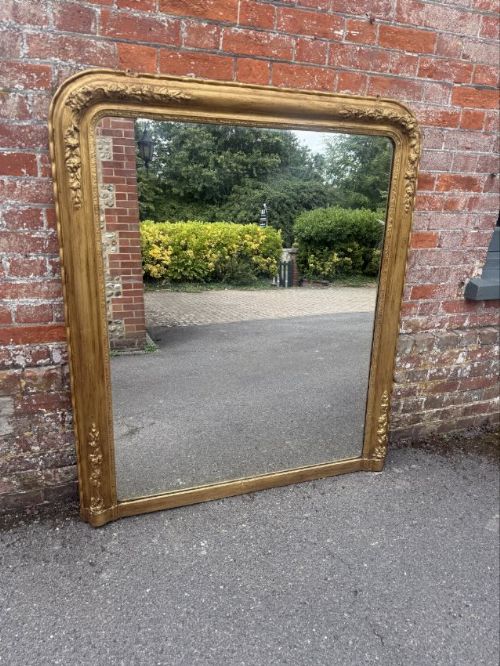
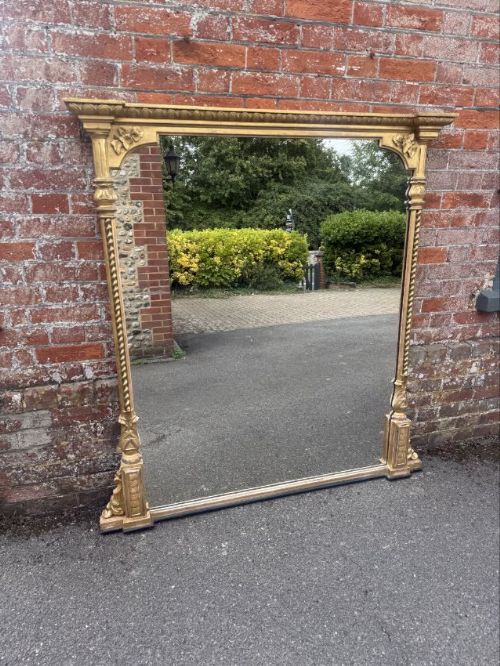
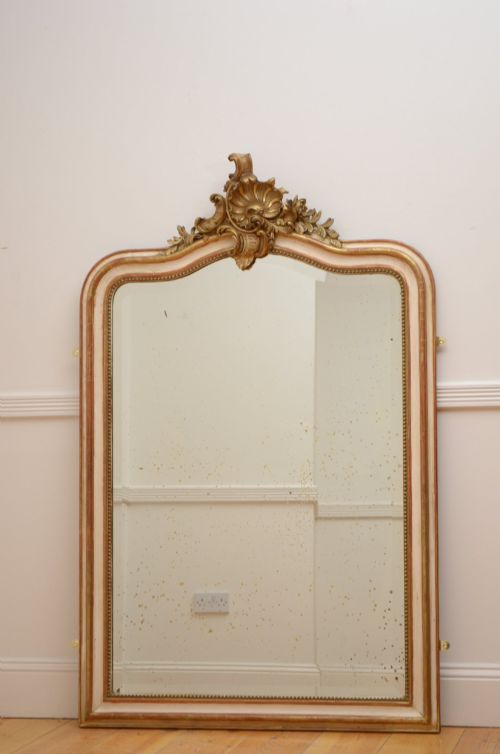
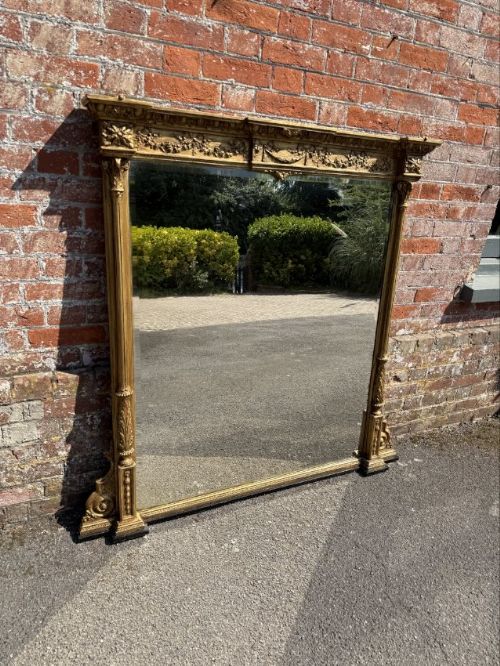


Large Carved Gesso Mirror
A large carved gesso mirror anchors a room with the generous proportions and reflective depth characteristic of nineteenth-century overmantels and wall pieces.
Large Carved Gesso Mirror
When searching for a large carved gesso mirror, collectors encounter substantial nineteenth-century furnishings designed primarily as overmantel or wall mirrors.
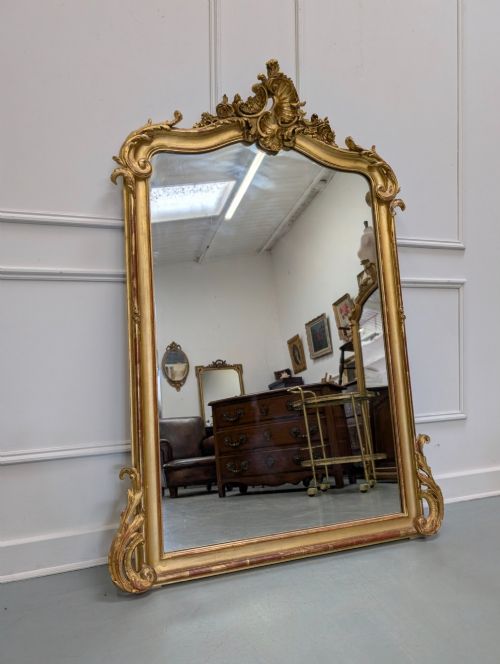
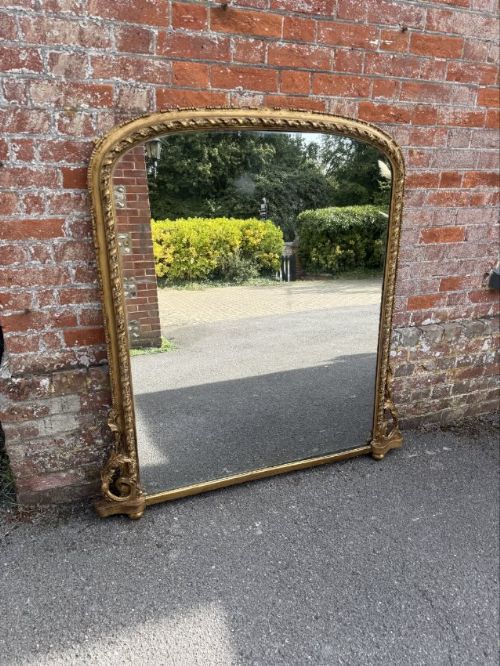
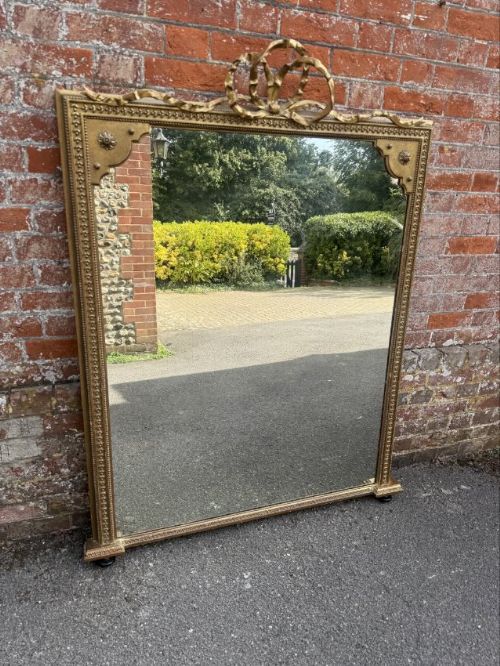
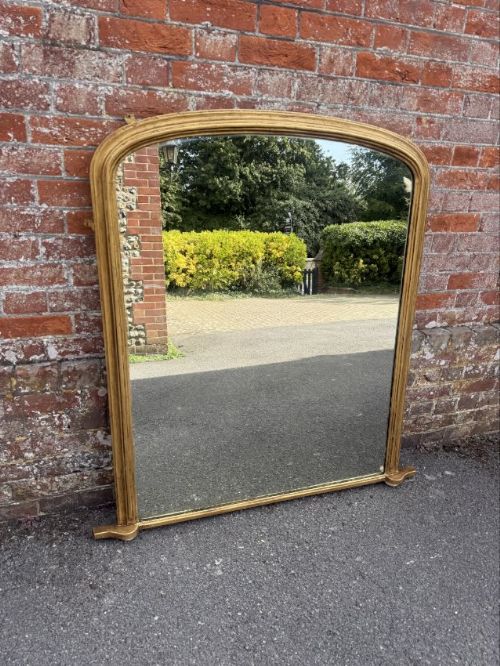
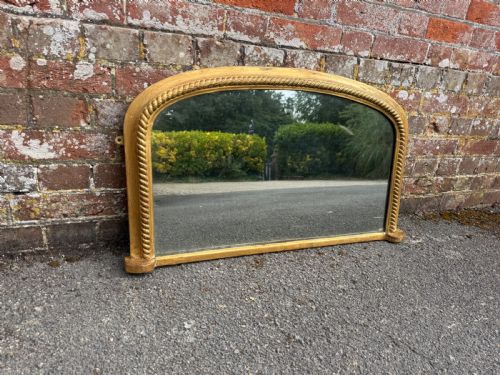
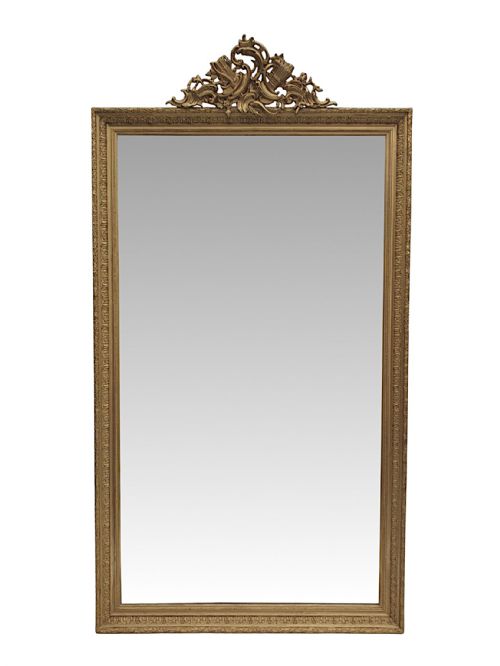
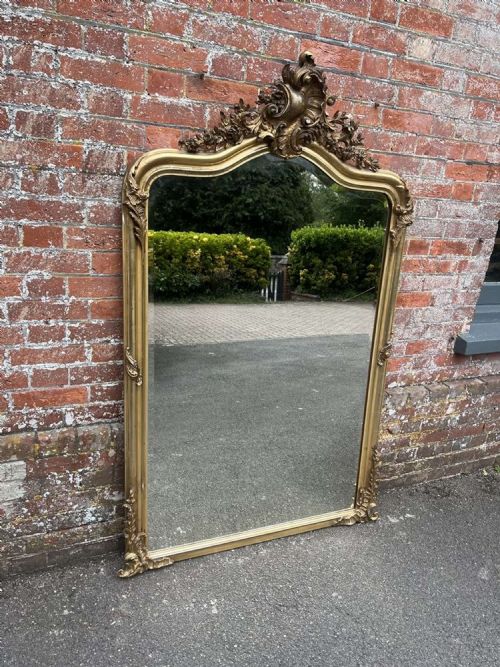
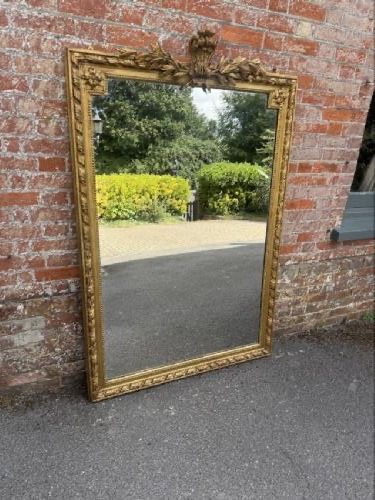
The prevailing form on this page is the English overmantel mirror featuring an arched or shaped top, alongside French chateau examples and Rococo revival wall pieces.
These grand decorative objects were built to command significant wall space above a fireplace or along a principal drawing room wall.
How They Were Made
Craftsmen built the foundational structure from carved wood, applying layers of gesso to create high-relief ornamentation before gilding the surface with gold leaf or paint.
The interplay between carved wooden elements and moulded gesso allowed makers to achieve intricate rope twist, ribbed, column, and tulip framing details.
Original mirror glass was set within these ornate frames, frequently retaining the subtle distortions and depth characteristic of nineteenth-century production methods.
Listings span the nineteenth century, featuring Victorian and Napoleon III periods with carved wood, gesso, and gold leaf materials.
What Varies In Quality
Quality rests upon the crispness of the gesso moulding and the depth of the underlying carved wood decoration, where sharper relief denotes superior execution.
The preservation of original gold leaf or early painted surfaces dictates the visual integrity of the piece, distinguishing untouched examples from later interventions.
The Large Carved Gesso Mirror Glossary
- Gesso
- A plaster-like mixture applied to a wooden base and carved or moulded into ornate decorative reliefs. It provides the smooth, receptive surface needed for subsequent gilding.
- Overmantel Mirror
- A large mirror specifically designed to hang or rest upon the mantelpiece above a fireplace. These pieces often feature arched tops to follow architectural lines.
- Giltwood
- Wood that has been treated with a thin layer of gold leaf or gold paint. It reflects candlelight and natural illumination warmly.
- Rope Twist
- A carved or moulded decorative motif resembling twisted rope cords. This pattern frequently frames the mirror plate.
- Pier Mirror
- A tall mirror designed to hang on the narrow section of wall between windows. These vertical formats maximise available light in nineteenth-century interiors.
Large Carved Gesso Mirror: Frequently Asked Questions
Where should I hang a large overmantel mirror?
These pieces traditionally sit directly above a drawing room fireplace, anchored securely to the wall to bear the substantial weight of the timber and gesso frame.
They also function effectively as leaner mirrors against principal walls in reception rooms, reflecting natural light across the floor space.
How do I identify a nineteenth-century gesso mirror?
Examine the construction of the wooden carcass and the application of the gesso relief work, which typically shows the softening effects of age.
Look for original mirror glass exhibiting minor foxing and traditional backboards secured with old fixings rather than modern substitutes.
Were these mirrors meant to be hung or leaned?
Nineteenth-century overmantel mirrors were engineered with robust framing to rest safely on mantelpieces while secured to the wall with heavy brackets.
Larger wall and pier formats were built for direct wall hanging to anchor formal room schemes.
What is the difference between English and French styles?
English nineteenth-century examples often favour architectural arched tops and geometric rope twist or column framing suited to Victorian interiors.
French chateau and Rococo revival pieces tend to display more asymmetrical, ornate flourishes and cartouche motifs inspired by continental decorative traditions.