
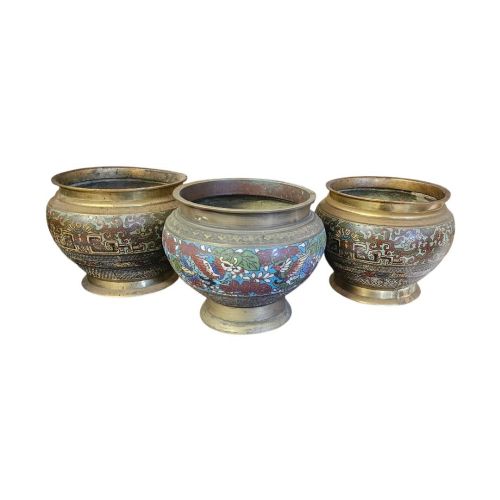


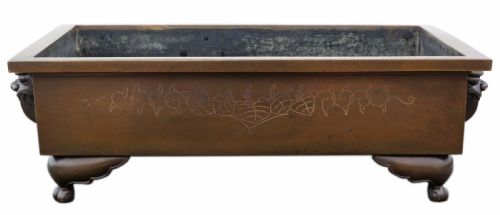


Large Bronze Jardiniere
A large bronze jardiniere brings sculptural weight and planted greenery together, offering a striking display vessel for interiors.
Large Bronze Jardiniere
A large bronze jardiniere is a substantial plant container or decorative bowl designed to hold greenery or floral arrangements. When you search for this phrase, you encounter heavy metal vessels originating from Japanese Meiji and Edo periods, Chinese Qing dynasty workshops, and nineteenth-century European makers.
The most common versions on this page are Japanese Meiji period bronze planters and Chinese champlevé enamel or cloisonne bowls. These pieces often feature traditional ornamentation, animal motifs, or sectional construction suited for indoor display.
Beyond East Asian export pieces, the selection includes Victorian English cast iron planters and French mixed metal pedestals. Collectors choose these large vessels for their patinated surfaces and solid cast construction.
Materials and Techniques
These vessels rely primarily on cast bronze, often enhanced through patination, chased surface detailing, or inlaid enamel work. Makers utilised traditional lost-wax or sectional casting methods to achieve thick walls and stable bases.
Enamelled examples incorporate champleve or cloisonne techniques, fusing coloured vitreous pastes into recessed metal channels or wire cells. Cast iron and porcelain also appear among European and Asian alternatives, providing different weights and finishes for domestic plant display.
Several heavy bronze bowls double as frog habitats if left outdoors, though most prefer a quiet indoor fern.
Craftsmanship and Weight
Quality separates through the crispness of the chased decoration, the depth of the bronze patination, and the physical weight of the casting. Superior examples show precise control in enamelling and secure joinery across sectional elements.
Heavier specimens demonstrate substantial metal thickness rather than hollow thin-walled construction, giving them better balance when filled. Finer pieces retain intricate surface details that remain sharp and clear across the entire body of the vessel.
Genryusai Seiya·A Moreau Paris
The Large Bronze Jardiniere Glossary
- Jardiniere
- An ornamental pot or stand designed to hold plants or flowers indoors. They function as both horticultural vessels and decorative centrepieces.
- Champleve
- An enamelling technique where recessed channels are gouged into the bronze surface and filled with vitreous enamel before firing. This creates colourful decorative patterns flush with the metal.
- Cloisonne
- A technique using thin metal wires soldered to a bronze base to form compartments, which are then filled with enamel paste. The piece is fired and polished to a smooth finish.
- Meiji Period
- The era in Japanese history spanning from eighteen sixty-eight to nineteen twelve, known for exceptional bronze casting and export craft. Pieces from this time often exhibit detailed naturalistic motifs.
- Suiban
- A shallow Japanese basin traditionally used for arranging cut flowers in water, known as ikebana. These bronze vessels often double as low planters.
Large Bronze Jardiniere: Frequently Asked Questions
What plants fit inside a large bronze jardiniere?
These vessels suit potted plants, ferns, or floral arrangements placed directly inside in nursery pots. They act primarily as decorative outer cachepots rather than direct planting containers.
Using an inner liner protects the interior metal surface from moisture and soil erosion, preserving the original patination over time.
How do I clean a antique bronze jardiniere?
Dust the surface gently with a soft dry cloth to remove everyday particles. Avoid abrasive polishes or chemical cleaners that strip the aged patina.
Leaving the natural oxidation intact maintains the historical character and visual depth of the metal.
How do I distinguish Meiji period bronzes?
Meiji period bronzes typically feature crisp relief casting, signature plaques, and motifs drawn from nature or mythology. The patination often ranges from deep brown to warm reddish tones.
Japanese makers during this era mastered complex sectional casting, producing vessels with remarkable weight and structural balance.
Where should I display a heavy jardiniere?
Place these substantial vessels on sturdy low tables, plant stands, or hearths where their weight is fully supported. Their scale makes them ideal focal points for entrance halls and living rooms.
Ensure the placement surface has adequate protection against potential moisture transfer from watering.