
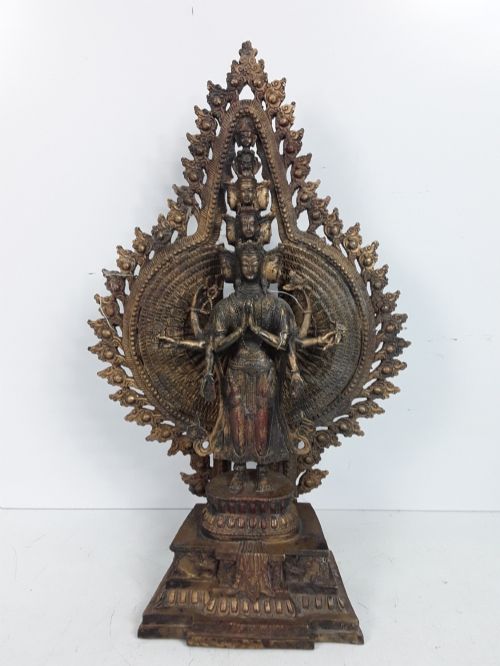
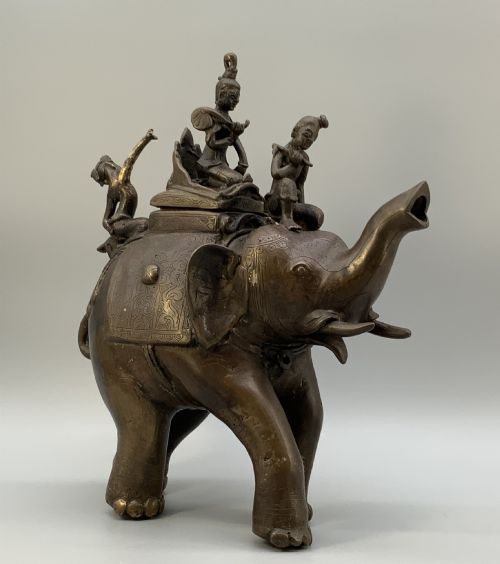

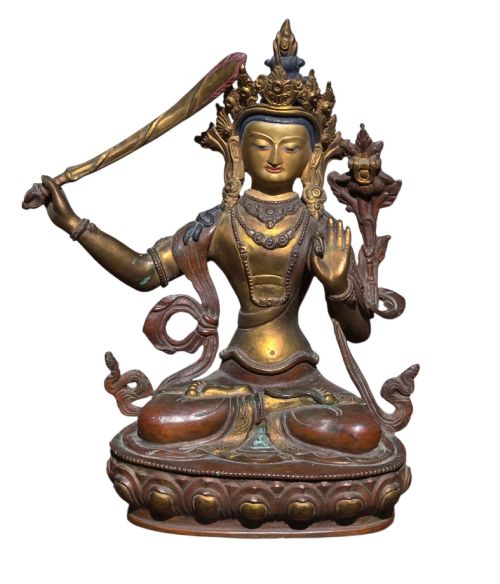
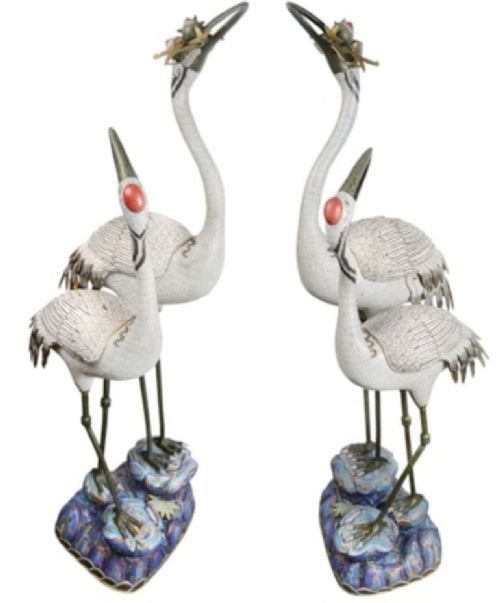
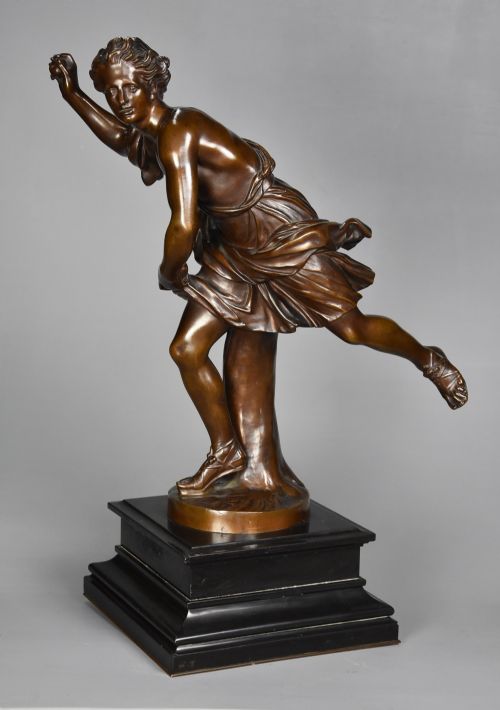
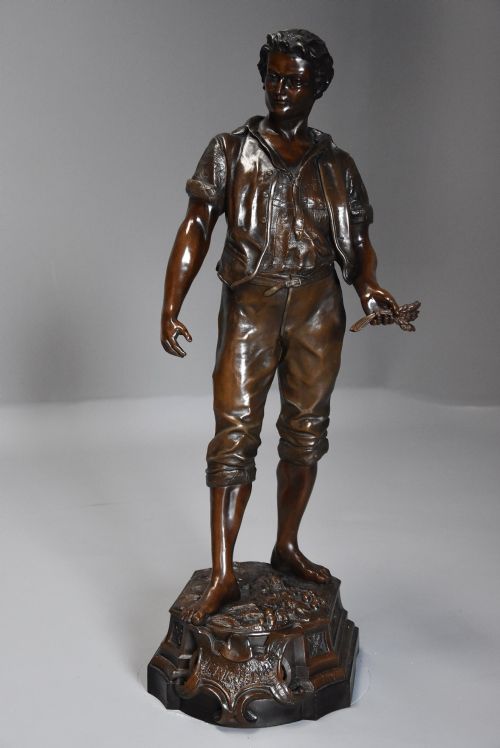
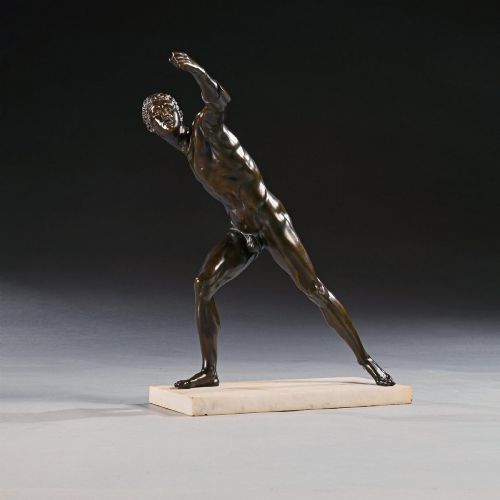
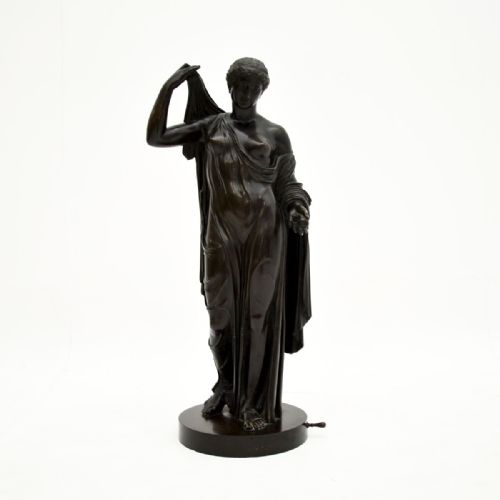



Large Bronze Figure
When choosing a large bronze figure, you select a substantial work of art rooted in nineteenth-century foundry traditions or Asian craftsmanship.
Large Bronze Figure
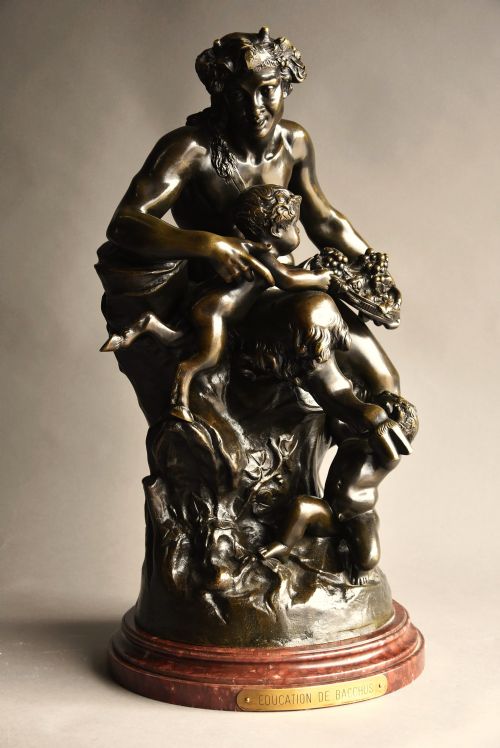
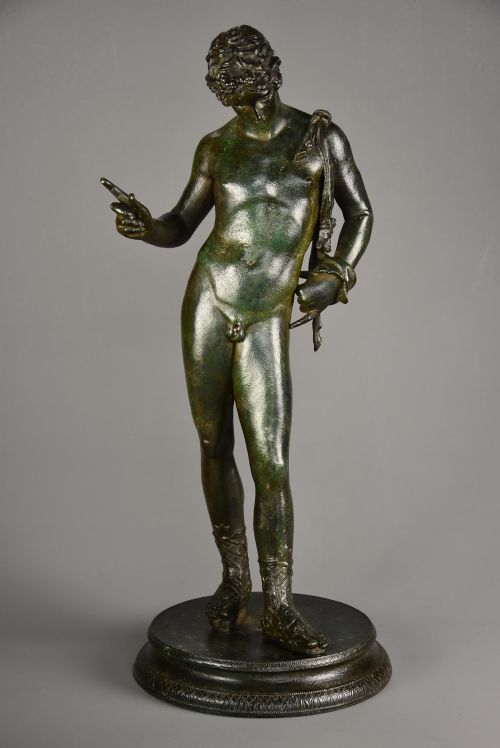
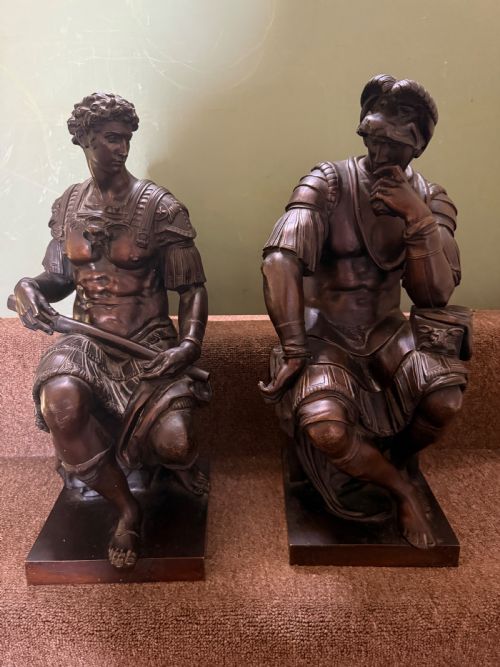
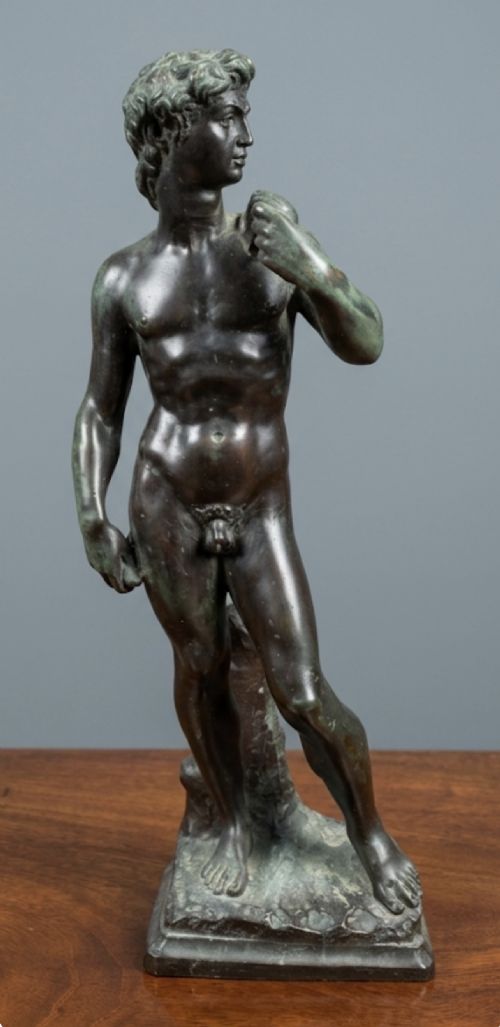
A large bronze figure represents mythological heroes, historical warriors, classical deities or allegorical subjects cast in substantial metal scale. These works span European foundry productions, Grand Tour souvenirs after the antique, and Japanese Meiji period Okimono sculptures.
Buyers encounter French salon bronzes by named sculptors, Italian Grand Tour reductions of classical monuments, and Tibetan or Chinese Buddhist figures. Many examples incorporate integral bronze bases, while others stand upon turned marble plinths.
Beyond standalone sculptures, the category encompasses figural table lamps, torchères, clock cases, and advertising display figures executed in bronze or bronzed spelter.
How They Were Made
Foundries utilised the lost-wax casting method or sand casting to achieve complex forms, followed by meticulous cold-chiselling to sharpen surface details. Artisans applied chemical patination, ranging from warm green and brown tones to rich gilt finishes, to colour the metal.
Alternative compositions include spelter, an alloy finished with bronze paint to simulate heavier metal, alongside parcel-gilt details and occasional silver inlays seen on Asian bronzes.
A brass elephant carries its trunk high while a bronze bull prepares to charge across the centuries.
What Varies in Quality
Quality rests upon the crispness of the chase work, where master founders preserved muscular definition, drapery folds, and facial expressions without blurring from worn moulds. The depth and subtlety of the patination differentiate standard commercial editions from exhibition-grade foundry casts.
The sophistication of the original modeler and the prestige of the foundry, such as Barbedienne, elevate the standing of a piece within the hierarchy of nineteenth-century sculpture.
Ferdinand Barbedienne·F. Milliot·L & F Moreau·Edouard Drouot·Franz Bergman·Emile Louis Picault·Kaniya Kuniharu·Jean-Louis Gregoire
The Large Bronze Figure Glossary
- Patination
- The chemical or natural colouration applied to the surface of bronze. This treatment produces tones ranging from deep chocolate brown to antique green.
- Grand Tour
- Souvenir sculptures purchased by travellers in Italy during the eighteenth and nineteenth centuries. These pieces reproduced classical antiquities and Renaissance masterpieces.
- Okimono
- Japanese decorative statues designed for display on a tokonoma or cabinet. They frequently depict animals, deities, or figures from daily life.
- Spelter
- A zinc alloy utilised as an economical alternative to bronze. Founders cast it into figures and lamp bases before applying a bronze-coloured finish.
- Lost-wax casting
- A technique where a wax model is melted from a mould and replaced with molten metal. This method permits intricate undercut details in sculptural work.
Large Bronze Figure: Frequently Asked Questions
How do I clean a bronze figure?
Dust the surface gently with a soft, dry brush to remove accumulated particles without disturbing the underlying patination. Avoid water, abrasive cloths, or chemical polishes that strip historical finishes.
Apply a very light coat of microcrystalline wax occasionally if the metal requires protection, buffing it away completely with a clean cloth.
What is a Grand Tour bronze?
A Grand Tour bronze is a reduction of a classical sculpture or Renaissance masterpiece acquired by European travellers touring cultural sites in Italy. These souvenirs allowed collectors to bring museum-scale antiquities into domestic interiors.
Foundries in Rome, Florence, and Naples specialised in producing these high-quality souvenir bronzes throughout the nineteenth century.
How do I distinguish bronze from spelter?
Bronze is a heavy, copper-based alloy that feels cool to the touch and rings with a resonant tone when gently tapped. Spelter is a softer zinc alloy that feels lighter and often shows grey metal beneath chips in the surface finish.
Examining the underside or base frequently reveals the distinct colour and weight differences between the two materials.
Where should I place a heavy sculpture?
Position large figures on sturdy furniture, dedicated pedestals, or marble surfaces capable of supporting substantial weight safely. Ensure the display area remains away from direct heat sources and damp environments.
Balanced weight distribution prevents tipping, particularly for tall figures mounted on narrow bases or marble plinths.