
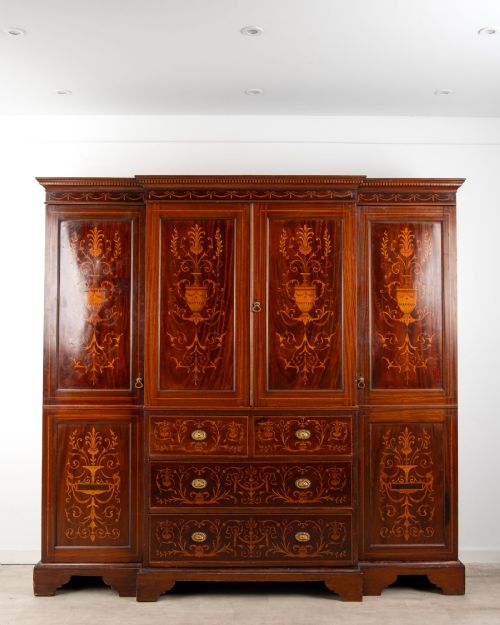
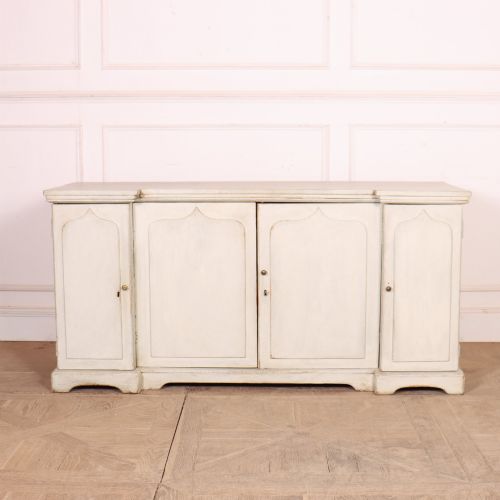
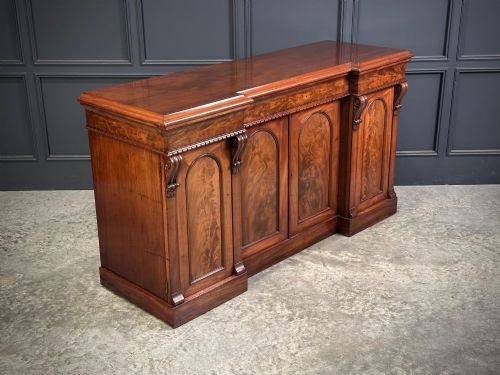
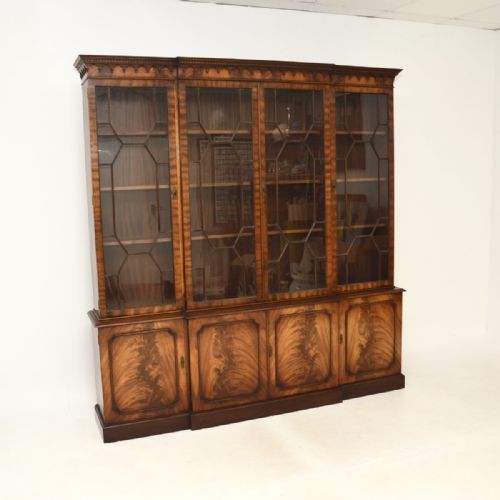
Large Breakfront Cabinet
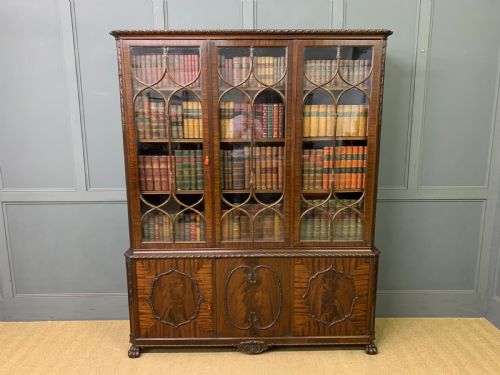
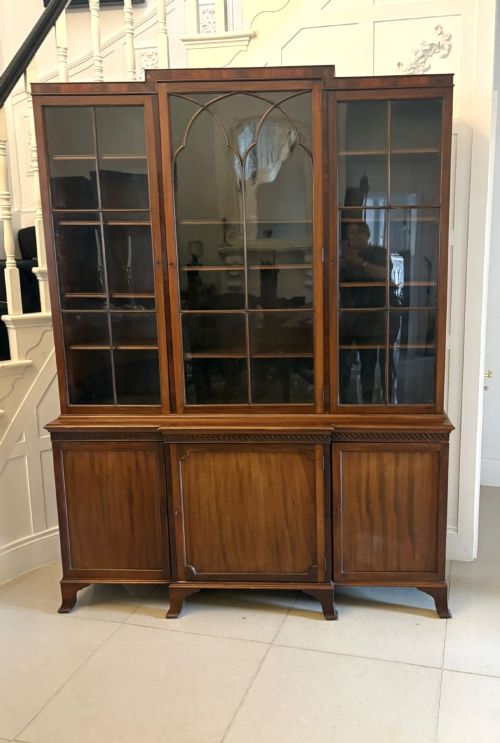
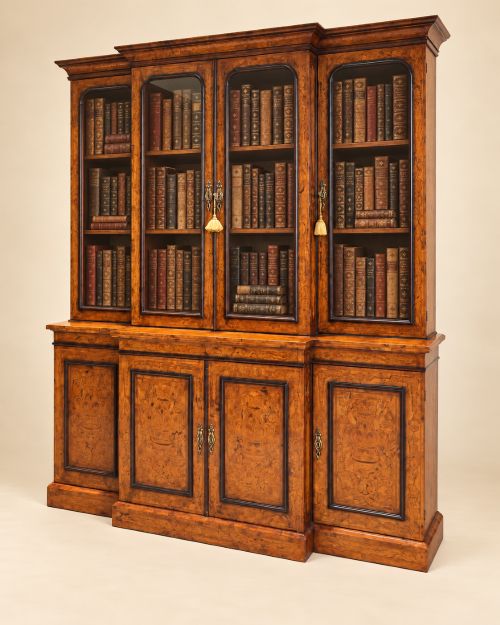
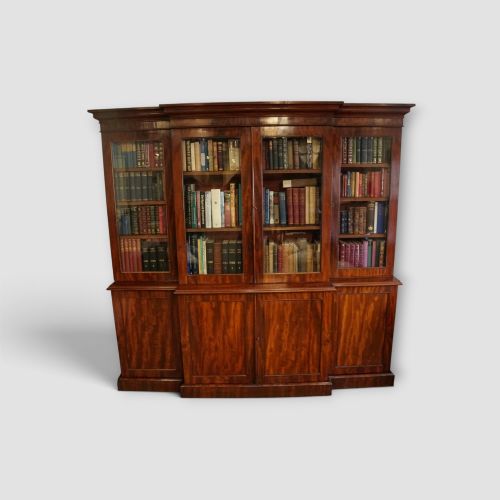
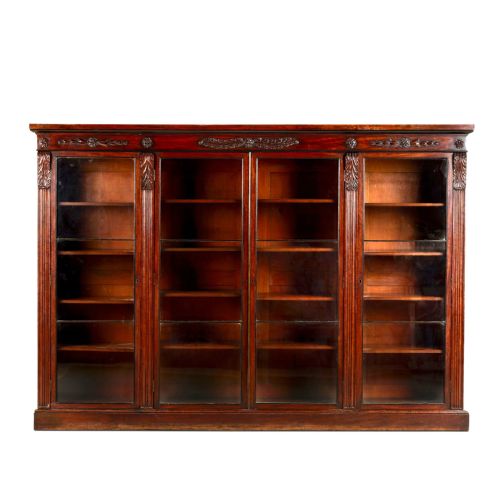
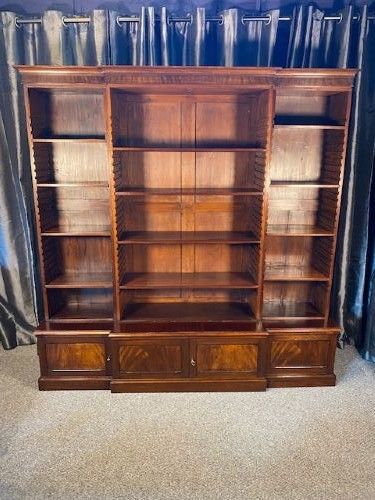
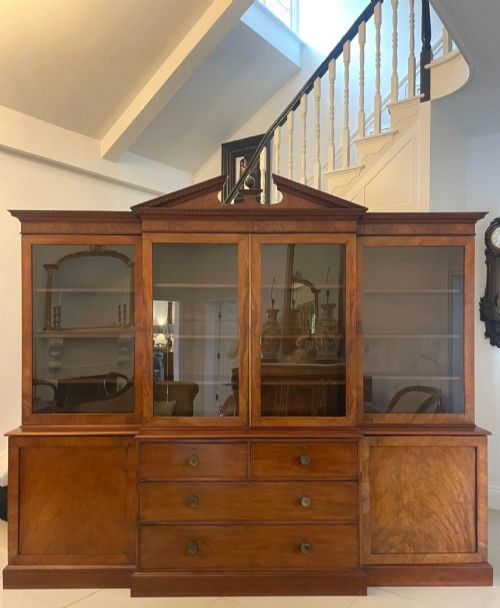
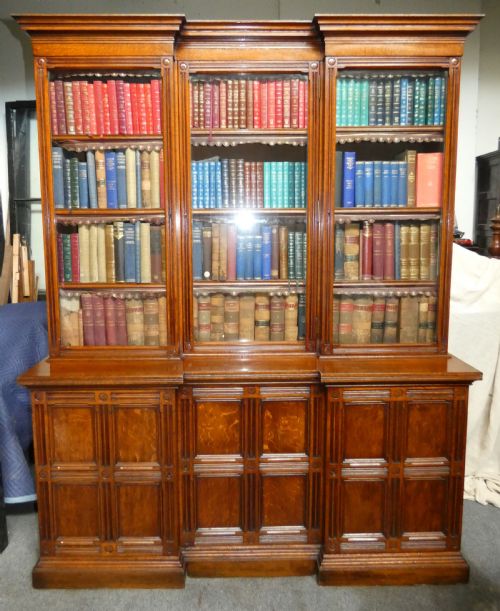
A large breakfront cabinet stands as a commanding piece of furniture, projecting forward centrally to anchor a room with serious presence and display generous shelving.
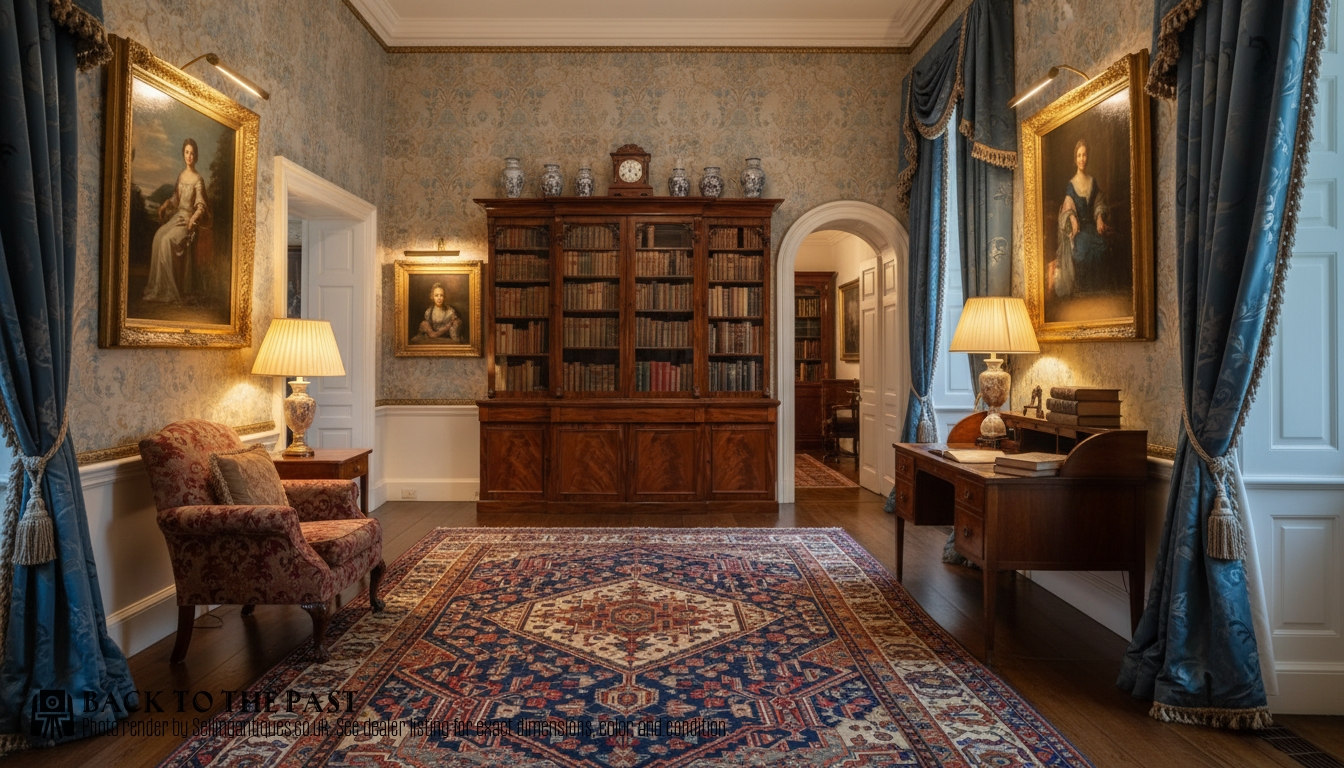
Large Breakfront Cabinet
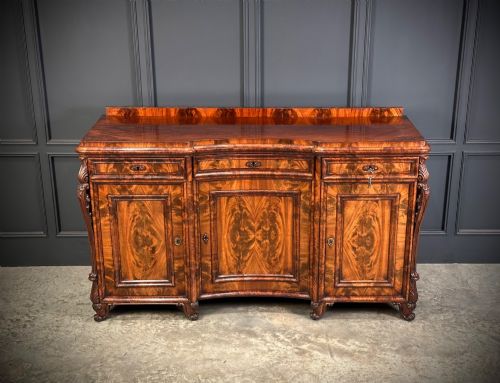
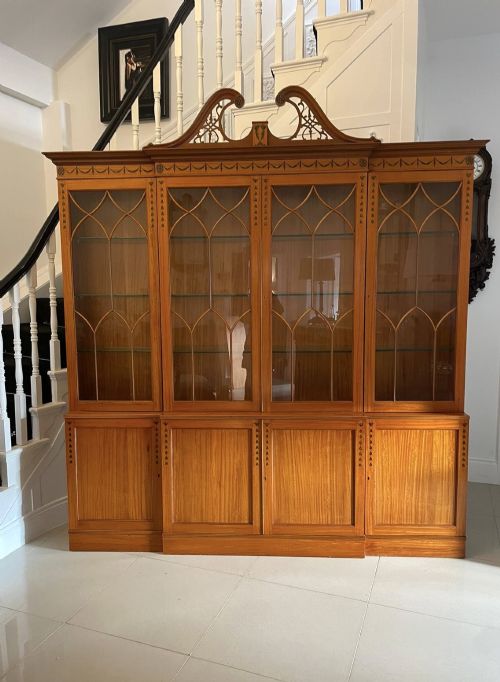
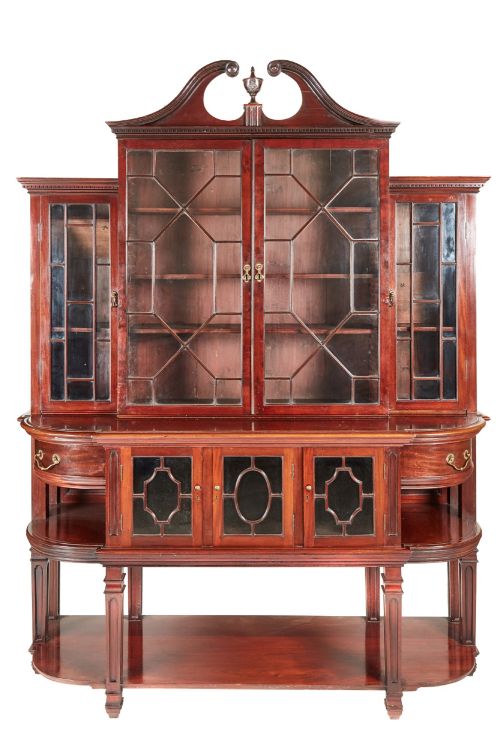
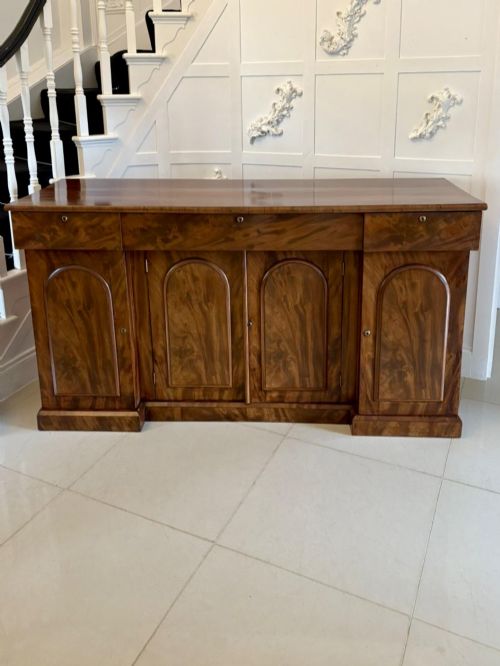
A large breakfront cabinet organises a room through its distinctive tripartite projecting central section, which breaks the flat line of traditional case pieces. Buyers searching for a large breakfront cabinet encounter substantial library bookcases, display cabinets, and sideboards originating primarily from the nineteenth century and the Edwardian period.
The material record shows a strong preference for mahogany, walnut, and satinwood, often enhanced with glazed doors or open shelving designed for extensive collections. Victorian and Edwardian examples dominate the offerings, bringing considerable height and depth to domestic interiors.
These architectural forms served grand libraries and formal dining rooms, functioning both as storage for precious volumes and as display surfaces for decorative objects. Pieces span formal George III styles through to elaborate Victorian Gothic revivals and later satinwood decorations.
Materials and construction
Cabinet makers utilised dense timber foundations such as mahogany, oak, and walnut, frequently applying flame mahogany veneer, burr walnut, or satinwood to visible surfaces for striking grain patterns. Glass panels and brass mounts appear regularly, alongside intricate marquetry and hand-painted decorations on select satinwood items.
Construction techniques relied on multi-section carcases to allow transport of these monumental pieces, incorporating adjustable timber shelving and astragal glazed doors. Cabinet makers joined sections securely to support heavy loads of books or porcelain within the extended central breakfront.
Listings feature eighteenth-century pieces alongside Victorian and Edwardian examples, built from mahogany, walnut, oak, and satinwood.
Distinctions in craftsmanship
Superior examples of a large breakfront cabinet display exceptional timber selection, such as highly figured flame mahogany or richly patterned burr walnut that matches symmetrically across the doors. The depth of hand-carved detailing, the precision of brass or ormolu mounts, and the integration of original painted decoration separate exceptional workshop production from standard commercial output.
Structural integrity reveals itself in the weight and thickness of the timber used for internal adjustable shelving and backboards, alongside the fine joinery of astragal glazing bars. Pieces bearing maker attributions or stamps reflect the highest standards of nineteenth-century cabinet work.
Gillows
The Large Breakfront Cabinet Glossary
- Breakfront
- A piece of furniture whose central section projects forward from the flanking wings. This architectural arrangement creates shadow and depth across large storage walls.
- Astragal
- Moulding framing the glass panes on cabinet doors. These wooden strips divide the large glass area into smaller geometric lights.
- Burr walnut
- Timber taken from the wart-like growths on walnut trees, yielding turbulent and highly decorative grain patterns. Cabinet makers prized this veneer for principal display surfaces.
- Credenza
- A sideboard or display cabinet originating in the nineteenth century, often featuring glazed doors and elaborate mounts. It serves primarily for displaying porcelain and silverware.
- Marquetry
- The art of applying pieces of veneer to a structure to form decorative patterns and pictures. Craftsmen utilised contrasting woods to achieve pictorial depth.
Large Breakfront Cabinet: Frequently Asked Questions
What rooms suit a large breakfront cabinet?
These imposing cabinets demand significant wall space and high ceilings, making them natural centrepieces for substantial libraries, formal dining rooms, or spacious living areas. Their scale requires a room capable of absorbing deep furniture without feeling cramped.
Positioning them away from direct sunlight protects vulnerable timber veneers and antique glass from fading, while leaving sufficient floor clearance ensures the projecting central section opens fully.
How do I care for antique wood surfaces?
Maintenance involves applying quality beeswax sparingly and buffing with a soft cloth to nourish dry timber without building up heavy wax residues. Avoid synthetic sprays and keep cabinets away from sudden temperature fluctuations.
Checking humidity levels in the room prevents timber shrinkage that can affect the alignment of large doors and glazed panels over time.
How do I distinguish Victorian from Edwardian pieces?
Victorian examples generally feature heavier timbers, deep mahogany tones, and occasionally ornate Gothic revival carving or rich burr walnut veneers. Their architectural presence tends to be dense and heavily proportioned.
Edwardian pieces often lighten the palette with satinwood, delicate painted decorations, or refined inlay work reflecting a revival of neoclassical taste with brighter interior finishes.
Can shelves be adjusted in older bookcases?
Many nineteenth-century and Edwardian bookcases feature adjustable wooden shelving supported on traditional rack-and-pinion systems or brass studs. This flexibility allows the housing of volumes of varying heights.
Original interiors should be inspected gently to ensure the support mechanisms remain sound before loading heavy book collections onto the shelves.