

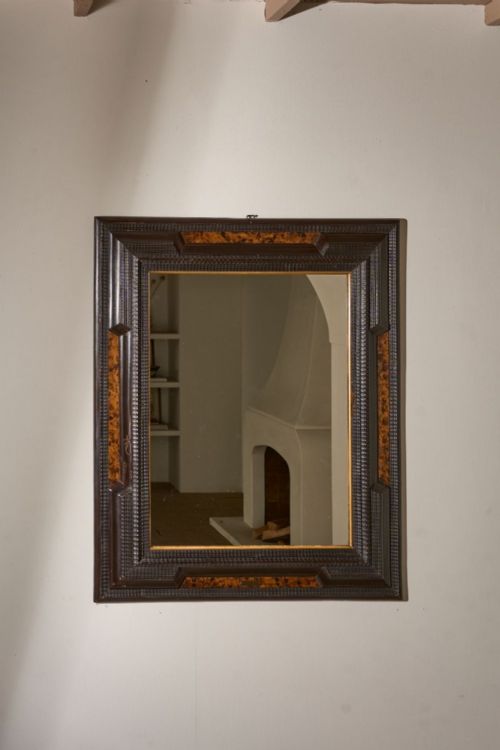


Large Black Framed Mirror
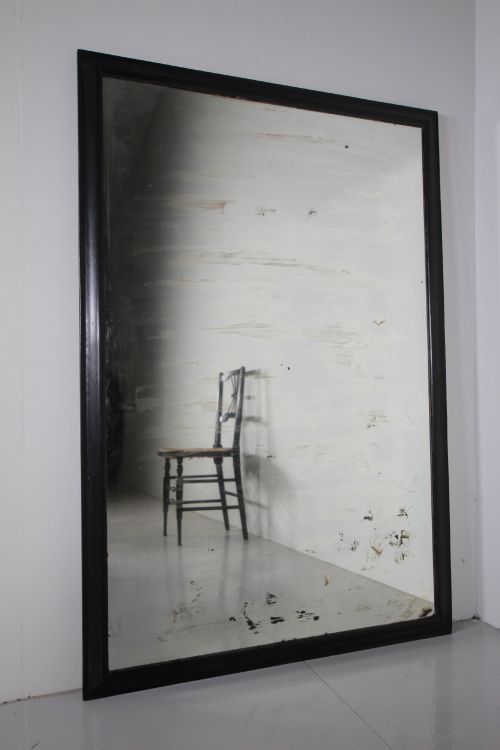
A large black framed mirror anchors a room with dark drama, drawing the eye through scale and heavy shadow.
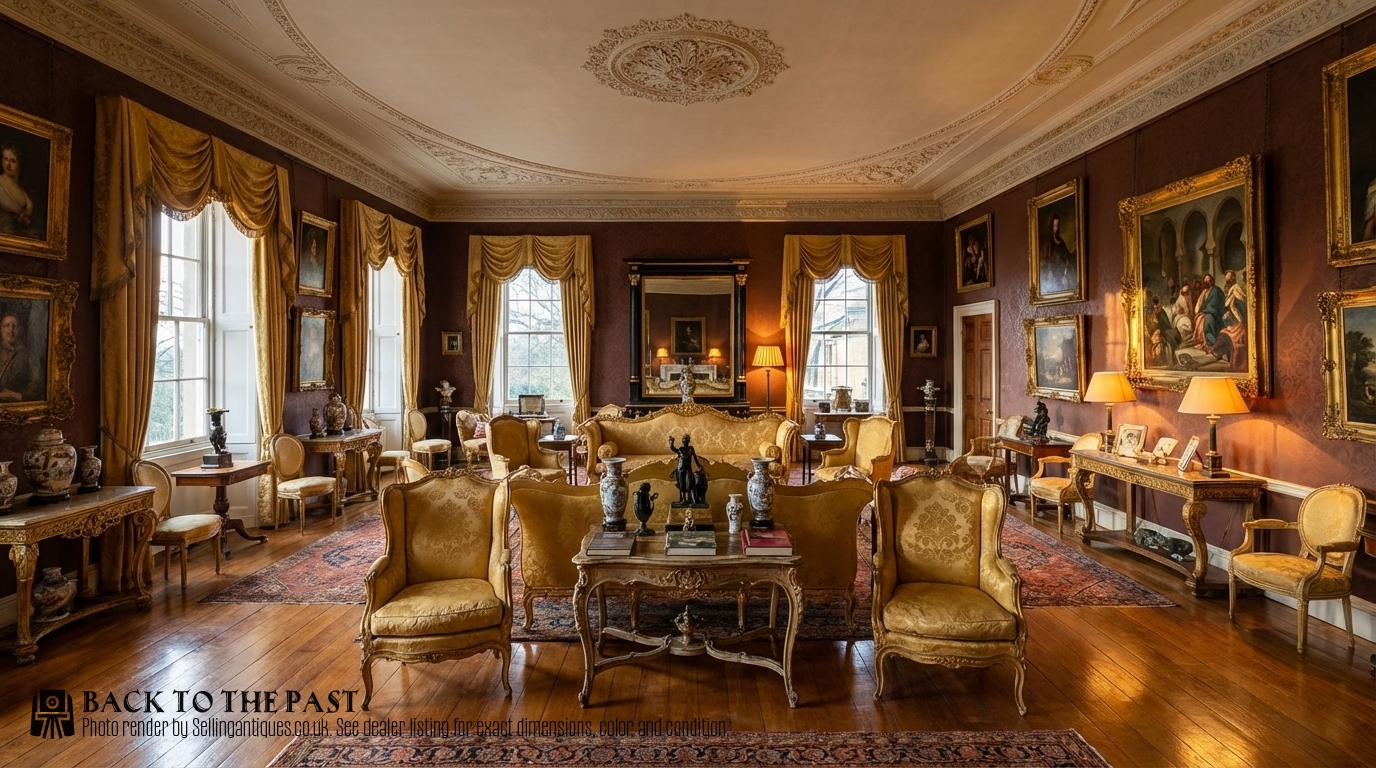
Large Black Framed Mirror
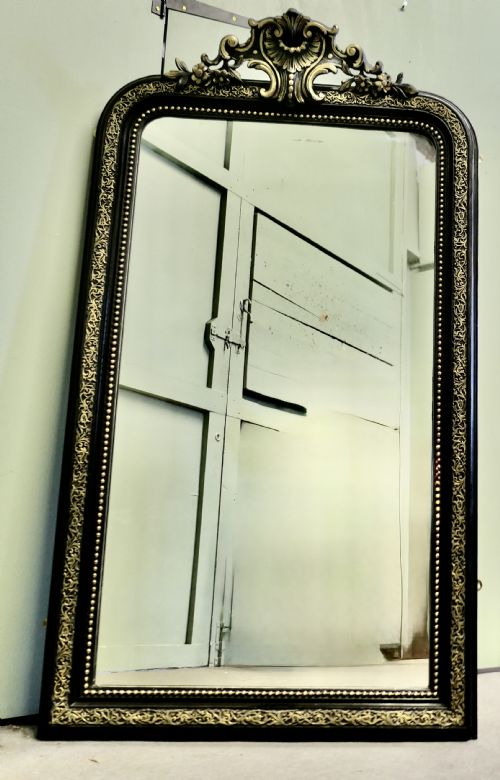
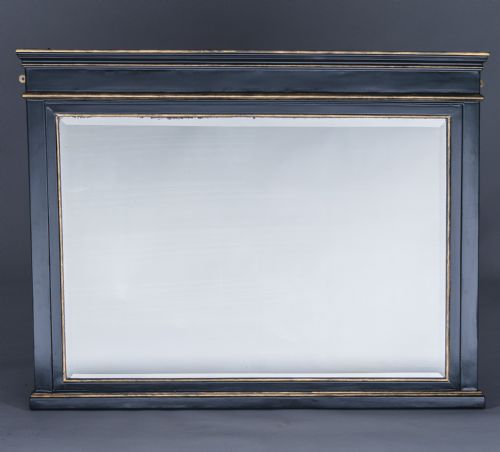
A large black framed mirror delivers monumental scale and dark presence, appearing most frequently on this page as an overmantle mirror from the Victorian period or the nineteenth century. These substantial wall pieces occupy significant vertical space, traditionally hung above a fireplace or set directly onto a mantelpiece.
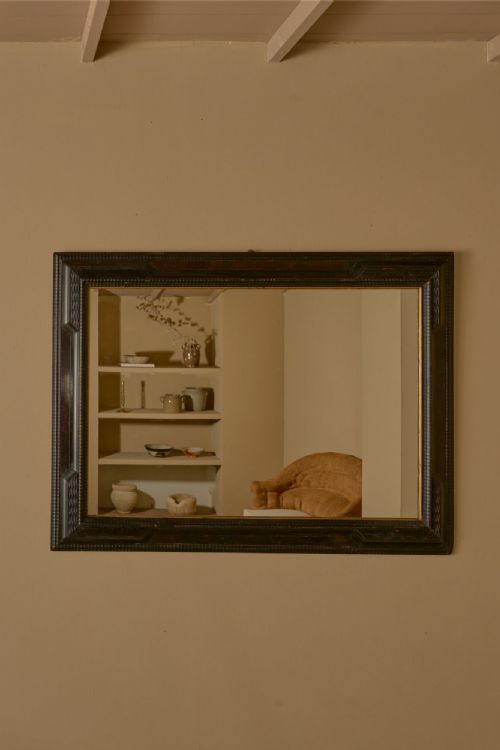
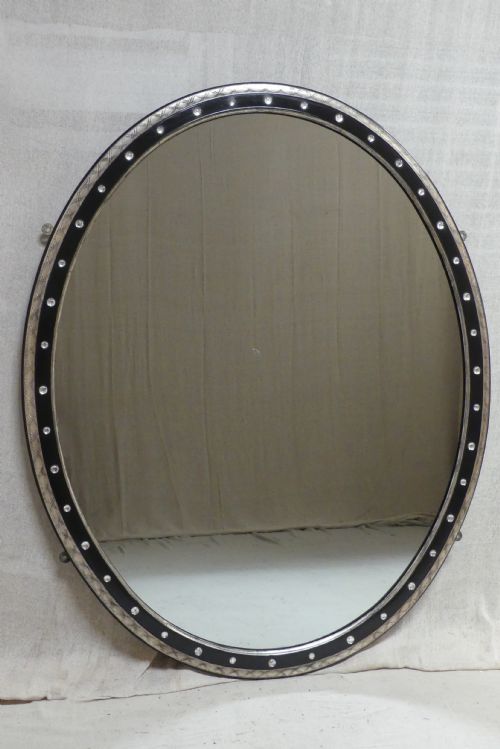
Beyond standard overmantles, the selection encompasses pier mirrors, cushion mirrors, and oval formats stretching from the late nineteenth century into the Edwardian era. Surviving examples demonstrate diverse regional origins, including English, French, and Italian workshops, each bringing distinct proportions to the dark frame.
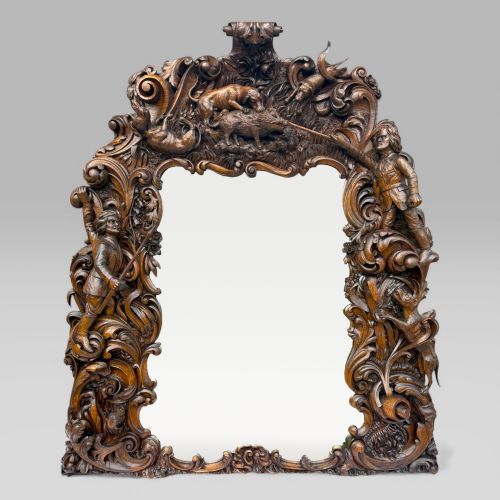
The aesthetic vocabulary spans simple ebonised designs to ornate Gothic carvings, Chinoiserie motifs, and elaborate Baroque revivals. Such variety ensures a piece suits both period interiors and rooms requiring a heavy, dark focal point.
Materials and construction
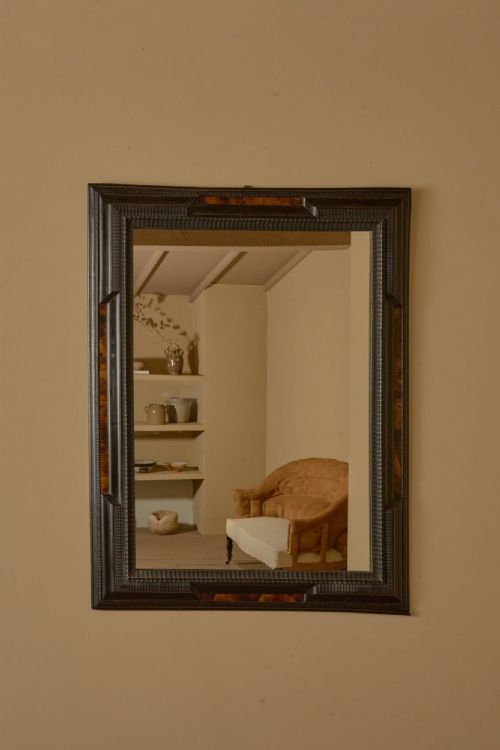
Wood serves as the primary structural body, frequently finished in ebonised treatments that emulate expensive ebony through staining or dark paint. Gesso is then applied over the wooden substrate to build up decorative mouldings, crisply rendering architectural details, floral motifs, and crests.
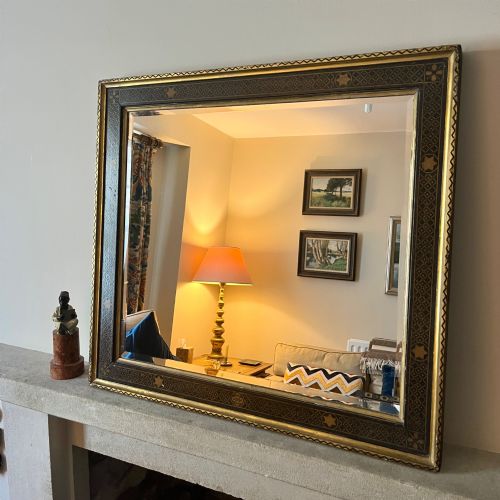
Makers integrated gold leaf, parcel gilt, or silvered highlights to catch the light against the dark matte surfaces, adding subtle contrast to arches and carved edges. Mirror glass, often heavy and bevelled, sits securely within these deep frames, supported by sturdy timber backboards.
Large Black Framed Mirror Retail Price Guide 2026
Typical asking prices for large black framed mirror among the pieces listed under this phrase on Sellingantiques today, from the lower quarter to the upper quarter. They describe what is for sale here now, not the wider market.
One remarkably honest twentieth-century entry on this page arrives as a fun house mirror, ensuring your reflection receives a distorted greeting.
Judging quality in dark frames
Quality rests upon the crispness of the carved wood and gesso ornamentation, where sharp edges and deep relief separate superior workshops from simpler production. The application of the ebonised finish and the integration of parcel gilding also dictate standard, with finer pieces showing deliberate restraint and harmonious contrast rather than flat, uniform black paint.
The integrity of the mirror glass itself contributes heavily to the overall merit, alongside the structural soundness of the heavy wooden frames designed to support significant weight over centuries. Original backboards and undisturbed framing pins indicate a well-preserved object with greater historical coherence.
The Large Black Framed Mirror Glossary
- Ebonised Wood
- Timber treated to resemble ebony through staining or painting. This dark finish became immensely popular during the Victorian era for creating dramatic contrast.
- Overmantle Mirror
- A large mirror designed specifically to hang upon the wall directly above a fireplace mantel. Their horizontal or arched proportions match the width of chimney breasts.
- Gesso
- A plaster-like mixture applied to wood frames and carved into intricate decorative relief. It provides a smooth surface for gilding and painting.
- Parcel Gilt
- A technique where only specific portions of an object receive a covering of gold leaf. This selective application highlights raised carvings against a dark background.
- Cushion Mirror
- A looking glass featuring a convex or sloping frame profile that pushes outward towards the edges. The style adds sculptural depth to the wall.
Large Black Framed Mirror: Frequently Asked Questions
How do I hang a heavy overmantle mirror safely?
Heavy nineteenth-century frames require robust wall fixings secured directly into masonry or substantial timber studs rather than standard plasterboard. Professional mirror hangers utilise heavy-duty brackets to distribute the considerable weight evenly.
Ensuring the hanging wire or integrated D-rings match the frame's mass prevents structural strain over time. Proper positioning also relies on anchoring the base securely if resting partially on a mantelpiece.
What is the difference between an ebonised finish and black paint?
An ebonised finish involves treating timber with chemical stains or dark dyes that sink into the grain while retaining the natural texture of the wood beneath. Black paint sits purely on the surface as an opaque layer, obscuring the underlying material entirely.
Period pieces often employ ebonisation to achieve a deep, lustrous black that mimics costly exotic hardwoods like genuine ebony.
Where should I place a large floor mirror in a modern room?
A large floor mirror functions effectively when propped against a wall in a hallway, bedroom, or living space to bounce natural light around the room. Positioning the piece opposite a window maximises illumination and creates an illusion of expanded square footage.
Securing the top of the frame to the wall prevents tipping, ensuring stability in busy areas.
How do I clean antique mirror glass without causing damage?
Cleaning antique glass requires a gentle touch and mild solutions, avoiding harsh chemical ammonia that can degrade old silvering behind the plate. A soft microfiber cloth slightly dampened with distilled water safely lifts dust and grime.
Spraying cleaner directly onto the frame must be avoided, as moisture ruins historic gesso, gilding, and ebonised wood surfaces.