



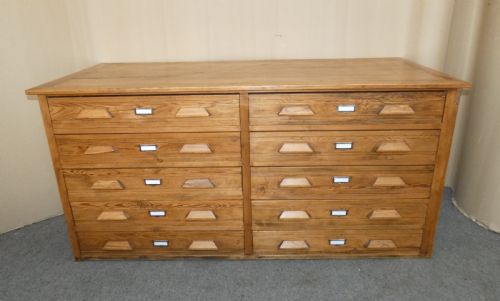


Large Bank of Drawers
A large bank of drawers offers immense utility and a commanding presence, serving as versatile storage for a room.
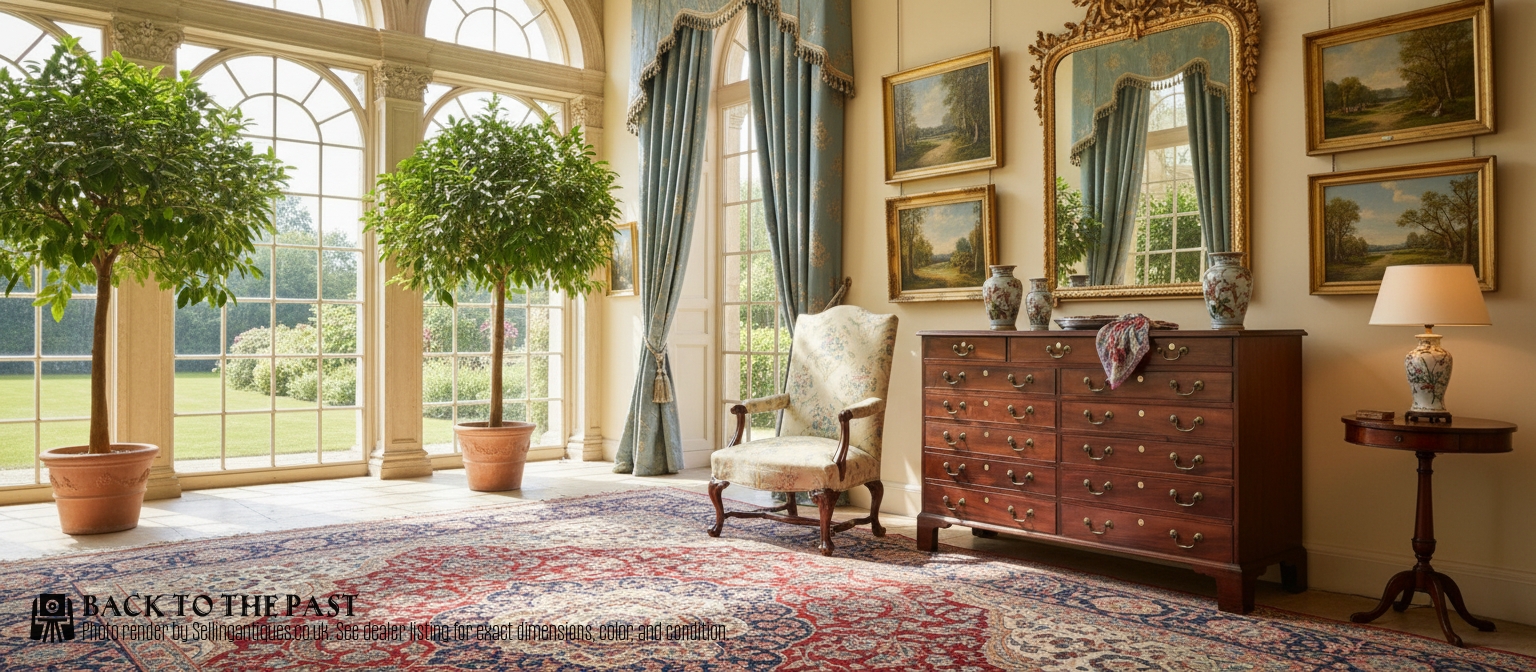
Large Bank of Drawers
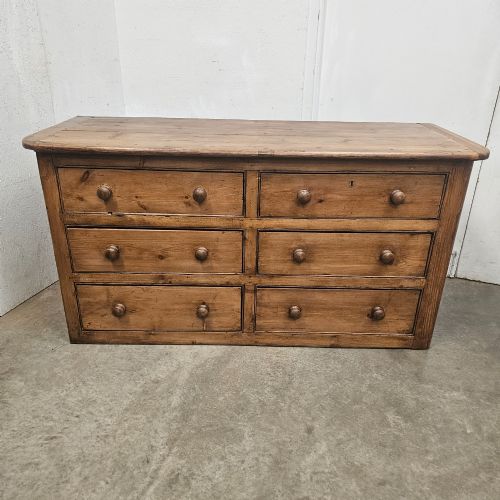
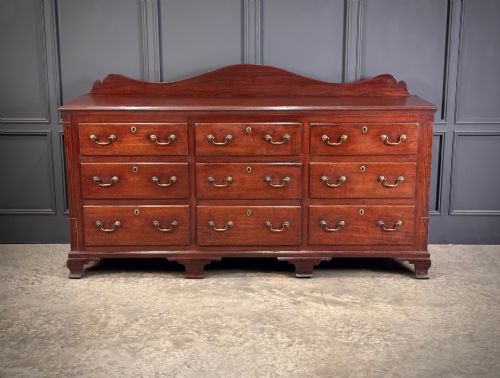
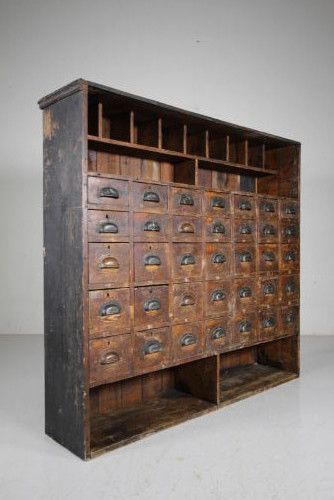
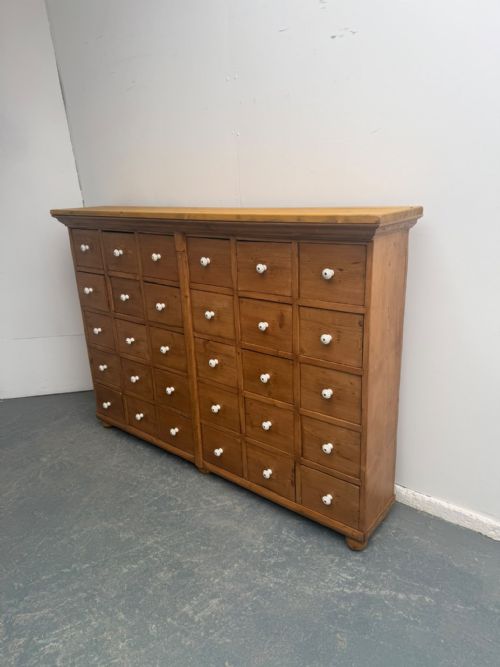
When you search for a large bank of drawers, you are looking at substantial multi-drawer storage pieces originally designed for commercial, trade or institutional use rather than domestic bedrooms. The forms include shop fittings, chemist and apothecary counters, drapers and haberdashery cabinets, school storage, office filing units, and workshop pieces.
The versions you are most likely to meet on this page span from the eighteenth century through the Victorian and Edwardian eras into the 1920s and 1930s. They range from modest workshop banks to massive fifty or sixty-drawer shop fittings designed to hold stock.
Origins vary across English, French, and Hungarian workshops, reflecting the practical needs of apothecaries, drapers, ironmongers, and seed merchants. These units bring heavy-duty utility and distinct historical character into modern spaces.
Materials and construction
Makers built these heavy-duty units primarily in solid pine, oak, and mahogany, utilising durable timber capable of withstanding daily commercial use. Secondary woods and fruitwood also appear in carcass and drawer construction.
Hardware such as brass pulls, iron handles, and glass card holders feature heavily on the numerous small drawers to aid organisation in busy shops and offices. Painted wood surfaces, sometimes retaining original cream or coloured finishes, sit alongside polished mahogany and plain pine.
Large Bank of Drawers Retail Price Guide 2026
Typical asking prices for large bank of drawers among the pieces listed under this phrase on Sellingantiques today, from the lower quarter to the upper quarter. They describe what is for sale here now, not the wider market.
Formations range from modest twelve-drawer French counters up to massive workshop cabinets containing sixty-six individual drawers.
Judging quality
The distinction between ordinary utility pieces and finer examples rests on the scale, the timber selection, and the intact survival of original hardware and painted finishes. A substantial timber carcass with dozens of smoothly running drawers commands greater interest.
Commercial provenance heavily influences the character of each piece, distinguishing utilitarian workshop banks from sophisticated shop fittings with glass inserts or numbered label holders. Original paint surfaces and unpolished patination elevate the standing of these large storage units.
The Large Bank of Drawers Glossary
- Bank of drawers
- A multiple-drawer storage unit designed for commercial, trade or institutional use rather than domestic sleeping quarters. These pieces typically feature many small drawers arranged in grids.
- Haberdashery cabinet
- A shop display and storage unit fitted with numerous shallow drawers, often featuring glass panels, used by drapers to sort ribbons, buttons and small textiles. They are highly sought after for domestic display.
- Apothecary drawers
- A specialist bank of small drawers traditionally used in chemists and pharmacies to store dried herbs, powders, and medical ingredients. Surviving examples often retain original handwritten paper labels.
- Shop fitting
- Heavy furniture built specifically for commercial interiors, including counters and drawer banks meant to withstand decades of heavy public trade. They possess robust structural framing.
- Drapers drawers
- Tall storage banks created for cloth merchants to organise fabrics, trimmings and haberdashery items. They provide exceptional depth and compartmentalisation.
Large Bank of Drawers: Frequently Asked Questions
What is a large bank of drawers?
A large bank of drawers is a utilitarian multi-drawer storage unit built for commercial, trade, or institutional environments. They were originally used in shops, chemists, offices, and workshops to organise large quantities of small stock.
Today, these substantial pieces serve as statement storage furniture in residential homes, offering exceptional capacity and distinct historical character.
How were haberdashery drawers used?
Haberdashery drawers were utilised in drapers and cloth shops to store ribbons, threads, buttons, and small garments. Their shallow proportions kept textile goods visible and accessible to shop assistants.
In modern interiors, these configurations provide ideal storage for collections, paperwork, or accessories while displaying a striking multi-drawer facade.
How do I fit a large bank of drawers at home?
These substantial cabinets require careful measurement of room dimensions and access routes, particularly stairways and doorways, due to their sheer size and weight. Placing them against a blank wall allows the piece to anchor the room visually.
Ensure the floor can support the combined weight of the timber carcass and its contents, especially when fully loaded.
How do I tell Victorian drawers from later pieces?
Victorian and nineteenth-century pieces often display hand-cut dovetailing, heavier pine or mahogany construction, and period-specific brass or cast iron hardware. They frequently originate from chemist shops or apothecary settings.
Later pieces from the 1920s and 1930s tend towards industrial office filing cabinets, workshop storage, or standardised commercial formats with simpler joinery.